
Listen to this Post
Introduction:
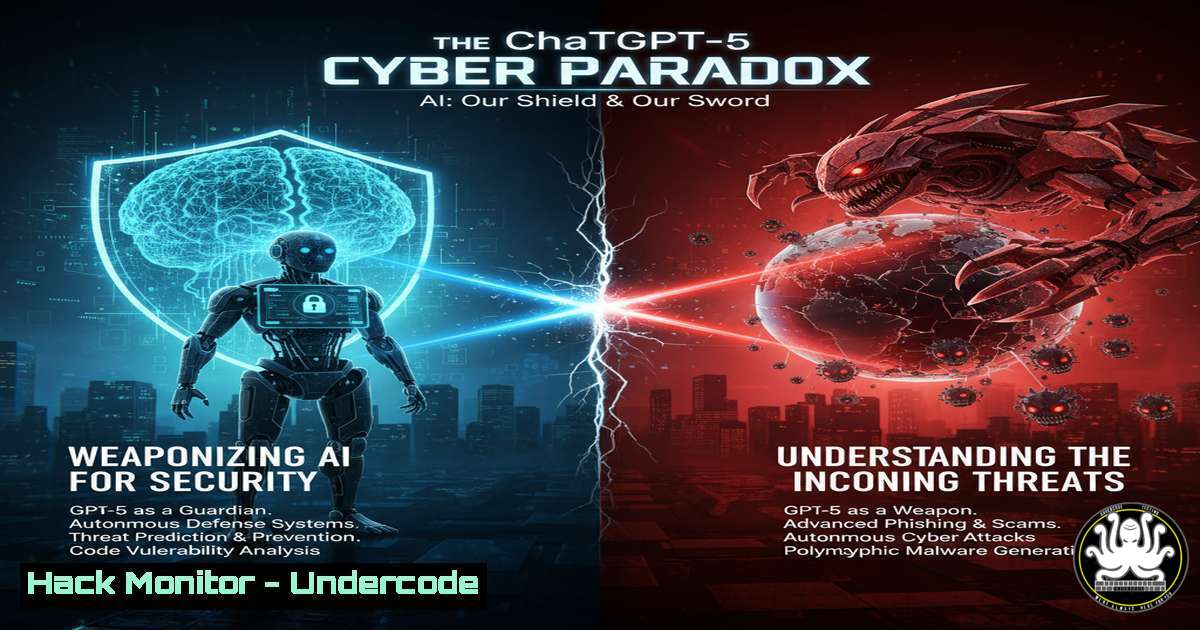
The arrival of ChatGPT-5 marks a seismic shift in the cybersecurity landscape, presenting a dual-use technology of unprecedented power. While security professionals can leverage it to automate defenses and analyze threats, malicious actors are already weaponizing its capabilities to create sophisticated malware and orchestrate complex attacks. Understanding this paradox is critical for building resilient systems in the AI era.
Learning Objectives:
- Understand how ChatGPT-5 can be leveraged for both offensive security testing and defensive hardening.
- Learn to craft effective prompts that generate functional security scripts and identify system vulnerabilities.
- Develop mitigation strategies to defend against AI-generated social engineering and automated exploit code.
You Should Know:
1. AI-Powered Network Reconnaissance
`nmap -sV -sC –script vuln -oA target_scan `
This Nmap command performs a comprehensive network reconnaissance, combining service version detection (-sV), default scripts (-sC), and vulnerability scripts (–script vuln). With ChatGPT-5, you can automate the analysis of its output. Provide the scan results to the AI with a prompt like: “Analyze this Nmap scan. Prioritize the discovered services by potential CVSS score, suggest specific exploits for the listed versions, and generate a Metasploit module skeleton for the most critical service.”
2. Generating Log Analysis Scripts
`!/bin/bash
AI-Generated Log Analyzer
grep -i “failed|error|denied” /var/log/auth.log | awk ‘{print $1, $2, $3, $NF}’ | sort | uniq -c | sort -nr`
ChatGPT-5 excels at creating custom log parsers. Use a prompt such as, “Write a Bash script to parse /var/log/auth.log for failed login attempts, group them by IP address, and output the top 10 offending IPs with a count of their attempts.” The generated script automates the tedious process of identifying brute-force attacks.
3. Windows Hardening with AI-Generated PowerShell
`Get-Service | Where-Object {$_.StartType -eq ‘Automatic’ -and $_.Status -eq ‘Stopped’} | Set-Service -StartupType Manual`
This PowerShell command, which can be conceptualized by ChatGPT-5, identifies automatically starting services that are currently stopped and sets them to manual, reducing the attack surface. Prompt the AI with: “Generate a PowerShell script to audit and harden a Windows Server 2019. Disable non-essential services like ‘Spooler’ and ‘Telnet’, enforce strong password policy via secedit, and enable Windows Defender attack surface reduction rules.”
4. Automating Web Vulnerability Detection
`!/bin/bash
AI-Suggested Directory Brute-Forcer
for word in $(cat /usr/share/wordlists/dirb/common.txt); do
response=$(curl -s -o /dev/null -w “%{http_code}” http://target.com/$word/)
if [ “$response” == “200” ]; then
echo “Found: http://target.com/$word/”
fi
done`
While basic, this script demonstrates how ChatGPT-5 can create foundational security tools. A more advanced prompt would be: “Create a Python script that acts as a simple fuzzer. It should take a target URL and a wordlist, test for common directories and parameters, and report back with the HTTP status codes and response sizes for further analysis.”
5. Crafting Phishing-Resistant Training Material
`curl -H “Authorization: Bearer
This API call structure illustrates how to programmatically use ChatGPT-5 to create security awareness training. By having the AI generate both the attack vector and the educational breakdown, you create dynamic, up-to-date training materials that evolve with the threat landscape.
6. Cloud Infrastructure Hardening Scripts
` Terraform Snippet for a Secure S3 Bucket
resource “aws_s3_bucket” “secure_logs” {
bucket = “my-secure-logs-bucket”
acl = “private”
versioning {
enabled = true
}
server_side_encryption_configuration {
rule {
apply_server_side_encryption_by_default {
sse_algorithm = “AES256”
}
}
}
<
h2 style=”color: yellow;”>policy = <<EOF
{
“Version”: “2012-10-15”,
“Statement”: [
{
“Effect”: “Deny”,
“Principal”: “”,
“Action”: “s3:”,
“Resource”: [
“arn:aws:s3:::my-secure-logs-bucket”,
“arn:aws:s3:::my-secure-logs-bucket/”
],
“Condition”: {
“Bool”: {
“aws:SecureTransport”: “false”
}
}
}
]
}
EOF
}`
Provide this to ChatGPT-5 and ask: “Review this Terraform code for a secure S3 bucket. Identify any potential misconfigurations and enhance it to include logging, block public access at the account level, and require KMS encryption instead of SSE-S3.” The AI can audit and improve Infrastructure-as-Code, a critical skill for DevSecOps.
7. Incident Response Automation
` AI-Generated Incident Triage Script
!/bin/bash
echo “=== INCIDENT TRIAGE START ===”
date
echo ” Network Connections “
netstat -tulnpe
echo ” Running Processes “
ps aux –sort=-%cpu | head -20
echo ” Recent Logins “
last -n 10
echo ” Scheduled Tasks (Last 30 mins)
find /etc/cron -type f -mmin -30 2>/dev/null
echo “=== INCIDENT TRIAGE END ===”`
In a crisis, speed is essential. Prompt ChatGPT-5 with: “Write a comprehensive incident response triage script for a Linux server. It must collect all active network connections, running processes, recent user logins, and check for recently modified cron jobs or scheduled tasks, outputting everything to a dated file.” This script provides a immediate, automated baseline during a security incident.
What Undercode Say:
- The democratization of advanced hacking capabilities is the single greatest threat introduced by generative AI. Script kiddies can now execute attacks that previously required deep expertise.
- Proactive, AI-augmented defense is no longer optional. Security teams must integrate these same tools into their workflows to keep pace with the volume and sophistication of automated attacks.
The analysis from the cybersecurity underground is stark. There is a palpable shift from manual, targeted attacks towards automated, AI-driven campaigns. The barrier to entry for conducting sophisticated operations has plummeted. For defenders, the focus must pivot from purely preventative controls to resilience and detection. The “assume breach” mentality is now table stakes, and the ability to rapidly analyze, respond, and recover using AI-assisted tools will separate the prepared from the compromised. The era of human-vs-human in cyber conflict is rapidly evolving into AI-vs-AI.
Prediction:
The next 18-24 months will see an explosion of AI-native malware—self-modifying code that can adapt to its environment, polymorphic phishing campaigns that are hyper-personalized, and fully automated penetration testing suites that can find and exploit vulnerabilities faster than any human team. The regulatory and legal frameworks around the offensive use of AI by state and non-state actors will become a central point of international discourse, leading to a new “AI Cyber Arms Control” debate. Organizations that fail to integrate AI into their defensive postures will find themselves operating at an insurmountable disadvantage.
🎯Let’s Practice For Free:
IT/Security Reporter URL:
Reported By: Matt Pogla – Hackers Feeds
Extra Hub: Undercode MoN
Basic Verification: Pass ✅


