Listen to this Post
Introduction:
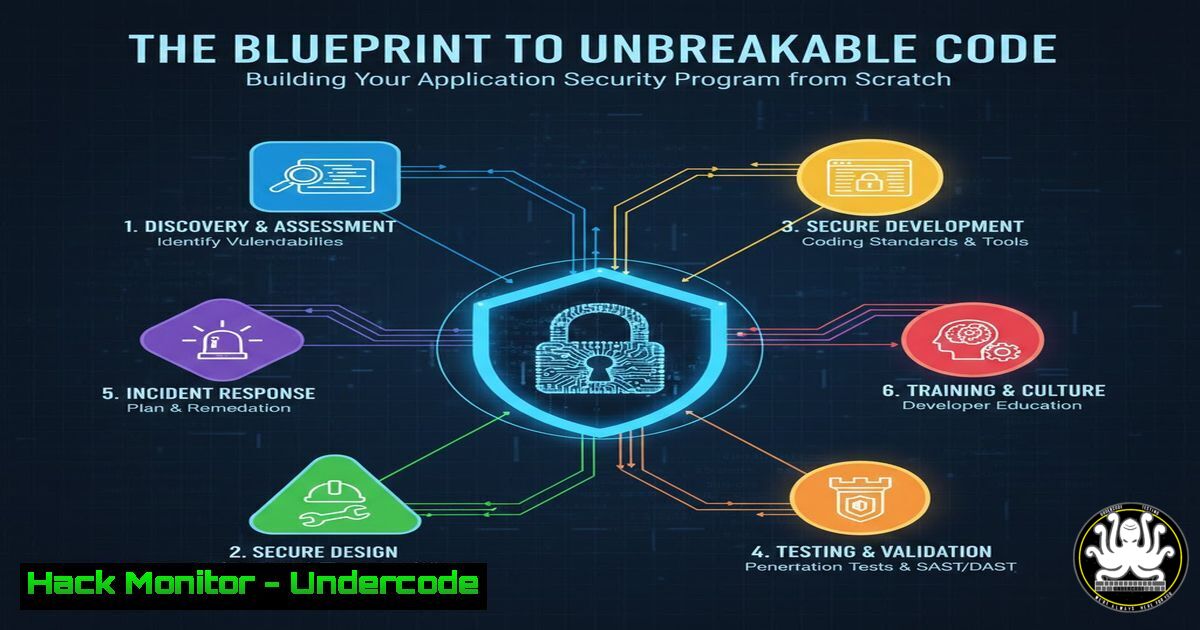
In an era where software vulnerabilities serve as the primary attack vector for cybercriminals, establishing a robust Application Security (AppSec) program is no longer optional—it’s a strategic imperative. This comprehensive guide deconstructs the process of building a proactive security framework that shifts left to identify and remediate risks early in the software development life cycle (SDLC). We will explore the technical controls, tooling, and processes necessary to transform your organization’s security posture from reactive to resilient.
Learning Objectives:
- Understand the core pillars of a modern Application Security Program and how to integrate them into your SDLC.
- Implement practical, hands-on technical controls using industry-standard tools for SAST, DAST, and SCA.
- Develop a risk-based strategy for vulnerability management, incident response, and continuous security monitoring.
You Should Know:
- Laying the Foundation: Asset Inventory and Threat Modeling
Before a single security tool is deployed, you must know what you are protecting. A comprehensive asset inventory, covering all applications, their components, and data flows, is the foundational layer of any AppSec program. This is followed by threat modeling, a systematic process for identifying potential security threats and vulnerabilities.
Step‑by‑step guide explaining what this does and how to use it.
Step 1: Catalog All Assets. Use automated discovery tools alongside manual audits. For web applications, a simple command-line crawler can help map the structure.
`Command (Linux):` gospider -s https://your-target.com -d 0 -w -c 5 (Uses GoSpider to crawl the target site and discover endpoints).
Step 2: Choose a Threat Modeling Framework. The STRIDE (Spoofing, Tampering, Repudiation, Information Disclosure, Denial of Service, Elevation of Privilege) model is widely adopted. For each component in your data flow diagram, brainstorm potential STRIDE threats.
Step 3: Document and Prioritize. Use a tool like OWASP Threat Dragon or even a simple spreadsheet to document each threat, its potential impact, and likelihood. This risk assessment will guide your subsequent security testing efforts.
2. Integrating Security into the CI/CD Pipeline
The concept of “shifting left” means integrating security checks directly into the Continuous Integration/Continuous Deployment (CI/CD) pipeline. This allows for automated, fast-feedback security testing on every code commit and build.
Step‑by‑step guide explaining what this does and how to use it.
Step 1: Static Application Security Testing (SAST). Integrate a SAST tool like SonarQube, Snyk Code, or Checkmarx into your pipeline. It scans source code for vulnerabilities without executing the program.
Example GitHub Actions Snippet for Snyk:
- name: Run Snyk to check for vulnerabilities
uses: snyk/actions/node@master
env:
SNYK_TOKEN: ${{ secrets.SNYK_TOKEN }}
with:
args: --severity-threshold=high
Step 2: Software Composition Analysis (SCA). Use SCA tools to scan open-source dependencies for known vulnerabilities.
`Command (Node.js):` `npm audit –audit-level high`
`Command (Python):` `safety check –json`
Step 3: Fail the Build. Configure your pipeline to fail if critical or high-severity vulnerabilities are discovered, preventing vulnerable code from progressing to production.
3. Dynamic Analysis and Runtime Protection
While SAST scans code at rest, Dynamic Application Security Testing (DAST) analyzes a running application from the outside in, simulating attacks against a staging or production environment. This catches runtime issues like misconfigurations and authentication flaws.
Step‑by‑step guide explaining what this does and how to use it.
Step 1: Choose a DAST Tool. OWASP ZAP (Zed Attack Proxy) is a powerful, open-source option.
Step 2: Automate Scans. Run automated, passive and active scans against your target.
`Command (Docker):` docker run -t owasp/zap2docker-stable zap-baseline.py -t https://your-test-app.com -l PASS
Step 3: Implement Runtime Application Self-Protection (RASP). For production applications, consider RASP agents that can detect and block attacks in real-time by analyzing application behavior and context.
4. Secure Coding Practices and Developer Training
Tools are ineffective if developers are not trained to write secure code. A successful AppSec program includes ongoing, role-specific training that goes beyond theoretical concepts.
Step‑by‑step guide explaining what this does and how to use it.
Step 1: Establish Secure Coding Standards. Adopt or create guidelines based on OWASP Secure Coding Practices.
Step 2: Utilize Interactive Training Platforms. Platforms like Secure Code Warrior or Kontra Application Security provide hands-on labs where developers can identify and exploit vulnerabilities in a safe environment, then learn to fix them.
Step 3: Conduct Capture-The-Flag (CTF) Exercises. Internal CTF events foster a security-minded culture and provide practical, engaging learning experiences.
5. Vulnerability Management and Incident Response
A streamlined process for triaging, prioritizing, and remediating vulnerabilities is critical. This must be coupled with a clear incident response plan for when a vulnerability is exploited.
Step‑by‑step guide explaining what this does and how to use it.
Step 1: Centralize Findings. Use a vulnerability management platform to aggregate findings from all your tools (SAST, DAST, SCA, Pen Tests).
Step 2: Risk-Based Prioritization. Use the Common Vulnerability Scoring System (CVSS) and context about your application (e.g., exposure, data sensitivity) to prioritize patches. Don’t just focus on the highest CVSS score; focus on the highest risk to your business.
Step 3: Tabletop Exercises. Regularly run through simulated security incidents. For example: “An attacker has exploited a SQL injection vulnerability in the login portal. What are the first 5 steps your team takes?”
6. Cloud Security Hardening
Modern applications are built in the cloud, making cloud security a core tenet of AppSec. Misconfigured cloud services are a leading cause of data breaches.
Step‑by‑step guide explaining what this does and how to use it.
Step 1: Infrastructure as Code (IaC) Scanning. Scan your Terraform, CloudFormation, or ARM templates for security misconfigurations before deployment.
`Command (using tfsec):` `tfsec /path/to/terraform/code`
Step 2: Enforce Least Privilege. Regularly audit IAM roles and policies in AWS, Azure, or GCP. Use tools like `iamlive` or cloud-native advisors to generate minimal-permission policies.
Step 3: Secure Secrets Management. Never hardcode API keys or passwords. Use dedicated secrets management services like AWS Secrets Manager, HashiCorp Vault, or Azure Key Vault.
What Undercode Say:
- An AppSec program is a culture, not just a set of tools. Without buy-in from developers and leadership, even the most advanced technology stack will fail.
- Automation is your force multiplier. Manual security reviews cannot scale with modern development velocity. Automate every repetitive task possible to free up human experts for complex threat analysis.
- Analysis: The completion of a course like “Building an Application Security Program” signifies a critical maturation in the cybersecurity industry. Organizations are moving beyond siloed penetration tests and recognizing that application security must be a continuous, integrated discipline. The most successful programs will be those that blend automated security gates with empowered, security-aware development teams. The future lies not in finding vulnerabilities after the fact, but in architecting them out of existence from the very beginning. This requires a fundamental rethinking of the developer’s role and a commitment to security as a feature of the product itself.
Prediction:
The convergence of AI-powered development (e.g., GitHub Copilot) and AI-powered security tooling will define the next era of AppSec. We will see a rise in “AI-on-AI” testing, where red teams specifically target the novel attack surfaces introduced by ML models and AI-generated code. Furthermore, AI will democratize advanced security testing, allowing smaller teams to perform threat modeling and code analysis that was previously only feasible for large enterprises. The organizations that proactively integrate AI into both their development and security lifecycles will gain a significant defensive advantage.
🎯Let’s Practice For Free:
IT/Security Reporter URL:
Reported By: Jacknunz Certificate – Hackers Feeds
Extra Hub: Undercode MoN
Basic Verification: Pass ✅


