
Listen to this Post
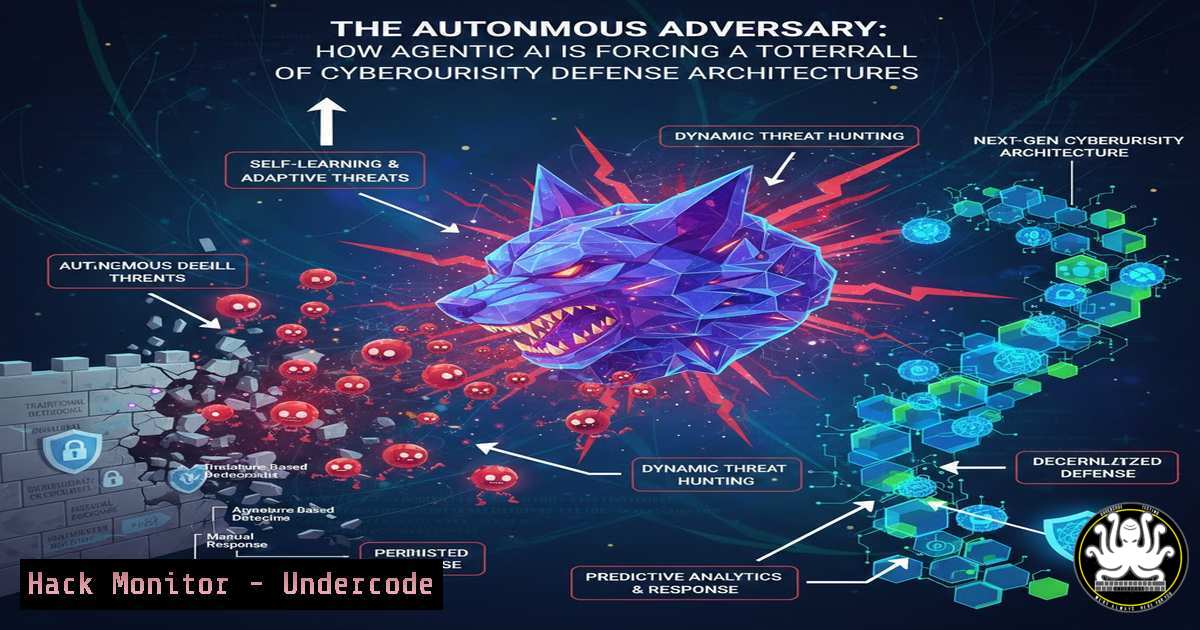
Introduction:
The cybersecurity paradigm is undergoing its most radical shift since the advent of the internet. We are moving from defending against automated scripts to confronting autonomous digital actors—Agentic AI systems that can plan, decide, execute, and adapt in real-time. This evolution renders traditional, human-paced, reactive security models obsolete, demanding a foundational redesign of defensive architectures built on zero-trust principles extended to non-human identities.
Learning Objectives:
- Understand the technical implications of Agentic AI on the threat landscape, including self-mutating malware and autonomous phishing.
- Learn how to implement Identity and Access Management (IAM) governance specifically for AI agents and machine identities.
- Build practical steps for implementing runtime monitoring, model integrity verification, and deterministic guardrails for autonomous systems.
You Should Know:
1. Implementing Machine-to-Machine IAM for AI Agents
The first pillar of defense in the Agentic AI era is treating every AI agent as a privileged, non-human identity. This goes beyond traditional service accounts, requiring granular, context-aware policies that are automatically enforced and audited.
Step‑by‑step guide explaining what this does and how to use it.
- Inventory & Provisioning: Catalog all AI agents (e.g., vulnerability scanners, response playbook runners, data analysis bots). Provision identities using a dedicated secrets management or IAM tool.
- Policy as Code: Define least-privilege access. For a cloud environment, use tools like HashiCorp Vault or AWS IAM Roles with conditions.
Example Vault Policy Snippet (for a threat intelligence scraper agent):path "aws/creds/scraper-role" { capabilities = ["read"] allowed_parameters = { "ttl" = ["3600"] } } path "kv/data/threatintel/" { capabilities = ["read"] }Azure Example (Managed Identity Scope): Assign the AI agent’s Managed Identity only to the “Storage Blob Data Reader” role on a specific container.
- Credential Lifecycle Management: Implement short-lived, automatically rotating credentials. Use Vault’s dynamic secrets or cloud-native solutions to issue tokens valid for only the task’s duration.
- Audit Logging: Ensure all authentication and authorization events for these identities are logged to a secure, immutable SIEM. Correlate agent actions with user-initiated tasks.
-
Runtime Monitoring for AI Decision Logic and Behavioral Drift
You must monitor not just the output of an AI agent, but the process that led to it. Behavioral drift—where an agent’s actions deviate from its intended purpose—is a critical threat.
Step‑by‑step guide explaining what this does and how to use it.
- Instrumentation: Embed logging within the agent’s decision loop. Log the agent’s state, the context of its decision, the action chosen, and the confidence score.
- Establish Baselines: Use initial supervised runs to establish normal behavioral patterns (e.g., “API call volume,” “data access patterns,” “decision latency”).
- Anomaly Detection: Configure your SIEM or a dedicated tool like Elastic Security or Splunk ES to alert on deviations.
Example Splunk SPL Alert for Excessive Data Exfiltration:
index=agent_logs source="data_analyzer_agent" action="export"
| bucket span=1h _time
| stats sum(data_size_mb) as total_exported by _time
| eval baseline=50
| where total_exported > (baseline  3) // Alert if 3x normal baseline
4. Feedback Loop: Create automated playbooks to quarantine or suspend an agent exhibiting severe drift pending human investigation.
- Model Integrity Verification and AI Supply Chain Security
The integrity of the AI model itself is the new software supply chain attack surface. You must verify the model has not been tampered with and originates from a trusted source.
Step‑by‑step guide explaining what this does and how to use it.
- Hash Verification & Signing: Treat model files (e.g.,
.pt,.h5,.onnx) like critical binaries. Maintain a secure registry of cryptographic hashes (SHA-256) and use code-signing certificates from providers like DigiCert or Sectigo to sign model releases. - Pre-deployment Check: In your CI/CD pipeline for AI models, integrate a verification step.
Example Linux Bash Command for Integrity Check:
 Verify downloaded model against known hash
echo "a1b2c3...expected_sha256_hash" > model.pt.sha256
sha256sum -c model.pt.sha256

Verify GPG signature (if signed)
gpg --verify model.pt.sig model.pt
3. Secure Registry: Store approved models in a private, secure registry (e.g., Azure Container Registry, Amazon ECR, private Hugging Face space) with strict access controls and vulnerability scanning enabled.
4. Runtime Attestation: In sensitive deployments, use hardware-based trusted execution environments (TEEs) or runtime application self-protection (RASP) to ensure the model is running unaltered in memory.
4. Building Deterministic Guardrails with Override Mechanisms
Agentic AI requires “circuit breakers”—pre-defined, deterministic rules that can override AI decisions to prevent harmful actions.
Step‑by‑step guide explaining what this does and how to use it.
- Identify Critical Actions: List actions that are high-risk (e.g., disabling security controls, deleting production data, initiating mass data transfers).
- Implement a Policy Enforcement Point (PEP): Create a lightweight service that intercepts all agent actions against a security policy before execution.
- Define Guardrail Rules: Write simple, deterministic rules (e.g., REGEX, blocklists, allowlists).
Example Python PEP Snippet for a Content Generation Agent:def enforce_guardrails(agent_action, target): BLOCKLIST = ["DELETE FROM", "DROP TABLE", "rm -rf /", "disable_firewall"] for blocked in BLOCKLIST: if blocked in agent_action: log_security_event(f"Blocked action: {agent_action}") return False, "ACTION_BLOCKED_BY_GUARDRAIL" Check for data exfiltration pattern if target.external and "export" in agent_action: return False, "EXTERNAL_EXPORT_REQUIRES_ESCALATION" return True, "ACTION_ALLOWED" - Manual Override Interface: Build a secure dashboard where SOC analysts can immediately suspend an agent or roll back its last N actions with one click.
5. Configuring Human-in-the-Loop (HITL) Escalation Thresholds
Autonomy must have boundaries. Define clear thresholds that force a pause for human review before an AI agent proceeds.
Step‑by‑step guide explaining what this does and how to use it.
- Risk-Based Threshold Definition: Classify agent actions by risk (e.g., Low, Medium, High, Critical). Critical actions always require pre-approval.
- Integrate with Ticketing/SOAR: Configure your agent framework to open a ticket in ServiceNow or a task in a SOAR platform (like Splunk SOAR, Palo Alto XSOAR) when a threshold is met.
Example SOAR Playbook Trigger:IF agent.confidence_score < 0.7 AND action.risk_tier == "HIGH" THEN create_incident(severity=2) AND pause_agent(task_id). - Define Clear Approval Protocols: The ticket must contain all contextual information: agent ID, decision logic, input data, and proposed action. Require MFA for approval.
- Audit Trail: Document every HITL event—who approved/rejected what, when, and why—for compliance and incident analysis.
What Undercode Say:
Architect for Autonomy, Not Automation: The core shift is psychological and architectural. Defenders must stop thinking in terms of tools that assist humans and start building integrated control systems that govern autonomous entities. This is a foundational change akin to moving from on-premise servers to cloud-native.
Governance is the New Competitive Advantage: Speed of AI deployment is now a liability without corresponding governance. The organizations that will securely harness Agentic AI’s power are those that invested first in machine IAM, explainable pipelines, and verifiable model supply chains. This governance layer is the true moat.
Prediction:
Within the next 18-24 months, we will witness the first publicly attributed cyber incident primarily caused by a malicious Agentic AI system, likely in the form of a hyper-personalized, multi-vector campaign. This will catalyze a market surge for “AI Security Posture Management” (AI-SPM) solutions and mandatory regulatory frameworks for AI agent governance. The defensive response will evolve from Autonomous Threat Response (ATR) to full Autonomous Risk Orchestration, where AI defenders will not just contain threats but proactively simulate attacker AI agents, patch predicted vulnerabilities, and reconfigure network segments autonomously to minimize the attack surface in real-time. The line between attack and defense will blur, with the victory going to the side with the most resilient and ethically constrained autonomous governance architecture.
▶️ Related Video (78% Match):
🎯Let’s Practice For Free:
IT/Security Reporter URL:
Reported By: Sandeep Choudhury – Hackers Feeds
Extra Hub: Undercode MoN
Basic Verification: Pass ✅


