Listen to this Post
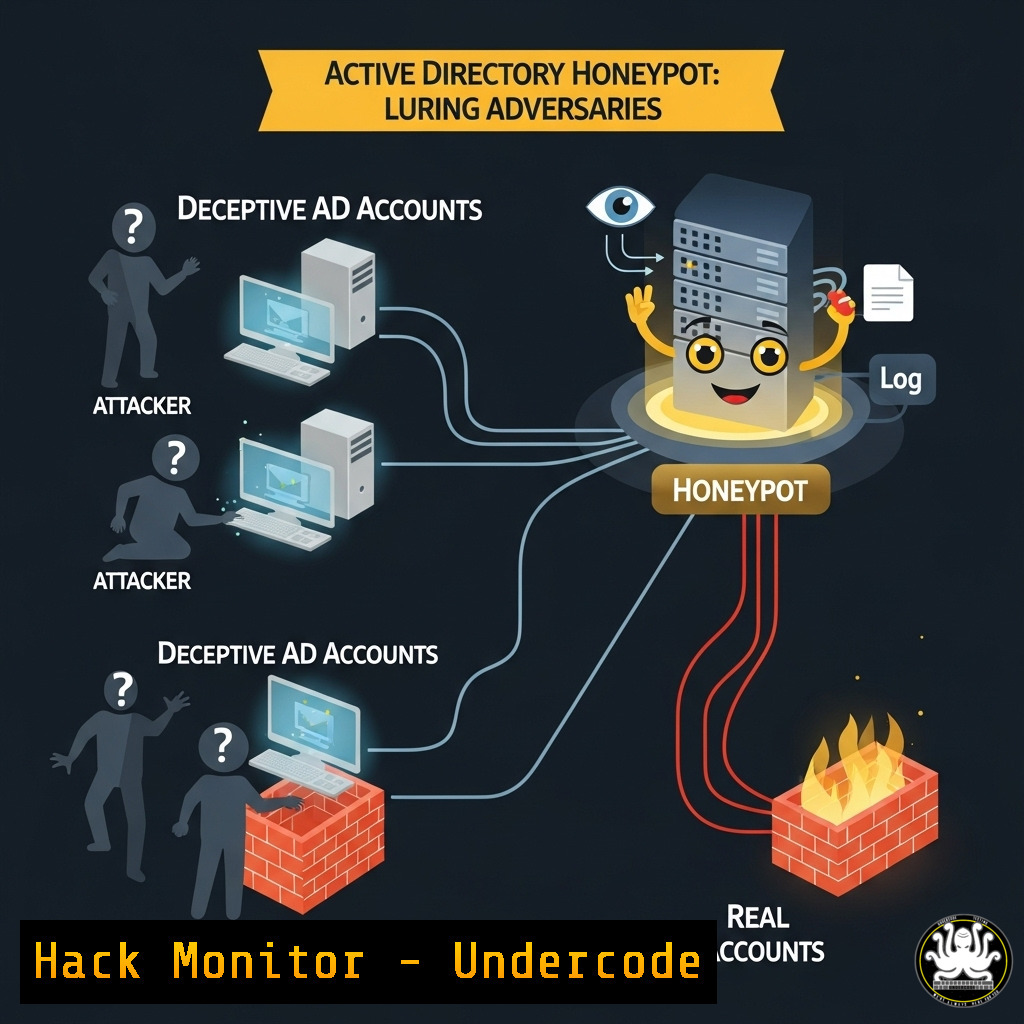
Introduction:
In the relentless cat-and-mouse game of cybersecurity, deception has emerged as a powerful defensive strategy. Honeypot accounts within Active Directory (AD) are precisely that—carefully crafted traps designed to attract, detect, and analyze attacker behavior. This article delves into the sophisticated art of creating these deceptive objects, making the unusual look normal to effectively catch threat actors in the act.
Learning Objectives:
- Understand the core principles and benefits of deploying honeypot accounts in an Active Directory environment.
- Learn to create and configure credible, high-interaction honeypot user and computer accounts.
- Implement monitoring and alerting mechanisms to detect and respond to interactions with honeypot objects.
You Should Know:
1. The Foundation: Creating a Decoy User Account
The first step is creating a user account that appears legitimate but has no business purpose. The key is to use realistic naming conventions and attributes to avoid suspicion.
`New-ADUser -Name “svc_SQLMonitoring” -SamAccountName “svc_sqlmon” -GivenName “SQL” -Surname “Monitoring” -DisplayName “SQL Monitoring Service” -Description “Service account for internal SQL performance monitoring” -AccountPassword (ConvertTo-SecureString “A_Strong_Fake_Password123!” -AsPlainText -Force) -Enabled $true -PasswordNeverExpires $true`
Step-by-step guide:
This PowerShell command creates a new AD user account. The name `svc_SQLMonitoring` mimics a common service account naming convention. The description is deliberately vague yet plausible. Crucially, the account is enabled and the password is set to never expire—a slight misconfiguration that is attractive to attackers but should be monitored. After creation, add this account to a highly privileged group like `Domain Admins` as bait, but ensure it has no actual permissions or logon rights elsewhere.
2. Baiting with Kerberoastable Accounts
Attackers often target accounts with SPNs for Kerberoasting attacks. Creating a honeypot account with a desirable SPN is an excellent trap.
`Set-ADUser -Identity “svc_sqlmon” -ServicePrincipalNames “MSSQLSvc/sql-primary.domain.com”`
`Set-ADAccountControl -Identity “svc_sqlmon” -TrustedForDelegation $false`
Step-by-step guide:
The first command assigns a Service Principal Name (SPN) to the honeypot account, making it a potential target for Kerberoasting. The second command ensures the account is not trusted for delegation, a configuration that would be highly unusual for a real service account and might tip off a skilled attacker. The goal is to appear as a misconfigured, high-value target.
3. Setting the Trap with Canary Tokens
Canary tokens provide a silent alarm when used. Embedding them in a honeypot account’s attributes can trigger an alert.
`Set-ADUser -Identity “svc_sqlmon” – “CanaryToken=4x7g8m9z” -Office “Internal-Use-Only” -EmailAddress “[email protected]”`
Step-by-step guide:
This command sets custom attributes on the user object. The “ field contains a unique canary token string. Any query for this attribute (e.g., via `ldapsearch` or BloodHound) could be logged and alert your security team. The email domain `yourdomain.fake` is invalid, ensuring no legitimate mail is sent, but an attacker might try to use or abuse this address.
4. Deploying a Honeypot Computer Object
Beyond users, computer objects can be potent honeypots, especially for detecting attacks like SMB relay or RBCD (Resource-Based Constrained Delegation).
`New-ADComputer -Name “SRV-LEGACY-01” -SamAccountName “SRV-LEGACY-01$” -Description “Legacy application server (Do Not Decommission)” -Enabled $true`
Step-by-step guide:
This creates a new computer account named SRV-LEGACY-01. The description implies it’s an old, potentially vulnerable system, making it attractive. Ensure its `userAccountControl` flag is set to `WORKSTATION_TRUST_ACCOUNT` (default) and that it is joined to the domain in a segregated network segment if it will be a live system, or left as a pure object-based trap.
5. Configuring Sensitive Group Membership
Placing a honeypot account in a privileged group is a high-risk, high-reward tactic that can quickly identify a major breach.
`Add-ADGroupMember -Identity “Domain Admins” -Members “svc_sqlmon”`
Step-by-step guide:
This command adds the honeypot user to the ultra-sensitive “Domain Admins” group. Any attempt to use this account is an immediate red flag. Monitoring for successful authentication events (Event ID 4624) or group enumeration queries (e.g., net group "Domain Admins" /domain) that include this account is critical. The alert priority for this should be set to the highest level.
6. Implementing Auditing and SIEM Alerts
A honeypot is useless without monitoring. Configure SACLs (System Access Control Lists) to audit any access attempts.
` PowerShell to audit successful access on the user object`
`$acl = Get-Acl “AD:\CN=svc_sqlmon,OU=Honeypot,DC=domain,DC=com”`
`$rule = New-Object System.DirectoryServices.ActiveDirectoryAuditRule(“Everyone”, “ReadProperty”, “Success”)`
`$acl.AddAuditRule($rule)`
`Set-Acl -AclObject $acl -Path “AD:\CN=svc_sqlmon,OU=Honeypot,DC=domain,DC=com”`
Step-by-step guide:
This script retrieves the ACL of the honeypot user object and adds an auditing rule that will generate a Windows Security event (e.g., Event ID 4662) every time any principal (Everyone) successfully reads a property (ReadProperty) of the object. These events must be forwarded to a SIEM (e.g., Splunk, Elasticsearch) where correlation rules can trigger immediate alerts to your SOC.
7. Leveraging Microsoft Sentinel Analytics Rules
For cloud-native environments, Microsoft Sentinel can be configured to detect honeypot interaction.
`// KQL Query for Microsoft Sentinel Alert Rule`
`SecurityEvent`
`| where EventID == 4624 // Successful Logon`
`| where Account contains “svc_sqlmon” or Account contains “SRV-LEGACY-01$”`
`| project TimeGenerated, Account, Computer, IpAddress, LogonType`
Step-by-step guide:
This Kusto Query Language (KQL) query is the basis for an analytics rule in Microsoft Sentinel. It searches for successful logon events (4624) that involve the usernames of your honeypot accounts. When triggered, it can create a high-severity incident and launch an automated response playbook, such as disabling the attacker’s session and notifying an analyst.
What Undercode Say:
- Deception is a Force Multiplier: Honeypots shift the defender’s advantage from purely reactive to proactively disruptive. They generate high-fidelity, low-noise alerts that cut through the chaos of typical SIEM data, allowing for rapid response to genuine threats.
- Credibility is Everything: The effectiveness of a honeypot is inversely proportional to its detectability. An obvious trap is worse than no trap at all, as it can educate the attacker on your defensive tactics. The artistry lies in mimicking real misconfigurations and legacy systems that attackers expect to find.
The strategic deployment of honeypot accounts represents a mature, intelligence-driven security posture. It goes beyond preventing entry to understanding adversary TTPs (Tactics, Techniques, and Procedures). By analyzing how attackers interact with these traps—what tools they use, what lateral movement paths they attempt—organizations can fortify their defenses against real attack patterns, turning a breach attempt into a valuable learning opportunity.
Prediction:
The future of cybersecurity will see a massive rise in the use of AI-driven deception technology. Honeypots will evolve from static objects into dynamic, adaptive systems that can generate realistic, entire fake network segments in real-time based on an attacker’s behavior. Machine learning models will be used to perfect the “lure,” making deceptive assets indistinguishable from real ones. Furthermore, we will see the integration of deception into cloud-native and DevOps pipelines, allowing for the automatic deployment of canary resources alongside production microservices and storage buckets, providing early warning signals within modern, ephemeral infrastructures.
🎯Let’s Practice For Free:
IT/Security Reporter URL:
Reported By: Sylvaincortes Activedirectory – Hackers Feeds
Extra Hub: Undercode MoN
Basic Verification: Pass ✅


