
Listen to this Post
Introduction:
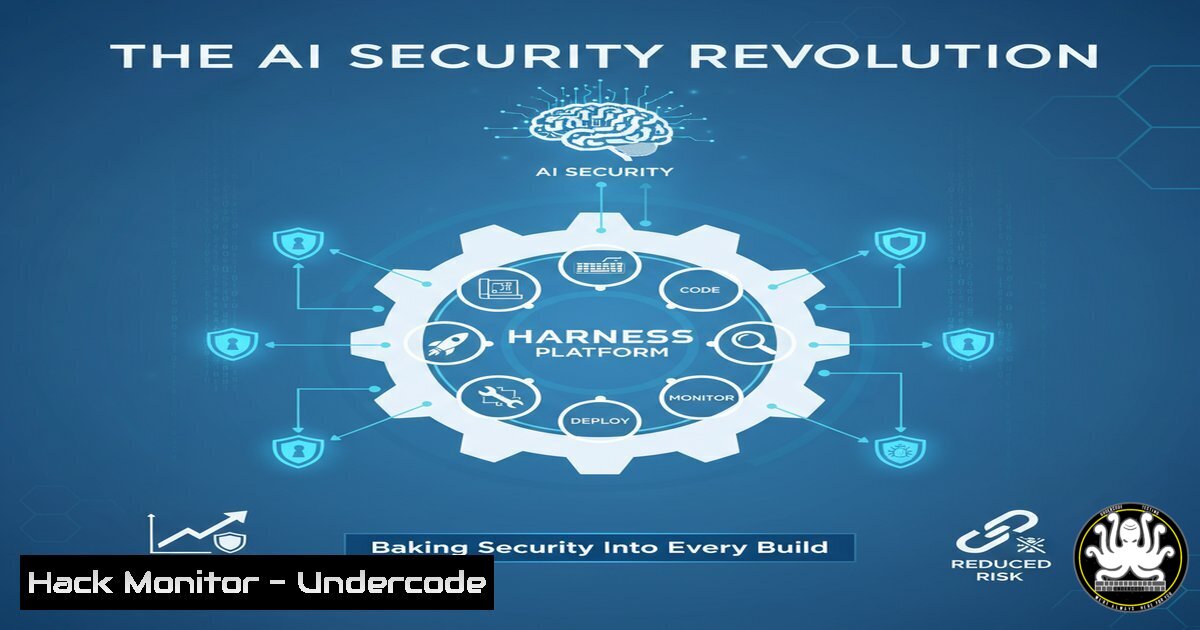
The acquisition of Qwiet AI by Harness marks a pivotal shift in the application security landscape. This move signifies a strategic push towards integrating advanced, AI-powered security scanning directly into the CI/CD pipeline, aiming to make application security proactive and seamless rather than a reactive, manual bottleneck.
Learning Objectives:
- Understand the core concepts of shifting security left and DevSecOps.
- Learn the practical commands and tools for integrating security scans into a CI/CD pipeline.
- Identify key commands for vulnerability detection in code, containers, and cloud configurations.
You Should Know:
- Integrating Static Application Security Testing (SAST) into Your Pipeline
Verified commands and code snippets for integrating SAST tools.Example GitHub Actions workflow with Semgrep SAST name: Security Scan on: [bash] jobs: semgrep: runs-on: ubuntu-latest container: image: returntocorp/semgrep steps:</li> </ol> - uses: actions/checkout@v3 - run: semgrep --config=auto --error-on-findings .
Step-by-step guide: This YAML configuration defines a GitHub Actions workflow that automatically triggers on every code push. It uses the official Semgrep container to scan the codebase using its “auto” config, which includes a wide range of security rules. If any findings are detected, the workflow will fail (
--error-on-findings), preventing vulnerable code from progressing.2. Scanning Container Images for Vulnerabilities
Verified commands for container security scanning.
 Scan a Docker image with Trivy
trivy image --severity CRITICAL,HIGH your-registry/your-app:latest

Scan a Dockerfile with Hadolint for best practices
docker run --rm -i hadolint/hadolint < Dockerfile
Step-by-step guide: The `trivy image` command scans a built container image for known vulnerabilities (CVEs), filtering to show only CRITICAL and HIGH severity issues. The Hadolint command analyzes your `Dockerfile` itself for common errors and deviations from best practices, helping to build more secure images from the start.
- Hardening Cloud Configurations with Infrastructure as Code (IaC) Scans
Verified commands for IaC security.
 Scan Terraform plans with Checkov
checkov -d /path/to/terraform/code

Scan Kubernetes manifests with Kubeaudit
kubeaudit all -f /path/to/manifest.yaml
Step-by-step guide: Checkov performs static analysis on Terraform code to identify misconfigurations before deployment, such as publicly accessible S3 buckets. Kubeaudit audits Kubernetes YAML files for security issues like containers running as root, ensuring your cluster configurations are secure by design.
4. Detecting Secrets Accidentally Committed to Code
Verified commands and scripts for secret detection.
 Scan git history for secrets with Gitleaks
gitleaks detect --source /path/to/repo --verbose

Pre-commit hook to prevent secrets from being committed
 Place in .git/hooks/pre-commit
!/bin/sh
gitleaks protect --staged-changes
Step-by-step guide: Gitleaks scans your entire git history, including all branches and commits, for hardcoded credentials like API keys and passwords. The pre-commit hook example provides a proactive defense, running `gitleaks protect` on all staged files before a commit is finalized, blocking secrets at the source.
5. Dynamic Analysis with OWASP ZAP Baseline Scan
Verified commands for automated DAST.
 Run a baseline scan with OWASP ZAP in a container
docker run -v $(pwd):/zap/wrk/:rw -t owasp/zap2docker-stable zap-baseline.py \
-t https://your-test-app.com/ -g gen.conf -r testreport.html
Step-by-step guide: This command runs the OWASP ZAP (Zed Attack Proxy) baseline scan against a running web application. It performs a passive security audit, identifying issues like missing security headers and cookie flags without actively attacking the app. The report is saved to
testreport.html.6. API Security Testing with Schemathesis
Verified commands for fuzzing and testing APIs.
 Run property-based tests against an OpenAPI schema
schemathesis run --checks all --stateful=links \
https://api.example.com/openapi.json
Step-by-step guide: Schemathesis automatically generates and runs hundreds of test cases against your API based on its OpenAPI schema. The `–checks all` flag enables a wide range of security checks, while `–stateful=links` allows it to follow connections between API calls, simulating a more realistic attack sequence to find deeper flaws.
7. Generating a Software Bill of Materials (SBOM)
Verified commands for dependency transparency.
 Generate an SBOM in SPDX format with Syft
syft your-registry/your-app:latest -o spdx-json > sbom.json

Scan the SBOM for vulnerabilities with Grype
grype sbom:sbom.json
Step-by-step guide: Syft catalogs all packages and libraries within your container image, producing a Software Bill of Materials (SBOM) in a standard format. This SBOM can then be fed into Grype to identify vulnerabilities within your dependencies, providing a clear, auditable inventory of your software supply chain.
What Undercode Say:
- Security is Shifting from Gatekeeper to Enabler. The future isn’t about saying “no” with slow, late-stage security reviews, but about baking security in so developers get a fast “yes” with every secure build. Tools that provide immediate, contextual feedback within the developer’s existing workflow are key.
- AI is the Force Multiplier for AppSec. The sheer volume and speed of modern development, especially with AI-generated code, has outstripped manual review capabilities. AI-powered security tools are no longer a luxury but a necessity to analyze code contextually, reduce false positives, and identify complex, novel attack paths that rule-based systems miss. The Harness+Qwiet AI merger is a direct response to this market imperative, aiming to create an integrated system where security findings are automatically prioritized and remediated within the platform.
Prediction:
The consolidation of application security tooling directly into the CI/CD platform, supercharged by AI, will become the industry standard within three years. This will lead to a significant reduction in common vulnerabilities found in production, forcing attackers to shift their focus towards more sophisticated logic flaws, business logic abuse, and AI model poisoning attacks. The era of “security as code” is dawning, where security policies are defined as code, enforced automatically, and validated with every single build, fundamentally changing the role of the security engineer from an auditor to an architect.
🎯Let’s Practice For Free:
IT/Security Reporter URL:
Reported By: Adamrossarellano Harness – Hackers Feeds
Extra Hub: Undercode MoN
Basic Verification: Pass ✅🔐JOIN OUR CYBER WORLD [ CVE News • HackMonitor • UndercodeNews ]
📢 Follow UndercodeTesting & Stay Tuned:


