Listen to this Post
Introduction:
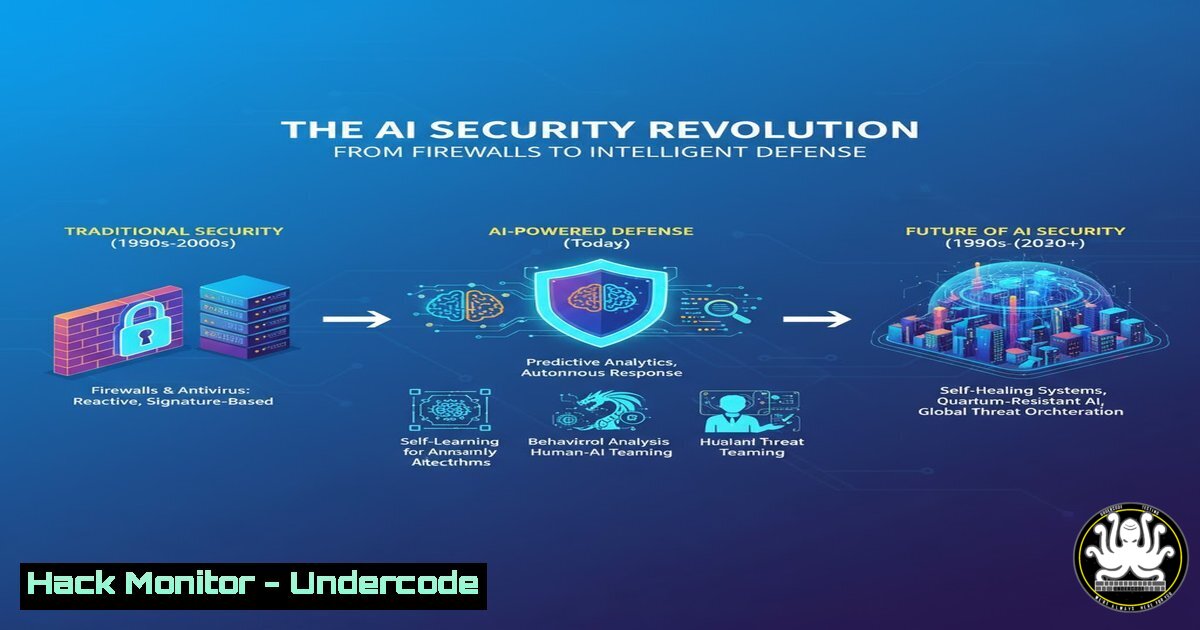
The cybersecurity landscape has undergone a seismic shift from perimeter-based defense to intelligent, context-aware systems. Where organizations once relied on firewalls and patching, modern security now integrates AI-driven prediction and automated response mechanisms, fundamentally transforming how we protect digital assets.
Learning Objectives:
- Understand the core technical components of AI-enhanced security operations
- Implement practical commands for threat detection across Linux, Windows, and cloud environments
- Develop automated security workflows that leverage machine learning capabilities
You Should Know:
1. AI-Powered Log Analysis with PowerShell
 Analyze Windows Security logs for suspicious patterns
Get-WinEvent -LogName Security | Where-Object {$_.Level -eq 4} |
Export-Csv -Path "C:\SecurityAnalysis\suspicious_events.csv" -NoTypeInformation

Use ML-based classification for anomaly detection
Import-Module MLNet
$data = Import-Csv "C:\SecurityAnalysis\suspicious_events.csv"
$pipeline = AddModelTransformer "AnomalyDetection" |
AppendTransformer "NormalizeData" |
Fit -Data $data
This PowerShell script extracts Windows security events and applies machine learning classification to identify anomalous patterns. The ML.NET pipeline normalizes event data and applies anomaly detection algorithms to flag potentially malicious activity that might evade traditional signature-based detection.
2. Linux System Hardening with Automated Compliance
!/bin/bash
 Automated Linux hardening script
echo "Applying CIS Benchmark compliance..."

Disable unused services
systemctl disable rpcbind
systemctl disable telnet.socket

Configure auditd for comprehensive logging
cat > /etc/audit/audit.rules << EOF
-w /etc/passwd -p wa -k identity
-w /etc/group -p wa -k identity
-w /etc/shadow -p wa -k identity
-w /var/log/faillog -p wa -k logins
-w /var/log/lastlog -p wa -k logins
EOF

Set file permissions
find /home -type f -name ".sh" -exec chmod 750 {} \;
chmod 600 /etc/gshadow
This comprehensive Linux hardening script implements Center for Internet Security (CIS) benchmarks, configures advanced auditing, and applies principle of least privilege to file permissions. The audit rules monitor critical system files for unauthorized modifications.
3. Cloud Security Posture Management with Azure CLI
 Assess Azure security posture
az security assessment-metadata list --output table

Enable Microsoft Defender for Cloud
az security auto-provisioning-setting update --name "default" --auto-provision "On"

Configure regulatory compliance monitoring
az policy assignment create --name "NIST-compliance" \
--display-name "NIST SP 800-53 Rev. 5" \
--params '{ "effect": { "type": "String" } }' \
--policy-set-definition "/providers/Microsoft.Authorization/policySetDefinitions/c3f20c90-...
These Azure CLI commands enable comprehensive cloud security monitoring, automatic provisioning of security agents, and regulatory compliance enforcement. The policy assignments ensure continuous compliance with industry standards like NIST 800-53.
4. API Security Testing with OWASP ZAP Automation
!/usr/bin/env python3
from zapv2 import ZAPv2

Configure ZAP API client
zap = ZAPv2(apikey='your-api-key',
proxies={'http': 'http://localhost:8080',
'https': 'http://localhost:8080'})

Automated API security scan
target_url = 'https://api.yourcompany.com/v1'
scan_id = zap.ascan.scan(target_url)

Check scan progress and results
while int(zap.ascan.status(scan_id)) < 100:
print(f'Scan progress: {zap.ascan.status(scan_id)}%')
time.sleep(5)

Generate security report
report = zap.core.htmlreport()
with open('api_security_report.html', 'w') as f:
f.write(report)
This Python script automates API security testing using OWASP ZAP, performing active scanning for vulnerabilities like injection flaws, broken authentication, and sensitive data exposure. The automated reporting provides actionable security insights.
5. Container Security with Docker Bench Security
!/bin/bash
 Run Docker security benchmark
docker run -it --net host --pid host --userns host --cap-add audit_control \
-e DOCKER_CONTENT_TRUST=$DOCKER_CONTENT_TRUST \
-v /var/lib:/var/lib \
-v /var/run/docker.sock:/var/run/docker.sock \
--label docker_bench_security \
docker/docker-bench-security

Implement container security policies
cat > docker-security-policy.json << EOF
{
"allowedImages": ["registry.trusted.com/"],
"deniedPorts": ["22", "137-139"],
"requiredLabels": ["security-tier"],
"maxContainerAge": "24h"
}
EOF
The Docker Bench Security script implements the CIS Docker Benchmark, checking for common security misconfigurations while enforcing container security policies that restrict image sources, network ports, and container lifecycle.
6. Network Traffic Analysis with Zeek (formerly Bro)
 Install and configure Zeek network security monitor
git clone --recursive https://github.com/zeek/zeek
cd zeek
./configure && make && make install

Create custom detection script for C2 traffic
cat > /usr/local/zeek/share/zeek/site/c2-detection.zeek << EOF
event connection_established(c: connection)
{
if (c$id$resp_h in 192.168.1.0/24 && c$id$resp_p == 443/tcp)
{
if (c$duration > 3600 sec && c$orig$size > 1000000)
{
NOTICE([$note=LongConnection,
$conn=c,
$msg=fmt("Potential C2 channel: %s", c$id$orig_h)]);
}
}
}
EOF

Start Zeek monitoring
zeek -i eth0 local c2-detection.zeek
This Zeek (Bro) configuration monitors network traffic for command and control (C2) indicators, detecting long-lived encrypted connections with unusual data transfer patterns that often characterize compromised systems.
7. Incident Response Automation with TheHive and Cortex
!/usr/bin/env python3
from thehive4py import TheHive
from cortex4py import Cortex

Initialize security automation platforms
thehive = TheHive('http://localhost:9000', 'api-key')
cortex = Cortex('http://localhost:9001', 'api-key')

Automated incident creation and analysis
def create_incident(alert_data):
incident = {
'title': f"Security Alert: {alert_data['type']}",
'description': alert_data['details'],
'severity': alert_data.get('severity', 2),
'tags': ['auto-created', 'siem-integration'],
'flag': True
}

Create incident in TheHive
result = thehive.create_case(incident)

Automatically run analyzers
analyzers = cortex.analyzers.find_all({})
for analyzer in analyzers:
if 'IP' in alert_data and analyzer.name == 'AbuseIPDB':
job = cortex.analyzers.run_by_name('AbuseIPDB',
data={'data': alert_data['IP']},
data_type='ip')

return result
This Python script demonstrates automated incident response using TheHive and Cortex, creating security cases automatically from alerts and enriching them with threat intelligence to accelerate investigation and containment.
What Undercode Say:
- The integration of AI into security operations represents not just an evolution but a fundamental paradigm shift from reactive to predictive defense
- Organizations that fail to adopt intelligent security automation will face exponentially increasing response times and breach costs
The transition from traditional perimeter security to AI-enhanced defense requires both technological adoption and cultural transformation. Security teams must evolve from gatekeepers to data scientists, leveraging machine learning to identify subtle attack patterns that evade conventional detection. The most successful organizations will be those that treat security as a continuous learning process rather than a compliance checklist, embedding intelligence at every layer of their infrastructure while maintaining human oversight of automated systems.
Prediction:
Within three years, AI-driven security orchestration will reduce mean time to detection (MTTD) for sophisticated attacks from months to minutes, fundamentally altering the attacker-defender balance. However, this advancement will simultaneously empower malicious actors with AI-enhanced attack tools, creating an escalating AI arms race in cybersecurity. Organizations that master intelligent security automation will achieve breach prevention rates exceeding 95%, while those relying on legacy approaches will face untenable operational costs and business disruption.
🎯Let’s Practice For Free:
IT/Security Reporter URL:
Reported By: Femcornelissen Infosecurity – Hackers Feeds
Extra Hub: Undercode MoN
Basic Verification: Pass ✅


