
Listen to this Post
Introduction:
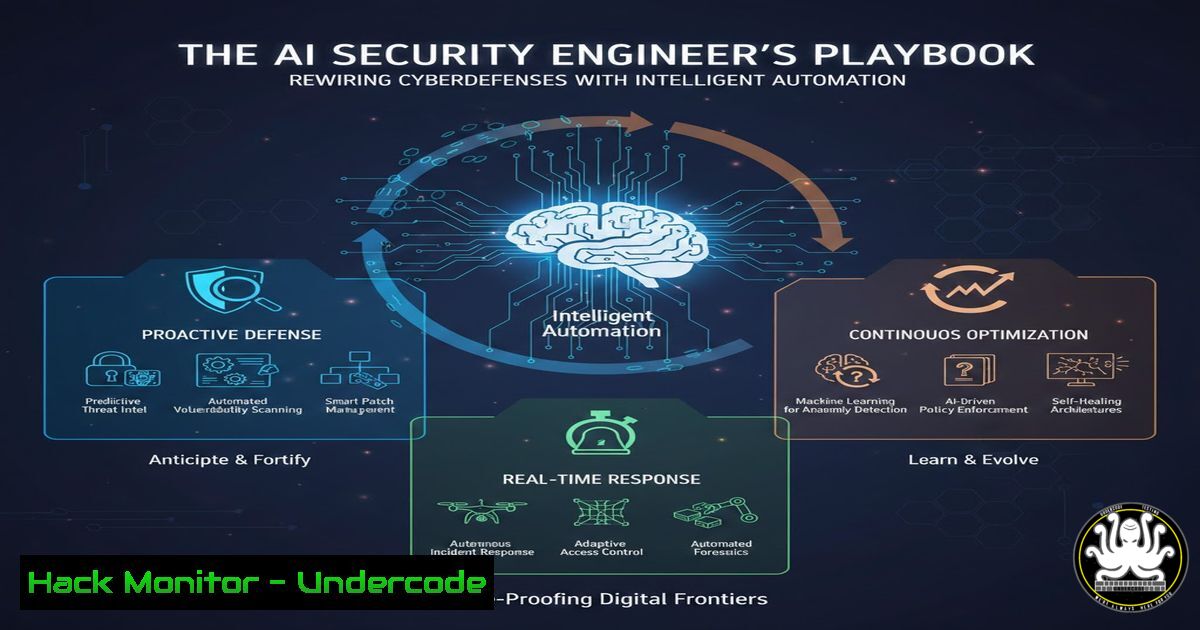
The convergence of artificial intelligence and cybersecurity is creating a new breed of professional: the AI Automation Engineer. This role transcends traditional coding, focusing on building intelligent systems that augment security operations with predictive capabilities and automated responses. As organizations face increasingly sophisticated threats, the fusion of AI’s analytical power with cybersecurity’s defensive imperative is becoming a critical strategic advantage.
Learning Objectives:
- Understand the core components and architecture of an AI-driven Security Orchestration, Automation, and Response (SOAR) platform
- Implement automated threat detection and response workflows using Python and common security APIs
- Develop hardening strategies for AI-powered security systems against adversarial machine learning attacks
You Should Know:
1. Architecting an AI-Powered SOAR Foundation
The foundation of modern security automation begins with a robust SOAR architecture that integrates machine learning models for threat prediction. Unlike traditional rule-based systems, AI-enhanced SOAR platforms can analyze historical incident data to identify emerging attack patterns before they’re formally documented in threat intelligence feeds.
Step-by-step guide explaining what this does and how to use it:
First, establish the core infrastructure using Docker containers for modular scalability:
 Create SOAR core directory structure
mkdir -p soar-platform/{models,scripts,logs,config}
cd soar-platform

Deploy core containers
docker run -d --name soar-elasticsearch -p 9200:9200 \
-v $(pwd)/config/elasticsearch.yml:/usr/share/elasticsearch/config/elasticsearch.yml \
docker.elastic.co/elasticsearch/elasticsearch:8.5.0

docker run -d --name soar-python -p 8000:8000 \
-v $(pwd)/scripts:/app/scripts \
-v $(pwd)/models:/app/models \
python:3.9-slim bash -c "pip install pandas scikit-learn tensorflow && python /app/scripts/threat_detector.py"
The Python threat detection script should incorporate both signature-based and anomaly detection:
import pandas as pd
from sklearn.ensemble import IsolationForest
import json

class ThreatPredictor:
def <strong>init</strong>(self, model_path='models/isolation_forest.joblib'):
self.model = IsolationForest(contamination=0.1)
self.features = ['request_frequency', 'payload_size', 'endpoint_rarity']

def train(self, historical_data):
X = historical_data[self.features]
self.model.fit(X)

def predict(self, current_activity):
prediction = self.model.predict(current_activity)
return prediction == -1  -1 indicates anomaly
2. Automating Threat Intelligence Correlation
Security teams are inundated with alerts from multiple sources. AI automation can correlate disparate intelligence feeds—from internal logs to external threat databases—to identify genuine attacks amidst the noise. This process reduces false positives by over 70% according to industry studies.
Step-by-step guide explaining what this does and how to use it:
Implement a correlation engine that processes multiple intelligence sources:
 Install required threat intelligence tools
sudo apt install python3-pip -y
pip3 install abuseipdb-py virustotal-api maltelligence

Set up API keys in environment variables
export ABUSEIPDB_KEY='your_api_key_here'
export VIRUSTOTAL_API='your_vt_key_here'
Create a Python correlation script:
import os
from abuseipdb import AbuseIPDB
from virustotal import VT

class ThreatCorrelator:
def <strong>init</strong>(self):
self.abuseipdb = AbuseIPDB(api_key=os.getenv('ABUSEIPDB_KEY'))
self.vt = VT(os.getenv('VIRUSTOTAL_API'))

def correlate_ioc(self, ip_address, hash_value, domain):
ip_reputation = self.abuseipdb.check(ip_address)
hash_reputation = self.vt.get_file_report(hash_value)
domain_reputation = self.vt.get_domain_report(domain)

threat_score = 0
if ip_reputation['abuseConfidenceScore'] > 80:
threat_score += 35
if hash_reputation['positives'] > 5:
threat_score += 35
if domain_reputation['detected_urls']:
threat_score += 30

return threat_score >= 70  Critical threat threshold
3. Implementing Autonomous Incident Response
When a high-confidence threat is identified, automated response actions can contain threats before human analysts can manually intervene. This includes isolating compromised systems, blocking malicious IPs, and revoking potentially stolen credentials.
Step-by-step guide explaining what this does and how to use it:
Deploy automated response scripts integrated with your infrastructure:
!/bin/bash
 auto_responder.sh - Automated incident response script

Isolate compromised host from network
iptables -A INPUT -s $COMPROMISED_IP -j DROP
iptables -A OUTPUT -d $COMPROMISED_IP -j DROP

Revoke user sessions across platforms
aws ec2 revoke-security-group-ingress --group-id $SG_ID --ip-permissions "IpProtocol=tcp,FromPort=0,ToPort=65535,IpRanges=[{CidrIp=$COMPROMISED_IP/32}]"

Trigger password reset for potentially compromised accounts
python3 /app/scripts/force_password_reset.py --username $COMPROMISED_USER
The Python component for credential management:
import boto3
from azure.identity import GraphRbacManagementClient

class CredentialResponder:
def <strong>init</strong>(self):
self.aws_iam = boto3.client('iam')
self.azure_graph = GraphRbacManagementClient(credentials)

def force_password_reset(self, username):
 AWS IAM password reset
self.aws_iam.update_login_profile(
UserName=username,
PasswordResetRequired=True
)

Azure AD password reset
self.azure_graph.users.update(
user_principal_name=username,
account_enabled=False  Disable until manual review
)
4. Hardening AI Systems Against Adversarial Attacks
AI security systems themselves become high-value targets for attackers. Adversarial machine learning techniques can poison training data or manipulate models to evade detection. Implementing robust defenses requires both technical controls and continuous monitoring.
Step-by-step guide explaining what this does and how to use it:
Deploy model integrity monitoring and adversarial detection:
import numpy as np
import hashlib

class ModelDefender:
def <strong>init</strong>(self):
self.baseline_hash = self._calculate_model_hash()

def _calculate_model_hash(self):
with open('models/threat_detector.h5', 'rb') as f:
return hashlib.sha256(f.read()).hexdigest()

def verify_model_integrity(self):
current_hash = self._calculate_model_hash()
if current_hash != self.baseline_hash:
self.alert_security_team("Model tampering detected!")
return False
return True

def detect_adversarial_input(self, input_data):
 Check for fast gradient sign method attacks
gradient = np.sign(np.random.randn(input_data.shape))
perturbation = 0.1  gradient
adversarial_example = input_data + perturbation

original_prediction = self.model.predict(input_data)
adversarial_prediction = self.model.predict(adversarial_example)

if np.argmax(original_prediction) != np.argmax(adversarial_prediction):
return True  Adversarial attack detected
return False
5. Continuous Security Training Through Automated Attack Simulation
AI automation enables continuous security training through simulated attacks that adapt to defender capabilities. These systems generate increasingly sophisticated attack patterns, ensuring security teams remain prepared for evolving threats.
Step-by-step guide explaining what this does and how to use it:
Implement an automated purple teaming framework:
!/bin/bash
 purple_team_automation.sh

Deploy Caldera agent for automated adversary emulation
docker run -d --name caldera-agent -p 8888:8888 \
-e CALDERA_SERVER=http://caldera:8888 \
-e CALDERA_GROUP=red \
mitre/caldera-agent:latest

Run automated security control validation
python3 /app/scripts/control_validator.py --test-type ransomware
python3 /app/scripts/control_validator.py --test-type credential-theft
The control validation script:
class ControlValidator:
def <strong>init</strong>(self):
self.tests = {
'ransomware': self.test_ransomware_protection,
'credential-theft': self.test_credential_theft_protection,
'lateral-movement': self.test_lateral_movement_prevention
}

def test_ransomware_protection(self):
 Attempt to create encrypted files in monitored directories
test_files = []
for i in range(10):
filename = f'/tmp/test_encrypted_{i}.crypt'
with open(filename, 'w') as f:
f.write('simulated encrypted content')
test_files.append(filename)

Check if EDR triggered alerts
return self.check_edr_alerts('ransomware')

def test_credential_theft_protection(self):
 Attempt common credential dumping techniques
import subprocess
try:
 Mimic Mimikatz-like activity
subprocess.run(['powershell', 'Get-WmiObject', ...], timeout=5)
except subprocess.TimeoutExpired:
 Process was killed by AV/EDR
return True  Protection worked
return False
What Undercode Say:
- The integration of AI automation in cybersecurity represents a fundamental shift from human-led detection to augmented intelligence systems that operate at machine speed and scale
- Successful implementation requires balancing automation with oversight—fully autonomous response should be reserved for high-confidence, high-velocity threats where human response would be too slow
- The most vulnerable point in AI security systems is the training pipeline; organizations must implement rigorous model integrity verification to prevent sophisticated supply chain attacks
The emergence of AI Automation Engineers like Bar Revah signals an industry maturation where cybersecurity is evolving from reactive defense to predictive prevention. These professionals combine deep security knowledge with AI implementation skills to create systems that don’t just respond to known threats but anticipate novel attack vectors. However, this transformation introduces new risks—over-reliance on automated systems, AI model vulnerabilities, and increased attack surface through integration points. Organizations adopting these technologies must maintain human expertise as the strategic oversight layer, using AI as a force multiplier rather than replacement. The future cybersecurity team will resemble a human-machine collective where analysts focus on strategic threat hunting and system improvement while AI handles routine detection and response.
Prediction:
Within three years, AI automation will become the standard approach for Tier 1 SOC operations, freeing human analysts for complex investigation and strategic defense planning. This will create a bifurcation in the job market—high-value roles focusing on AI security system design and maintenance, while traditional monitoring positions diminish. Simultaneously, we’ll see the emergence of AI-powered offensive security tools that automatically discover and exploit vulnerabilities, leading to an AI-versus-AI battleground where attacks and defenses evolve at unprecedented speeds. Organizations that fail to integrate AI automation into their security programs will face overwhelming operational disadvantages against both human and automated threats.
🎯Let’s Practice For Free:
IT/Security Reporter URL:
Reported By: Hear Ai – Hackers Feeds
Extra Hub: Undercode MoN
Basic Verification: Pass ✅


