Listen to this Post
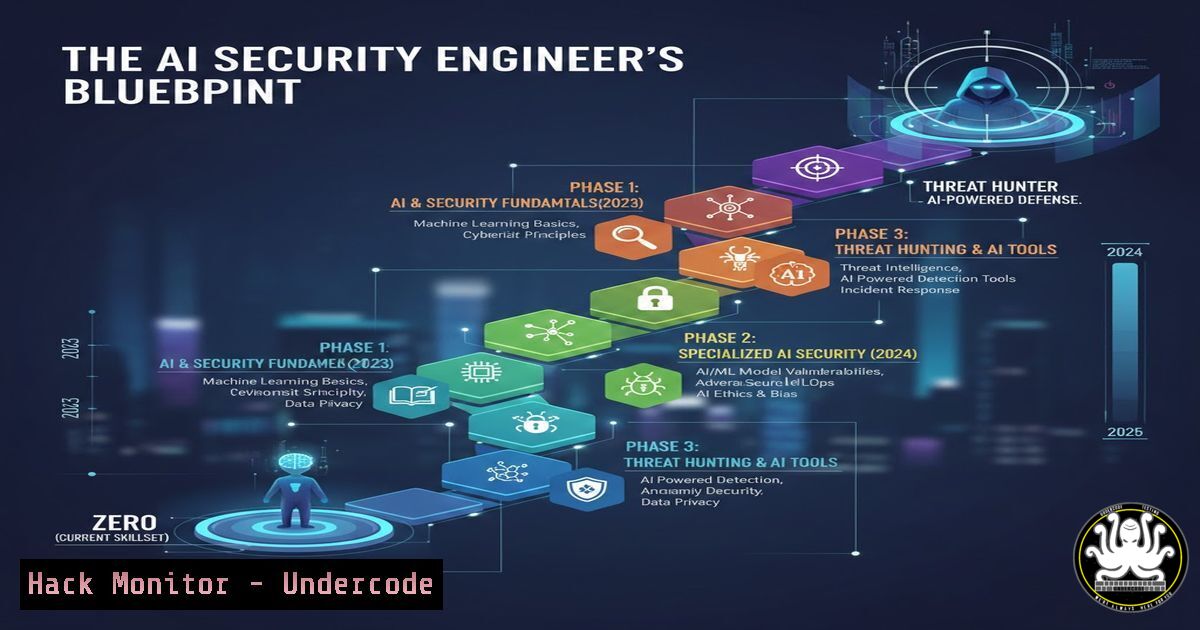
Introduction:
The cybersecurity landscape is undergoing a seismic shift, with AI-powered security platforms becoming the new frontline defense against sophisticated threats. This evolution demands a new breed of security professional: one who can harness AI tools, automate threat detection, and orchestrate responses at machine speed. Mastering these platforms is no longer a niche skill but a core competency for modern security teams aiming to protect dynamic cloud environments and hybrid infrastructures.
Learning Objectives:
- Deploy and configure a leading open-source AI security platform for real-time threat detection.
- Automate the ingestion and analysis of system logs using integrated AI models.
- Construct and deploy custom detection rules to identify anomalous behavior and potential breaches.
- Integrate the platform with cloud services and orchestration tools for automated incident response.
- Conduct a proactive threat hunt using the platform’s data analytics and visualization capabilities.
You Should Know:
1. Platform Deployment & Core Architecture
The foundation of AI-driven security is a robust data processing engine. Platforms like the hypothetical “SecurAI-X” (representing modern open-source solutions like Security Onion or Elastic Security) aggregate logs from across your network, servers, and cloud instances, using machine learning to identify patterns indicative of malicious activity.
Step‑by‑step guide explaining what this does and how to use it.
Step 1: Prerequisites & Installation
Verify your environment meets the requirements (e.g., 8+ GB RAM, 100GB+ disk space). Deployment is often streamlined using Docker or a dedicated installer.
Linux Command:
 Check system resources
free -h
df -h

Download and execute the installer for a typical platform
wget https://securAI-x.org/installer.sh
chmod +x installer.sh
sudo ./installer.sh
Step 2: Initial Configuration
Access the web interface (typically https://your-server-ip:443) and complete the initial setup wizard. This involves creating an admin user, setting up certificates, and defining the initial network scope for monitoring.
Step 3: Understanding the Components
Recognize the core architecture: a message broker (Kafka) for data ingestion, a storage layer (Elasticsearch) for log retention, and the analysis engine (ML models) that processes the data. This separation allows for scalable, resilient security monitoring.
2. Data Ingestion: Connecting Your Log Sources
An AI platform is blind without data. The critical next step is to forward logs from critical systems—firewalls, endpoints, cloud trails, and applications—to the platform for analysis.
Step‑by‑step guide explaining what this does and how to use it.
Step 1: Configure a Windows Endpoint
Use a lightweight agent like Winlogbeat to forward Windows Event Logs, which are a goldmine for detecting lateral movement and privilege escalation.
Windows Command (PowerShell as Admin):
 Download and install Winlogbeat
Invoke-WebRequest -Uri "https://artifacts.elastic.co/downloads/beats/winlogbeat/winlogbeat-8.11.0-windows-x86_64.zip" -OutFile "winlogbeat.zip"
Expand-Archive winlogbeat.zip -DestinationPath C:\Program<code>Files\
cd "C:\Program Files\winlogbeat-8.11.0-windows-x86_64"
.\install-service-winlogbeat.ps1
Step 2: Edit the `winlogbeat.yml` configuration file to point to your SecurAI-X server:
output.elasticsearch:
hosts: ["https://your-securAI-x-server:9200"]
username: "winlogbeat_internal"
password: "YOUR_PASSWORD"
ssl.certificate_authorities: ["C:\Program</code> Files\winlogbeat-8.11.0-windows-x86_64\certs\ca.crt"]
Step 3: Start the service.
Start-Service winlogbeat
Step 4: Ingest Linux System Logs
On a Linux server, use Filebeat to ship system logs (auth.log, syslog) for analysis of SSH brute-force attacks and suspicious sudo commands.
Linux Command:
 Install and configure Filebeat
curl -L -O https://artifacts.elastic.co/downloads/beats/filebeat/filebeat-8.11.0-linux-x86_64.tar.gz
tar xzvf filebeat-8.11.0-linux-x86_64.tar.gz
cd filebeat-8.11.0-linux-x86_64/
./filebeat modules enable system
./filebeat setup
./filebeat -e
3. Crafting Custom Detection Rules
While pre-built AI models detect common threats, custom rules allow you to defend against tactics specific to your industry or infrastructure. These rules use a domain-specific language to query the ingested data.
Step‑by‑step guide explaining what this does and how to use it.
Step 1: Understand the Rule Structure
A typical rule in YARA-L or EQL (Event Query Language) contains metadata, a condition block defining the trigger logic, and an output section.
Step 2: Create a Rule to Detect Password Spraying
Password spraying is a low-and-slow attack that avoids account lockouts. This rule triggers on multiple failed logons from a single source IP across different user accounts within a short window.
Example Rule Snippet (Pseudocode):
rule Detect_Password_Spray {
meta:
author = "Your Name"
severity = "High"
events:
$fail.event_type == "authentication_failure"
condition:
 Group by source IP, count distinct usernames with failures
group by $source_ip where
count($fail.target_username) > 5 over 10m
output:
alert = "Potential Password Spray Attack from IP: " + $source_ip
}
Step 3: Deploy and Test the Rule
Import the rule into your platform’s detection engine. Generate test events (e.g., intentional failed logins) to validate that the rule triggers correctly without creating excessive false positives.
4. Cloud Integration & API Security
Modern infrastructure lives in the cloud. Integrating your AI platform with services like AWS CloudTrail or Microsoft Sentinel is non-negotiable for full visibility. This also involves securing the platform’s own API.
Step‑by‑step guide explaining what this does and how to use it.
Step 1: Ingest AWS CloudTrail Logs
Create an S3 bucket for CloudTrail logs and configure the platform to pull data from it, enabling detection of suspicious IAM role assumptions or unauthorized API calls in your cloud environment.
AWS CLI Command to create a trail:
aws cloudtrail create-trail --name Global-Trail --s3-bucket-name my-securai-x-cloudtrail-logs --is-multi-region-trail
aws cloudtrail start-logging --name Global-Trail
Step 2: Harden the Platform API
The platform’s API is a high-value target. Enforce strict access controls, use API keys instead of basic auth where possible, and implement network-level restrictions.
Linux Command to test API connectivity with a key:
curl -H "Authorization: ApiKey YOUR_ENCODED_API_KEY" https://your-securAI-x-server:5601/api/status
5. Proactive Threat Hunting with AI Analytics
Move beyond automated alerts. Use the platform’s data visualization and query tools to proactively search for Indicators of Compromise (IoCs) and subtle attack patterns that evade standard detections.
Step‑by‑step guide explaining what this does and how to use it.
Step 1: Formulate a Hypothesis
Start with a question: “Did any user execute a suspicious PowerShell script that downloaded a file from a newly registered domain?”
Step 2: Construct a Hunt Query
Use the platform’s query language to search process execution logs (for PowerShell) correlated with network logs (for the outbound connection).
Example KQL-style Query:
(process.name : "powershell.exe" AND process.args : "Invoke-WebRequest")
| join kind=inner (
network.destination.ip != "10.0.0.0/8" and network.destination.port == 80
) on $left.source_ip == $right.source_ip
Step 3: Analyze and Triage Results
Investigate the returned data, pivoting from suspicious processes to user accounts and network connections. Document your findings and, if a true positive is found, create a new detection rule to automate future discovery.
What Undercode Say:
- AI is an Amplifier, Not a Silver Bullet. An AI security platform dramatically increases a team’s efficiency and detection capabilities, but its effectiveness is directly proportional to the quality of the data it ingests and the expertise of the professionals tuning it. Garbage in, garbage out still applies.
- The Human Hunter is Irreplaceable. The most sophisticated AI can be evaded by a determined adversary. Proactive threat hunting, driven by human intuition and knowledge of adversary TTPs (Tactics, Techniques, and Procedures), remains the ultimate defense layer for finding stealthy, advanced threats that automated systems miss.
The integration of AI into security operations represents a fundamental power shift. It allows smaller teams to manage vast attack surfaces, but it also centralizes risk. A misconfigured platform or an over-reliance on its automated outputs can create a false sense of security. The key to success lies in a symbiotic relationship: the AI handles the scale and the initial pattern recognition, while human analysts provide the critical thinking, context, and investigative depth required to confirm and respond to genuine threats. This blueprint is not just about installing software; it’s about building a new, more intelligent security practice.
Prediction:
The widespread adoption of AI security platforms will create a new offensive-defensive arms race. On one hand, security teams will achieve unprecedented visibility and speed. On the other, threat actors will increasingly weaponize AI to conduct more efficient reconnaissance, craft hyper-realistic phishing (making posts like the one analyzed a potential social engineering vector), and develop malware designed to evade AI detection by mimicking legitimate behavior or poisoning training data. The next major frontier will be the security of the AI models themselves, with a surge in attacks targeting model integrity and data pipelines, making “AI Security” a critical subset of cybersecurity.
🎯Let’s Practice For Free:
IT/Security Reporter URL:
Reported By: Alix Van – Hackers Feeds
Extra Hub: Undercode MoN
Basic Verification: Pass ✅


