Listen to this Post
Introduction:
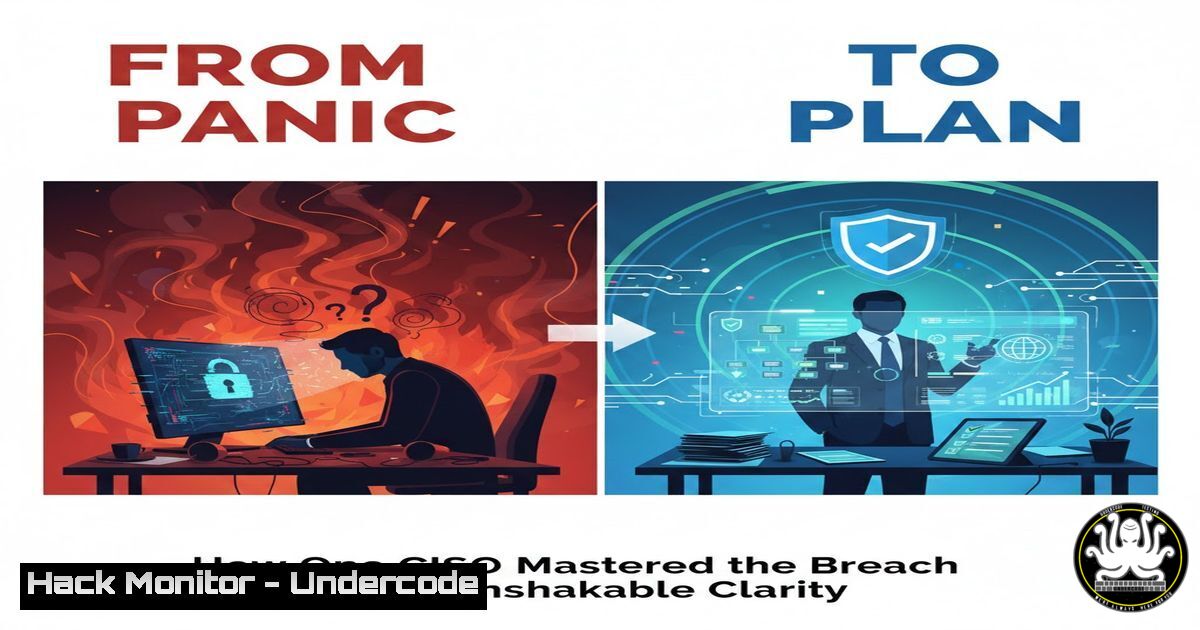
In the chaotic aftermath of a security incident, leadership is often defined not by the tools deployed, but by the clarity of communication and the precision of the response. This analysis deconstructs the legendary CISO’s approach, translating her calm demeanor into a concrete, actionable incident response playbook that transforms fear into focused action and rebuilds stakeholder trust from the ground up.
Learning Objectives:
- Master the immediate forensic and communication steps to identify root cause and contain a breach.
- Develop a clear, jargon-free communication strategy for executive leadership and the board.
- Implement proactive hardening measures across identity, logging, and cloud environments to prevent future incidents.
You Should Know:
- Instantaneous Root Cause Analysis: Cutting Through the Noise
The ability to pinpoint a breach’s origin within seconds, as described, relies on pre-established forensic readiness and centralized logging. This isn’t magic; it’s the result of having the right data at your fingertips and knowing how to query it.
Step‑by‑step guide explaining what this does and how to use it.
Step 1: Centralize Your Logs. Ensure all critical systems (cloud, on-prem, identity) feed into a Security Information and Event Management (SIEM) system.
Step 2: Craft High-Fidelity Queries. The “root cause in seconds” implies pre-built queries for common attack patterns. For a suspected compromised account, you would immediately run searches for:
Cloud (AWS CLI): `aws cloudtrail lookup-events –lookup-attributes AttributeKey=Username,AttributeValue=
Windows (PowerShell): `Get-WinEvent -FilterHashtable @{LogName=’Security’; ID=4625,4624; StartTime=(Get-Date).AddHours(-1)} | Where-Object {$_.Properties[bash].Value -eq ‘
Linux: `journalctl _COMM=sshd | grep “Failed password for
Step 3: Isolate the Incident. Once the malicious IP or user session is identified, immediately block it at the network level or revoke the session.
2. The Art of Jargon-Free Board Communication
Technical details paralyze a boardroom. The CISO’s success lay in translating technical risk into business impact. This requires a pre-defined template for crisis communication.
Step‑by‑step guide explaining what this does and how to use it.
Step 1: The One-Sentence Summary. Start with the absolute essentials. “We have contained an attempted unauthorized access via a compromised user account, and no critical financial or customer data was accessed.”
Step 2: Business Impact, Not Technical Details. Avoid CVEs and attack vectors. Instead, state: “The impact was limited to a non-production development environment, causing no service disruption. Our maximum potential financial exposure is estimated at [bash].”
Step 3: The Clear Path Forward. Map the next 72 hours. “Our immediate next steps are: 1) Complete forensic analysis by EOD, 2) Force password resets for affected users, 3) Provide a full report to the audit committee by 10 AM tomorrow.”
- Fortifying Your First Line of Defense: Mandatory MFA
The comments correctly highlight that “attackers don’t break in; they log in.” Multi-Factor Authentication (MFA) is the single most effective control against credential-based attacks. Enforcing it is non-negotiable.
Step‑by‑step guide explaining what this does and how to use it.
Step 1: Audit MFA Status.
Microsoft 365 (PowerShell): `Get-MsolUser -All | Select-Object DisplayName, StrongAuthenticationRequirements, StrongAuthenticationMethods`
AWS CLI: Use IAM policies to mandate MFA for CLI and console access.
Step 2: Implement Conditional Access Policies. In Azure AD, create policies that require MFA for access from outside the corporate network, for admin roles, or for sensitive applications.
Step 3: Phish-Resistant MFA. Move beyond SMS. Enforce the use of authenticator apps (Microsoft Authenticator, Google Authenticator) or FIDO2 security keys for higher-privilege accounts.
- Proactive Threat Hunting: Never Ignore a New Device Alert
As the CISO noted, a new device alert is often the first signal of a breach. Proactive hunting for these anomalies is crucial.
Step‑by‑step guide explaining what this does and how to use it.
Step 1: Enable Device Logging. Ensure your endpoint detection and response (EDR) tools and cloud identity providers are configured to log new device registrations and first-time logins.
Step 2: Build Alerting Rules. Create alerts in your SIEM for:
A user account logging in from a new device AND a new geographical location within a short time window.
A user account accessing the network from two geographically impossible locations in a short period.
Step 3: Automate Response. Use a SOAR platform to automatically trigger a password reset and temporarily disable the account until the user can verify the activity.
- Cloud Security Hardening: Locking Down Identity and Access
The majority of modern breaches involve cloud misconfigurations, particularly in identity and access management (IAM).
Step‑by‑step guide explaining what this does and how to use it.
Step 1: Enforce the Principle of Least Privilege. Regularly audit and revoke excessive permissions.
AWS CLI to list user policies: `aws iam list-attached-user-policies –user-name
Azure PowerShell to get user roles: `Get-AzureADUserMembership -ObjectId
Step 2: Rotate Access Keys. Mandate regular rotation of all cloud access keys.
AWS CLI: `aws iam create-access-key –user-name
Step 3: Enable Guardrails. Use AWS GuardDuty or Microsoft Defender for Cloud to continuously monitor for suspicious API activity and IAM anomalies.
6. Building Security Habits Over One-Off Tools
The CISO’s comment that “security is about habits” points to a cultural shift. This involves embedding security into daily workflows.
Step‑by‑step guide explaining what this does and how to use it.
Step 1: Implement Just-In-Time Training. Use the incident as a training moment. Send a short, focused email explaining the attack vector and the one thing employees must do (e.g., “If you get a new device alert, report it immediately”).
Step 2: Gamify Security. Create leaderboards for departments that enable MFA fastest or report the most simulated phishing emails.
Step 3: Automate Security Scans. Integrate static/dynamic application security testing (SAST/DAST) into the CI/CD pipeline so that finding vulnerabilities becomes a habit of the development process, not a separate security task.
What Undercode Say:
- Clarity is Your Most Powerful Tool in a Crisis. A well-prepared, simple narrative is more valuable than the most advanced EDR tool when communicating with non-technical stakeholders. It stops the spread of misinformation and aligns the entire organization on a path to resolution.
- Proactive Hardening Turns Panic into Procedure. The “calm” exhibited is a direct result of having rehearsed these scenarios and pre-hardened the environment. MFA, centralized logging, and clear runbooks are not just technical controls; they are the foundation of composed leadership during a storm.
The post underscores a critical evolution in the CISO role: from a technical implementer to a strategic communicator and leader. The technical actions—root cause analysis, MFA enforcement, log auditing—are merely the prerequisites. The true value is synthesized in the ability to translate those actions into a story of control, competence, and strategic foresight. This builds a trust that is resilient long after the immediate threat has passed.
Prediction:
The demonstrated approach will become the benchmark for cybersecurity leadership, accelerating the integration of AI-driven forensic tools that provide near-instant root cause analysis. Furthermore, we will see a surge in board-level demand for “clarity metrics” and crisis simulation drills, making the ability to communicate under pressure as valued a skill as technical expertise. The CISO of the future will be assessed not on their ability to prevent every attack, but on their proven capacity to manage the inevitable one with unambiguous precision.
🎯Let’s Practice For Free:
IT/Security Reporter URL:
Reported By: Inga Stirbytecybersecurityleader – Hackers Feeds
Extra Hub: Undercode MoN
Basic Verification: Pass ✅


