
Listen to this Post
Introduction:
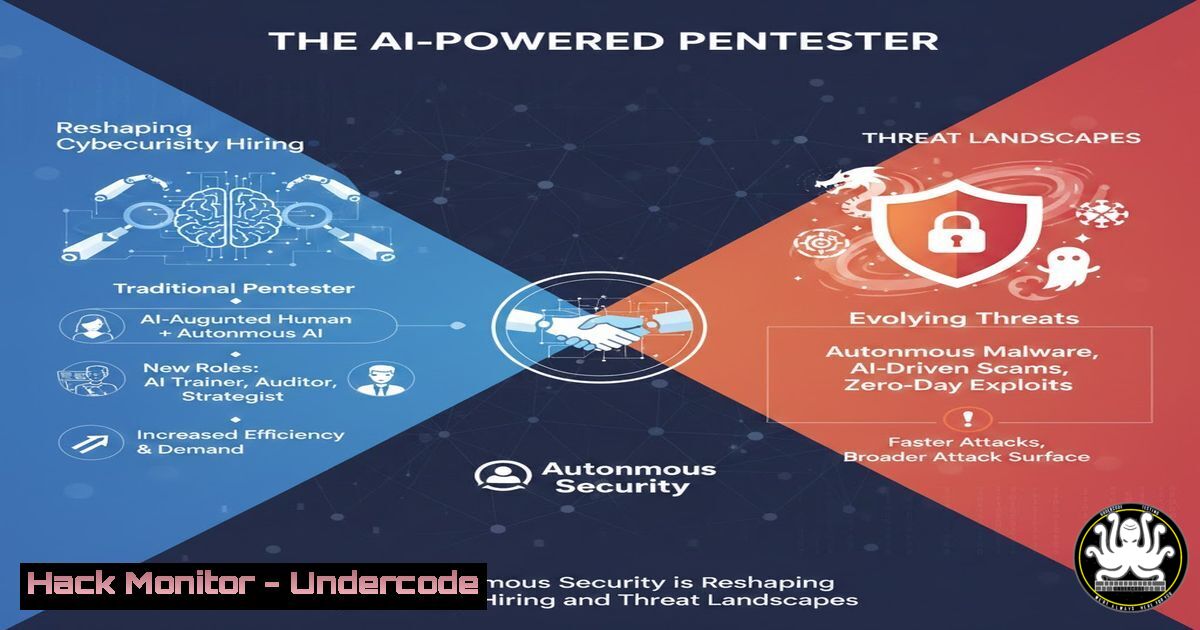
The cybersecurity industry is undergoing a seismic shift with the emergence of autonomous ethical hacking platforms. Companies like Ethiack are leveraging artificial intelligence to blend automated penetration testing with real hacker intelligence, creating a new paradigm for continuous security validation. This evolution is not only changing how organizations defend themselves but also creating demand for a new breed of technical marketers who can communicate these complex advancements effectively.
Learning Objectives:
- Understand the core components and methodology of AI-driven penetration testing platforms
- Learn how to configure and deploy automated security testing in development pipelines
- Master the techniques for validating and responding to AI-generated security findings
You Should Know:
1. The Architecture of Autonomous Pentesting Platforms
Autonomous pentesting platforms represent the convergence of traditional security testing methodologies with machine learning algorithms. These systems typically operate through a multi-layered architecture that combines reconnaissance automation, vulnerability analysis, and exploitation frameworks.
Step-by-step guide explaining what this does and how to use it:
- Reconnaissance Phase: The AI system begins with comprehensive asset discovery using both passive and active techniques.
Passive reconnaissance using built-in tools
ethiack-recon --target example.com --passive --subdomains

Active scanning with rate limiting to avoid detection
ethiack-recon --target example.com --active --threads 5 --delay 2
-
Vulnerability Assessment: Machine learning models analyze gathered data to identify potential vulnerabilities based on pattern recognition and historical exploitation data.
Run AI-driven vulnerability assessment
ethiack-scan --target example.com --intensity full --output json
-
Exploitation Validation: The system attempts controlled exploitation to verify findings without causing actual damage.
Validate SQL injection findings
ethiack-exploit --type sqli --target http://example.com/login --technique boolean-based
2. Integrating AI Security Testing into DevOps Pipelines
The true power of autonomous pentesting emerges when integrated directly into development workflows. This enables continuous security validation rather than periodic assessments.
Step-by-step guide explaining what this does and how to use it:
- CI/CD Integration: Configure your pipeline to trigger security scans on each deployment.
GitHub Actions example</li> </ol> - name: Autonomous Security Scan uses: ethiack/security-scan@v2 with: target: ${{ env.DEPLOYMENT_URL }} api-key: ${{ secrets.ETHIACK_KEY }} fail-on: critical- Pre-production Testing: Implement security gates before production deployment.
Docker container scanning
docker run --rm ethiack/scanner:latest \
--target staging-app:8080 \
--report-format sarif \
--output security-report.sarif
-
Results Analysis and Triage: Configure automated ticket creation for validated vulnerabilities.
Parse results and create JIRA tickets
ethiack-jira-integration --input scan-results.json \
--project SEC \
--component app-security
3. Advanced Web Application Testing Methodologies
Modern autonomous platforms employ sophisticated testing strategies that go beyond traditional vulnerability scanning, incorporating business logic flaw detection and API security testing.
Step-by-step guide explaining what this does and how to use it:
1. API Endpoint Discovery and Testing:
 Discover and test API endpoints
ethiack-api-scan --openapi-file spec.json \
--auth-token $BEARER_TOKEN \
--test-cases all
- Business Logic Testing: Configure custom attack scenarios for application-specific workflows.
Business logic test configuration test_scenarios:</li> </ol> - name: "Price Manipulation" steps: - action: "add_to_cart" parameters: {"item": "premium_product"} - action: "modify_price" parameters: {"new_price": 0.01} validation: "order_total_verification"- Authentication Bypass Testing: Systematic testing of authentication mechanisms.
Test authentication flows
ethiack-auth-test --target http://app.com/login \
--username-list common_users.txt \
--password-list top_passwords.txt \
--technique oauth-bypass
4. Cloud Infrastructure Hardening with AI Insights
Autonomous security platforms extend beyond application testing to include cloud infrastructure assessment and hardening recommendations.
Step-by-step guide explaining what this does and how to use it:
1. Cloud Security Posture Management:
 AWS infrastructure scanning
ethiack-cloud-scan --provider aws \
--regions us-east-1,us-west-2 \
--services ec2,s3,iam \
--compliance frameworks=cis-aws-2.0
2. Kubernetes Security Configuration:
 K8s security scan configuration
apiVersion: security.ethiack.com/v1
kind: ClusterScan
metadata:
name: production-cluster-scan
spec:
clusterContext: "production"
namespaces:
- "default"
- "kube-system"
checks:
- "pod-security-standards"
- "network-policies"
- "secrets-management"
3. Infrastructure as Code Security:
 Terraform security scanning
ethiack-tf-scan --directory ./terraform \
--check-types aws,general,networking \
--output formatted
5. Threat Intelligence and Attack Surface Management
Autonomous systems continuously monitor and analyze global threat intelligence to prioritize testing based on real-world attack patterns.
Step-by-step guide explaining what this does and how to use it:
1. Attack Surface Mapping:
 Comprehensive attack surface discovery
ethiack-asm --domain company.com \
--discover-subdomains \
--port-scan comprehensive \
--technology-detection
2. Threat Intelligence Integration:
 Custom threat intelligence feed integration
from ethiack_sdk import ThreatIntelligence

ti = ThreatIntelligence(api_key=API_KEY)
latest_threats = ti.get_recent_cves(severity='high')
custom_tests = ti.generate_tests_from_threats(latest_threats)
- Risk-based Prioritization: Configure risk scoring algorithms to focus on critical assets.
risk_scoring:
asset_value: </li>
</ol>

- financial_data: 10
- customer_data: 9
- internal_tools: 4
exploit_likelihood:
- public_exploit_available: 8
- complex_attack_required: 2
6. Incident Response and Forensic Readiness
AI-driven platforms enhance incident response capabilities through automated evidence collection and attack pattern analysis.
Step-by-step guide explaining what this does and how to use it:
1. Automated Evidence Collection:
 Incident response data collection
ethiack-ir-collect --host compromised-server \
--collect-memory \
--collect-logs \
--collect-network-connections
2. Attack Chain Reconstruction:
 Reconstruct attack sequence
ethiack-attack-reconstruct --incident-id INC-2024-001 \
--timeline-start "2024-01-15T00:00:00Z" \
--output-format attack-tree
3. Countermeasure Deployment:
 Deploy automated countermeasures
ethiack-countermeasures --attack-pattern "sql-injection" \
--action "deploy-waf-rule" \
--rule-type "sql-injection-blocking"
7. Security Metrics and Executive Reporting
Transforming technical findings into business-oriented metrics is crucial for communicating security posture to stakeholders.
Step-by-step guide explaining what this does and how to use it:
1. Dashboard Configuration:
 Generate executive dashboard
ethiack-dashboard --period last-quarter \
--metrics mttd,mttr,risk-trends \
--format executive-brief
2. Compliance Reporting:
 Generate compliance reports
ethiack-compliance --framework soc2,pci-dss,iso27001 \
--evidence-collection automated \
--output-dir ./compliance-reports
3. Risk Quantification:
 Calculate financial risk exposure
ethiack-risk-quantification --scenario data-breach \
--impact-analysis financial,reputational \
--output-format business-case
What Undercode Say:
- The emergence of autonomous pentesting platforms represents the most significant shift in cybersecurity since the advent of cloud computing, fundamentally changing how organizations approach continuous security validation.
- Success in this new paradigm requires technical marketers who can bridge the gap between complex AI security concepts and practical business value, making security accessible and actionable for decision-makers.
The rapid advancement of AI in cybersecurity testing is creating a dual-edged sword for the industry. While organizations gain unprecedented capabilities for continuous security validation, they also face the challenge of interpreting and acting on massive volumes of security findings. The demand for technical marketers who can translate these complex capabilities into compelling business narratives highlights the maturation of cybersecurity from a purely technical discipline to a strategic business function. Companies that successfully bridge this communication gap will not only sell more effectively but will also drive better security outcomes through clearer understanding and prioritization.
Prediction:
Within three years, AI-powered autonomous pentesting will become the standard for continuous security validation, rendering traditional point-in-time penetration testing obsolete for all but the most specialized use cases. This shift will create a new cybersecurity economy where human expertise focuses on strategic risk management and complex attack simulation, while AI handles routine testing and vulnerability discovery. The marketing professionals who master communicating these capabilities today will become the industry leaders tomorrow, shaping how organizations perceive and invest in cybersecurity innovation.
🎯Let’s Practice For Free:
IT/Security Reporter URL:
Reported By: Jb Monteiro – Hackers Feeds
Extra Hub: Undercode MoN
Basic Verification: Pass ✅🔐JOIN OUR CYBER WORLD [ CVE News • HackMonitor • UndercodeNews ]
📢 Follow UndercodeTesting & Stay Tuned:
- Authentication Bypass Testing: Systematic testing of authentication mechanisms.
- Pre-production Testing: Implement security gates before production deployment.


