Listen to this Post
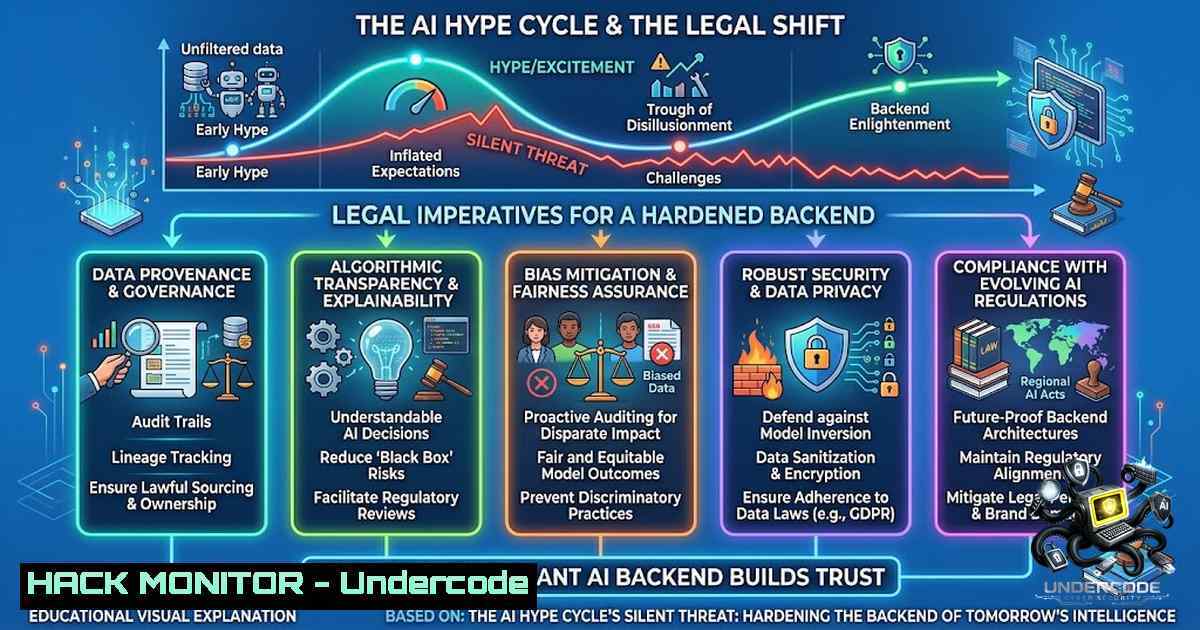
Introduction:
As the tech industry becomes saturated with speculative AI forecasts and rapid-growth marketing courses, a critical operational reality often gets sidelined: the integrity and security of the underlying infrastructure that powers these advanced models. The current “gold rush” mentality fosters rapid deployment, frequently bypassing rigorous security hardening, leaving APIs, cloud instances, and training pipelines exposed to sophisticated supply chain attacks and data leaks. This article bridges the gap between theoretical AI capability and practical, enforceable cybersecurity hygiene, focusing on the concrete steps necessary to secure the machine learning ecosystem before it collapses under the weight of its own vulnerabilities.
Learning Objectives:
- Understand the primary attack vectors targeting AI/ML production environments, including model poisoning and API key exposure.
- Master essential Linux and Windows security commands for auditing system integrity and network configurations.
- Implement a robust secrets management workflow and ingress filtering strategy to mitigate prompt injection and data exfiltration risks.
- Develop a cloud-hardening checklist specifically tailored to GPU-accelerated instances and inference endpoints.
You Should Know:
- Securing the Machine Learning Pipeline: A Host-Level Audit
The foundation of a secure AI stack is a clean operating system. Most data science workloads run on Linux (Ubuntu/CentOS) or Windows Server with WSL2. Before deploying any framework, such as PyTorch or TensorFlow, system administrators must ensure that unnecessary services are disabled and that the kernel is patched against recent vulnerabilities like Dirty Pipe or Spectre variants.
On Linux, to audit listening ports and prevent unauthorized external access to Jupyter or MLflow dashboards, use the following command:
sudo ss -tulpn | grep LISTEN
If you identify an unintended service (e.g., a testing server bound to 0.0.0.0), kill the associated PID or reconfigure the service to bind only to `localhost` for development. For Windows environments, utilize `netstat` and the `Stop-Service` cmdlet to restrict exposed ports:
netstat -ano | findstr :5000
taskkill /PID [bash] /F
Additionally, verify file integrity to detect tampered dependencies:
sudo aide --init && sudo mv /var/lib/aide/aide.db.new.gz /var/lib/aide/aide.db.gz
- Network Hardening: Zero Trust for the Inference Endpoint
With the rise of Large Language Models (LLMs) being accessed via REST APIs, the perimeter has vanished. The current threat landscape emphasizes the abuse of exposed `/v1/chat/completions` endpoints. The initial step is to deploy an API gateway (e.g., Kong or Traefik) that acts as a reverse proxy, terminating TLS and enforcing strict rate limiting.
Step-by-step implementation for ingress protection:
- Step 1: Configure the firewall using `iptables` or `nftables` to restrict access to the inference port (e.g., 443) solely from the Cloudflare IP ranges or your corporate VPN.
- Step 2: Implement header validation. For NGINX, add the following to reject requests without a specific custom header (acting as a pre-shared key):
if ($http_x_api_version != "v2") { return 403; } - Step 3: On Windows Server, utilize the `New-1etFirewallRule` PowerShell command to block high-risk outbound connections from the training containers if a breach is suspected. This prevents the “callback” behavior commonly seen in malware embedded within model weights.
3. Secrets Management: Moving Beyond `.env` Files
Storing OpenAI or Azure keys in a `.env` file is equivalent to leaving the vault door open. A single misconfigured `.gitignore` can expose billions of tokens to public scrapers. The cybersecurity remedy is the integration of a HashiCorp Vault or Azure Key Vault.
To retrieve secrets dynamically in a Python script and reduce the risk of static exposure, execute the following Vault CLI command and bind it to your container’s entrypoint:
export OPENAI_API_KEY=$(vault kv get -field=key secret/ai/credentials)
Furthermore, scan your repository history for inadvertent leaks using trufflehog:
trufflehog git file://. --only-verified
For administrators, enforce “Just-in-Time” (JIT) permissions where the secret is valid for only 60 minutes. On Windows, use `Register-ObjectEvent` to trigger a key rotation script based on a scheduled timer, ensuring the lifecycle of credentials is minimal.
4. Data Sanitization and Anti-Poisoning Measures
Data poisoning is a primary concern where attackers inject malicious samples into the training set. Security teams must implement validation layers on the data ingestion pipeline. This involves scanning uploaded Parquet or CSV files for command injection strings that might exploit the Pandas library.
If the training data is accessible via a public S3 bucket, first check the bucket policy:
aws s3api get-bucket-policy --bucket training-data-bucket
If you detect "Principal": "", immediate remediation is required. Transition to pre-signed URLs with expiration times. On the client side (Linux or Windows), verify the SHA-256 checksum of downloaded datasets to prevent man-in-the-middle (MITM) attacks altering the binaries:
sha256sum dataset.parquet
- Vulnerability Exploitation and Mitigation: The GPU Driver Layer
Often overlooked, the NVIDIA GPU driver and the Container Toolkit have exposed vulnerabilities (e.g., CVE-2022-31676) allowing container escapes. A malicious actor leveraging a crafted model file could execute code on the host.
To mitigate this:
- Step 1: Update the driver immediately:
- Linux: `sudo apt-get install nvidia-driver-525` (or latest stable).
- Windows: Use the NVIDIA GeForce Experience or download the enterprise driver.
- Step 2: Restrict the container’s capabilities using Docker:
docker run --cap-drop=ALL --cap-add=IPC_LOCK --security-opt=no-1ew-privileges:true gpu-image
This prevents `ptrace` attacks and limits the container’s access to system resources, reducing the blast radius of a compromised ML model.
6. Monitoring and Anomaly Detection
Post-hardening, continuous monitoring is non-1egotiable. For AI workloads, log the prompt tokens and the corresponding output lengths; sudden spikes in consumption often indicate a denial-of-service (DoS) attack or prompt injection attempts. Deploy Falco or Sysdig to monitor runtime behavior.
Example Falco rule to detect shell spawning within a model-serving container:
- rule: Shell spawned in ML container
desc: Detection of shell process within inference engines
condition: container.image.repository contains "inference" and proc.name = bash
output: "Shell spawned in ML container (user=%user.name command=%proc.cmdline)"
priority: CRITICAL
What Undercode Say:
- Key Takeaway 1: The efficiency of AI deployment is inversely proportional to the security overhead; the industry must treat security debt as a business risk, not a technical inconvenience. The temporary speed of development often becomes the permanent speed of disaster recovery.
- Key Takeaway 2: Automation is the only viable defense against the scale of modern AI threats. Manual audits of dependencies and access keys are insufficient; organizations must adopt Infrastructure as Code (IaC) with built-in security policy validators (e.g., Checkov or Terrascan).
- Analysis: The “AI hype cycle” referenced in the source material serves as a warning against complacency. While organizations rush to monetize generative AI, the foundational security teams are often underfunded or excluded from “agile” sprints. This creates a massive attack surface where the adversary isn’t just stealing data—they are corrupting the intelligence itself. The introduction of “shadow AI” (unsanctioned models) further complicates the perimeter. Moving forward, security will transform from a compliance gatekeeper to a performance enabler; secure models are the only models that will survive regulatory scrutiny. The next major breach will not be a database dump but a “mind dump,” where the private prompts and reasoning chains of a large corporation are exposed, leading to strategic disadvantage. Hence, the focus must shift from preventing the leak of the model weights (which is difficult) to preventing the leakage of the context window data, which often contains higher-fidelity business secrets.
Prediction:
- -1: The lag between AI development velocity and security tooling maturity will inevitably lead to a catastrophic, high-profile data breach involving a Fortune 500 company’s proprietary AI models within the next 12 months, causing significant stock devaluation.
- -1: We will witness a rise in “model jailbreak-as-a-service” attacks, where automated tools bypass safety filters, leading to a regulatory crackdown that stifles open-source AI development.
- +1: This security crisis will catalyze the creation of a new cybersecurity sub-industry specifically focused on “LLM Forensics” and “Prompt Anti-Tampering,” driving significant investment and technological innovation.
- +1: The standardization of secure API gateways and JWT authentication for endpoints will eventually mature, allowing for safer, more widespread adoption of AI in healthcare and finance, where trust is paramount.
▶️ Related Video (84% Match):
🎯Let’s Practice For Free:
🎓 Live Courses & Certifications:
Join Undercode Academy for Verified Certifications
🚀 Request a Custom Project:
Secure, high-velocity infrastructure and disruptive technological engineering. Contact our engineering team for high-tier development and proprietary systems:
[email protected]
💎 Smart Architecture | 🛡️ Secure by Design | ⭐ Trusted by Thousands
IT/Security Reporter URL:
Reported By: https://lnkd.in/p/ede2_AHp – Hackers Feeds
Extra Hub: Undercode MoN
Basic Verification: Pass ✅


