Listen to this Post
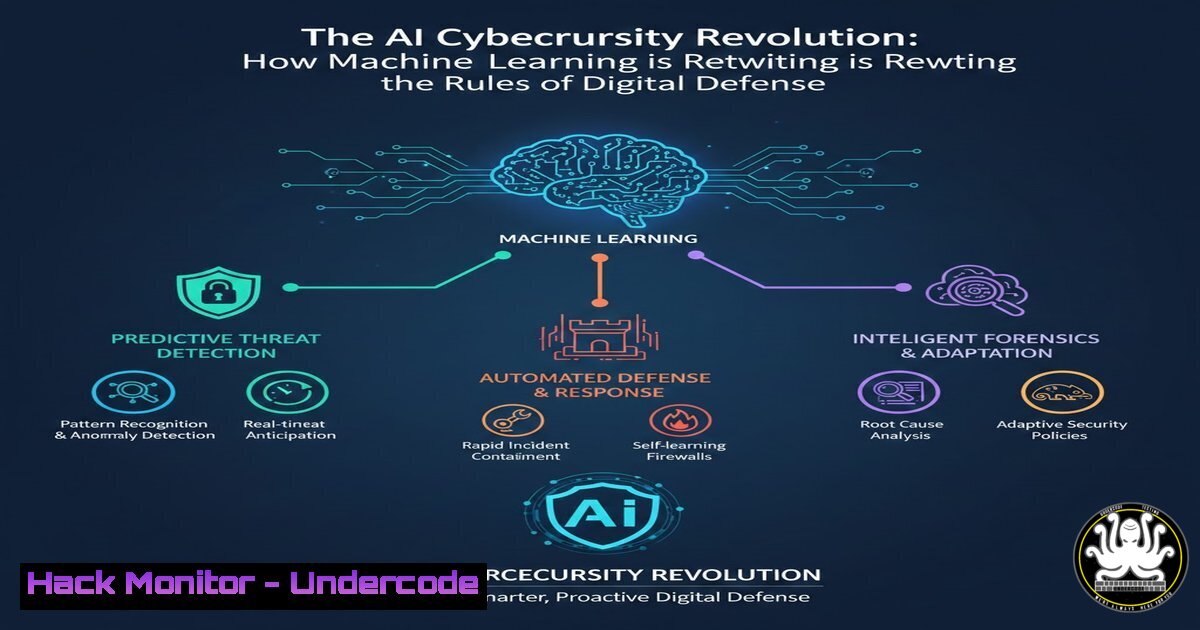
Introduction:
The cybersecurity paradigm is undergoing a fundamental shift, moving beyond traditional perimeter defenses like firewalls into a new era of predictive, intelligent protection. Artificial Intelligence is now a frontline defender, capable of not only automating threat detection but also anticipating attacks before they are launched. This evolution transforms security from a reactive discipline into a proactive strategic function.
Learning Objectives:
- Understand the core mechanisms of AI in cybersecurity, including pattern recognition and predictive analytics.
- Learn to implement practical AI-driven security tools and commands for both Linux and Windows environments.
- Develop a strategy for integrating AI insights with human expertise to create a robust security posture.
You Should Know:
1. AI-Powered Anomaly Detection in Network Traffic
Modern AI security tools don’t just look for known malware signatures; they establish a behavioral baseline for your network and flag significant deviations. This is crucial for identifying zero-day attacks and sophisticated, low-and-slow intrusions that bypass traditional defenses.
Step‑by‑step guide explaining what this does and how to use it.
Concept: Tools like Zeek (formerly Bro) or Suricata with ML plugins analyze network metadata (packet size, frequency, destination) to learn “normal” behavior. AI models then flag statistical outliers that could indicate data exfiltration, C2 communication, or internal reconnaissance.
Implementation with Zeek on Linux:
1. `sudo apt-get install zeek` (on Debian/Ubuntu)
- Navigate to your Zeek node configuration: `cd /opt/zeek/etc/`
3. Review the `node.cfg` file to ensure the worker node is active. - Zeek will begin logging connection data to
/opt/zeek/logs/current/conn.log. - You can pipe this log data to a Python script using a simple ML model (like Isolation Forest from Scikit-learn) to score each connection for anomaly. A high anomaly score triggers an alert.
2. Automated Threat Intelligence with AI Analysis
The volume of global threat intelligence feeds is overwhelming for human analysts. AI can ingest, correlate, and prioritize this data, connecting disparate indicators of compromise (IoCs) to reveal coordinated campaigns.
Step‑by‑step guide explaining what this does and how to use it.
Concept: Platforms like MISP (Malware Information Sharing Platform) can be enhanced with AI to automatically tag and link incoming threats. An AI model can cluster IoCs by tactics, techniques, and procedures (TTPs), identifying if a new IP address is part of a known threat actor’s infrastructure.
Implementation:
- Deploy a MISP instance: `docker run -it –name misp -p 80:80 -p 443:443 harvarditsecurity/misp`
2. Once running, you can use its REST API to feed in new IoCs. - A Python script can periodically call the API, fetch new events, and use a clustering algorithm (like DBSCAN) to group them based on textual similarity in their descriptions or overlapping attributes.
-
Endpoint Detection and Response (EDR) Supercharged with AI
Next-generation EDR solutions use AI to analyze process behavior on endpoints (servers, workstations) in real-time. They can detect malicious sequences of actions, such as a PowerShell script making a suspicious network connection, which are hallmarks of living-off-the-land attacks.
Step‑by‑step guide explaining what this does and how to use it.
Concept: Instead of just matching file hashes, AI models analyze the behavioral chain of events—process creation, file writes, registry modifications, and network calls—to identify malicious intent.
Windows Command Example (Manual Investigation):
To investigate process activity manually, you can use PowerShell: `Get-WinEvent -FilterHashtable @{LogName=’Security’; ID=4688} | Where-Object {$_.Properties[bash].Value -like “powershell”} | Format-List`
This command fetches Security log events for process creation (Event ID 4688) involving PowerShell, which is a common tool for attackers.
4. Hardening Cloud APIs with AI-Driven Security
Cloud environments are API-driven, making them a prime target. AI can monitor API traffic for abnormal usage patterns that suggest credential stuffing, data scraping, or logic abuse.
Step‑by‑step guide explaining what this does and how to use it.
Concept: Deploy an AI-powered Web Application Firewall (WAF) that learns the normal structure and sequence of API calls for your application. It can then block requests that deviate from this pattern, even if they don’t contain a known malicious payload.
Implementation with AWS WAF & Lambda:
1. Enable full logging for your AWS WAF.
- Configure an AWS Lambda function to be triggered by new logs in CloudWatch.
- The Lambda function, written in Python, can analyze the `COUNT` of requests per IP per endpoint. Using a simple threshold model, it can dynamically add offending IPs to a block list in AWS WAF if they exceed a learned baseline.
5. The Human Firewall: Augmenting Analyst Decision-Making
The most critical application of AI is not replacement, but augmentation. AI handles the data-heavy lifting, presenting human analysts with prioritized alerts and context-rich evidence, allowing them to focus on strategic response and complex threat hunting.
Step‑by‑step guide explaining what this does and how to use it.
Concept: A Security Orchestration, Automation, and Response (SOAR) platform uses AI to correlate alerts from your EDR, network monitors, and cloud services. It automatically enriches alerts with threat intelligence and can even execute pre-defined playbooks for containment.
Workflow:
- An alert from your AI-powered EDR is triggered for a suspicious process.
- The SOAR platform (e.g., TheHive, Splunk SOAR) automatically receives the alert.
- It enriches the event by querying VirusTotal for the process hash and checking the source IP against a threat feed.
- Based on a high confidence score from the AI and the enrichment data, the SOAR automatically isolates the affected endpoint from the network and creates a high-priority ticket for the security team with all the context.
What Undercode Say:
- AI is a Force Multiplier, Not a Silver Bullet. Its greatest value is in scaling human expertise and intuition, not operating in a vacuum. The most effective security teams will be those that learn to trust and interpret AI-generated insights.
- Data Quality is Non-Negotiable. An AI model is only as good as the data it’s trained on. Feeding it noisy, uncurated, or biased data will produce unreliable and potentially dangerous results, creating a false sense of security.
The transition to AI-driven cybersecurity is inevitable. While the post correctly identifies the shift from passive to active defense, the real challenge lies in the implementation gap. Many organizations are collecting the necessary data but lack the in-house expertise to build or even effectively manage off-the-shelf AI security tools. Furthermore, adversaries are already developing AI-powered offensive tools, setting the stage for an AI-versus-AI battleground. The key to success will be a cultural shift where security professionals view AI as a junior analyst that never sleeps—one that requires continuous training (with quality data) and, most importantly, expert oversight to validate its findings and guide its evolution.
Prediction:
In the next 3-5 years, AI will become the foundational layer of all enterprise cybersecurity, making manual, signature-based defense entirely obsolete. We will see the rise of Autonomous Security Operations Centers (ASOCs) that can self-heal and adapt in real-time. However, this will simultaneously give rise to hyper-personalized, AI-generated malware and social engineering attacks, leading to an accelerated, automated cyber arms race. The organizations that thrive will be those that invested early in building integrated human-AI security teams.
🎯Let’s Practice For Free:
IT/Security Reporter URL:
Reported By: Mathisdupin Cybersecuritystrategy – Hackers Feeds
Extra Hub: Undercode MoN
Basic Verification: Pass ✅


