Listen to this Post
Introduction:
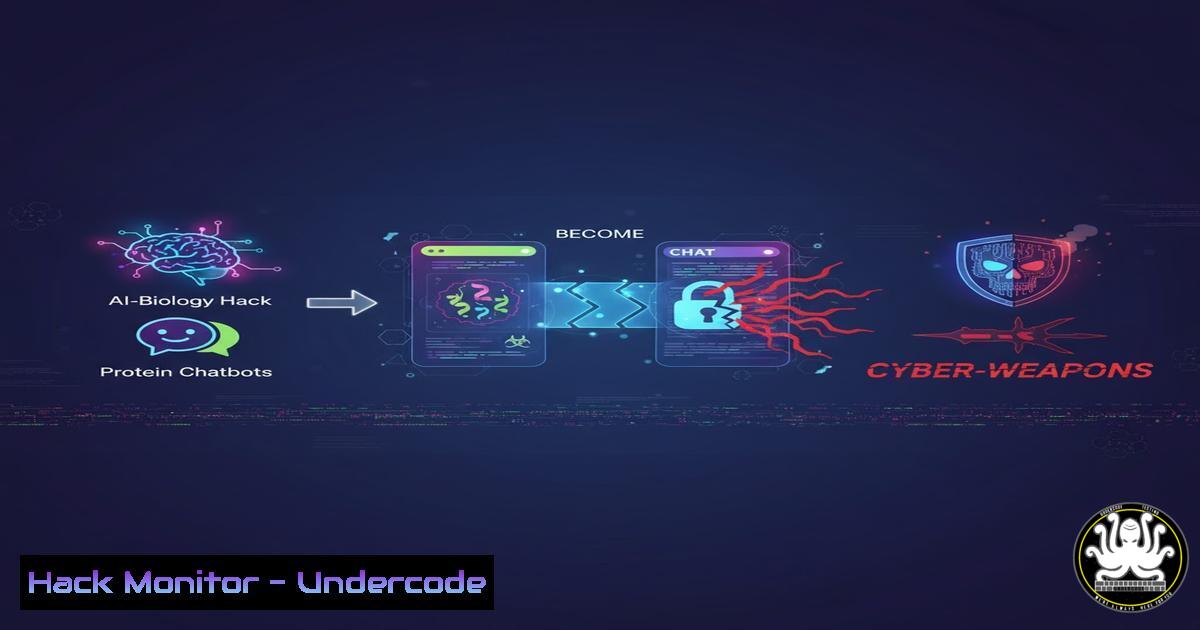
The convergence of artificial intelligence and biology is poised to revolutionize medicine, but it simultaneously creates a new, unprecedented attack surface. As Nvidia’s Jensen Huang envisions a future where scientists “talk to proteins,” we must confront the cybersecurity implications of turning biological data into an interactive, queryable system. This shift from static analysis to dynamic simulation opens a frontier for digital threats with physical consequences.
Learning Objectives:
- Understand the novel cyber-biological attack vectors created by AI-driven protein interaction models.
- Learn to secure AI APIs and data pipelines handling sensitive biological information.
- Develop mitigation strategies for potential weaponization of predictive biological AI.
You Should Know:
1. The Data Poisoning Vector in Biological AI
The foundational models that allow AI to “understand” and “query” proteins are trained on massive datasets of biological information. Corrupting this training data represents a primary attack vector.
Step‑by‑step guide explaining what this does and how to use it.
The Threat: An adversary injects maliciously altered protein folding data or reaction profiles into the training corpus. This could cause the AI to mispredict how a protein interacts with a specific chemical, leading to the design of ineffective or toxic drugs.
Step-by-Step Mitigation:
- Implement Data Provenance Tracking: Use cryptographic hashing to verify the integrity of all training data.
Linux Command: `sha256sum training_dataset.json > dataset_checksum.orig`
Verification: Before training, re-run `sha256sum training_dataset.json` and compare it to dataset_checksum.orig.
2. Employ Anomaly Detection: Train a secondary AI model to identify outliers and potential poison samples within your training data before the primary model ingests it.
3. Use Secure Data Pipelines: Ensure data transfer from sources like the Protein Data Bank (PDB) occurs over encrypted channels and is validated at every step.
2. Exploiting The “Query API” for Malicious Simulation
The interface through which scientists “ask questions” is a high-value target. An unsecured API could be used to run unauthorized simulations.
Step‑by‑step guide explaining what this does and how to use it.
The Threat: An attacker gains access to the AI’s query API and uses it to simulate the interaction of a known toxin with human proteins, rapidly identifying new methods of weaponization that would have taken years in a physical lab.
Step-by-Step Mitigation:
- Implement Strict API Authentication & Rate Limiting: Use OAuth 2.0 and API keys. Limit the number of queries per user to prevent mass-scale abusive simulation.
Conceptual Code Snippet (Python/Flask):
from flask_limiter import Limiter
from flask_limiter.util import get_remote_address

limiter = Limiter(app, key_func=get_remote_address)
@app.route('/api/query-protein', methods=['POST'])
@limiter.limit("100/day;10/minute")  Strict rate limiting
@auth.login_required  Requires authentication
def query_protein():
 Process query
2. Sanitize and Validate Input Queries: Treat all biological query input as untrusted. Use allow-lists for acceptable characters and parameters to prevent injection attacks.
3. Maintain a Detailed Audit Log: Log all queries, user IDs, timestamps, and results for forensic analysis in case of a breach.
3. Model Inversion and Intellectual Property Theft
The AI model itself is a crown jewel, encapsulating proprietary research and insights into biological structures.
Step‑by‑step guide explaining what this does and how to use it.
The Threat: A competitor uses model inversion attacks—feeding the AI millions of cleverly crafted queries—to reverse-engineer the model’s weights and internal logic, effectively stealing the proprietary research that went into its creation.
Step-by-Step Mitigation:
- Restrict Model Access: Do not host the primary model on a publicly accessible endpoint. Use a tiered access system where only vetted, internal applications can access the full model.
- Implement Model Watermarking: Embed unique, identifiable signatures within the model’s parameters to prove ownership if it is stolen.
- Monitor for Abnormal Query Patterns: Deploy security tools that detect the massive, systematic querying characteristic of a model inversion attack and automatically trigger alerts and block the source IP.
4. Hardening the Underlying Cloud and HPC Infrastructure
The computational power needed for these simulations runs on High-Performance Computing (HPC) clusters, often in the cloud.
Step‑by‑step guide explaining what this does and how to use it.
The Threat: Attackers target the underlying Kubernetes clusters or cloud VMs running the simulations to hijack compute resources for crypto-mining or to disrupt critical research.
Step-by-Step Mitigation:
- Harden Kubernetes Pods: Configure pods to run with the least privileges necessary.
Kubernetes Command: In your pod spec, setsecurityContext:securityContext: runAsNonRoot: true runAsUser: 1000 allowPrivilegeEscalation: false capabilities: drop:</li> </ol> - ALL
2. Use Cloud Security Posture Management (CSPM) Tools: Continuously scan your cloud environment for misconfigurations, such as storage buckets containing sensitive biological data being set to public access.
3. Segment the HPC Network: Isolate the high-performance compute nodes from the general corporate network to limit the blast radius of a potential breach.5. The “Biological Ransomware” Scenario
As drug discovery becomes reliant on these AI systems, they become a lucrative target for ransomware groups.
Step‑by‑step guide explaining what this does and how to use it.
The Threat: Ransomware encrypts not just corporate files but the unique AI models, training datasets, and years of simulation results, halting a multi-billion dollar drug development program.Step-by-Step Mitigation:
- Enforce the 3-2-1 Backup Rule: Maintain 3 copies of data, on 2 different media, with 1 copy offline or off-site.
- Practice Immutable Backups: Configure backup systems so that data cannot be altered or deleted for a specified period, even by admins.
- Develop and Test an Incident Response Plan: Have a clear, practiced plan for isolating infected systems, restoring from clean backups, and communicating with stakeholders. Regularly run tabletop exercises simulating this exact scenario.
What Undercode Say:
- The paradigm shift from wet-lab experimentation to digital simulation creates a cyber-physical kill chain, where a digital breach can directly cause physical harm.
- The primary defense is not just stronger walls, but robust data integrity and provenance, as poisoned data creates a corrupted reality that the AI will faithfully and dangerously obey.
The optimism surrounding AI in biology is warranted, but the security community is dangerously behind the curve. We are preparing for yesterday’s threats while tomorrow’s are being coded in Python and run on GPU clusters. The ability to simulate biological warfare in silico, without the need for a physical lab, presents a catastrophic risk. The core vulnerability is one of trust—trust in data, trust in models, and trust in simulations. Securing this new frontier requires a fundamental rethinking of cybersecurity, moving beyond protecting financial data to safeguarding the very building blocks of life. Failing to build security into the foundation of this bio-digital convergence is a gamble with existential stakes.
Prediction:
Within the next 3-5 years, we will witness the first publicly disclosed cyber-attack that successfully manipulates an AI-driven biological simulation, leading to significant financial loss for a pharmaceutical company or a major research institution. This will trigger a regulatory explosion, forcing the creation of new “Bio-Cyber” security frameworks and compliance standards. Nation-state actors will increasingly invest in the capability to probe and potentially compromise the bio-AI infrastructure of rival nations, making this a central pillar of future geopolitical conflict and biological security.
🎯Let’s Practice For Free:
IT/Security Reporter URL:
Reported By: Activity 7396298563225374720 – Hackers Feeds
Extra Hub: Undercode MoN
Basic Verification: Pass ✅🔐JOIN OUR CYBER WORLD [ CVE News • HackMonitor • UndercodeNews ]
📢 Follow UndercodeTesting & Stay Tuned:


