Listen to this Post
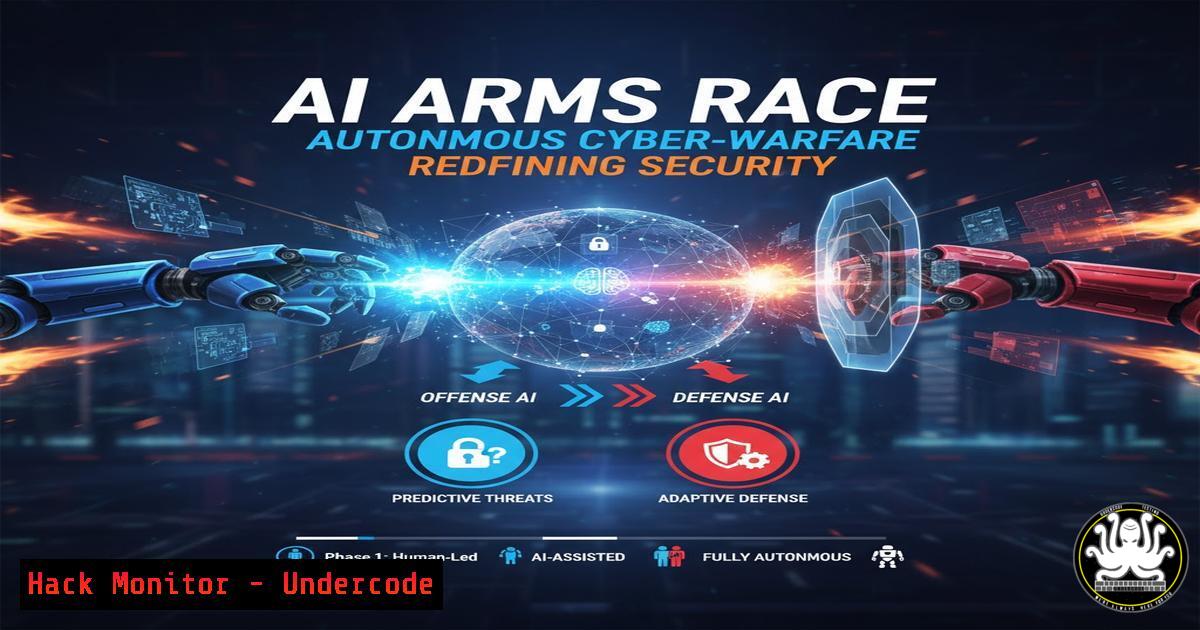
Introduction:
The integration of Artificial Intelligence into offensive cyber operations is no longer a theoretical threat but an emerging reality. Security Operations Centers (SOCs) are now facing a paradigm shift where AI-powered tools can execute attacks at machine speed and scale, forcing a fundamental re-evaluation of traditional defense strategies. This new era, where AI may eventually fight AI, demands proactive adaptation to prevent humans from becoming mere spectators in their own digital battlespace.
Learning Objectives:
- Understand the specific capabilities AI brings to cyber-attacks, including automated reconnaissance, social engineering, and vulnerability exploitation.
- Learn the critical steps to modernize a SOC, integrating AI-driven defensive tools and upskilling analysts for high-level threat hunting.
- Develop a strategic outlook on the future of autonomous cyber-conflict and the enduring role of human oversight.
You Should Know:
1. The Anatomy of an AI-Powered Cyber-Attack
The first documented AI-driven cyber-attack, as referenced in the provided link, signifies a leap in threat sophistication. Unlike traditional attacks, AI can automate the entire kill chain. It can use large language models (LLMs) to generate highly convincing phishing emails, perform intelligent reconnaissance to identify target-specific vulnerabilities, and even write functional exploit code.
Step-by-step guide explaining what this does and how to use it.
Step 1: Reconnaissance. An AI tool scrapes public data from LinkedIn, company websites, and code repositories to build a detailed profile of potential targets and their technology stack.
Example OSINT Command (Linux): `theharvester -d target-company.com -l 500 -b google,linkedin` This harvests emails and subdomains associated with the target.
Step 2: Weaponization. Instead of generic malware, an AI generates a polymorphic payload. It can also craft a personalized phishing lure by synthesizing information from the reconnaissance phase.
Step 3: Delivery. The AI automates the sending of these tailored emails or messages, bypassing static content filters that look for known malicious patterns.
Step 4: Exploitation. Upon interaction, the AI-driven system can test multiple exploitation paths against a service until it finds one that works, mimicking a human penetration tester but at a much faster rate.
- Hardening Your Defenses: Integrating AI into the SOC
To counter AI-powered attacks, the SOC must leverage AI itself. This involves deploying tools that use machine learning for behavioral analytics, anomaly detection, and automated incident response.
Step-by-step guide explaining what this does and how to use it.
Step 1: Implement an AI-Powered SIEM. Move beyond signature-based detection. Tools like Splunk ES, IBM QRadar with Watson, or Microsoft Sentinel use UEBA (User and Entity Behavior Analytics) to establish a baseline of normal activity and flag significant deviations.
Step 2: Deploy EDR with AI Capabilities. Next-Generation Endpoint Detection and Response (EDR) platforms use ML models to detect malicious processes and fileless attacks that evade traditional antivirus software.
Example (Conceptual): An EDR tool would flag a `powershell.exe` process that suddenly starts making rare network connections and attempting lateral movement, even if the PowerShell script itself is unique.
Step 3: Automate Response with SOAR. A Security Orchestration, Automation, and Response (SOAR) platform can be programmed to automatically contain threats. For instance, upon receiving a high-confidence alert from the EDR, the SOAR can instantly isolate the infected host from the network.
- The Human Firewall: Upskilling for an AI-Augmented Reality
The role of the human analyst is not diminished but elevated. SOC personnel must transition from reviewing low-level alerts to performing strategic threat hunting, managing AI systems, and interpreting complex findings.
Step-by-step guide explaining what this does and how to use it.
Step 1: Develop Threat Hunting Proficiency. Use the AI-driven tools to pinpoint anomalous activity for deeper investigation.
Example Hunt Hypothesis: “An AI-powered attacker is using a new C2 channel disguised as legitimate cloud traffic.” An analyst would then query logs for unusual patterns in DNS queries or HTTPS traffic to uncategorized domains.
Step 2: Master AI Tool Management. Analysts must learn to train, tune, and validate the ML models in their security tools to reduce false positives and adapt to new tactics.
Step 3: Focus on Strategic Analysis. Humans excel at understanding context, motive, and long-term campaign goals—areas where AI still struggles. The analyst’s role becomes one of strategic oversight and decision-making in the face of AI-generated intelligence.
4. Proactive Measures: Adversarial AI and System Hardening
Understanding how to attack AI systems (Adversarial AI) is key to defending them. Furthermore, classic system hardening becomes even more critical to reduce the attack surface available to automated tools.
Step-by-step guide explaining what this does and how to use it.
Step 1: Harden Key Services. Ensure public-facing services are patched and configured with least-privilege principles.
Example Linux Command (SSH Hardening): In /etc/ssh/sshd_config, set Protocol 2, PermitRootLogin no, and `PasswordAuthentication no` to force key-based logins and thwart AI-driven brute-force attacks.
Example Windows Command (PowerShell Logging): Enable Script Block Logging via Group Policy to capture the commands used by an AI-driven post-exploitation script.
Step 2: Implement Zero Trust Architecture. Assume breach. Enforce strict identity and device verification for every access request, limiting the lateral movement an AI can achieve post-compromise.
- The Future is Now: Preparing for Autonomous Cyber Warfare
The scenario of AI fighting AI is not just possible; it’s inevitable. The goal is not to prevent it entirely but to build resilient systems and maintain a strategic advantage.
Step-by-step guide explaining what this does and how to use it.
Step 1: Invest in AI Security Research. Organizations should support or partner with groups researching Adversarial Machine Learning to understand and mitigate threats against their own AI defenses.
Step 2: Develop Cyber Wargaming Scenarios. Run regular red team/blue team exercises where the red team uses AI-assisted tools to simulate advanced attacks, testing the resilience and response time of the blue team and their AI defenses.
Step 3: Advocate for International Norms. As with nuclear and biological weapons, the global community must begin discussions on norms and regulations governing the use of autonomous cyber-weapons to prevent escalation and unintended conflict.
What Undercode Say:
- The integration of AI into cyber-attacks is a force multiplier, not just an incremental improvement. It democratizes advanced attack capabilities, allowing less-skilled threat actors to execute sophisticated campaigns.
- The defense cannot afford to be static. A SOC that relies solely on traditional, signature-based tools will be overwhelmed by the speed and adaptability of AI-driven assaults. The only viable defense is an equally sophisticated, AI-augmented security posture that combines machine speed with human intuition and strategic oversight.
The discussion in Dubai, highlighted by the SANS Institute event, correctly identifies the core anxiety: the potential for a fully autonomous cyber-conflict. The link to the “first documented AI cyberattack” shows this is not science fiction. The critical error would be to dismiss this as a future problem. The adjustment for SOCs is twofold: technological, through the integration of AI-powered defensive platforms, and cultural, through the continuous upskilling of personnel to manage these new tools and focus on high-level cognitive tasks that machines cannot perform. The human role shifts from operator to conductor, orchestrating the symphony of automated defenses.
Prediction:
Within the next 2-3 years, we will see the first widespread, financially motivated cyber-campaigns that are fully planned and executed by AI with minimal human intervention. This will primarily manifest in hyper-personalized phishing and software supply chain attacks. The long-term impact will be the consolidation of security capabilities; only large organizations with advanced, AI-driven SOCs will be able to defend themselves effectively, creating a new divide in cyber-resilience. This will inevitably lead to an arms race in the cybersecurity industry, accelerating the development of defensive AI and, conversely, forcing attackers to innovate even further, solidifying the cycle of autonomous cyber warfare.
🎯Let’s Practice For Free:
IT/Security Reporter URL:
Reported By: Andreas Papadaniil – Hackers Feeds
Extra Hub: Undercode MoN
Basic Verification: Pass ✅


