
Listen to this Post
Introduction:
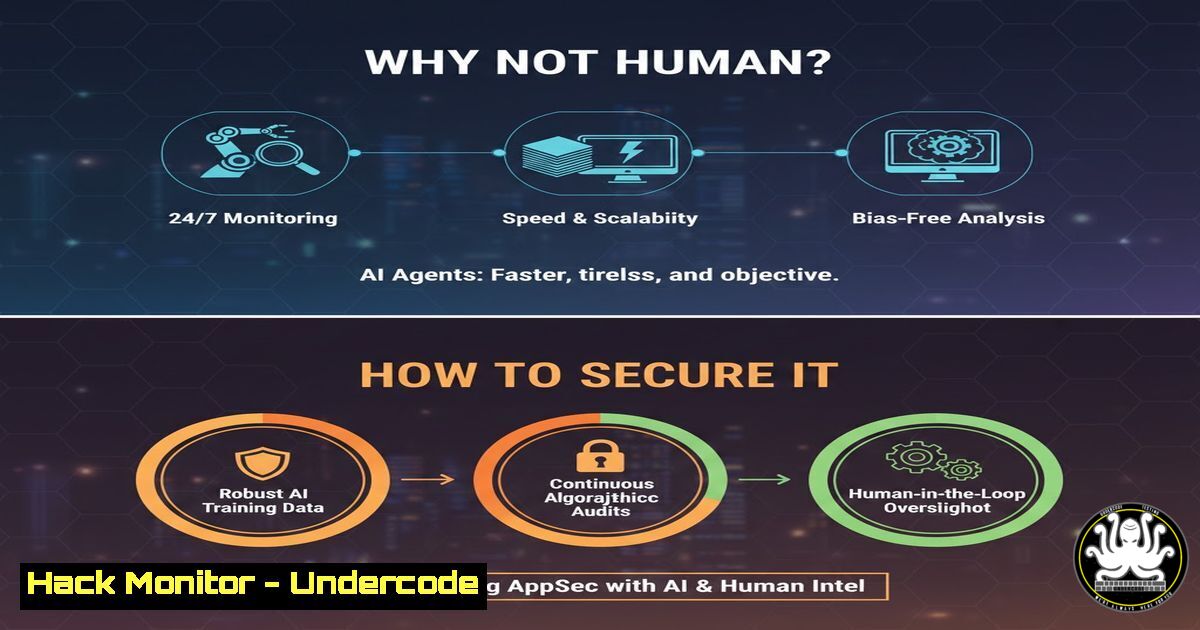
The application security landscape is on the brink of a fundamental paradigm shift, moving from tools assisted by AI to autonomous AI agents that wield the tools themselves. As OpenAI’s Frontier platform and industry discourse highlight, these AI “coworkers” require the same rigorous vetting, training, and governance as human employees, especially when granted access to critical systems and codebases. This transition promises to fully automate AppSec work, demanding a new security model built for an era where the primary user is an intelligent agent.
Learning Objectives:
- Understand the critical security principles for onboarding and governing AI agents within an enterprise environment.
- Learn practical steps to implement guardrails, including permission boundaries, activity monitoring, and context management for AI agents.
- Explore the future implications for AppSec roles and the evolving attack surface introduced by autonomous AI systems.
You Should Know:
- The Principle of Least Privilege for AI Agents
Just as you wouldn’t grant a new human employee root access on day one, AI agents must operate within strictly defined permissions. This involves creating dedicated service accounts and scoping their access to only the necessary resources.
Step‑by‑step guide explaining what this does and how to use it.
Cloud IAM Policy Scoping (AWS Example): Create a policy that denies high-risk actions while allowing specific, safe ones. Attach this to the AI agent’s execution role.
{
"Version": "2012-10-17",
"Statement": [
{
"Effect": "Allow",
"Action": [
"s3:GetObject",
"codecommit:GitPull"
],
"Resource": ["arn:aws:s3:::secure-code-bucket/", "arn:aws:codecommit:us-east-1:123456789012:MyRepo"]
},
{
"Effect": "Deny",
"Action": [
"iam:",
"s3:Delete",
"ec2:TerminateInstances"
],
"Resource": ""
}
]
}
Network Segmentation: Deploy agents in a dedicated, isolated network segment (VPC/subnet). Use network access control lists (NACLs) and security groups to restrict egress and ingress traffic only to approved repositories, ticketing systems (like Jira), and internal APIs.
2. Comprehensive Audit Logging and Anomaly Detection
Agents must leave a detailed, immutable audit trail. Every API call, code change suggestion, and tool invocation must be logged and correlated for analysis and forensic investigation.
Step‑by‑step guide explaining what this does and how to use it.
Structured Logging Implementation: Configure your agent framework to emit JSON-formatted logs with essential fields: agent_id, timestamp, action, target_resource, input_hash, and result_status.
Centralized Log Aggregation: Use a SIEM or dedicated logging stack. A simple Linux command to forward logs via `rsyslog` to a central server:
 On the agent host, configure rsyslog to send logs
echo ".info @<CENTRAL_LOG_SERVER_IP>:514" | sudo tee -a /etc/rsyslog.conf
sudo systemctl restart rsyslog
Baseline and Alert: Establish a baseline of normal agent activity (e.g., number of API calls per hour, typical targets). Use a SIEM rule or a Python script with libraries like `Pandas` to flag deviations, such as a sudden attempt to access a production database it normally doesn’t touch.
3. Secure Context and Knowledge Management
Agents operate on “shared context” – codebases, documentation, past tickets. This knowledge base must be curated and secured to prevent data poisoning, leakage of secrets, or ingestion of malicious instructions.
Step‑by‑step guide explaining what this does and how to use it.
Pre‑Ingestion Secret Scanning: Implement a pre-commit or pre-ingestion hook that scans all documents and code before they are added to the agent’s context repository. Use tools like `trufflehog` or gitleaks.
 Scan a directory before adding it to the agent's knowledge base
docker run -v "$(pwd)":/path trufflesecurity/trufflehog:latest filesystem /path --only-verified
Context Versioning and Integrity Checks: Store agent context in a git repository. Use signed commits and branch protection rules to ensure only approved, reviewed changes are merged into the main context branch that the agent uses.
4. Tool Use Sanitization and Validation
Agents will use tools like linters, SAST scanners, and deployment scripts. The input and output of these tools must be sanitized to prevent argument injection attacks or the agent acting on maliciously crafted tool output.
Step‑by‑step guide explaining what this does and how to use it.
Input Sandboxing: Wrap tool calls in a sanitizer function. For example, if an agent runs a SAST tool, ensure the file path argument is strictly validated.
import subprocess
import os

def safe_sast_scan(file_path):
 Validate the path is within the allowed workspace
base_path = "/agent/workspace"
absolute_path = os.path.abspath(os.path.join(base_path, file_path))
if not absolute_path.startswith(base_path):
raise SecurityException("Path traversal attempt blocked.")
 Use allowlist of allowed arguments
result = subprocess.run(['semgrep', 'scan', '--config', 'p/security-audit', absolute_path], capture_output=True, text=True)
return result.stdout
Output Parsing with Caution: Treat tool output as untrusted input. Parse results using strict schemas and avoid `eval()` or recursive deserialization of tool output.
- The Moltbook Lesson: Implementing Kill Switches and Rate Limits
The Moltbook incident, where AI assistants interacted autonomously with lax security, underscores the need for immediate intervention capabilities. Agents must have enforced operational boundaries.
Step‑by‑step guide explaining what this does and how to use it.
External Heartbeat and Kill Switch: Implement a central service that the agent must “check in with” periodically (e.g., every 60 seconds). If the service doesn’t receive a heartbeat, or if it receives a kill command, it revokes the agent’s credentials via the IAM API.
API Rate Limiting: Apply stringent rate limits on the agent’s own API credentials to prevent runaway resource consumption or denial-of-service stemming from a logic error. This can be done at the API Gateway level.
 Example using AWS CLI to apply usage plan to an API key for an agent
aws apigateway create-usage-plan-key --usage-plan-id <USAGE_PLAN_ID> --key-id <API_KEY_ID> --key-type API_KEY
What Undercode Say:
- Agents as First-Class Security Principals: The core shift is treating AI agents not as features, but as new, automated identities within your IAM framework. Their credentials are as critical as any admin’s SSH key.
- Governance is the New Differentiator: The “magic” won’t be in the agent’s capability, but in the governance layer surrounding it—the guardrails, audit trails, and context management that make it trustworthy for real work.
The analysis is clear: the technical challenge is less about building intelligent agents and more about constructing the secure, observable, and controllable infrastructure they require. The post’s vision that “AI will use tools” transforms the AppSec professional’s role from hands-on keyboard remediation to that of a security architect and governance specialist for autonomous systems. The tools will need to shift from finding vulnerabilities in human code to enforcing policies on AI behavior and securing the agent-ecosystem interaction.
Prediction:
By 2026, the majority of routine AppSec tasks (vulnerability scanning, dependency review, misconfiguration checks) will be conducted by governed AI agents. This will not eliminate AppSec jobs but will radically redefine them. Demand will skyrocket for professionals who can design secure agent workflows, interpret AI-driven security activity logs, and respond to novel attack vectors like agent prompt injection, context poisoning, or tool manipulation. The major breaches of the late 2020s will likely stem from inadequate AI agent governance, drawing stark parallels to early cloud breaches caused by misconfigured S3 buckets. Companies that master AI agent security now will gain a significant competitive advantage in development velocity and operational integrity.
▶️ Related Video (74% Match):
🎯Let’s Practice For Free:
IT/Security Reporter URL:
Reported By: Https: – Hackers Feeds
Extra Hub: Undercode MoN
Basic Verification: Pass ✅


