Listen to this Post
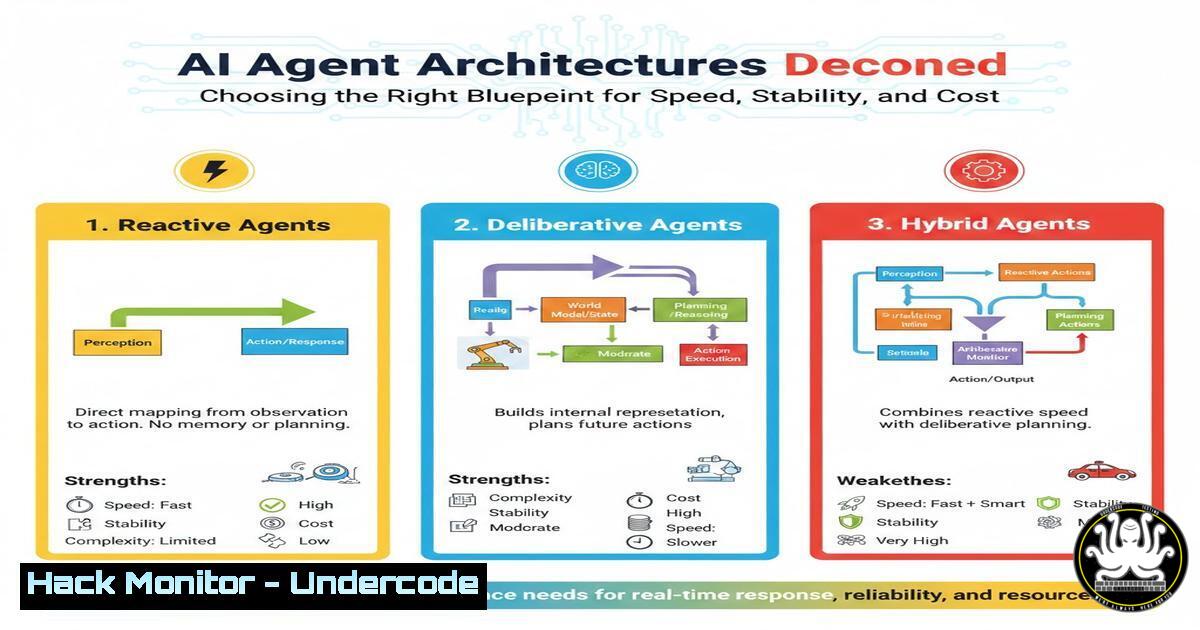
Introduction:
The evolution of Artificial Intelligence is shifting from standalone models to sophisticated multi-agent systems, where the architecture dictates performance, reliability, and cost. Selecting the correct agent architecture—Sequential, Parallel, Hierarchical, or Swarm—is a critical engineering decision that determines whether an AI system operates with precision and efficiency or descends into costly, unpredictable chaos. This guide provides a technical breakdown of these four foundational paradigms, complete with implementation insights to guide your AI infrastructure strategy.
Learning Objectives:
- Differentiate between the four core AI agent architectures and their ideal use cases.
- Implement basic proof-of-concept code for each architectural pattern.
- Evaluate the trade-offs between speed, coordination, cost, and output reliability for a given project.
You Should Know:
1. Sequential Agents: The Linear Workflow
Sequential agents operate like a rigid assembly line, where each step must be completed successfully before the next one begins. This architecture is inherently simple to debug and reason about, as the state flows predictably from one agent to the next. However, its linear nature makes it slow for complex tasks that could be parallelized and introduces a single point of failure at each step.
Step‑by‑step guide explaining what this does and how to use it.
1. Design the Task Chain: Break down your objective into discrete, dependent steps. For example: Data Preprocessing -> Feature Extraction -> Model Inference -> Output Generation.
2. Implement Agent Handlers: Create a dedicated function or class for each step. Each handler should accept the output from the previous step as its input.
3. Orchestrate the Sequence: Use a simple script to pass the output of each agent as the input to the next.
 Example Python Pseudo-Code for a Sequential Agent System
def data_preprocessing(raw_data):
 Clean and validate data
return cleaned_data

def feature_extraction(cleaned_data):
 Transform data into features
return features

def model_inference(features):
 Run the ML model
return prediction

def output_generation(prediction):
 Format the final result
return final_report

Main Orchestration
raw_data = "your_input_data_here"
cleaned_data = data_preprocessing(raw_data)
features = feature_extraction(cleaned_data)
prediction = model_inference(features)
final_output = output_generation(prediction)
print(final_output)
2. Parallel Agents: The Synchronized Team
Parallel architectures delegate independent subtasks to multiple agents that execute simultaneously, dramatically reducing latency for I/O-bound or computationally diverse operations. The primary technical challenge shifts from linear orchestration to synchronization and conflict resolution, often requiring semaphores or distributed locks to manage shared resources.
Step‑by‑step guide explaining what this does and how to use it.
1. Identify Independent Tasks: Decompose your problem into units that can run concurrently. For instance, scraping three different websites or analyzing multiple images.
2. Choose a Concurrency Model: Select threads for I/O-bound tasks or processes for CPU-intensive work to bypass the Global Interpreter Lock (GIL) in Python.
3. Launch and Manage Threads/Processes: Use a `ThreadPoolExecutor` or `ProcessPoolExecutor` to manage the worker pool and collect results.
from concurrent.futures import ThreadPoolExecutor
import requests

def fetch_url(url):
"""Agent task: fetch data from a URL."""
response = requests.get(url)
return f"Fetched {len(response.content)} bytes from {url}"

List of independent tasks
urls = ['https://httpbin.org/delay/1', 'https://httpbin.org/delay/2', 'https://httpbin.org/delay/1']

Execute agents in parallel
with ThreadPoolExecutor(max_workers=3) as executor:
results = list(executor.map(fetch_url, urls))

for result in results:
print(result)
3. Hierarchical Agents: The Manager-Worker Framework
This structure introduces a supervisory agent that plans, delegates, evaluates, and synthesizes the work of subordinate “worker” agents. It is exceptionally well-suited for complex, multi-faceted problems requiring coordination and quality control, mimicking a corporate organizational chart. The manager agent itself can be a powerful LLM prompting a series of specialized worker models.
Step‑by‑step guide explaining what this does and how to use it.
1. Define the Manager’s Role: Program the manager agent to break down a high-level goal, select the appropriate workers for each subtask, and integrate their outputs.
2. Develop Specialized Workers: Create a set of agents, each with a specific skill (e.g., Web Scraper, Data Analyst, Report Writer).
3. Implement the Workflow: Use a framework like LangGraph to manage the state and control flow between the manager and workers.
 Conceptual Pseudo-Code using a LangGraph-like approach
from langgraph.core import State, Node

class ManagerWorkerState(State):
goal: str
plan: list = []
results: dict = {}
final_output: str = None

def manager_node(state: ManagerWorkerState):
 AI-powered planning: Break down the goal and create a plan.
state.plan = ["research_topic", "analyze_data", "write_report"]
return state

def research_worker_node(state: ManagerWorkerState):
 Execute research subtask
state.results['research'] = "Gathered information on topic X"
return state

def analysis_worker_node(state: ManagerWorkerState):
 Execute analysis subtask
state.results['analysis'] = "Analysis complete based on research"
return state

def report_worker_node(state: ManagerWorkerState):
 Synthesize all results into a final report
state.final_output = f"Report based on {state.results['research']} and {state.results['analysis']}"
return state

The graph defines the hierarchical flow: Manager -> dispatches to -> Workers
4. Swarm Agents: The Emergent Intelligence
Swarm intelligence leverages a massive number of simple, homogeneous agents that operate independently, exploring a problem space through stochastic processes and sharing signals via a shared environment or communication channel. This architecture is ideal for optimization, brainstorming, and discovery tasks where the path to a solution is not known in advance, inspired by biological systems like ant colonies.
Step‑by‑step guide explaining what this does and how to use it.
1. Define the Agent Rules and Environment: Create a simple behavioral rule set for individual agents and a shared space (e.g., a shared list or database) for them to deposit “signals” or results.
2. Launch the Swarm: Instantiate a large number of these agents to run concurrently.
3. Aggregate Results: Implement a mechanism to collect and rank the signals from the shared environment to find the best solutions.
import random
from concurrent.futures import ProcessPoolExecutor
import multiprocessing

A shared value to simulate a pheromone trail or result pool
manager = multiprocessing.Manager()
shared_results = manager.list()

def swarm_agent(agent_id, shared_results):
"""A single agent in the swarm exploring the solution space."""
 Simulate exploring an idea or a solution
candidate_solution = random.uniform(0, 100)
score = abs(candidate_solution - 42)  The "ideal" solution is 42
 Share the result back to the swarm
shared_results.append((agent_id, candidate_solution, score))

Launch a swarm of 100 agents
with ProcessPoolExecutor() as executor:
futures = [executor.submit(swarm_agent, i, shared_results) for i in range(100)]

Wait for all agents to complete and find the best solution
best_solution = min(shared_results, key=lambda x: x[bash])
print(f"Best solution found by Agent {best_solution[bash]}: {best_solution[bash]} (Score: {best_solution[bash]})")
5. Security and Cost Implications of Agent Architecture
The chosen architecture has profound security and operational cost consequences. Parallel and Swarm architectures, while fast, can exponentially increase API calls to paid LLM services, leading to unexpected costs. From a security perspective, Hierarchical and Swarm systems have a larger attack surface; a compromised manager agent in a hierarchical system can lead to a complete breach, while a malicious agent in a swarm can poison the shared knowledge base.
Step‑by‑step guide explaining what this does and how to use it.
1. Implement Rate Limiting and Budget Caps: Before deploying any agent system, enforce strict rate limiting on API calls and set hard budget limits with your cloud provider.
2. Isolate Agents: Run agents in isolated containers or serverless functions to limit the blast radius of a compromise. Use Linux namespaces for isolation.
 Example: Running an agent in a disposable Docker container
docker run --rm --memory="512m" --cpus="1.0" my-agent-image:latest
3. Audit and Sign Communications: Implement a system where agents sign their outputs with a cryptographic hash. The receiving agent can verify the integrity and origin of the data before processing it.
What Undercode Say:
- Architecture is Not an Afterthought: The agent topology is a primary design constraint that dictates performance, security, and cost, not an implementation detail to be decided later.
- Start Simple, Scale Deliberately: Begin with a Sequential or simple Parallel architecture and only introduce the complexity of Hierarchical or Swarm systems when the problem domain explicitly requires it to avoid over-engineering.
- The discourse around these architectures highlights a maturation in AI engineering practices. The focus is shifting from raw model capability to system-level design and orchestration. The comments correctly identify emerging critical gaps, particularly in multi-agent debugging and the evolution of agent memory, which will define the next generation of AI infrastructure. The key is to align the architecture with the problem’s inherent structure—linear, divisible, hierarchical, or exploratory.
Prediction:
The future of AI agent systems will not be a competition between these architectures but a move towards adaptive, polymorphic frameworks. We will see the rise of meta-orchestrators that can dynamically reconfigure agent topologies in real-time based on workload characteristics, cost constraints, and security requirements. A single AI system might begin with a Sequential flow for data ingestion, spawn a Parallel swarm for idea generation, and then employ a Hierarchical team to refine and validate the best candidates, all self-healing and auto-scaling without human intervention. This will make AI systems vastly more efficient and resilient but will also introduce unprecedented complexity in monitoring and governance.
🎯Let’s Practice For Free:
IT/Security Reporter URL:
Reported By: Greg Coquillo – Hackers Feeds
Extra Hub: Undercode MoN
Basic Verification: Pass ✅


