Listen to this Post
Introduction:
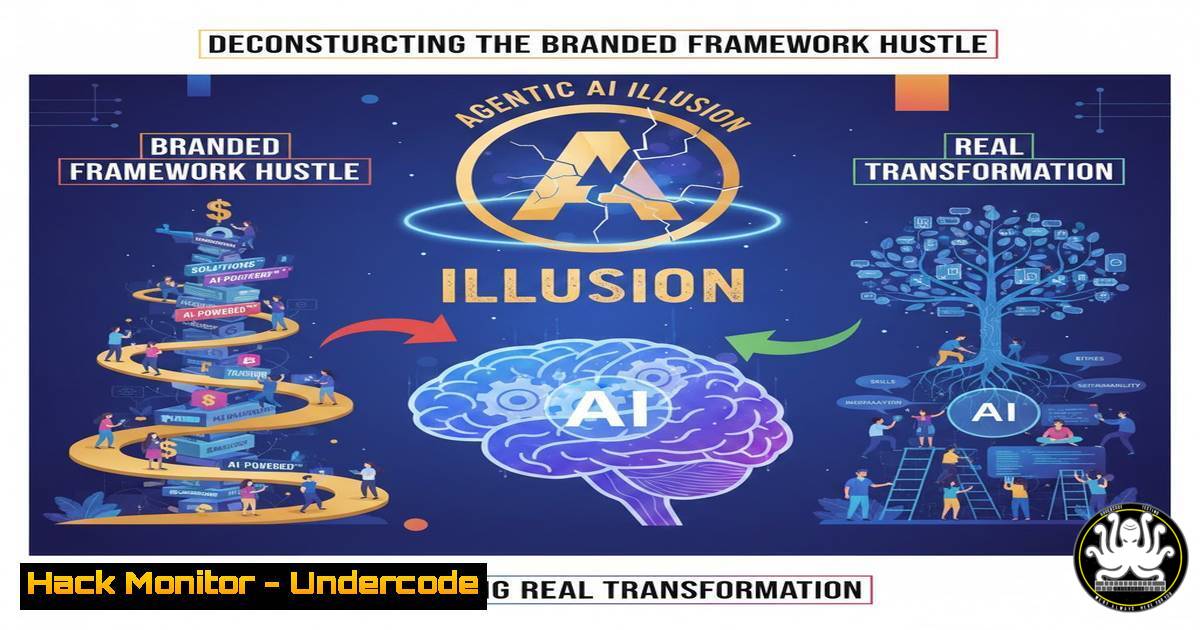
The consulting landscape is awash with branded “Agentic AI” frameworks, often marketed as silver bullets for digital transformation. However, these pre-packaged solutions frequently prioritize theatrical demonstrations over substantive, secure, and operationally sound outcomes. This divergence creates significant cybersecurity, integration, and governance risks, leaving organizations with fragile, expensive systems that fail to address core business problems or adhere to infrastructure reality.
Learning Objectives:
- Identify the key technical and security pitfalls of adopting pre-packaged “Agentic AI” frameworks without a problem-first assessment.
- Learn the critical infrastructure and governance questions that must precede any AI agent architecture.
- Apply practical, vendor-agnostic steps to evaluate AI solutions based on tangible outcomes and security postures rather than marketing spectacle.
You Should Know:
- The Infrastructure Reality Check: Question Before You Architect
Before a single AI agent is deployed, a ruthless assessment of your infrastructure layer is non-negotiable. Branded frameworks often gloss over this to sell platform licenses. The conversation must start with foundational questions, not solution pitches.
Step-by-step guide explaining what this does and how to use it.
Step 1: Map Workloads and Data Sovereignty. You cannot secure what you do not understand. Use discovery tools to catalog all potential data sources and processing workloads.
Linux Command Example: Use `find` and `grep` to locate sensitive data files: `find /data -type f -name “.csv” -exec grep -l “SSN\|CreditCard” {} \;`
Cloud CLI Example (AWS): Use AWS Config rules or AWS Trusted Advisor to identify non-compliant S3 buckets: `aws s3api list-buckets –query “Buckets[].Name”`
Step 2: Calculate the True TCO. Move beyond license costs. Model expenses for data pipeline security, API gateway protection, compliance auditing, and the specialized talent required to maintain a complex agentic system over 3-5 years.
Step 3: Define the Sovereignty Picture. Where must your data reside? This dictates cloud provider selection, agent deployment locations, and directly impacts which frameworks are even viable.
2. Security First: The “Zero-Trust Agent” Mandate
Agents that autonomously access systems and data represent a massive attack surface expansion. A branded framework is not a security framework. You must architect a zero-trust model for your AI agents.
Step-by-step guide explaining what this does and how to use it.
Step 1: Implement Least-Privilege Access. Every agent must have a narrowly scoped identity (service principal/IAM role) with only the permissions essential for its task.
Azure CLI Example: Create a service principal for a specific task: `az ad sp create-for-rbac –name “Agent-DataReader” –role “Storage Blob Data Reader” –scopes /subscriptions/
Step 2: Secure Agent-to-Agent Communication. All inter-agent calls must be authenticated and encrypted. Never allow internal APIs to be exposed without authentication.
Tutorial Concept: Configure mutual TLS (mTLS) between your agents. Use a service mesh (like Istio or Linkerd) to automatically inject certificates and manage secure communication channels.
Step 3: Log and Monitor All Agent Actions. Treat each agent as a privileged user. Ingest all its activity logs into your SIEM (e.g., Splunk, Elastic SIEM) for anomalous behavior detection.
- From “Performance Art” to Measured Outcomes: Defining Real Metrics
Theater is measured in applause; engineering is measured in KPIs. Shift the conversation from “what the agent can demonstrate” to “what business outcome it achieves and how we verify it.”
Step-by-step guide explaining what this does and how to use it.
Step 1: Align with a Specific Business Problem. Instead of “implementing an agentic framework for customer service,” define “reduce Tier 1 support ticket volume by 30% by automating password resets and balance inquiries.”
Step 2: Establish Baselines and Security Benchmarks. Before implementation, measure the current state: ticket volume, average resolution time, and associated security incident rates related to the process.
Step 3: Define Technical Success Metrics. These should include: Accuracy (%), Automation Rate (%), Mean Time to Recover (MTTR) from an agent failure, and Number of Policy Violations flagged by security monitoring.
- The Vendor Agnostic Audit: Cutting Through the Marketing
Develop a technical interrogation checklist to separate platform capabilities from consultant storytelling.
Step-by-step guide explaining what this does and how to use it.
Step 1: Demand a Non-Branded Architecture Diagram. Ask the consultant to redraw their proposed solution without using any product names. This forces the discussion to components (orchestrator, memory store, tool API) rather than brands.
Step 2: Request a Penetration Test Report. Ask for a third-party pen test report of the exact framework/platform they are proposing. If it doesn’t exist, this is a major red flag.
Step 3: Ask for the “Offboarding Script.” Question: “If we need to migrate away from your framework in 24 months, what is the process and tooling to extract our prompts, agent logic, and knowledge graphs into an open format?” Hesitation reveals vendor lock-in.
5. Building a “Problem-First” Proof of Concept (PoC)
A legitimate PoC tests a hypothesis against a real problem, not a platform’s features. Structure it to fail fast and reveal integration truths.
Step-by-step guide explaining what this does and how to use it.
Step 1: Isolate the Problem Scope. Choose a narrow, high-friction process (e.g., “employee IT onboarding”) with clear start and end points.
Step 2: Build with Open-Source Core Components. Use LangChain or LlamaIndex for orchestration, an open-source LLM (via Ollama) or a cloud API, and a simple vector database (Chroma, Weaviate). This proves the concept, not the vendor.
Code Snippet Example (Simplified): `from langchain.agents import initialize_agent, Tool; from langchain.llms import Ollama; llm = Ollama(model=”llama3″); Define tools that call your secure APIs…`
Step 3: Measure Against the Baseline. Run the PoC in parallel with the legacy process for a set period. Compare the defined metrics (speed, accuracy, security events). The results should dictate go/no-go decisions, not the allure of the demo.
What Undercode Say:
- Substance Over Sizzle is a Security Imperative. Theatrical frameworks often neglect the “boring” security essentials—logging, IAM, network policies. A breach occurs in these overlooked layers, not in the flashy chatbot interface. Real transformation hardens these layers first.
- The Real AI Strategy is a Governance Strategy. The highest ROI action an enterprise can take is not buying a framework, but establishing a cross-functional AI governance board that enforces problem-first thinking, infrastructure readiness checks, and continuous security reviews for all AI projects.
Prediction:
The backlash against AI “theater” will catalyze a rise in open-source, composable agent toolkits and independent audits for AI systems. Cybersecurity insurance providers will begin mandating specific agent security controls (like mTLS and mandatory activity logging) as a condition for coverage. Within two years, the consulting differentiator will shift from who has the most branded framework to who possesses the deepest competency in securely integrating modular AI components into complex, legacy enterprise environments. The winners will be those who focus on the unsexy plumbing of identity, access, and data flow, rendering the performance artists obsolete.
▶️ Related Video (82% Match):
🎯Let’s Practice For Free:
IT/Security Reporter URL:
Reported By: Davidlinthicum Over – Hackers Feeds
Extra Hub: Undercode MoN
Basic Verification: Pass ✅


