Listen to this Post
Introduction:
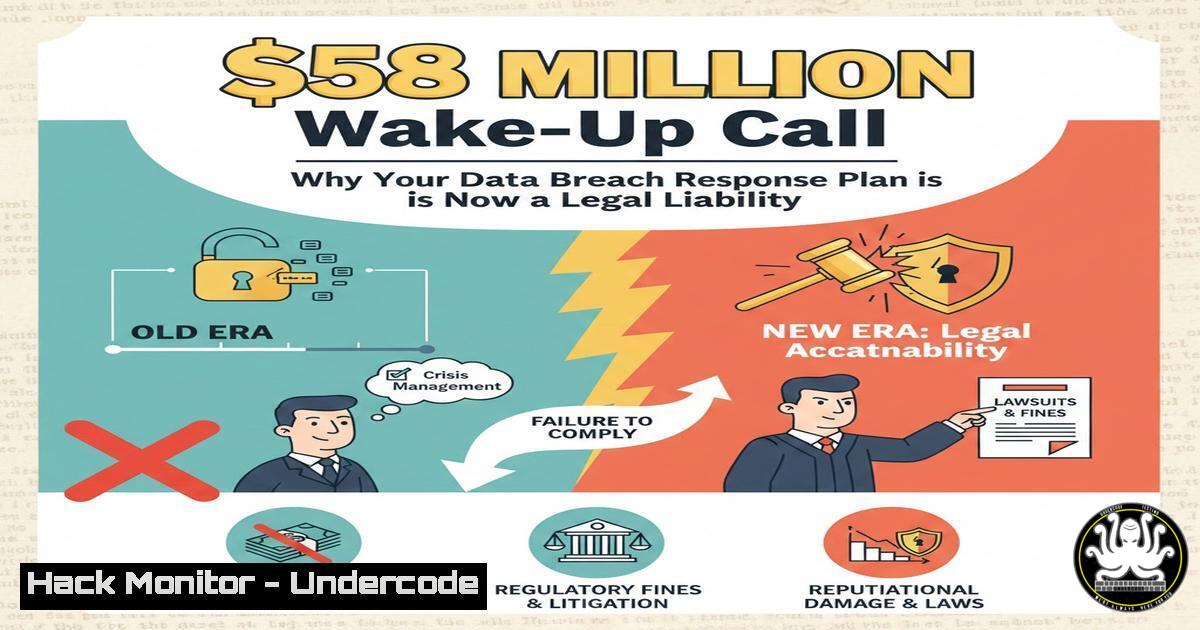
The Australian Federal Court has levied a landmark $5.8 million penalty against Australian Clinical Labs Ltd (ACL) for severe failures in its cybersecurity and data breach notification procedures. This precedent-setting case, the first civil penalty of its kind brought by the Australian Information Commissioner, signals a new era of aggressive regulatory enforcement. It fundamentally shifts cybersecurity from a technical concern to a core legal and operational risk, with non-compliance carrying devastating financial consequences.
Learning Objectives:
- Understand the specific legal failures that led to the $5.8 million penalty and how to audit your own organization for similar gaps.
- Learn the technical steps for effective incident response, including evidence preservation and forensic analysis using common command-line tools.
- Develop a proactive compliance strategy that integrates legal requirements with technical security controls to mitigate future liability.
You Should Know:
1. The Anatomy of a Failed Breach Response
The ACL case was not merely about suffering a breach, but about a catastrophic failure in the response. The court found that ACL failed to take reasonable steps to protect personal information and, critically, did not notify the Office of the Australian Information Commissioner (OAIC) for over two months after detecting the incident. This delay prevented affected individuals from taking protective actions and violated the Mandatory Data Breach Notification scheme under the Privacy Act 1988. The breach involved a significant amount of sensitive health data, exacerbating the severity of the failure.
Step‑by‑step guide explaining what this does and how to use it.
An effective response starts long before a breach occurs.
Step 1: Activate Your Incident Response Plan. This is not an ad-hoc process. Your plan should define roles, responsibilities, and immediate containment procedures.
Step 2: Immediate Containment (Forensically Sound). Isolate affected systems to prevent further data exfiltration, but do so in a way that preserves evidence.
On a Linux server, you might create a memory dump before shutting down: `sudo dd if=/dev/mem of=/secure_location/mem.dump bs=1M`
On Windows, you can use built-in tools like `logman` to create a performance counter trace that might capture malicious activity: `logman create trace “IncidentTrace” -o C:\Forensics\trace.etl -p “Windows Kernel Trace” (disk,net)`
Step 3: Legal & Regulatory Triage. Immediately involve legal counsel to determine notification obligations. The clock starts ticking the moment there is a reasonable belief a breach has occurred.
2. Proactive System Hardening and Vulnerability Management
The breach likely originated from a known vulnerability. Organizations must move beyond passive vulnerability scanning to active system hardening. This involves configuring operating systems and applications to reduce their attack surface, making it harder for attackers to gain an initial foothold, even if a vulnerability exists.
Step‑by‑step guide explaining what this does and how to use it.
Step 1: Implement a CIS Benchmark Policy. The Center for Internet Security (CIS) provides free, consensus-based hardening benchmarks for most major OS and software.
Step 2: Automate Hardening Checks. Use tools like `OpenSCAP` on Linux to audit your systems against these benchmarks.
Scan a RHEL/CentOS server: `sudo oscap xccdf eval –profile xccdf_org.ssgproject.content_profile_cis_server_l1 –results scan-results.xml –report scan-report.html /usr/share/xml/scap/ssg/content/ssg-rhel7-ds.xml`
On Windows, the `Microsoft Security Compliance Toolkit` allows you to deploy and analyze Group Policy Objects (GPOs) that enforce CIS-level security settings.
Step 3: Prioritize Patch Management. Focus on patching critical and exploited vulnerabilities (CVSS score > 9.0) within 48 hours. Automate this process where possible.
3. Mastering Logging and Monitoring for Early Detection
A two-month delay in notification suggests a failure in detection and analysis. Comprehensive logging is your primary evidence source. Without it, you cannot understand the scope of a breach, a key requirement for accurate regulatory reporting.
Step‑by‑step guide explaining what this does and how to use it.
Step 1: Centralize Logs. Use a SIEM (Security Information and Event Management) solution. For smaller setups, the Elastic (ELK) Stack or Graylog are open-source options.
Step 2: Implement Critical Log Sources.
Windows: Enable command-line auditing via Group Policy (Advanced Audit Policy Configuration > Detailed Tracking > Audit Process Creation). This logs every `cmd` and `powershell` command executed.
Linux: Use `auditd` to monitor critical files and directories. To monitor the `/etc/passwd` file for unauthorized changes: `sudo auditctl -w /etc/passwd -p wa -k identity_file`
Step 3: Create High-Fidelity Alerts. Build SIEM rules that alert on specific, high-risk events, such as the use of living-off-the-land binaries (LOLBins) like `certutil.exe` used for downloading payloads, or successful lateral movement between network segments.
4. Securing Cloud APIs and Identity Management
Modern attacks increasingly target cloud infrastructure and APIs, which are often misconfigured. The principle of least privilege is non-negotiable.
Step‑by‑step guide explaining what this does and how to use it.
Step 1: Inventory Your APIs. Use tools like `nmap` to discover exposed API endpoints: `nmap -p 443,8443 –script http-title
Step 2: Enforce API Security Policies. Implement an API Gateway to enforce rate limiting, request validation, and authentication. Use strong, standardized authentication like OAuth 2.0, never API keys in URLs.
Step 3: Harden Identity and Access Management (IAM).
In AWS, regularly run the IAM Access Analyzer to identify resources shared with external entities.
Enforce Multi-Factor Authentication (MFA) for all user and service accounts, especially those with high privileges. In Azure AD, you can use Conditional Access policies to block logins without MFA.
5. Building a Legally Defensible Cybersecurity Program
The court’s ruling underscores that “reasonable steps” is a legal standard. Your cybersecurity program must be documented, tested, and aligned with recognized frameworks to be defensible in a court of law.
Step‑by‑step guide explaining what this does and how to use it.
Step 1: Adopt a Framework. Formally adopt a framework like the NIST Cybersecurity Framework or the ISO/IEC 27001 standard. This demonstrates a commitment to a recognized standard of care.
Step 2: Document Everything. Maintain records of risk assessments, security policies, training completion, penetration test reports, and incident response tabletop exercises.
Step 3: Conduct Regular Tabletop Exercises. At least twice a year, run simulated breach scenarios with your legal, communications, and IT teams. Practice the decision-making process for when and how to notify regulators. This creates muscle memory and proves your plan is operational.
What Undercode Say:
- A financial penalty of this magnitude is no longer an abstract risk; it is a direct and material threat to the balance sheet that demands C-suite and board-level attention immediately.
- The precedent moves the goalposts from “if you are secure” to “prove you were diligent.” Your documented processes and response timeline will be scrutinized in a courtroom.
This ruling is a seismic shift in the regulatory landscape. It effectively makes the OAIC a de facto cybersecurity regulator in Australia. The “reasonable steps” defense is dead if it’s not backed by a documented, operational, and proactive security program. Organizations that treat their cybersecurity and privacy obligations as a checklist will be exposed, both to attackers and to the courts. The time for complacency is over; the era of enforceable accountability has begun.
Prediction:
This landmark penalty is just the beginning. We predict a rapid domino effect, with regulators in Australia and other jurisdictions using this case as a blueprint for their own enforcement actions. The focus will expand beyond healthcare to target finance, critical infrastructure, and any entity holding large datasets of personal information. Future penalties will likely be even larger, and we may see the first instances of personal liability for directors and officers who knowingly neglect their cybersecurity governance duties. The cost of non-compliance is now decisively higher than the cost of building a robust security program.
🎯Let’s Practice For Free:
IT/Security Reporter URL:
Reported By: Australian Technology – Hackers Feeds
Extra Hub: Undercode MoN
Basic Verification: Pass ✅


