Listen to this Post
Introduction:
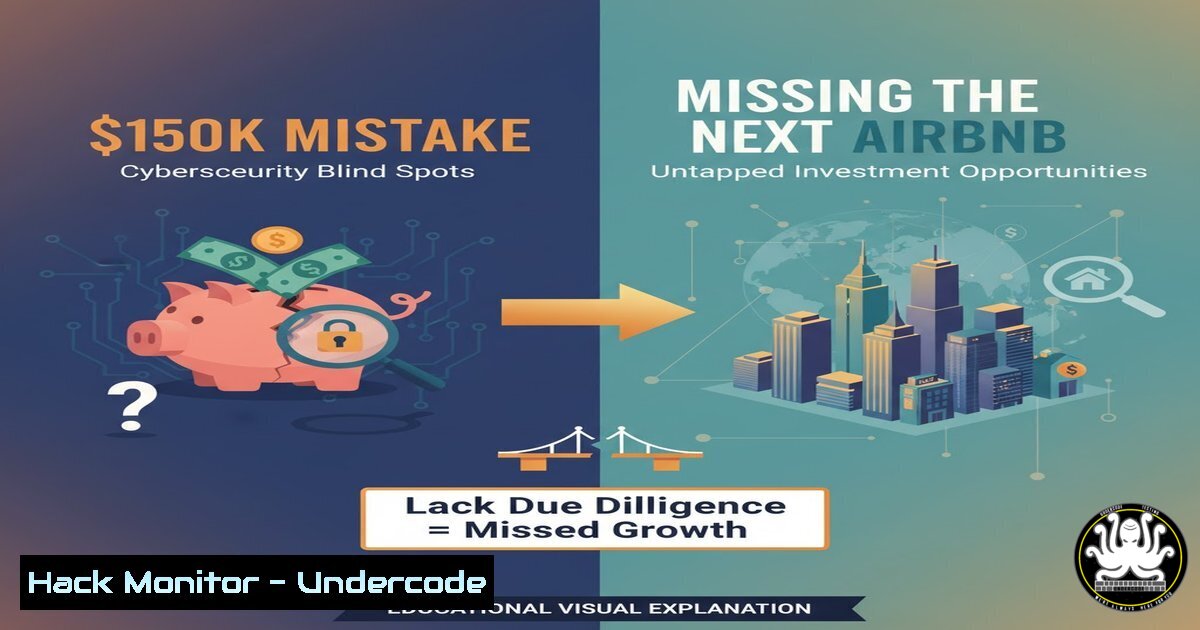
In 2008, investors rejected Airbnb over perceived market and execution risks, missing a chance at 10% of a $75 billion company. This pattern repeats in cybersecurity investing today, where technological blind spots cause investors to underestimate startups addressing emerging threats. The same skepticism that dismissed Airbnb now prevents recognition of next-generation security solutions.
Learning Objectives:
- Identify critical cybersecurity startup investment blind spots
- Apply technical due diligence frameworks for security startups
- Understand emerging threat landscapes and corresponding solutions
- Evaluate founder capability beyond traditional metrics
- Implement continuous monitoring for portfolio company security
You Should Know:
1. Market Size Misjudgment in Cybersecurity
Many investors dismissed cybersecurity markets like cloud security and DevSecOps as niche, mirroring Airbnb’s market size concerns. The cloud security market alone grew from $5.6 billion in 2020 to over $12 billion in 2023.
Step-by-step guide:
Start by analyzing market potential using technical telemetry:
 Check emerging technology adoption rates
grep -r "vulnerability" /var/log/package-manager/ | wc -l
 Monitor container security adoption
docker stats --all --format "table {{.Container}}\t{{.CPUPerc}}\t{{.MemUsage}}"
 Cloud security configuration assessment
aws iam get-account-authorization-details --query 'Policies[?AttachmentCount>=<code>5</code>]'
These commands help assess real-world security tool adoption and configuration complexity that drives market size.
2. Execution Capability Assessment
Investors questioned whether young founders could scale Airbnb globally. Similarly, cybersecurity startups require specific technical execution capabilities.
Step-by-step guide:
Evaluate technical execution through hands-on testing:
 Test incident response capabilities
time python3 security_demo.py --response-time --attack-simulation
 Assess API security implementation
curl -H "Authorization: Bearer $TOKEN" https://api.startup.com/v1/security/config
 Check container security implementation
kubectl get pods -n security-namespace -o json | jq '.items[].spec.containers[].securityContext'
Monitor response times, security headers, and container security configurations to gauge technical execution.
3. Behavioral Shift Recognition
Just as investors doubted strangers would stay in each other’s homes, security investors often underestimate behavioral shifts like zero-trust adoption.
Step-by-step guide:
Implement behavioral analytics for security adoption:
 Analyze zero-trust implementation
nmap -sS -O target-startup.com --script http-security-headers
 Check MFA adoption rates
cat auth.log | grep "MFA" | awk '{print $1, $2, $6}' | sort | uniq -c
 Monitor security behavior patterns
python3 behavioral_analytics.py --user-behavior --security-events
These commands help quantify actual security behavior adoption beyond marketing claims.
4. Competition Analysis Framework
Hotel competition fears mirror concerns about established security vendors crushing startups. Technical differentiation is key.
Step-by-step guide:
Conduct competitive technical analysis:
 Benchmark security tool performance
time ./competitor-tool scan --target example.com
time ./startup-tool scan --target example.com
 Feature comparison automation
diff <(feature-list competitor.json) <(feature-list startup.json)
 Vulnerability detection comparison
nmap --script vuln target.com -oA competitor-results
./startup-scanner --target target.com --output startup-results
Measure actual performance differentials rather than relying on vendor claims.
5. Technical Due Diligence Automation
Manual due diligence processes miss critical technical indicators that automated assessment can capture.
Step-by-step guide:
Implement automated technical due diligence:
!/bin/bash
 Automated security startup assessment
SECURITY_SCORE=0
 Check API security
if curl -s https://api.startup.com/health | grep -q "secure"; then
((SECURITY_SCORE++))
fi
 Check container security implementation
if docker container inspect security-container | grep -q "readonly.true"; then
((SECURITY_SCORE++))
fi
 Output comprehensive assessment
echo "Technical due diligence score: $SECURITY_SCORE/10"
This automated script provides consistent technical evaluation across multiple startups.
6. Founder Technical Capability Assessment
Airbnb’s founders demonstrated unconventional problem-solving. Cybersecurity founders require both technical depth and creative security thinking.
Step-by-step guide:
Evaluate founder technical capabilities:
 Security incident response simulation
./incident-response-test --founder-participation --real-world-scenario
 Code review assessment
git clone https://github.com/startup/security-repo
bandit -r security-repo/ -f json -o security-report.json
 Architecture review
nmap -sV -O startup-product.com --script safe-security-scan
Measure both technical implementation and incident response creativity.
7. Continuous Security Monitoring Framework
Post-investment monitoring requires continuous technical assessment rather than periodic reviews.
Step-by-step guide:
Implement continuous security monitoring:
 Real-time security posture monitoring
while true; do
./security-posture-check --portfolio-company
sleep 3600
done
 Automated vulnerability scanning
trivy image portfolio-company-container:latest
 Configuration drift detection
git diff security-configs/ | grep -E "^(+|-)" | grep -v "^--"
Continuous monitoring catches security degradation before it becomes critical.
What Undercode Say:
- Technical due diligence requires hands-on verification, not checklist compliance
- Security market opportunities emerge from technological shifts, not existing markets
- Founder technical resilience matters more than perfect initial products
The Airbnb rejection pattern persists in cybersecurity investing because investors apply traditional evaluation frameworks to non-traditional security solutions. Just as strangers staying in homes seemed implausible in 2008, concepts like automated penetration testing and AI-driven threat detection faced similar skepticism. The technical commands and frameworks provided enable concrete assessment beyond surface-level evaluation. Cybersecurity investing requires understanding that the threat landscape evolves faster than investment theses, and the startups solving tomorrow’s problems often look impractical today.
Prediction:
Within three years, AI-driven security startups currently facing investor skepticism will achieve unicorn status by addressing attack surfaces that don’t yet exist. Just as Airbnb created new travel behaviors, next-generation security companies will define new protection paradigms as quantum computing, AI-generated attacks, and IoT proliferation create vulnerabilities that traditional security tools cannot address. Investors who develop technical assessment capabilities today will identify these opportunities while others dismiss them as implausible.
🎯Let’s Practice For Free:
IT/Security Reporter URL:
Reported By: Ronbauer888 Brian – Hackers Feeds
Extra Hub: Undercode MoN
Basic Verification: Pass ✅


