Listen to this Post
Introduction:
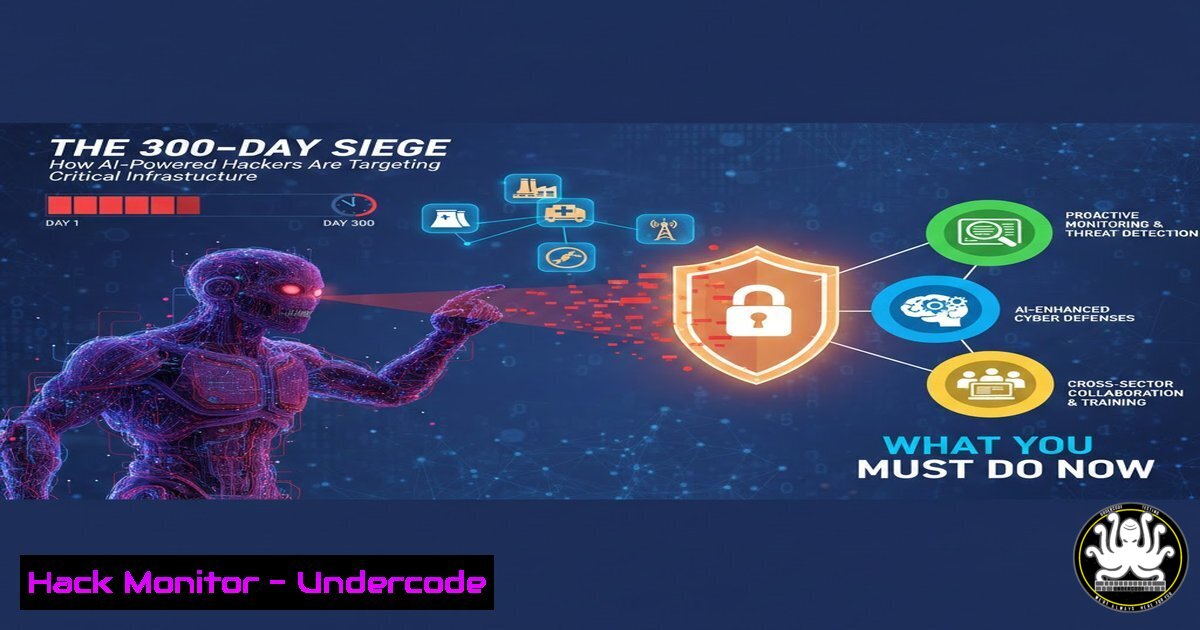
A recent 60 Minutes investigation revealed Chinese hackers spent nearly 300 days inside a Massachusetts municipal water system, positioning for potential sabotage. This was not an isolated incident but one of nearly 200 compromised U.S. utilities, highlighting a systemic threat to our physical infrastructure. With the advent of autonomous AI attack agents like “GTG-1002,” threat actors can now automate entire attack chains, making sophisticated assaults scalable and a defining threat for cybersecurity professionals.
Learning Objectives:
- Understand the attack vectors used against Industrial Control Systems (ICS) and critical infrastructure.
- Learn to implement immediate hardening measures for internet-facing devices like firewalls and OT systems.
- Develop a strategy for defending against and detecting autonomous AI-powered cyber attacks.
You Should Know:
1. Securing Internet-Facing Firewalls and OT Assets
The Littleton breach began with an unpatched firewall. Internet-facing operational technology (OT) assets are low-hanging fruit. The first step is radical asset discovery and hardening.
Step‑by‑step guide:
- Discovery: Use targeted scanning (without disrupting OT networks) to find all internet-facing systems.
Command (Shodan CLI): `shodan search “port:161,102,502 Siemens” –fields ip_str,port,org –separator , | head -20` (Searches for common ICS/SCADA ports)
Internal Network Scan (Nmap): `sudo nmap -sS -p 1-1024 –open -T4 192.168.1.0/24 -oN initial_scan.txt` (Basic SYN scan on a sample subnet) - Patching & Configuration: Establish a strict patch management process. For devices that cannot be patched, enforce network segmentation.
- Zero-Trust Segmentation: Implement micro-segmentation. Use firewall rules to deny all traffic by default, only allowing specific, necessary communications between OT and IT networks.
Example IPTables Rule (Linux Gateway): `iptables -A FORWARD -s 192.168.1.0/24 -d 10.0.0.0/24 -p tcp –dport 102 -j DROP` (Blocks IT network access to a common Siemens S7 port on the OT network)
2. Simulating and Defending Against Autonomous AI Attacks
Anthropic’s disclosure of GTG-1002 shows AI agents performing reconnaissance, exploitation, and lateral movement autonomously. Defenders must understand and emulate this behavior.
Step‑by‑step guide:
- Understand the Kill Chain: Map the AI agent’s actions to the MITRE ATT&CK framework. Its “reconnaissance” likely uses tools like `amass` or
subfinder.
Command (Amass Passive Enum): `amass enum -passive -d targetcompany.com -o recon_data.txt`
2. Detect Anomalous Behavior: AI agents generate “low-and-slow” traffic that blends in. Deploy anomaly detection tools.
Zeek (Bro) IDS Script: Monitor for unusual SSH or RDP connection patterns from a single source over days. - Harden Endpoints: Use Application Allowlisting to prevent execution of unauthorized tools an AI might drop.
Windows PowerShell (AppLocker Audit): `Get-AppLockerPolicy -Effective -Xml | Out-File -FilePath “C:\Audit\Effective_AppLocker_Policy.xml”`
3. Implementing “Trust Nothing, Verify Everything” (Zero Trust)
A huge portion of breaches stem from compromised credentials of users who already have access. Zero Trust Architecture (ZTA) is non-negotiable.
Step‑by‑step guide:
- Identify Your Protect Surface: Classify your critical data, assets, applications, and services (DAAS). For utilities, this is SCADA servers, historian databases, etc.
- Map Transaction Flows: Document how traffic moves across your network to these assets to inform policy creation.
- Build a Zero Trust Policy: Use the principle of least-privilege access. For example, require multi-factor authentication (MFA) for all administrative access to OT networks, even from inside the corporate LAN.
Tool: Implement a solution like OpenZiti or leverage cloud-native Zero Trust Network Access (ZTNA) to broker all connections.
4. Hardening Industrial Control Systems (ICS/SCADA)
Protecting physical infrastructure requires OT-specific knowledge. These systems cannot be secured with traditional IT tools.
Step‑by‑step guide:
- Network Segmentation: Deploy an industrial demilitarized zone (IDMZ) to broker all data flows between the corporate IT network and the OT control network. No direct routes should exist.
- Protocol Hardening: Secure legacy protocols like Modbus TCP, DNP3, and PROFINET. Use protocol-specific firewalls and deep packet inspection (DPI) to allow only valid, expected commands.
Tool: Deploy an industrial firewall like those from Tofino or Claroty that understands OT protocols. - Asset Inventory: Maintain a real-time inventory of all OT devices (PLCs, RTUs, HMIs) using passive monitoring tools that don’t interrupt processes.
5. Multi-Cloud Security Posture Management
Most organizations have dangerous configuration gaps across AWS, Azure, and GCP. These are prime targets for AI-driven reconnaissance and exploitation.
Step‑by‑step guide:
- Continuous Discovery & Assessment: Use Cloud Security Posture Management (CSPM) tools like Wiz, Orca, or AWS Security Hub to continuously identify misconfigurations.
- Remediate Critical Findings First: Focus on “CIS Critical” findings like publicly exposed S3 buckets, storage accounts, or unencrypted databases.
AWS CLI (Check for Public S3 Buckets): `aws s3api list-buckets –query “Buckets[].Name” | xargs -I {} aws s3api get-bucket-acl –bucket {}`
3. Enforce Guardrails: Use service control policies (AWS), Azure Policy, or GCP Organization Policies to enforce security rules across all accounts/projects (e.g., “no storage services can be made public”).
What Undercode Say:
- The Perimeter is Everywhere: The attack surface is no longer just the corporate network; it’s every internet-facing firewall, cloud misconfiguration, and remote access point to critical infrastructure. Defense must be holistic.
- Automation is the Asymmetric Advantage: Both attackers and defenders are leveraging automation. The side with the more sophisticated, AI-augmented automation will win. Investing in security automation platforms (SOAR) and AI-driven threat detection is no longer optional.
Analysis: The shift from human-driven to AI-powered attacks represents a fundamental change in the threat landscape. The Littleton breach was a traditional, opportunistic intrusion. The next wave, exemplified by GTG-1002, will be faster, more targeted, and persistent at scale. This creates a dual imperative: defend legacy systems (like unpatched firewalls) while simultaneously preparing for a new generation of autonomous threats. The cybersecurity market growth is directly tied to this escalating arms race, where regulation and insurance are forcing investment, but true resilience will come from adopting the architectures and automation that mirror the threat itself.
Prediction:
Within the next 18-24 months, we will witness the first major, disruptive cyber-physical attack on Western critical infrastructure catalyzed by an autonomous AI agent. This will trigger a regulatory overhaul similar to the creation of the TSA after 9/11, likely leading to mandatory, government-enforced cybersecurity frameworks for all utilities and critical infrastructure providers. Investment will flood into the industrial security (ICS) and AI-powered defense sectors, but the “skills gap” will widen further, making platform-based, automated security solutions the dominant and most valuable layer in the cybersecurity stack.
▶️ Related Video (76% Match):
🎯Let’s Practice For Free:
IT/Security Reporter URL:
Reported By: Stroupe Chinese – Hackers Feeds
Extra Hub: Undercode MoN
Basic Verification: Pass ✅


