Listen to this Post
Introduction
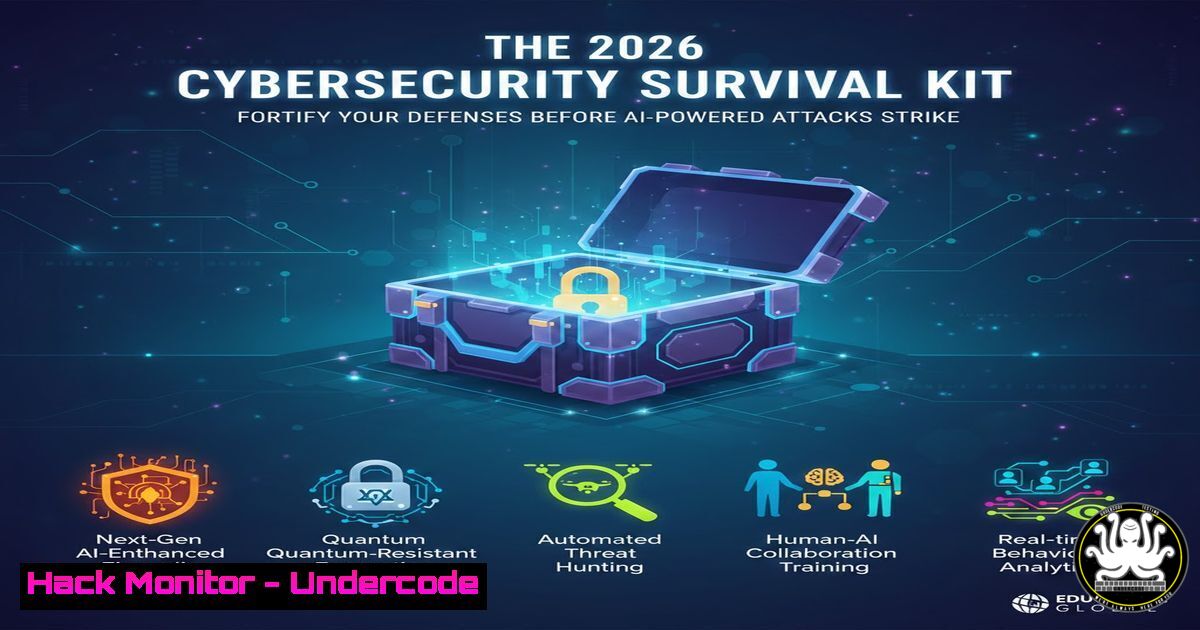
As we enter 2026, the cybersecurity landscape has transformed into a high-stakes battlefield where artificial intelligence is both the ultimate weapon and the primary target. The escalating cost of data breaches, now exceeding $10 million on average in the United States, underscores the critical need for organizations to evolve their security postures beyond traditional perimeter defenses. This article provides a tactical guide to understanding and implementing the essential cybersecurity strategies required to survive and thrive in this new era of AI-enhanced threats.
Learning Objectives
- Understand the evolving threat landscape shaped by AI-driven attacks and how to defend against them
- Implement practical security hardening measures across cloud, API, and endpoint environments
- Develop a comprehensive incident response and resilience strategy for 2026 cybersecurity challenges
You Should Know:
- The New AI-Powered Attack Surface: Beyond Traditional Defenses
The cybersecurity paradigm has fundamentally shifted as threat actors now weaponize artificial intelligence to create more sophisticated, targeted, and automated attacks. These AI-powered threats can analyze defense patterns, craft convincing social engineering at scale, and exploit vulnerabilities faster than human-led teams can respond. In 2026, defending against these threats requires security teams to deploy AI-enhanced defensive systems that can predict, detect, and neutralize attacks in real-time through behavioral analysis and automated response protocols.
Step‑by‑step guide:
- Deploy AI Threat Detection Platforms: Implement security solutions like CrowdStrike Falcon or Microsoft Defender that utilize machine learning to establish behavioral baselines and identify anomalies. These systems learn normal network and user behavior to flag deviations that might indicate compromise.
- Configure Behavioral Analytics: Set up rules and thresholds for user and entity behavior analytics (UEBA). Focus on privileged accounts, after-hours access, and unusual data transfer patterns that could indicate credential theft or insider threats.
- Implement AI-Powered Phishing Detection: Utilize tools like IRONSCALES or Cofense that employ natural language processing and computer vision to detect sophisticated phishing attempts that bypass traditional email filters.
- Automate Threat Intelligence Integration: Configure your security orchestration, automation, and response (SOAR) platform to ingest and act upon real-time threat intelligence feeds, automatically updating firewall rules and blocking indicators of compromise.
2. Cloud Security Hardening in a Multi-Cloud World
With organizations increasingly operating across multiple cloud environments, the attack surface has expanded dramatically. Misconfigured cloud storage, inadequate access controls, and unsecured APIs create vulnerabilities that attackers eagerly exploit. The 2026 approach to cloud security emphasizes zero-trust architecture, consistent policy enforcement across providers, and comprehensive visibility into all cloud assets.
Step‑by‑step guide:
- Implement Cloud Security Posture Management (CSPM): Deploy tools like Wiz, Palo Alto Prisma Cloud, or AWS Security Hub to continuously scan for misconfigurations and compliance violations across AWS, Azure, and Google Cloud environments.
- Enforce Least Privilege Access: Utilize cloud-native identity and access management (IAM) tools to implement role-based access control (RBAC). Regularly review and prune permissions using automated tools.
AWS CLI command to list IAM users and their attached policies
aws iam list-users
aws iam list-attached-user-policies --user-name <USERNAME>

Azure PowerShell to get role assignments
Get-AzRoleAssignment -SignInName <USERPRINCIPALNAME>
- Secure Cloud Storage: Enable encryption at rest and in transit for all cloud storage services. Implement strict bucket policies and disable public access unless absolutely necessary.
- Monitor Cloud Trail and Activity Logs: Ensure comprehensive logging is enabled across all cloud services and integrate these logs with your security information and event management (SIEM) system for centralized monitoring and alerting.
3. API Security: The Silent Vulnerability Amplifier
As digital transformation accelerates, application programming interfaces (APIs) have become the backbone of modern business connectivity—and a prime target for attackers. Unprotected APIs can expose sensitive data, enable account takeover, and serve as entry points for broader system compromise. The 2026 approach to API security requires dedicated protection strategies beyond traditional web application firewalls.
Step‑by‑step guide:
- Discover and Inventory All APIs: Utilize specialized API discovery tools or implement automated scanning to identify all APIs in your environment, including shadow APIs not managed by IT.
- Implement API Security Gateways: Deploy dedicated API gateways that provide authentication, authorization, rate limiting, and input validation. Popular options include Kong, Apigee, and AWS API Gateway with appropriate security configurations.
- Enforce Strong Authentication and Authorization: Implement OAuth 2.0 with proper scope validation, and consider mutual TLS for highly sensitive APIs. Regularly rotate API keys and secrets.
Example using curl to test API authentication
curl -X POST https://api.example.com/token \
-H "Content-Type: application/x-www-form-urlencoded" \
-d "grant_type=client_credentials&client_id=YOUR_CLIENT_ID&client_secret=YOUR_CLIENT_SECRET"

Using the obtained token to access protected resources
curl -H "Authorization: Bearer YOUR_ACCESS_TOKEN" https://api.example.com/resource
- Implement Comprehensive API Testing: Include security testing in your API development lifecycle using tools like OWASP ZAP or Burp Suite to identify vulnerabilities before deployment.
4. Endpoint Security Evolution: Beyond Traditional Antivirus
The endpoint security landscape has evolved significantly as remote work persists and devices operate outside traditional network perimeters. Next-generation endpoint protection platforms (EPP) and endpoint detection and response (EDR) solutions now incorporate behavioral analysis, machine learning, and automated response capabilities to detect and neutralize sophisticated threats that bypass signature-based detection.
Step‑by‑step guide:
- Deploy Next-Generation Endpoint Protection: Replace traditional antivirus with EPP/EDR solutions like CrowdStrike, SentinelOne, or Microsoft Defender for Endpoint that utilize behavioral detection and machine learning algorithms.
- Implement Application Allowlisting: For critical systems, implement application allowlisting to prevent unauthorized executables from running. This is particularly effective against zero-day exploits and fileless attacks.
Windows PowerShell to configure AppLocker policy
Get-AppLockerPolicy -Effective -Xml > current_policy.xml
Modify policy as needed, then apply
Set-AppLockerPolicy -XmlPolicy current_policy.xml

Linux alternative: Implement mandatory access control with SELinux or AppArmor
sudo aa-status  Check AppArmor status
sudo aa-genprof /path/to/application  Generate AppArmor profile
- Enable Hardware-Based Security Features: Utilize hardware security features like Intel vPro, AMD Memory Guard, or Apple’s T2 Security Chip to provide additional protection against firmware and hardware-level attacks.
- Implement Robust Patch Management: Establish automated patching processes for operating systems and applications, prioritizing critical vulnerabilities based on threat intelligence and exploit availability.
5. Zero-Trust Architecture: The 2026 Security Foundation
The zero-trust security model, which operates on the principle of “never trust, always verify,” has moved from emerging concept to essential architecture in 2026. This approach eliminates implicit trust in any entity—inside or outside the network perimeter—and requires continuous verification of all access requests through multiple authentication and authorization checks.
Step‑by‑step guide:
- Implement Identity-Centric Security Controls: Deploy identity and access management solutions that provide strong multi-factor authentication (MFA), single sign-on (SSO), and conditional access policies based on user, device, location, and behavior risk factors.
- Segment Your Network: Implement micro-segmentation to limit lateral movement in case of breach. This involves dividing the network into smaller, isolated zones with strict access controls between them.
- Deploy Zero-Trust Network Access (ZTNA): Replace traditional VPNs with ZTNA solutions that provide granular, context-aware access to specific applications rather than full network access. Popular solutions include Zscaler Private Access, Cloudflare Access, and Twingate.
- Establish Continuous Monitoring and Validation: Implement systems that continuously monitor user behavior, device health, and network activity to detect anomalies and re-evaluate trust levels in real-time.
6. Supply Chain Security: Protecting Your Extended Ecosystem
Modern organizations are interconnected with complex ecosystems of vendors, partners, and third-party services, each representing a potential attack vector. Supply chain attacks, like the SolarWinds incident, demonstrate how vulnerabilities in third-party components can compromise otherwise secure organizations. The 2026 approach requires rigorous third-party risk management and software supply chain security practices.
Step‑by‑step guide:
- Implement Third-Party Risk Assessment: Develop a formal process for evaluating the security posture of vendors and partners before engagement. This should include security questionnaires, compliance verification, and ongoing monitoring.
- Secure Your Software Development Lifecycle: Implement DevSecOps practices including dependency scanning, container security, and software composition analysis to identify vulnerabilities in third-party libraries and components.
Using OWASP Dependency-Check to scan for vulnerable dependencies
dependency-check --project "My Application" --scan ./path/to/project --out ./report

Scanning container images for vulnerabilities
docker scan my-image:latest
trivy image my-image:latest
- Implement Software Bill of Materials (SBOM): Generate and maintain SBOMs for all internally developed and procured software to maintain visibility into components and quickly identify affected systems when vulnerabilities are disclosed.
-
Establish Contractual Security Requirements: Include specific security requirements, breach notification timelines, and audit rights in contracts with third-party providers.
-
Incident Response and Cyber Resilience: Preparing for the Inevitable
Despite robust preventive measures, successful cyber attacks remain a question of “when” rather than “if” in 2026. An effective incident response plan and cyber resilience strategy ensure organizations can quickly detect, contain, eradicate, and recover from security incidents while maintaining essential business operations.
Step‑by‑step guide:
- Develop and Test Incident Response Plans: Create detailed playbooks for different incident types (ransomware, data breach, DDoS) and conduct regular tabletop exercises to ensure preparedness. Ensure the plan includes communication protocols, legal considerations, and regulatory reporting requirements.
- Implement Immutable Backups: Establish a 3-2-1 backup strategy (three copies, two different media, one offsite) with immutable backups that cannot be altered or deleted, even by attackers with administrative privileges.
- Establish a Security Operations Center (SOC): Whether in-house, outsourced, or hybrid, implement 24/7 monitoring capabilities with defined escalation paths and response procedures.
- Conduct Regular Red Team Exercises: Employ internal or external red teams to simulate realistic attacks against your environment, identifying security gaps and testing detection and response capabilities.
What Undercode Say
-
AI Is the New Battleground: The most significant shift in 2026 cybersecurity is the dual-use nature of artificial intelligence—deployed by both attackers and defenders. Organizations failing to implement AI-enhanced security tools are effectively bringing knives to a gunfight, as human-only teams cannot match the speed and sophistication of AI-driven attacks. This creates a new security imperative where investment in defensive AI capabilities is no longer optional but essential for survival.
-
The Economics of Security Have Shifted: With the average cost of a U.S. data breach exceeding $10 million, cybersecurity investments must be evaluated through a new economic lens. The staggering financial impact, coupled with regulatory penalties and reputational damage, means that security spending should be viewed not as an IT cost but as essential business risk management. Organizations must allocate resources proportionate to their risk exposure, with particular attention to industry-specific threats and compliance requirements.
The analysis reveals that 2026 marks a turning point where cybersecurity transitions from a technical specialty to a core business function integrated across all operations. The disproportionate cost of U.S. breaches compared to the global average ($10 million versus $4.4 million) reflects both the higher value of data in advanced economies and the stringent regulatory penalties for breaches. This economic reality, combined with increasingly sophisticated AI-powered threats, creates unprecedented pressure on organizations to transform their security approaches fundamentally. Those who succeed will integrate security into business strategy, leverage AI defensively, and build resilience that assumes breach as inevitable rather than preventable.
Prediction
The cybersecurity landscape of late 2026 and beyond will be defined by the maturation of defensive AI systems that increasingly automate threat detection and response, creating security environments that adapt in real-time to emerging threats. However, this advancement will simultaneously trigger an AI arms race with threat actors, leading to increasingly sophisticated attacks that exploit the very AI systems designed to stop them. Regulatory frameworks will struggle to keep pace with technological evolution, creating compliance challenges for global organizations. The most successful companies will be those that balance technological investments with human expertise, recognizing that while AI can enhance security capabilities, strategic decision-making during crises and complex ethical judgments will remain distinctly human responsibilities. This evolution will further blur the lines between physical and digital security as critical infrastructure becomes increasingly connected and vulnerable to cyber-physical attacks with real-world consequences.
▶️ Related Video (84% Match):
🎯Let’s Practice For Free:
IT/Security Reporter URL:
Reported By: Chuckbrooks What – Hackers Feeds
Extra Hub: Undercode MoN
Basic Verification: Pass ✅


