Listen to this Post
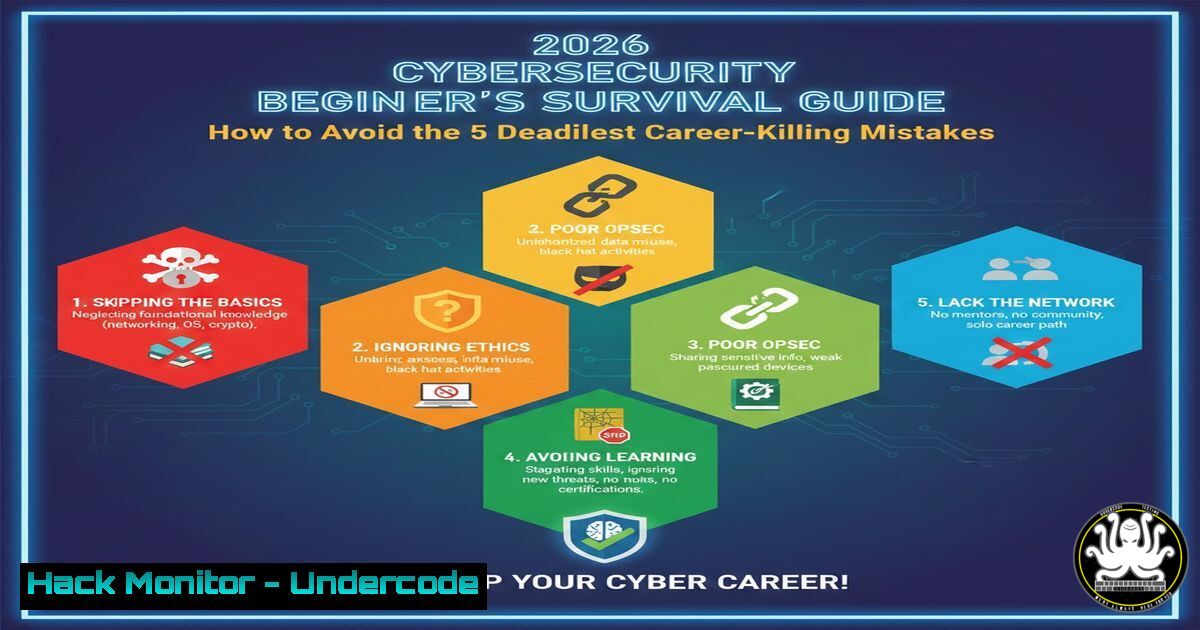
Introduction:
Embarking on a cybersecurity career without a strategic roadmap is akin to conducting a penetration test without scope or authorization—you’ll quickly find yourself lost, ineffective, and potentially in over your head. As the digital threat landscape expands, so does the pressure on newcomers to bypass foundational learning for flashy tools, leading to critical knowledge gaps. This guide translates high-level career advice into actionable, technical steps to build an unshakeable foundation.
Learning Objectives:
- Develop a structured, hands-on learning path from core IT fundamentals to security specialization.
- Implement practical lab environments across operating systems to master essential security concepts.
- Build a public portfolio of documented projects and labs to demonstrate practical skill to employers.
You Should Know:
- Mastering the Non-Negotiable Fundamentals: Networking and OS Internals
Before you can defend or attack a system, you must understand how it communicates and operates. This requires moving beyond theory into practical configuration and analysis.
Step‑by‑step guide:
Build a Homelab: Use a hypervisor like VirtualBox or VMware Workstation Player to create an isolated network. Set up two virtual machines: one running a Linux distribution (e.g., Ubuntu Server) and one running Windows.
Analyze Network Traffic: On your Linux VM, install `tcpdump` and Wireshark. Capture a simple web request and analyze the TCP three-way handshake.
 On Linux, capture traffic on the main interface
sudo tcpdump -i eth0 -w my_capture.pcap
 In another terminal, generate traffic
curl http://example.com
 Stop the capture (Ctrl+C) and analyze with Wireshark
wireshark my_capture.pcap &
Understand Windows and Linux Processes: On Windows, use PowerShell to enumerate running processes and their network connections: Get-Process | Select-Object Name, Id. On Linux, use `ps aux` and examine process trees with pstree. This is critical for identifying malicious activity later.
- Choosing Your Path: A Technical Roadmap for Key Specializations
“Blindly choosing a path” often means pursuing popular certifications without context. Instead, validate your interest through hands-on exposure to core domains.
Step‑by‑step guide:
Cloud Security (AWS Focus): Harden a default AWS S3 bucket. Create a bucket via the CLI and examine its public access settings.
aws s3api create-bucket --bucket my-unique-bucket-name-2026
aws s3api get-bucket-policy-status --bucket my-unique-bucket-name-2026
 The output should show "IsPublic": false. Misconfigurations here are a top vulnerability.
Vulnerability Management: Install and run a vulnerability scanner like `Trivy` against a Docker image.
 Scan a local image for OS and application vulnerabilities
trivy image python:3.9-slim
Security Operations (SIEM): Deploy the open-source SIEM, Wazuh, using their quickstart script to ingest and analyze system logs, providing immediate hands-on experience with alerts and monitoring.
- Transforming Certifications into Practical Skill: The Lab-Driven Approach
Certifications like Security+ or Network+ provide a blueprint. Your task is to build every concept in a lab.
Step‑by‑step guide for Security+ Cryptography Objectives:
Hashing & Integrity: Use `sha256sum` to verify file integrity. Create a file and generate its hash.
echo "Secret Data" > myfile.txt
sha256sum myfile.txt > original_hash.txt
 Simulate tampering
echo "Tampered Data" > myfile.txt
sha256sum -c original_hash.txt  This verification will now FAIL.
Symmetric Encryption: Encrypt and decrypt a file using AES with OpenSSL.
openssl enc -aes-256-cbc -salt -in myfile.txt -out encrypted.enc -k MyPassword
openssl enc -d -aes-256-cbc -in encrypted.enc -out decrypted.txt -k MyPassword
- Documenting Your Journey: Building a Public, Technical Portfolio
Online documentation is your credibility engine. Showcase your problem-solving process, not just the result.
Step‑by‑step guide:
Platform: Create a technical blog on GitHub Pages or Hashnode.
Content Template: For every lab (e.g., “Exploiting & Mitigating EternalBlue”), structure your post as: Objective, Tools Used, Attack Methodology (with commands), Mitigation Steps (with GPO or `iptables` rules), Key Learnings.
Code Snippets: Use GitHub Gists to share reusable code, like a Python script that parses firewall logs or a Bash script for automating security checks.
- Developing the Hacker Mindset: Controlled Exploitation and Mitigation
Understanding the attack is the first step to building a defense. Practice in isolated, legal environments.
Step‑by‑step guide (Using a Metasploit module in a controlled lab):
1. Setup: Use Metasploitable 2 (a deliberately vulnerable VM) as a target in your isolated homelab.
2. Reconnaissance: From your Kali Linux attacker VM, perform an Nmap scan to identify open services.
nmap -sV -O <metasploitable-ip>
3. Vulnerability Identification: The scan may reveal an outdated vsftpd service. Search for an exploit module within Metasploit: search vsftpd 2.3.4.
4. Controlled Exploitation & Analysis: If a module exists (e.g., exploit/unix/ftp/vsftpd_234_backdoor), study its code, set the required parameters (RHOSTS, RPORT), and run it in the isolated lab. The goal is not just to get a shell but to understand the vulnerability’s root cause (e.g., a hidden backdoor command).
5. Mitigation: Document the fix: removing the vulnerable software version, implementing network access controls with iptables, and deploying an Intrusion Detection System (IDS) rule using tools like Snort.
What Undercode Say:
- Foundations Are Force Multipliers: Time invested in networking, operating systems, and scripting pays exponential dividends. A professional who can write a Bash script to parse logs or a PowerShell script to audit configurations automates their impact and deepens their analytical capability.
- Portfolio Over Paper: In a field plagued by “certification collectors,” a single well-documented GitHub repository showcasing a complex lab—from setup to exploitation to hardening—carries more weight than multiple unexplained credentials. It provides tangible proof of your methodology, problem-solving skills, and passion.
Prediction:
The entry-level cybersecurity market will experience a pronounced bifurcation by 2026. On one side, a growing pool of applicants will possess generic certifications but lack demonstrable, practical skill, leading to increased frustration and market saturation at the lowest tier. On the other, a smaller cohort of candidates who have embraced hands-on, portfolio-driven learning from the start will be rapidly absorbed into the industry. These individuals will be equipped not just with theoretical knowledge, but with the troubleshooting grit and technical depth required to adapt to the evolving threats posed by AI-assisted attacks and cloud-native complexity. The differentiation will no longer be what you know, but what you have proven you can do.
▶️ Related Video (80% Match):
🎯Let’s Practice For Free:
IT/Security Reporter URL:
Reported By: Victor Akinode – Hackers Feeds
Extra Hub: Undercode MoN
Basic Verification: Pass ✅


