
Listen to this Post
Introduction:
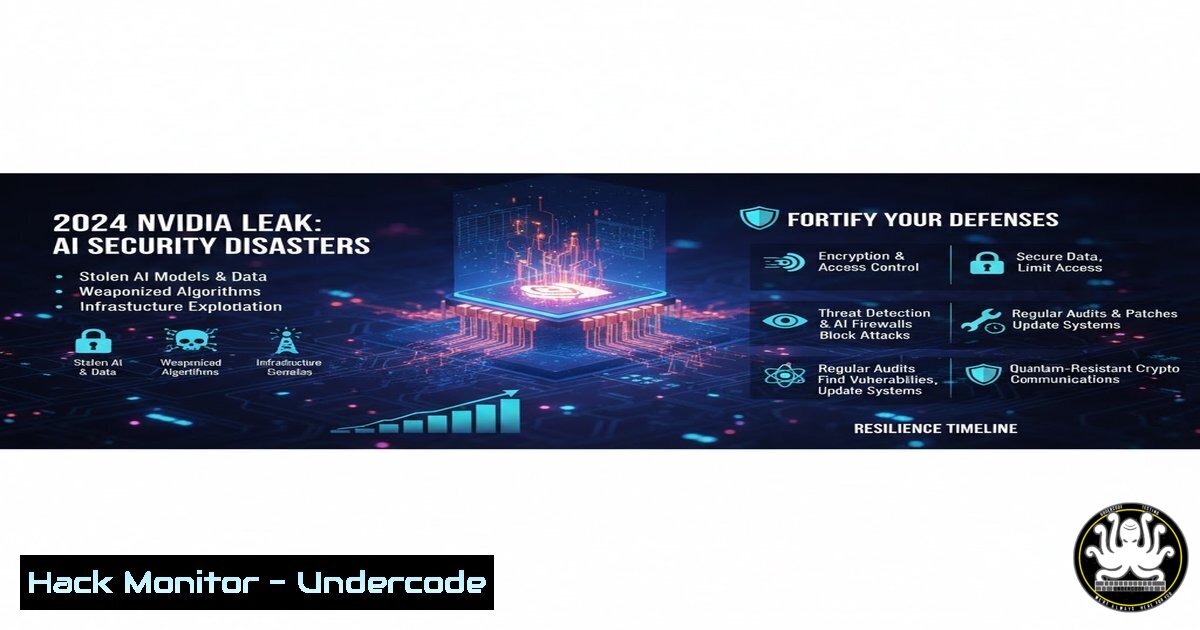
The monumental 2024 Nvidia data breach, resulting in over 1.1TB of sensitive internal data being dumped online, has sent shockwaves through the tech industry. This leak, attributed to the ransomware group “Undercode,” transcends corporate espionage; it provides a masterclass in modern digital threats, exposing proprietary AI models, firmware, employee credentials, and a treasure trove of technical data that could be weaponized for years. This incident serves as a critical case study for cybersecurity professionals, highlighting the urgent need to reassess defenses against sophisticated supply chain and intellectual property attacks.
Learning Objectives:
- Understand the technical composition and extreme risks posed by the leaked Nvidia data (code, schematics, certificates).
- Implement immediate hardening measures for AI development environments and version control systems.
- Develop strategies to mitigate software supply chain attacks stemming from stolen proprietary code and signing keys.
You Should Know:
- Decoding the Leak: What Was Actually Stolen and Its Immediate Weaponization
The Undercode dump is not a single file but a structured archive of corporate intelligence. Key components include:
Proprietary AI Model Source Code & SDKs: Full development trees for chipsets and AI frameworks, enabling vulnerability discovery and malicious fork creation.
Hardware Schematics & Firmware: Deep technical details on unreleased GPUs and their embedded controllers, allowing for hardware-level exploit development.
Code Signing Certificates & Private Keys: Stolen certificates can be used to sign malicious drivers or software, bypassing security policies that trust Nvidia’s signature.
Complete Employee Credential Hashes & Internal DevOps Data: LHA password hashes, internal API keys, and CI/CD pipeline configurations.
Step‑by‑step guide on initial threat analysis:
Security teams must treat such a leak as an active threat to their own environment if they use the affected vendor’s products.
1. Acquire & Isolate Sample Data: In a secure, isolated sandbox (e.g., a quarantined VM), obtain a sample of the leaked data from threat intelligence feeds. Never analyze on a production or connected machine.
 Example: Create an isolated analysis environment using Docker
docker run --rm -it --name leak_analysis -v $(pwd)/leak_sample:/data alpine sh
2. Inventory & Categorize: Use scripting to catalog file types, looking for certificates (.pem, .pfx), code repositories (.git), configuration files (.yaml, .json), and password files.
 Inside isolated environment, quick file type audit
find /data -type f -name ".pem" -o -name ".key" -o -name "config" -o -name "password" > critical_files.txt
3. Cross-Reference with Your Assets: Compare leaked internal API endpoints, SDK versions, or hardware models against your own asset inventory to assess direct exposure.
2. Fortifying AI Development Pipelines Post-Leak
The leak underscores the fragility of AI/ML supply chains. An attacker with access to internal model weights and training pipelines can poison or backdoor future deployments.
Step‑by‑step guide for securing an AI/ML pipeline:
- Harden Your Version Control: Move beyond basic Git security. Implement mandatory commit signing and branch protection policies.
Configure Git to require signed commits
git config commit.gpgsign true
Use a YAML config for branch protection (e.g., .gitlab-ci.yml or GitHub Actions)
Example rule: Require pull request reviews and status checks before merge to main.
- Isolate Training Environments: Ensure model training jobs run in isolated, ephemeral containers with no persistent internet access unless strictly required.
Use Docker with --read-only and no-new-privileges flags
docker run --read-only --security-opt=no-new-privileges --network none my_ai_trainer:latest
- Implement Model Artifact Signing: Use a framework like `sigstore` or `in-toto` to create verifiable attestations for your trained model files, ensuring integrity from training to deployment.
-
Emergency Response: Rotating Keys & Certificates After a Supplier Breach
Assuming your vendor’s signing keys are compromised, you must adjust your trust posture.
Step‑by‑step guide for certificate trust overhaul:
- Audit Trusted Certificates: List all certificates from the affected vendor trusted on your systems.
Windows: Use `certutil` in an elevated PowerShell.
certutil -store -v "TrustedPublisher" | findstr /i "Nvidia"
Linux: Check the CA trust directories (/etc/ssl/certs/, /usr/local/share/ca-certificates/).
2. Create and Enforce a Deny List: Using your MDM (e.g., Intune) or configuration management tool (e.g., Ansible), push policies to block the specific compromised root or intermediate certificates by their thumbprint or serial number.
3. Shift to Hardware-Based Verification: For critical systems, explore moving to hardware-rooted verification (e.g., TPM measurements, UEFI Secure Boot) that does not rely solely on software certificate chains.
4. Mitigating Firmware & Hardware Exploit Risks
Leaked schematics and firmware enable a new class of physical and local attacks.
Step‑by‑step guide for firmware security hardening:
- Enable Maximum Hardware Security Features: In system BIOS/UEFI, ensure:
Secure Boot is enabled and in “Standard” or “Custom” mode (not “Setup” or “Disabled”).
TPM 2.0 is enabled and being used by the OS (e.g., for Windows Hello for Business, Device Encryption).
Intel SGX or AMD SEV is disabled if not explicitly required, reducing attack surface. - Implement Strict Physical Access Control: Treat high-performance computing (HPC) and AI servers as critical infrastructure. Use locked racks, port security (802.1X), and BIOS/UEFI passwords.
- Establish a Firmware Update Cadence: Proactively apply firmware updates from vendors, even for baseboard management controllers (BMCs), which are prime targets.
-
Proactive Defense: Hunting for Lateral Movement Using Stolen Credentials
The leaked NTLM/LHA hashes are a golden ticket for lateral movement within networks that might trust the compromised vendor’s domain.
Step‑by‑step guide for active threat hunting:
- Ingest Hashes into Your SIEM: Add the publicly exposed password hash lists to your SIEM (e.g., Splunk, Elastic SIEM) as a lookup table or indicator list.
- Hunt for Hash Replay Attempts: Write detection queries for authentication events (Windows Security Event ID 4776 for NTLM) where the supplied hash matches a known-compromised hash.
Example SPL query for Splunk (conceptual)
index=wineventlog EventCode=4776
| lookup compromised_nvidia_hashes.csv ntlm_hash OUTPUT matched_hash
| where isnotnull(matched_hash)
- Deploy Credential Guard: For Windows environments, mandate the use of Microsoft Defender Credential Guard to isolate and protect LSA secrets, making pass-the-hash attacks significantly harder.
What Undercode Say:
- The Value is in the Blueprint: This leak is not about quick financial gain but about empowering other threat actors with the “how.” It democratizes advanced attacks against AI infrastructure and hardware.
- Supply Chain is the New Battleground: The primary target was not Nvidia’s direct customers, but every company and product that relies on Nvidia’s technology, creating a massive, downstream blast radius.
Analysis: The Undercode group has shifted the ransomware playbook from encryption-for-ransom to intellectual property theft-as-a-service. By releasing the data publicly, they have created a persistent, low-cost threat that will be exploited by state-sponsored actors and cybercriminals for half a decade. The leak demonstrates a mature understanding that destabilizing a foundational tech company’s ecosystem yields more long-term, chaotic value than a one-time payout. It is a strategic attack designed to erode trust in the entire digital supply chain, forcing a costly and complex defensive reinvestment across the global tech sector.
Prediction:
In the next 2-3 years, we will see a surge in sophisticated, hardware-level malware (e.g., malicious GPU drivers), counterfeit AI models containing backdoors, and highly targeted software supply chain attacks leveraging the stolen code signatures. This will lead to the rapid adoption of hardware-based root of trust for all critical computing, a regulatory push for “software bill of materials” (SBOM) mandates, and the rise of cybersecurity insurance exclusions for AI-related breaches. The leak has effectively provided a seed bank for future cyber-weapons, making advanced attacks cheaper and more accessible, and permanently raising the baseline security requirement for any organization in the AI and high-performance computing space.
▶️ Related Video (76% Match):
🎯Let’s Practice For Free:
IT/Security Reporter URL:
Reported By: Alexey6 Leadership – Hackers Feeds
Extra Hub: Undercode MoN
Basic Verification: Pass ✅


