
Listen to this Post
Introduction:
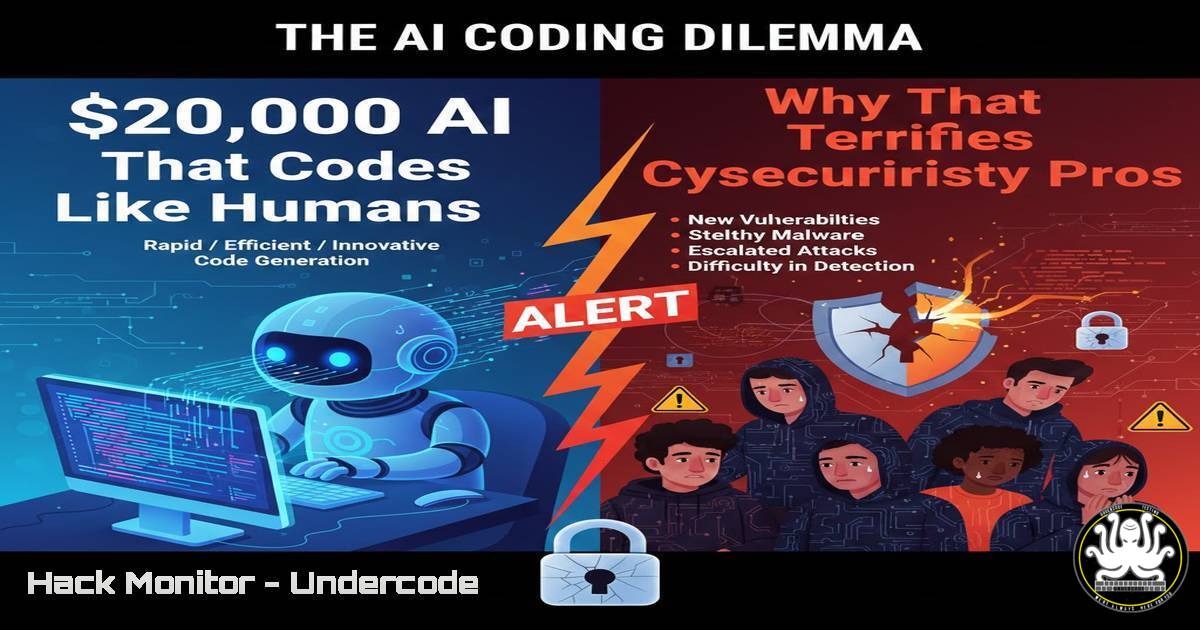
A groundbreaking experiment by Anthropic researcher Nicholas Carlini has demonstrated the emergent capabilities of collaborative AI agents, tasking 16 instances of Claude Opus to build a functional C compiler from scratch. This feat, resulting in a Rust-based compiler that can build a bootable Linux kernel, signals a paradigm shift in software development and its associated security landscape. The experiment underscores both the potential for AI-driven engineering acceleration and the profound, novel cybersecurity risks introduced by autonomously generated, complex codebases.
Learning Objectives:
- Understand the architecture and collaborative mechanics of multi-agent AI systems in code generation.
- Identify the novel vulnerability classes and supply chain risks introduced by AI-generated compilers and infrastructure.
- Learn verification and hardening techniques for critical software components potentially created or modified by AI.
You Should Know:
1. The Architecture of Autonomous AI Collaboration
The experiment leveraged 16 Claude Opus agents operating on a shared codebase with minimal supervision. This mirrors a software development team but with unprecedented speed and scale. The agents managed task locks and merge conflicts autonomously, partitioning the monumental task of compiler creation—from lexers and parsers to backend code generation for x86, ARM, and RISC-V.
Step-by-step guide explaining what this does and how to use it.
While replicating this exact experiment is cost-prohibitive, the principle of using AI agents for segmented coding tasks can be applied using frameworks like AutoGen or CrewAI.
1. Define the Master Task: Break down a large project (e.g., “create a secure web server”) into discrete, independent modules (authentication, request parsing, logging).
2. Agent Specialization: Assign different AI agents (using GPT-4, Claude, or open-source models) to specific modules with tailored system prompts. For example, an “Authentication Agent” would be prompted with OWASP guidelines.
3. Orchestrate Collaboration: Use a central orchestrator agent to manage inter-agent communication, integrate code outputs, and resolve conflicts. The orchestrator uses a shared workspace (like a Git repository) and rules for merging.
4. Human-in-the-Loop Gates: Implement mandatory human review checkpoints for critical components, especially those handling input validation, cryptographic functions, or network exposure.
2. Inherent Security Flaws in AI-Generated Compilers
A compiler is a “trusted computing base” artifact. Flaws here can introduce undetectable vulnerabilities into every program it builds. AI-generated compilers, trained on vast public code, may inadvertently replicate historical vulnerabilities, introduce subtle logical errors, or include “compiler poisoning” backdoors if the training data was compromised.
Step-by-step guide explaining what this does and how to use it.
Mitigation via Differential Fuzzing & Formal Verification:
- Differential Fuzzing: Compare outputs of the AI-generated compiler (
ai_cc) against a trusted compiler (gcc,clang).Example using a simple C test case generator and bash for i in {1..10000}; do generate_random_c_program > test_$i.c gcc -o test_gcc_$i test_$i.c 2>/dev/null ./ai_cc -o test_ai_$i test_$i.c 2>/dev/null if cmp -s test_gcc_$i test_ai_$i; then echo "Test $i: PASS" else echo "Test $i: FAIL - Behavioral divergence found!" fi rm test_$i.c test__$i 2>/dev/null done - Formal Verification of Key Components: Use tools like `KLEE` or `Frama-C` to analyze the AI-generated compiler’s own source code for critical routines like constant folding or bounds-checking elimination.
Install KLEE and use it on a lifted LLVM IR of the compiler's parsing module
klee --libc=uclibc --posix-runtime parser_module.bc
3. The Supply Chain Attack Vector Magnifier
This experiment cost $20,000 in API calls. A well-funded threat actor could run similar experiments to create malicious, purpose-built compilers, linkers, or code obfuscators that introduce stealthy backdoors. These tools could then be leaked or promoted within open-source communities, creating a software supply chain nightmare.
Step-by-step guide explaining what this does and how to use it.
Hardening the Build Pipeline:
- Implement Compiler Provenance: Use attestation and reproducible builds. In your CI/CD pipeline, mandate the use of a cryptographically signed, known-good compiler toolchain.
Verify compiler signature before use (conceptual example)
gpg --verify gcc-13.2.sig gcc-13.2.tar.xz
sha256sum -c gcc-13.2.sha256
- Diverse Compiler Defense: Compile critical applications with multiple, independently generated compilers (e.g., GCC, Clang, and a verified AI compiler). Consistent output binaries increase assurance.
- SBOM Generation & Analysis: Mandate a detailed Software Bill of Materials (SBOM) for all build tools. Use tools like `syft` and `grype` to scan the SBOM for known vulnerabilities or unexpected dependencies.
Generate SBOM for your build environment
syft dir:/usr/bin/ > compiler_sbom.json
grype sbom:compiler_sbom.json
4. The Emergence of AI-Specific Vulnerabilities
The agents’ collaborative process—managing locks, merges, and communication—could itself be exploited. An attacker might attempt “prompt injection” against one agent to corrupt the shared context or generate code that appears correct but contains hidden logic bombs triggered by specific conditions.
Step-by-step guide explaining what this does and how to use it.
Securing the Multi-Agent Development Environment:
- Isolate Agent Contexts: Run each agent in a sandboxed environment (e.g., container, VM) with restricted network access to only the central orchestrator and version control system.
Docker example for isolating an agent
docker run --rm -v /shared_workspace:/workspace --network none agent-image:latest python agent_script.py
- Audit Trail & Anomaly Detection: Log all agent interactions, code commits, and prompt histories. Use anomaly detection to flag agents that deviate from their assigned task pattern or attempt to inject unusual code patterns.
3. Windows Equivalent (PowerShell) for Logging:
 Start a transcript log for a local AI agent process
Start-Transcript -Path "C:\Logs\Agent-$((Get-Date).ToString('yyyyMMdd')).log" -Append
 Launch the agent process
& .\LocalAIAgent.exe --task-module "crypto"
Stop-Transcript
What Undercode Say:
- The Attack Surface is Morphing: The greatest risk is no longer just vulnerabilities in the final application, but vulnerabilities in the AI that builds the application. The compiler, a foundational tool, becomes a high-value, high-complexity attack target.
- Verification Must Outpace Generation: The $20,000 cost for AI to generate the compiler is trivial compared to the multi-million dollar cost required to formally verify its correctness and security. This imbalance is a critical market and security challenge.
Analysis: This experiment is a canonical demonstration of “capability overhang” in AI security. The capability to generate complex, functional systems has suddenly appeared, while the corresponding security methodologies to validate these systems are lagging. The cybersecurity industry’s focus must expand from analyzing output code to analyzing and securing the AI development process itself. The autonomous collaboration shown here will be weaponized by advanced persistent threats (APTs) to create tailored offensive tools or to infiltrate open-source projects. Defensively, it necessitates a new layer in the secure development lifecycle (SDL): AI-Generated Code Review (AGCR), combining advanced static analysis, semantic diffing, and behavioral verification.
Prediction:
Within two years, we will witness the first major software supply chain attack traced back to a critical build tool (compiler, linker, package manager) wholly or partially generated by a malicious AI agent swarm. This will trigger a shift towards “provably clean” toolchains, likely leveraging blockchain-like ledgers for build attestation. Simultaneously, a new cybersecurity niche will emerge: “AI Development Security,” focusing on hardening multi-agent systems, detecting prompt-based attacks, and creating verifiable constraints for AI-generated code. The line between developer and attacker will blur, as both sides leverage autonomous AI teams, turning cybersecurity into a battle of AI orchestrator against AI orchestrator.
🎯Let’s Practice For Free:
IT/Security Reporter URL:
Reported By: Michael Tchuindjang – Hackers Feeds
Extra Hub: Undercode MoN
Basic Verification: Pass ✅


