Listen to this Post
Introduction:
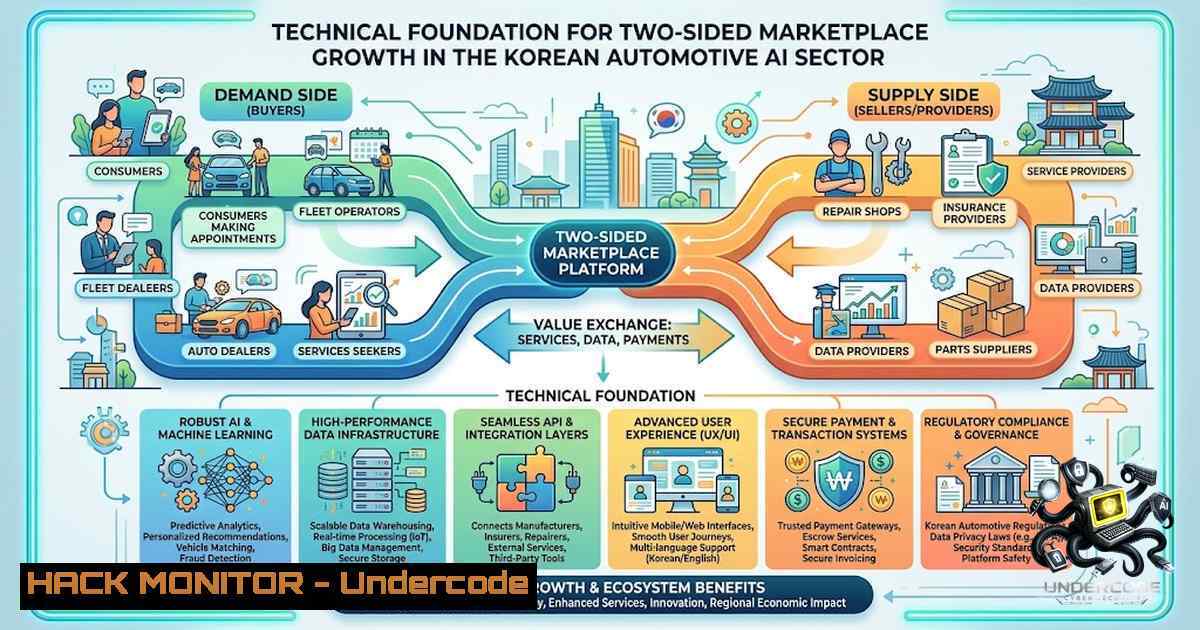
The convergence of artificial intelligence, two-sided marketplace dynamics, and localized digital ecosystems is redefining customer acquisition and retention strategies across Asia’s automotive tech sector. AutoDoc’s recent hiring initiative for a Korean market Growth Manager underscores the critical need for specialized professionals who can engineer growth from cold start to maturity using data-driven experimentation and deep integration with platforms like Naver and Kakao. This article synthesizes the technical, security, and operational requirements for scaling a dual-sided AI platform, providing a comprehensive guide for professionals navigating this intersection of growth hacking, API security, cloud hardening, and localized compliance.
Learning Objectives:
- Objective 1: Understand how to architect a secure, scalable growth funnel for two-sided marketplaces using cloud and API security best practices.
- Objective 2: Gain actionable knowledge of data-driven experimentation, user acquisition metrics (CAC, LTV, retention), and incentive design under local data privacy regulations (PIPA/LIPA).
- Objective 3: Learn platform-specific digital marketing techniques for Naver, Kakao, and Korean automotive communities, including command-line tools for SEO analysis and ad validation.
You Should Know:
- Architecting a Secure and Scalable Growth Infrastructure for Two-Sided Marketplaces
Effective growth management on a platform like AutoDoc necessitates a robust infrastructure that can handle high concurrency, protect sensitive user data, and withstand malicious attacks. This section provides a step‑by‑step guide to setting up a security-hardened environment for growth experimentation.
Step‑by‑step guide for securing a cloud‑based growth environment:
- Configure a Web Application Firewall (WAF): Use `aws wafv2 create-web-acl` to create a web ACL that blocks common attack vectors like SQL injection and cross‑site scripting (XSS). Define rules that rate‑limit API calls to prevent scraping of B2C and B2B user data.
- Implement API Gateway with Strong Authentication: Deploy an API Gateway that enforces OAuth 2.0 or API key rotation. For Linux, use `curl -X POST https://your-api-gateway/auth -d ‘{“client_id”:”growth_app”,”scope”:”marketplace_data”}’` to obtain a temporary token. On Windows PowerShell, use
Invoke-RestMethod -Uri https://your-api-gateway/auth -Method Post -Body '{"client_id":"growth_app","scope":"marketplace_data"}'. - Set Up a Secure Data Lake for A/B Testing: Utilize a service like Amazon S3 with bucket policies that restrict write access to only the growth engineering team. Example policy:
{"Effect":"Deny","Principal":"","Action":"s3:PutObject","Condition":{"NotIpAddress":{"aws:SourceIp":"10.0.0.0/16"}}}. - Encrypt Sensitive User Attributes: Use AWS KMS or Azure Key Vault to manage encryption keys for personally identifiable information (PII). For local testing, use OpenSSL:
openssl enc -aes-256-cbc -salt -in user_data.csv -out user_data.enc -k YOUR_PASSWORD. - Deploy a Zero‑Trust Network Architecture: Segment the B2C and B2B microservices using service meshes (e.g., Istio). On Linux, `kubectl apply -f network-policy.yaml` to enforce strict ingress/egress rules.
- Monitor for Anomalous Growth Activity: Integrate AWS CloudTrail and GuardDuty to detect unauthorized access attempts. Use `aws guardduty create-detector –enable` and set alerts for unusual API call patterns that may indicate a bot attack on the acquisition funnel.
- Perform Regular Vulnerability Scans: Use `nmap -sV -p- -T4 target_server_ip` to scan for open ports, and `nikto -h https://your-growth-dashboard.com` to identify web server vulnerabilities.
- Document Incident Response Playbooks: Create runbooks for potential data breaches, specifically focusing on Korean PIPA breach notification requirements (72‑hour reporting).
-
Data-Driven Experimentation and Localized Acquisition on Naver and Kakao
To optimize Customer Acquisition Cost (CAC) and Lifetime Value (LTV) in the Korean ecosystem, growth managers must master the technical interfaces of Naver, Kakao, and local automotive communities. This section details the verification, tracking, and compliance steps for these channels.
Step‑by‑step guide for implementing localized acquisition tracking:
- Set Up Naver Search Ad Conversion Tracking: Implement the Naver Ad Manager tracking pixel. Verify installation by inspecting network requests using Developer Tools (F12) and filtering by
ad.naver.com. - Configure Kakao Talk Channel API for B2B Lead Generation: Use the Kakao Talk Channel API with OIDC authentication. On Linux, use `curl -X GET “https://api.kakao.com/v1/users/me” -H “Authorization: Bearer $KAKAO_TOKEN”` to validate user profiles. For Windows, use
$response = Invoke-RestMethod -Uri "https://api.kakao.com/v1/users/me" -Headers @{Authorization="Bearer $KAKAO_TOKEN"}. - Implement UTM Parameter Standardization: Use a consistent UTM schema for all acquisition campaigns (e.g.,
?utm_source=naver&utm_medium=cpc&utm_campaign=b2b_repair_shop). Store these parameters in a database table with indexes on `campaign_id` anduser_segment. - Build a Data Pipeline for ROI Analysis: Use Apache Airflow to orchestrate daily ETL jobs that pull ad spend and conversion data. Sample Airflow DAG snippet:
task = PythonOperator(task_id='calculate_roi', python_callable=roi_calculation, op_kwargs={'data_source': 'naver_ads'}). - Validate Compliance with PIPA and LIPA: Implement data minimization logic. Use `jq` on Linux to filter and anonymize data before storage:
cat raw_user_data.json | jq 'del(.phone, .email)' > anonymized_data.json. - Conduct A/B Testing on Local Landing Pages: Use tools like Optimizely or custom feature flags. For feature flagging, use
curl -X POST https://your-feature-service/flags -d '{"flag":"new_kakao_onboarding","enabled":true}'. - Automate Keyword Bid Adjustments: Write a Python script using the Naver Search API to adjust bids based on real‑time CTR and conversion rates. Example using `requests` library:
response = requests.post('https://api.naver.com/v1/bid/adjust', json={'keyword':'auto_repair','bid':1200}). - Create Dashboards with Real‑Time Metrics: Use Grafana connected to PostgreSQL to display CAC, LTV, and retention rates. SQL query:
SELECT campaign_id, SUM(spend)/COUNT(DISTINCT user_id) AS cac FROM ad_performance GROUP BY campaign_id;. -
AI Platform Growth and Incentive Mechanism Implementation Under Local Regulations
The integration of AI Agents and DePIN logic into the platform’s incentive structure requires a delicate balance between technical sophistication and regulatory adherence. This section provides a guide for designing incentive systems that are secure, transparent, and compliant.
Step‑by‑step guide for building an AI-driven incentive system:
- Design a Smart Contract Prototype for Web3 Incentives: For DePIN or Web3 elements, use Solidity or Rust to create a staking contract that rewards B2B repair shops for verified services. Compile with
solc --abi --bin incentive.sol -o build/. - Secure the AI Model Endpoints: Use mutual TLS (mTLS) to authenticate requests between the AI recommendation engine and the incentive system. Generate client certs with
openssl req -1ew -key client.key -out client.csr. - Implement Real‑Time Reward Calculation: Create a microservice that listens to event streams (e.g., Kafka) of B2C appointments. Use `kafka-console-consumer –bootstrap-server localhost:9092 –topic appointments –from-beginning` to verify data flow.
- Ensure PIPA/LIPA Compliance for User Data: Build a consent management module. On Linux, use `grep -r “consent” /etc/growth_app/` to find all config files that enforce user consent for data sharing.
- Set Up a Fraud Detection System: Use machine learning models (e.g., Isolation Forest) to detect suspicious activities like fake reviews or duplicate accounts. Train with
python train_fraud_model.py --data fraud_dataset.csv --model isolation_forest.pkl. - Test the Incentive System Under Load: Use Apache JMeter or `wrk -t12 -c400 -d30s http://incentive-api/reward/calculate` to simulate high traffic from simultaneous B2C and B2B interactions.
7. Create a Feedback Loop for AI Model Retraining: Schedule a weekly cron job on Linux: `crontab -eand add0 2 1 /usr/bin/python3 /opt/growth/retrain_model.py –env production`. - Develop a Documentation Portal: Use Sphinx or MkDocs to document the incentive logic, API endpoints, and regulatory compliance checklists, ensuring all teams are aligned.
4. Cross-Departmental Collaboration and BD Ecosystem Amplification
Successful growth requires seamless integration with product, tech, and business development teams. This section provides a guide for a technical liaison.
Step‑by‑step guide for technical cross‑departmental integration:
- Set Up a Shared JIRA or Linear Board: Create issue templates for user feedback from Korean users that require product/tech localization.
- Automate Competitor Insight Aggregation: Use Python with BeautifulSoup or Selenium to scrape Korean automotive community forums (e.g., Bobae Dream). Run `python scrape_competitor_prices.py` to collect data.
- Implement a CI/CD Pipeline for Growth Experiments: Use Jenkins or GitHub Actions. Example GitHub Action step:
- name: Deploy to Staging uses: actions/deploy@v2 with: environment: staging. - Establish an OpenAPI Specification for BD Partners: Generate an OpenAPI YAML file and host it at
https://api.autodoc.com/v1/openapi`. Validate withswagger-cli validate openapi.yaml`. - Create a Data Sharing Agreement (DSA) Template: Work with legal to draft DSAs that meet Korean and international data protection laws. Encrypt DSAs with
gpg --encrypt --recipient [email protected] dsa_template.docx. - Hold Weekly Stand‑ups with Tech Teams: Use Zoom or Google Meet, and ensure all JIRA tickets related to growth are prioritized in the sprint grooming sessions.
- Monitor API Performance and Downtime: Set up Prometheus and Grafana to monitor API response times. Alert on 5xx errors using
prometheus-alertmanager. - Develop a Partner Portal: Use React or Vue.js to build a dashboard where BD partners can view real‑time referral performance and commissions.
-
Operationalizing Offline Community Viral Growth and Field Channel Expansion
Offline community events and field channels are critical for building trust and driving viral growth, especially in the automotive sector.
Step‑by‑step guide for offline community engagement:
- Create a QR Code‑Based Referral System: Generate dynamic QR codes for each repair shop using Python’s `qrcode` library:
qr = qrcode.QRCode(version=1); qr.add_data('ref_shop_123'). - Set Up a Landing Page for Offline Events: Host a subdomain for event registration, secured with HTTPS using Let’s Encrypt:
certbot --apache -d events.autodoc.com. - Implement RFID or NFC Check‑ins: For field events, use NFC tags to check‑in attendees. On Linux, use `nfc-poll` to read tag UIDs and correlate them with user accounts.
- Build a Mobile‑First Mobile Web App: Use PWA technologies to ensure fast loading on 4G networks. Use Lighthouse to audit performance: `lighthouse https://events.autodoc.com/`.
- Collect and Analyze Offline Data: Use `scp` to transfer event logs from field laptops to the central server:
scp user@field_laptop:/logs/event_2026-08-15.log /data/offline/. - Syndicate User‑Generated Content: Encourage attendees to post on Naver Blogs and Kakao Stories. Use the Naver Open API to syndicate content:
curl -X POST https://openapi.naver.com/v1/blog/post -d '{"title":"Event","body":"..."}'. - Integrate Offline Engagement into the AI Platform: Use the collected data to train a recommendation model that adjusts offers based on event attendance.
- Perform Post‑Event Data Analysis: Use `pandas` in Python to merge offline attendance data with online conversion data to measure ROI.
What Undercode Say:
- Key Takeaway 1: The AutoDoc role exemplifies the shift toward data‑first, security‑conscious growth roles that blend traditional marketing with deep technical skills in cloud infrastructure, API security, and AI model integration.
- Key Takeaway 2: Success in the Korean automotive tech market hinges on a practitioner’s ability to leverage local digital ecosystems (Naver, Kakao) and regulatory frameworks (PIPA/LIPA) while executing high‑frequency growth hacking experiments in a secure and scalable manner.
Analysis: The article highlights that modern growth management is no longer just about user acquisition—it’s about building a resilient technical foundation that supports rapid experimentation, protects user privacy, and complies with local laws. The emphasis on Web3 incentives and AI Agents suggests that AutoDoc is positioning itself at the forefront of decentralized automotive services, requiring professionals who can bridge the gap between traditional automotive verticals and cutting‑edge technology. The hybrid nature of the role (remote and on‑site) further underscores the need for agile collaboration across departments, from product development to legal compliance. By integrating security protocols and data‑driven strategies, growth managers can ensure that their initiatives not only drive user numbers but also build a trustworthy and sustainable platform.
Prediction:
- +1 The demand for professionals who combine native Korean fluency with technical growth hacking skills will rise significantly, creating a new specialty in the regional tech ecosystem.
- +1 AutoDoc’s aggressive investment in hybrid growth roles indicates that the Korean automotive tech sector is poised for rapid expansion, especially in the AI‑driven repair and diagnostics space.
- -1 Failure to balance aggressive growth with stringent data privacy and security measures could lead to regulatory penalties and user churn, particularly under PIPA’s strict breach notification rules.
- +1 The integration of Web3 and DePIN incentive models, if successfully implemented, could revolutionize how repair shops and car owners interact, potentially setting a new standard for loyalty and engagement.
- +1 Offline community viral strategies will likely become a critical differentiator, as trust‑based networks remain vital in the automotive industry, especially for B2B partnerships.
- -1 The complexity of managing a two‑sided marketplace across B2C and B2B segments may lead to resource allocation conflicts if growth experiments are not carefully prioritized.
- +1 The outlined security and compliance frameworks will not only protect user data but also serve as a competitive advantage, attracting privacy‑conscious consumers and partners.
- +1 As AI Agents become more sophisticated, they will enable hyper‑personalized user journeys, reducing CAC and increasing LTV through intelligent recommendations and dynamic incentive adjustments.
▶️ Related Video (84% Match):
🎯Let’s Practice For Free:
🎓 Live Courses & Certifications:
Join Undercode Academy for Verified Certifications
🚀 Request a Custom Project:
Secure, high-velocity infrastructure and disruptive technological engineering. Contact our engineering team for high-tier development and proprietary systems:
[email protected]
💎 Smart Architecture | 🛡️ Secure by Design | ⭐ Trusted by Thousands
IT/Security Reporter URL:
Reported By: https://lnkd.in/p/etcg9vGe – Hackers Feeds
Extra Hub: Undercode MoN
Basic Verification: Pass ✅


