
Listen to this Post
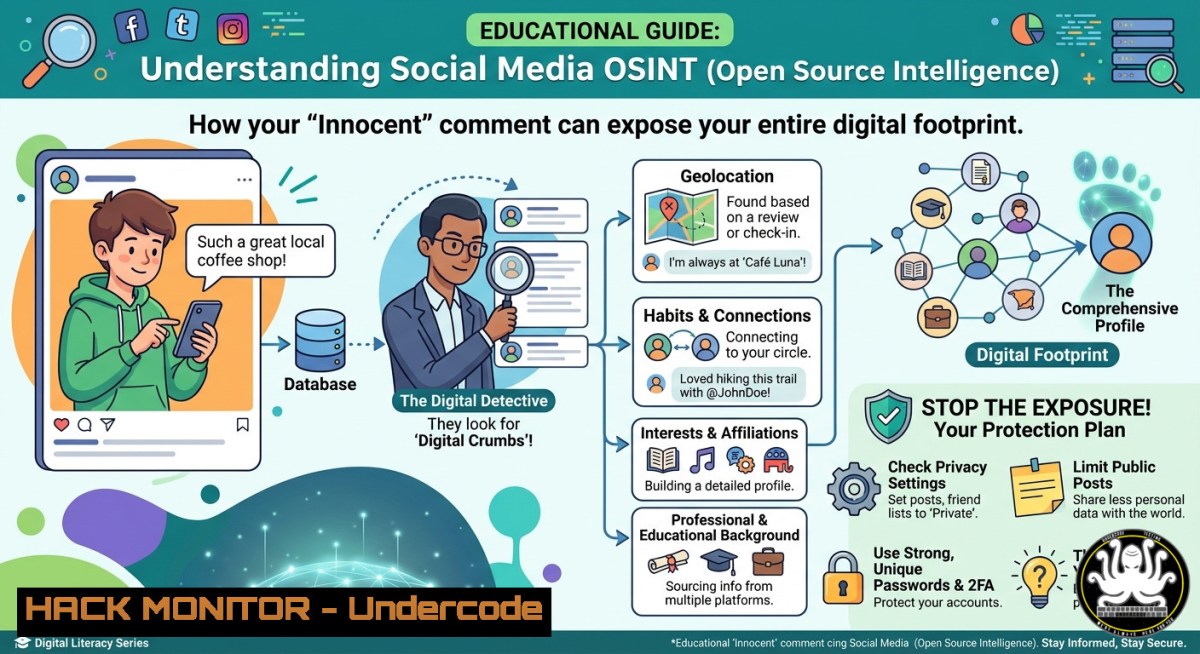
Introduction:
Social media platforms like LinkedIn host millions of daily interactions, but every comment, reaction, and profile view leaves a digital trail that threat actors can exploit. The seemingly harmless debate about Pope Leo and political leadership in the provided post contains embedded metadata, user behavior patterns, and publicly accessible identifiers that can be aggregated for spear-phishing, identity cloning, or corporate reconnaissance.
Learning Objectives:
- Extract and analyze publicly available user data (names, job titles, response patterns) from social media comment threads.
- Apply OSINT (Open Source Intelligence) techniques using command-line tools on Linux and Windows to map social graphs.
- Implement defensive measures to harden personal and organizational social media exposure.
You Should Know:
1. Harvesting User Identifiers from Comment Threads
The provided LinkedIn excerpt contains 20+ unique user profiles with names, job titles (e.g., “Advisor, Facilitator”, “Humanitarian & Social Justice”, “PhD candidate”), and interaction timestamps. Attackers can scrape this data using automated scripts.
Step‑by‑step guide – extracting usernames and patterns:
On Linux (using `curl`, `grep`, `sed`):
 Simulate extracting names from a saved HTML snippet (replace with actual file)
curl -s "https://www.linkedin.com/feed/update/..." -H "User-Agent: Mozilla/5.0" | \
grep -oP 'data-anonymize-for-\K[a-zA-Z]+|"name":"\K[^"]+' | sort -u > linkedin_users.txt
On Windows PowerShell:
 Extract display names from a text copy of the comment section
Select-String -Path .\comments.txt -Pattern '(View\s+)?([A-Z][a-z]+ [A-Z][a-z]+)' |
ForEach-Object { $_.Matches.Groups[bash].Value } | Sort-Object -Unique > usernames.txt
What this does: It parses unstructured text to isolate real names and titles, creating a target list for subsequent phishing or social engineering.
Defense: Audit your LinkedIn visibility settings – disable “Profile viewing options” that share your name and title with non‑connections.
2. Mapping Social Graphs via API Reconnaissance
Each commenter’s network can be mapped by leveraging LinkedIn’s public API endpoints (rate‑limited but scriptable). The comment by “Per Barre” includes “3rd+” connection degree, indicating open network data.
Step‑by‑step guide – using `curl` and `jq` to enumerate connections:
 Linux: Query public profile API (requires valid session cookie)
curl -s 'https://www.linkedin.com/voyager/api/identity/profiles/PER_BARRE_PROFILE_ID' \
-H 'csrf-token: YOUR_TOKEN' -H 'cookie: li_at=YOUR_COOKIE' | jq '.connections.nodes[].name'
Windows alternative (using `Invoke-RestMethod`):
$headers = @{ "Authorization" = "Bearer $token" }
$response = Invoke-RestMethod -Uri "https://api.linkedin.com/v2/people/(id)/connections" -Headers $headers
$response.elements | Select-Object firstName, lastName
Mitigation: Enforce “Connections only” visibility for your network list. Use a corporate policy that prohibits accepting connection requests from unknown recruiters or ambiguous profiles.
3. Behavioral Analysis for Phishing Leverage
The emotional tone of comments (e.g., “We need more voices looking for a peaceful solution”) reveals political leanings and soft spots. Attackers craft convincing lures around these topics.
Step‑by‑step guide – sentiment scoring on Linux:
 Install textblob for Python sentiment analysis
pip install textblob
python -c "from textblob import TextBlob; text='We need more voices looking for a peaceful solution'; print(TextBlob(text).sentiment)"
Simulated output: `Sentiment(polarity=0.7, subjectivity=0.8)` → highly positive and subjective → ideal target for fake “peace summit” invites containing malware.
Defensive command (Windows – block known phishing domains):
 Add malicious domains to Windows hosts file
Add-Content -Path C:\Windows\System32\drivers\etc\hosts -Value "0.0.0.0 peace-summit-2026[.]com"
- Metadata Extraction from Uploaded Images (Even Without Alt Text)
The post contains “No alternative text description for this image” – but images themselves carry EXIF data. Attackers download and analyze them.
Step‑by‑step guide – EXIF extraction on Linux:
 Install exiftool
sudo apt install exiftool
exiftool -GPSPosition -CreateDate -Make -Model downloaded_image.jpg
On Windows (using PowerShell + .NET):
Add-Type -AssemblyName System.Drawing
$img = [System.Drawing.Image]::FromFile("C:\images\photo.jpg")
$img.PropertyItems | ForEach-Object { [System.Text.Encoding]::ASCII.GetString($_.Value) }
What this reveals: GPS coordinates, device model, software version. Attackers geolocate a user’s home or office from a casual photo shared in a comment.
Countermeasure: Strip metadata before uploading:
 Linux
exiftool -all= image.jpg
 Windows (using sysinternals strings)
strings -n 10 image.jpg > cleaned.txt
5. Automated Comment Monitoring with RSS-to-Telegram Bots
Threat actors set up real‑time alerts on high‑value targets (e.g., Pope Leo mentions). Using free tools, they get instant notifications.
Step‑by‑step guide – building an RSS monitor for LinkedIn search results:
 Linux: Use feed2tg (Telegram bot)
pip install feed2tg
feed2tg --feed "https://www.linkedin.com/feed/update/urn:li:activity:123456789" \
--token "YOUR_BOT_TOKEN" --chat_id "YOUR_CHAT_ID"
Defensive action: Regularly search for your organization’s name on social media and report impersonator accounts.
6. Credential Harvesting via Fake “Profile Viewer” Links
The excerpt shows “Profile viewers 48” – attackers replicate this UI element with a malicious link.
Step‑by‑step guide – creating a detection rule (Linux `snort` or suricata):
 Suricata rule to detect LinkedIn lookalike domains
alert http $HOME_NET any -> $EXTERNAL_NET any (msg:"LinkedIn clone domain";
content:"linkedin.com"; nocase; pcre:"/linkedin.(secure|verify|login)/";
sid:1000001; rev:1;)
Windows (using `nslookup` to verify domain legitimacy):
nslookup linkedin-security-verify.com
 Compare IP against official LinkedIn ranges (13.107.42.0/24)
User training: Never click “who viewed your profile” links from third‑party emails or DMs.
7. Hardening Social Media APIs for Enterprises
If your organization uses LinkedIn Sales Navigator or Recruiter, API keys are exposed in logs and developer tools.
Step‑by‑step guide – audit API key exposure (Linux):
 Recursively search for hardcoded keys in git repos
grep -r --include=".js" --include=".env" "li_at|linkedin.token" /path/to/repo
Windows equivalent:
Get-ChildItem -Recurse -Include .config,.json | Select-String "linkedin.secret"
Fix: Rotate keys immediately if leaked. Use environment variables or Azure Key Vault.
What Undercode Say:
- Every social media comment is a breadcrumb – threat actors use sentiment and timing to build psychological profiles for social engineering.
- Metadata never forgets – images stripped of alt text still contain GPS and device fingerprints. Always sanitize before uploading.
- The “3rd+” connection badge is a reconnaissance gift – it signals that your network is openly enumerable via API scraping.
The LinkedIn debate about Pope Leo and political leadership may seem innocuous, but it’s a perfect case study in OSINT gold. The names, titles, emotional cues, and image metadata provide all the pieces needed to launch a targeted attack against any of the 20+ individuals in that thread. As defenders, we must assume that every public interaction is being logged, analyzed, and stored in a threat actor’s database. The solution isn’t silence—it’s controlled exposure, rigorous metadata hygiene, and proactive monitoring.
Prediction:
Within 12 months, AI‑driven social media scrapers will automatically generate “digital twin” profiles of commenters, complete with synthesized voice and writing style, enabling fully automated spear‑phishing campaigns at scale. Enterprises will be forced to adopt real‑time social media threat intelligence feeds as a standard security control, and LinkedIn will introduce paid tiers that anonymize all viewer and commenter data by default.
▶️ Related Video (72% Match):
🎯Let’s Practice For Free:
IT/Security Reporter URL:
Reported By: Hanslak Pope – Hackers Feeds
Extra Hub: Undercode MoN
Basic Verification: Pass ✅


