Listen to this Post
Introduction:
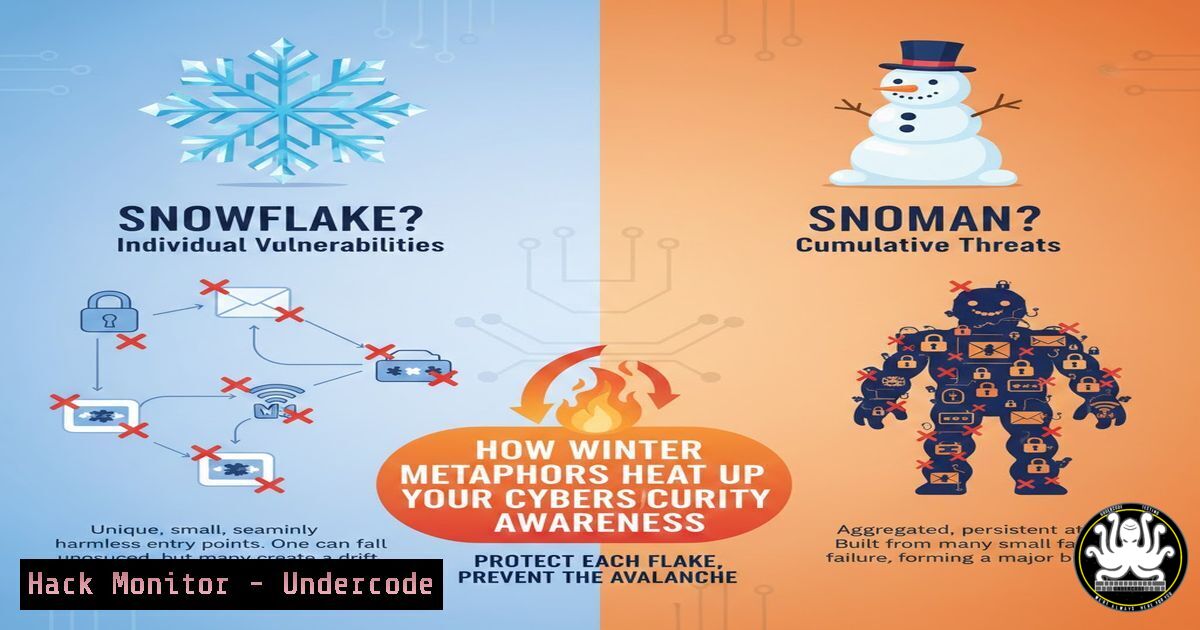
As professionals return from winter breaks, the playful imagery of building a snowman contrasts sharply with the critical task of building robust cyber defenses. This seasonal shift underscores a perennial challenge in IT security: maintaining vigilance and warmth in client relationships while the threat landscape remains frosty. The intersection of human factors, seasonal business rhythms, and persistent digital threats creates a unique risk profile that demands both technical hardening and strategic communication.
Learning Objectives:
- Understand the human and seasonal factors that influence cybersecurity posture.
- Implement technical controls to mitigate increased risk during business transitions.
- Leverage threat intelligence and security frameworks to maintain continuous protection.
You Should Know:
- The “Frosty” Perimeter: Securing Remote Access in Winter Conditions
Extended winter conditions often lead to increased remote work, expanding the corporate attack surface. This requires a hardened approach to VPNs, endpoints, and cloud access.
Step‑by‑step guide:
- Audit VPN Concentrators & Firewall Rules: Ensure only necessary ports are open. For a Linux-based firewall using
iptables, list current rules:sudo iptables -L -v -n. - Enforce Multi-Factor Authentication (MFA): Mandate MFA for all remote access solutions, including VPNs and cloud consoles like AWS IAM or Azure AD.
- Patch Management: Expedite patches for remote access software. On Windows, check the last update time for a specific service like OpenVPN:
Get-HotFix | Sort-Object InstalledOn -Descending | Select-Object -First 10. - Network Segmentation: Isolate remote user VLANs from critical internal networks to limit lateral movement.
-
Thawing the “Frozen” Configuration: Post-Holiday Security Baseline Review
Extended system dormancy can lead to outdated configurations and expired certificates. A rigorous post-holiday review is essential.
Step‑by‑step guide:
- Conduct a Configuration Compliance Scan: Use tools like CIS-CAT Pro, OpenSCAP, or custom Ansible playbooks to compare systems against hardened benchmarks (e.g., CIS Benchmarks).
- Check Certificate Validity: Scan for expiring TLS certificates. A simple OpenSSL command can check a web server:
openssl s_client -connect yourdomain.com:443 2>/dev/null | openssl x509 -noout -dates. - Review and Rotate Credentials: Force password resets for privileged accounts and service accounts that may have stale credentials. Implement automated secret rotation using a vault (e.g., HashiCorp Vault).
-
Validate Backup Integrity: Perform a test restoration of critical data from your latest backups to ensure recovery capabilities are not “frozen.”
-
Building a Security Snowman: Layering Your Defenses (Defense in Depth)
Like a snowman’s stacked sections, effective security requires multiple, interdependent layers.
Step‑by‑step guide:
- Layer 1 – Network: Configure Intrusion Prevention Systems (IPS) and segment networks. Example Suricata rule to detect common exploit kits:
alert tcp any any -> $HOME_NET any (msg:"Potential Exploit Kit Activity"; flow:to_client; content:"/malware.js"; http_uri; classtype:trojan-activity; sid:1000001;). - Layer 2 – Host: Deploy Endpoint Detection and Response (EDR) and ensure host-based firewalls are active. On Linux, verify `ufw` status:
sudo ufw status verbose. - Layer 3 – Application: Integrate Static Application Security Testing (SAST) and Dynamic Application Security Testing (DAST) into your CI/CD pipeline.
-
Layer 4 – Data: Implement encryption for data at rest (e.g., LUKS on Linux, BitLocker on Windows) and in transit (TLS 1.3+).
-
The “Melting” Attack Surface: Cloud Security Posture Management (CSPM)
The dynamic nature of cloud resources can lead to insecure, “drifting” configurations that melt away your security posture.
Step‑by‑step guide:
- Enable Cloud Provider Security Tools: Activate AWS Security Hub, Azure Security Center, or Google Cloud Security Command Center.
- Automate Remediation: Use tools like Prowler or ScoutSuite to identify misconfigurations, then create automated remediation scripts. For example, a script to find and fix publicly accessible S3 buckets using AWS CLI:
List all buckets
aws s3api list-buckets --query "Buckets[].Name" --output text
Check public access block for a specific bucket
aws s3api get-public-access-block --bucket BUCKET_NAME
- Enforce IAM Least Privilege: Regularly audit IAM roles and policies using access advisor tools to remove unused permissions.
5. Social Engineering: The “Warm Conversation” Phish
Cybercriminals exploit renewed communications and seasonal themes, like the post’s “warm conversation,” in targeted phishing campaigns.
Step‑by‑step guide:
- Launch a Phishing Simulation: Use open-source tools like GoPhish or commercial platforms to simulate seasonal phishing lures (e.g., “Q1 Budget Planning,” “Winter Deal Updates”).
- Implement Email Security Protocols: Configure DMARC, DKIM, and SPF records for your domain to prevent spoofing. Check your DMARC record:
dig TXT _dmarc.yourdomain.com. - User Awareness Training: Direct teams to cybersecurity training platforms like Cybrary, SANS Security Awareness, or the (implied) offerings from
th4ts3cur1ty.company. - Analyze Email Headers: Train SOC analysts to examine headers for signs of spoofing. Key fields to check:
From,Return-Path,Received-SPF. -
PocketSIEM and Continuous Monitoring: Keeping the Fire “Heating Up”
As mentioned in the post, solutions like PocketSIEM symbolize the need for affordable, continuous security monitoring to detect anomalies.
Step‑by‑step guide:
- Define Critical Log Sources: Ensure logs from firewalls, endpoints, cloud trails, and DNS are forwarded to your SIEM.
- Build Alerting Rules: Create correlations for post-holiday threats. Example Sigma rule (convertible to SIEM queries) for suspicious after-hours activity:
title: After Hours Activity detection status: experimental logsource: category: process_creation detection: selection: CommandLine|contains: 'powershell' condition: selection and not filter: .... - Tune False Positives: Regularly review and adjust alert thresholds to maintain a high signal-to-noise ratio.
- Establish an Incident Response Playbook: Ensure a clear workflow for alerts, including containment, eradication, and recovery steps.
7. API Security: The Hidden “Snow Fort”
APIs power modern business integrations but are often overlooked in security assessments, becoming hidden snow forts for attackers.
Step‑by‑step guide:
- Inventory All APIs: Use tools like Postman collections, OpenAPI specs, or network scanners (OWASP Amass) to discover all external and internal APIs.
- Implement an API Gateway: Use gateways (e.g., Kong, AWS API Gateway) to enforce rate limiting, authentication, and input validation.
- Test for OWASP API Top 10 Vulnerabilities: Use specialized tools like OWASP ZAP with the API scan add-on or commercial DAST tools.
- Secure API Keys & Tokens: Never hardcode keys. Store them in environment variables or secrets managers, and implement key rotation policies.
What Undercode Say:
- Key Takeaway 1: Seasonal business cycles and human factors are integral to threat modeling. Security awareness and technical controls must adapt to periods of increased transition, such as post-holiday returns, when user vigilance may be lower and attack surfaces shift.
- Key Takeaway 2: Effective cybersecurity is a balanced construct of layered technical defenses (the snowman) and proactive, warm human engagement. Tools like SIEMs and CSPM are critical, but their value is unlocked by strategic communication, continuous training, and understanding the business context they protect.
The LinkedIn post, while seemingly light-hearted, perfectly encapsulates the dual reality of cybersecurity professionals: they must maintain engaging, human-centric client relationships while orchestrating a complex, always-on technical defense. The reference to `th4ts3cur1ty.company` and `PocketSIEM` hints at the growing market for accessible, integrated security solutions that bridge this gap. The real “hot deal” is a security posture that is as resilient to the chill of cyber threats as a well-built snowman is to the winter cold.
Prediction:
The convergence of AI-driven threat actors and AI-powered defense tools will dominate the next 18-24 months. Phishing lures, like those exploiting seasonal themes, will become hyper-personalized and automated via generative AI. Conversely, security orchestration (SOAR) and SIEM platforms will integrate AI to autonomously correlate weak signals, predict attack paths, and suggest containment steps, drastically reducing mean time to respond (MTTR). The role of the security professional will evolve from alert triage to strategic oversight of these AI systems, making continuous education—highlighted by initiatives like WiCyS—more critical than ever.
▶️ Related Video (86% Match):
🎯Let’s Practice For Free:
IT/Security Reporter URL:
Reported By: Lisa Belmonte – Hackers Feeds
Extra Hub: Undercode MoN
Basic Verification: Pass ✅


