Listen to this Post
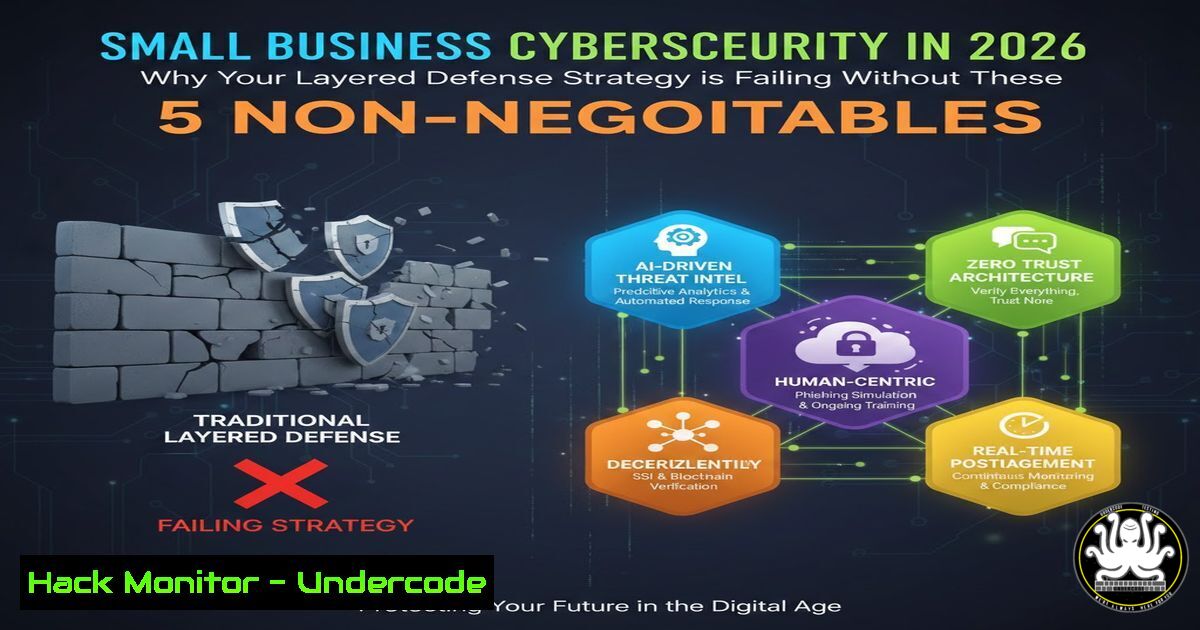
Introduction:
For most small and medium-sized enterprises (SMEs), the instinct is to treat cybersecurity as a shopping list—buy a firewall, install an antivirus, and hope for the best. However, as we move deeper into 2026, this “tool-first” mentality is the primary reason breaches succeed. Effective security is not about the volume of tools deployed, but about the strategic layering of controls that address predictable attack patterns. This article breaks down the fundamental architecture every SME needs, moving beyond product acquisition to focus on operational discipline, identity hygiene, and sustainable vulnerability management.
Learning Objectives:
- Understand the “Layering Approach” to security and how it applies to People, Accounts, and Devices.
- Learn to implement a high-ROI password management and MFA strategy without disrupting business workflows.
- Differentiate between enterprise-grade requirements (like a full SOC) and SME-appropriate solutions (like MDR).
- Master the art of lightweight, risk-based vulnerability scanning to avoid alert fatigue.
- Identify the critical path to securing email, endpoints, and cloud applications in a hybrid work environment.
- The Layering Approach: Moving from Tools to Strategy
The core concept outlined in the source material is the shift from a tool-centric view to a “layering approach.” In cybersecurity, depth is achieved by covering specific vectors in a specific order: People, Accounts, Devices, Email, Data, Apps, and Monitoring. You cannot secure data if you haven’t secured the device accessing it, and you cannot secure the device if the account controlling it is compromised.
Why it works: Breaches follow patterns (phishing, credential theft, misconfiguration). By layering defenses that map directly to these patterns—rather than buying a “swiss army knife” tool—you create friction for the attacker at every stage. Start by assessing your human risk (people), enforce strong identity controls (accounts), and then move outward to the technical estate.
- Identity First: Deploying Password Managers and MFA for Maximum ROI
The fastest return on investment for any SME lies in identity hygiene. The recommendation to use tools like 1Password or LastPass paired with ubiquitous MFA is not just about security; it’s about user adoption.
Step-by-Step Guide to Rolling Out Identity Controls:
- Pilot with Leadership: Deploy the password manager to the executive and finance teams first. They handle the most sensitive data and set the cultural tone.
- Configure Browser Extensions: Ensure the password manager extension is forced or suggested in Chrome/Edge to autofill credentials, eliminating the “sticky note” problem.
- Enforce MFA Everywhere: Prioritize Email (Microsoft 365/Google Workspace), Payroll systems (Gusto/ADP), and Banking portals.
- Command Verification (Windows – MFA Status Check): If using Microsoft Entra ID, run the following in PowerShell (requires MSOnline module) to identify users without MFA:
Connect to Microsoft Entra
Connect-MsolService
Get users and MFA status
Get-MsolUser -All | DisplayName, UserPrincipalName, StrongAuthenticationRequirements.State
- Command Verification (Linux – Password Policy): Ensure local Linux user passwords aren’t reused. Check aging information on critical servers:
Check password expiration info for all users
sudo chage -l (username)
Or view last password change from shadow file
sudo cat /etc/shadow | grep 'username:'
3. Rethinking Vulnerability Scanning: Quality over Quantity
Many SMEs fall into the trap of monthly “overkill” scans that produce hundreds of unactionable findings. The suggested approach is lightweight, monthly scans focusing on the top risk items. This aligns with a risk-based remediation strategy.
Step-by-Step Lightweight Scanning Strategy:
- Tool Selection: Use a lightweight, agentless scanner like Nessus Essentials or Greenbone (OpenVAS) for external surface scans.
- Scope Definition: Limit your monthly scan to internet-facing IPs and critical internal servers only—not every endpoint.
- Prioritization Matrix: Instead of fixing everything, use the CVSS Score combined with Exploit Availability. Focus only on vulnerabilities that are (a) Critical/High severity AND (b) have a known public exploit.
- Command Execution (Linux – Local Vulnerability Audit): For a quick check on a Linux server for outdated packages (a major source of vulns):
Debian/Ubuntu - Check for upgradable packages that may contain security fixes
sudo apt list --upgradable
RHEL/CentOS - Check for security updates only
sudo yum updateinfo list security
- Command Execution (Windows – Windows Update Audit): Use PowerShell to ensure critical patches are applied:
Check installed patches via PowerShell
Get-HotFix | Where-Object { (Get-Date).AddMonths(-3) -le .InstalledOn }
4. Endpoint Protection: Beyond the Antivirus
An antivirus is table stakes. In 2026, SMEs need Endpoint Detection and Response (EDR) capabilities, but usually delivered via a Managed Service Provider (MDR) rather than managed internally. This aligns with the source’s advice against building a full SOC.
Step-by-Step Endpoint Hardening:
- Deploy EDR Agent: Whether using Microsoft Defender for Business, SentinelOne, or CrowdStrike, ensure the agent is deployed to 100% of assets.
- Enable Attack Surface Reduction (ASR) Rules (Windows): These block common malware behaviors. To enable a rule blocking Office apps from creating child processes (common phishing behavior), use PowerShell:
Import the Defender module
Add an ASR rule (GUID for blocking Office apps from creating child processes)
Add-MpPreference -AttackSurfaceReductionRules_Ids D4F5AB3B-9DAA-4D8B-8B4F-5F9F6A7B8C9D -AttackSurfaceReductionRules_Actions Enabled
- Linux Endpoint Check: Verify that auditing is running to detect file changes.
Check if auditd is running
sudo systemctl status auditd
Watch for changes in the web directory (common attack vector)
sudo auditctl -w /var/www/html -p wa -k web_changes
5. Email Security: The Primary Attack Vector
Email remains the primary vector for ransomware. The “layering” approach requires specific controls here, not just spam filtering.
Step-by-Step Email Hardening:
- Implement DMARC: Move from monitoring (p=none) to rejection (p=reject) to prevent domain spoofing.
- Enable Safe Links/Attachments: If using Microsoft 365, ensure Defender for Office 365 policies are set to “Dynamic Delivery” to scan attachments in a sandbox.
- Command Line (Linux – Mail Log Analysis): Check your own mail server logs for unusual outbound traffic (a sign of a compromised account spamming):
Check mail log for sent emails (adjust path for your MTA)
sudo grep 'status=sent' /var/log/mail.log | awk '{print $1, $2, $7}' | sort | uniq -c | sort -nr | head -20
6. Cloud and Application Hardening
SMEs are heavily reliant on SaaS applications. Misconfigurations in these apps are a leading cause of data leaks.
Step-by-Step Cloud Security:
- Check OAuth Grants: Review which third-party apps have access to your Google Workspace or Microsoft 365 data. Revoke any unused or overly permissive apps.
- Enable Logging: Ensure that login and activity logs are being sent to a central location (SIEM or your MDR provider).
- Command Line (AWS CLI – Check S3 Buckets): If using AWS, a simple command to check for public buckets:
List all buckets and check their ACLs
aws s3api list-buckets --query "Buckets[].Name" --output text | xargs -I {} aws s3api get-bucket-acl --bucket {} --query "Grants[?Grantee.URI=='http://acs.amazonaws.com/groups/global/AllUsers']"
7. Monitoring: Why MDR Beats a DIY SOC
The source material correctly identifies that SMEs don’t need a Security Operations Center (SOC). They need a Managed Detection and Response (MDR) partner. A SOC requires 24/7 staffing, expensive technology, and complex playbooks. MDR provides the human analysis (the “discipline”) without the overhead.
What to look for in an MDR:
- 24/7 Human Analysis: They watch the alerts so you don’t have to.
- Response Capabilities: They should be able to isolate a host or block an IP on your behalf.
- Tool Agnostic: They should work with your existing stack (e.g., Defender, SentinelOne) rather than forcing a rip-and-replace.
What Undercode Say:
- Key Takeaway 1: Identity is the New Perimeter. The emphasis on password managers and MFA isn’t just best practice; it is the most cost-effective control you can deploy. In 2026, your bank and insurance provider will likely require it for cyber coverage. Deploying it to leadership first ensures buy-in and demonstrates that security enables, rather than hinders, business velocity.
- Key Takeaway 2: Stop Chasing Alerts, Start Managing Risk. The advice to avoid “monthly overkill” vulnerability scanning is critical. SMEs burn out trying to patch every low-severity issue. Shifting to a risk-based model—prioritizing vulnerabilities that are both critical and exploitable—preserves resources and actually reduces breach likelihood.
- Analysis: The core insight from the original post is the separation of “tools” from “discipline.” Most breaches in SMEs don’t occur because they lacked a firewall; they occur because the tools they bought were misconfigured, or the accounts using them were compromised. The focus on “People” and “Accounts” as the first layers forces a human-centric security model. By utilizing MDR for monitoring, SMEs can access enterprise-grade vigilance without enterprise-grade budgets. The real gap for most organizations isn’t the technology stack—it’s the consistent, disciplined application of that stack to the predictable patterns of modern cyberattacks. The layering model provides a blueprint to close that gap.
Prediction:
As AI-generated phishing becomes indistinguishable from human communication in late 2026, the “layering approach” will become the only viable defense for SMEs. We will see a sharp decline in tool sprawl and a rise in “Identity-First” managed services. The market will shift from selling individual products to selling outcomes—specifically, the outcome of not being breached. Consequently, cyber insurance premiums will begin to favor SMEs that can prove they have implemented this specific layered discipline (password managers + MFA + MDR) over those who simply own a list of security products. The future belongs to the disciplined, not the tool-rich.
▶️ Related Video (76% Match):
🎯Let’s Practice For Free:
IT/Security Reporter URL:
Reported By: Michaelrcastro Basic – Hackers Feeds
Extra Hub: Undercode MoN
Basic Verification: Pass ✅


