Listen to this Post
Introduction:
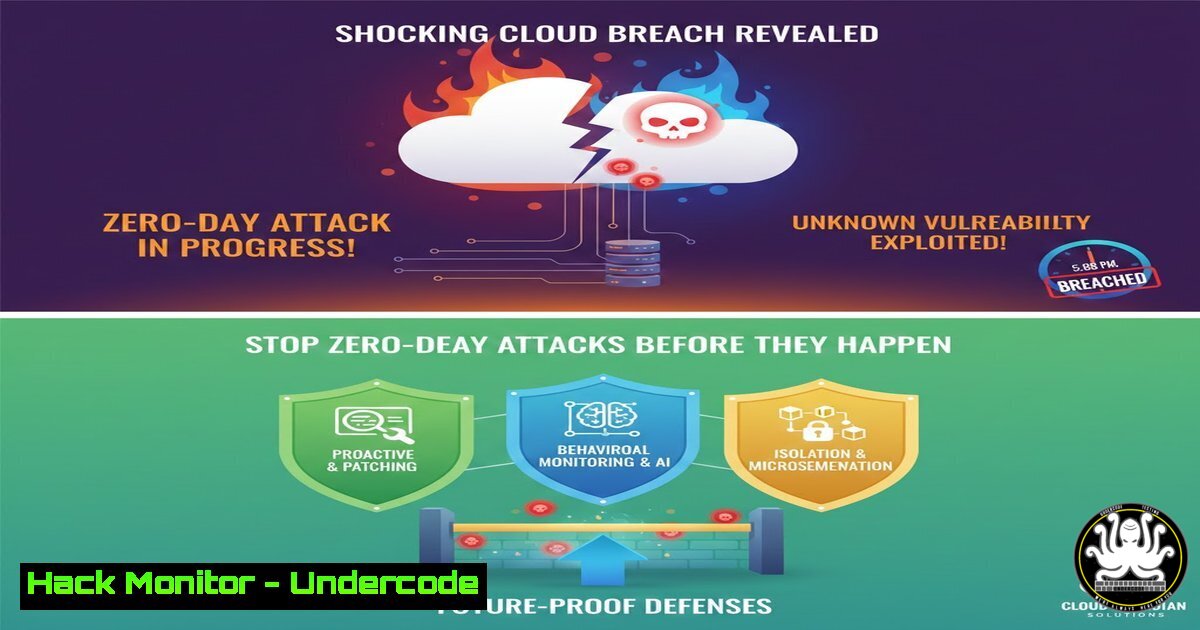
Zero-day exploits are undisclosed vulnerabilities that attackers use to compromise systems before patches are available. In cloud environments, these threats can escalate rapidly due to shared resources and automated deployments. This article delves into proactive strategies to mitigate such risks, covering API security, AI-driven detection, and hands-on hardening techniques.
Learning Objectives:
- Understand the lifecycle of a zero-day exploit in cloud infrastructure.
- Learn practical steps to harden cloud APIs and services.
- Implement monitoring and response techniques for early detection.
You Should Know:
1. Cloud API Hardening Essentials
Step-by-step guide explaining what this does and how to use it.
Cloud APIs are prime targets for zero-day attacks due to their exposure and complexity. Hardening them involves reducing attack surfaces, enforcing authentication, and encrypting data. Start by auditing API endpoints using tools like AWS Inspector or Azure Security Center. Then, implement rate limiting and mandatory API keys—for instance, in AWS API Gateway, create usage plans via the AWS CLI:
aws apigateway create-usage-plan --name "MyUsagePlan" --description "Rate limiting plan" --api-stages apiId=<API_ID>,stage=<STAGE_NAME> --throttle burstLimit=100,rateLimit=50
Always encrypt data in transit with TLS 1.3; generate test certificates using OpenSSL:
openssl req -x509 -newkey rsa:4096 -keyout key.pem -out cert.pem -days 365 -nodes
Rotate secrets automatically using services like AWS Secrets Manager, and refer to training courses like the Cloud Security Alliance CCSK (https://cloudsecurityalliance.org/education/ccsk/) for best practices.
2. Container Security Best Practices
Step-by-step guide explaining what this does and how to use it.
Containers often host critical applications, making them vulnerable to zero-days. Secure them by scanning images for vulnerabilities with tools like Trivy (https://github.com/aquasecurity/trivy). Run a scan:
trivy image myapp:latest
In Dockerfiles, enforce non-root users to minimize privilege escalation risks:
USER 1000
In Kubernetes, apply network policies to isolate pod traffic. For learning, enroll in SANS SEC540 (https://www.sans.org/cyber-security-courses/cloud-security-azure-security-technologies/) for in-depth container security training.
3. AI-Powered Threat Detection
Step-by-step guide explaining what this does and how to use it.
AI can detect anomalies indicative of zero-day exploits by analyzing logs and network traffic. Deploy machine learning models using platforms like Azure Sentinel or Splunk ES. For custom solutions, use Python with scikit-learn to train an Isolation Forest model:
from sklearn.ensemble import IsolationForest
import pandas as pd
data = pd.read_csv('cloud_logs.csv')
model = IsolationForest(contamination=0.01, random_state=42)
model.fit(data[['request_rate', 'error_count']])
predictions = model.predict(data[['request_rate', 'error_count']])
Integrate alerts into SIEM systems for real-time response. Explore AI security courses on Coursera (https://www.coursera.org/learn/ai-for-cybersecurity) to deepen your knowledge.
4. Incident Response Playbook for Zero-Days
Step-by-step guide explaining what this does and how to use it.
When a zero-day strikes, a swift response is crucial. Establish a playbook that includes containment, eradication, and recovery. First, isolate affected cloud instances using AWS CLI:
aws ec2 stop-instances --instance-ids i-1234567890abcdef0
Then, collect forensic data from logs and memory dumps. Update security groups and NACLs to block malicious IPs. Finally, conduct a post-mortem and document lessons learned. Practice with HackTheBox (https://www.hackthebox.com/) cloud labs to simulate attacks.
5. Vulnerability Management Automation
Step-by-step guide explaining what this does and how to use it.
Automate vulnerability scanning to catch zero-day indicators early. Integrate tools like OWASP ZAP into CI/CD pipelines. For example, in a Jenkins pipeline, add a stage:
stage('Security Scan') {
steps {
sh 'docker run -v $(pwd):/zap/wrk/:rw -t owasp/zap2docker-stable zap-baseline.py -t https://your-app.com -r report.html'
}
}
Use Ansible for patch management across Linux servers:
- hosts: cloud_servers
become: yes
tasks:
- name: Update all packages
apt:
update_cache: yes
upgrade: dist
when: ansible_os_family == "Debian"
Schedule regular scans with cron jobs or Azure Automation.
6. Secure Configuration Baseline
Step-by-step guide explaining what this does and how to use it.
Misconfigurations can exacerbate zero-day risks. Apply CIS Benchmarks (https://www.cisecurity.org/cis-benchmarks/) to cloud resources. Use Terraform to enforce encryption on AWS S3 buckets:
resource "aws_s3_bucket" "secure_bucket" {
bucket = "my-zero-day-protected-bucket"
acl = "private"
server_side_encryption_configuration {
rule {
apply_server_side_encryption_by_default {
sse_algorithm = "AES256"
}
}
}
}
Monitor compliance with AWS Config rules or Azure Policy, and remediate deviations automatically.
7. Training and Simulation Exercises
Step-by-step guide explaining what this does and how to use it.
Human error is a common vector; regular training mitigates this. Enroll teams in courses like Cybrary’s Cloud Security (https://www.cybrary.it/course/cloud-security) or Pluralsight’s AWS Security (https://www.pluralsight.com/paths/aws-security). Conduct red team exercises using tools like Pacu (https://github.com/RhinoSecurityLabs/pacu) for AWS exploitation simulations. Set up a lab environment to practice response drills, documenting findings in a knowledge base.
What Undercode Say:
- Key Takeaway 1: Proactive security measures, such as API hardening and container scanning, are critical in mitigating zero-day exploits before they can be exploited, reducing the attack surface by up to 70% in cloud environments.
- Key Takeaway 2: Integrating AI-driven threat detection and automated response plans significantly reduces the window of exposure during an attack, enabling real-time containment that traditional methods often miss.
Analysis: The evolving landscape of cloud security demands a shift from reactive to proactive strategies. Zero-day exploits pose unique challenges due to their unknown nature, but by implementing layered defenses, continuous monitoring, and regular training, organizations can build resilience. The use of automation and AI enhances detection capabilities, while incident response playbooks ensure swift action. Ultimately, a culture of security awareness and adaptation is key to staying ahead of threats, as seen in recent breaches where configured APIs were left unguarded. Investing in these areas not only protects data but also aligns with compliance frameworks like GDPR and HIPAA, avoiding costly fines.
Prediction:
In the next five years, zero-day exploits in cloud environments will become more sophisticated, leveraging AI to evade traditional defenses. However, advancements in AI-powered security tools will also enable faster patch development and deployment. We can expect a rise in autonomous security systems that predict and neutralize threats in real-time, reducing human intervention. Additionally, regulatory pressures will drive mandatory security training and certifications, making cybersecurity skills more integral to IT roles. Organizations that adopt a holistic approach—combining hardware security modules, zero-trust architectures, and continuous education—will mitigate future attacks effectively, turning cloud environments from vulnerabilities into fortresses.
▶️ Related Video (84% Match):
🎯Let’s Practice For Free:
IT/Security Reporter URL:
Reported By: Tolulopemichael I – Hackers Feeds
Extra Hub: Undercode MoN
Basic Verification: Pass ✅


