Listen to this Post
Introduction:
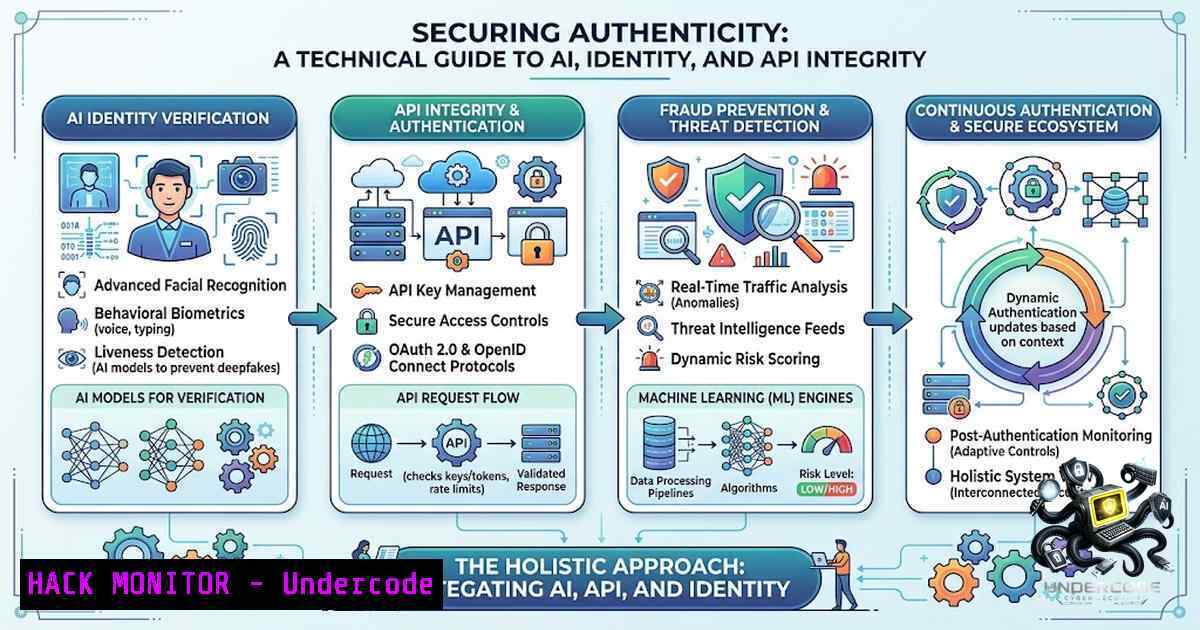
As society races toward algorithmic perfection through AI, performance enhancers, and bio-hacking, a counter-movement is emerging that champions human imperfection and brand authenticity. In the cybersecurity domain, this translates to a critical tension: while AI and automation drive efficiency, they also introduce vulnerabilities in identity management, API integrity, and data privacy. Technical professionals must navigate this landscape by hardening systems against AI-driven attacks, securing biometric and health data (e.g., GLP-1-related IoT devices), and ensuring that the “human touch” in digital interactions is verifiable and protected. This article bridges the marketing critique of optimization with actionable security practices for IT and AI engineers.
Learning Objectives & Secrets:
- Objective 1: Implement API request validation to prevent AI-generated injection attacks, using strict schema enforcement and rate limiting.
- Objective 2 (Secret Tip): For Linux environments, use `auditd` to monitor anomalous API calls that deviate from established behavioral baselines—early detection of AI-driven scraping or data exfiltration.
- Objective 3 (Secret Tip): In Windows, leverage PowerShell’s `Set-Acl` and `Get-Acl` to lock down directories containing user-generated content (UGC), preventing unauthorized tampering that could undermine brand authenticity signals.
You Should Know:
1. AI-Driven API Security and Behavioral Analytics
Extended context: The post highlights the “race towards optimization” via AI. In practice, AI models are often integrated via APIs that process user inputs (e.g., brand sentiment analysis, personalization). These APIs are prime targets for adversarial attacks. To protect them, implement behavioral analytics that distinguish human vs. bot traffic.
Step‑by‑step guide (Linux):
- Install `mod_security` with OWASP CRS rules: `sudo apt install libapache2-mod-security2` and enable.
- Configure custom rule to block requests exceeding a entropy score (indicating AI-generated text): Use `SecRule ARGS “@gt 0.8” “id:10001,deny,status:403,msg:’High entropy detected'”` after integrating a Perl-compatible regex entropy filter.
- Deploy `fail2ban` to dynamically blacklist IPs with repeated anomalies:
sudo fail2ban-client set apache-auth banip <IP>.
Step‑by‑step guide (Windows):
- Use IIS Advanced Logging to capture detailed request data.
- Write a PowerShell script that parses logs for unusual user-agent strings (e.g., “python-requests”, “Go-http-client”) and triggers a firewall block via
New-1etFirewallRule -Direction Inbound -Action Block -RemoteAddress <IP>. - Integrate with Microsoft Defender for Cloud’s API protection policies to enforce schema validation and JWT claim verification.
- Securing Biometric and Health Data from IoT and Wearables
The post mentions GLP-1s and Looksmaxxing, which are often tracked via smart devices. These devices transmit sensitive health metrics over Bluetooth and Wi-Fi. Attackers can intercept or spoof this data, leading to identity theft or insurance fraud.
Step‑by‑step guide (Linux):
- Set up `bluez` and use `btmon` to capture Bluetooth traffic, then filter for GATT characteristic reads.
- Encrypt local storage of health data using LUKS: `cryptsetup luksFormat /dev/sdb1` and mount with
cryptsetup open --type luks /dev/sdb1 health_data. - Use `iptables` to restrict outbound traffic from IoT gateways to only trusted cloud endpoints (e.g., AWS IoT Core).
Step‑by‑step guide (Windows):
- Enable BitLocker on drives storing health application databases.
- Use Windows Firewall with Advanced Security to create outbound rules that only allow traffic to known Microsoft Health or third-party API IP ranges.
- Deploy AppLocker to whitelist only approved health companion apps, preventing malicious sideloading.
- Identity Verification and Zero Trust for Authentic Brand Interactions
Authenticity requires verifying that a human is truly behind a digital interaction. Zero Trust architecture (ZTA) with continuous authentication is key. This involves multi-factor authentication (MFA) combined with behavioral biometrics (keystroke dynamics, mouse movements).
Step‑by‑step guide (Linux):
- Install `google-authenticator` for TOTP: `sudo apt install libpam-google-authenticator` and configure PAM to require it.
- Set up `oath-toolkit` for server-side validation of MFA tokens.
- Integrate with `fail2ban` to enforce temporary lockout after 3 failed attempts.
Step‑by‑step guide (Windows):
- Configure Windows Hello for Business using biometric authentication (fingerprint, face).
- Use Group Policy to enforce MFA for all RDP sessions: `Computer Configuration > Policies > Windows Settings > Security Settings > Local Policies > Security Options > Interactive logon: Require smart card` (adjust to use Microsoft Authenticator via AAD).
- Leverage Microsoft Defender for Identity to detect and flag impossible travel scenarios.
4. Hardening Cloud Infrastructure Against AI-Generated Phishing
AI can craft hyper-personalized phishing emails that mimic brand voice. To counter this, implement DMARC, SPF, and DKIM with strict policies. Additionally, use cloud-1ative threat intelligence feeds to block known malicious domains.
Step‑by‑step guide (AWS):
- Use AWS SES and set up DMARC: publish a `_dmarc.yourdomain.com` TXT record with
v=DMARC1; p=reject; rua=mailto:[email protected]. - Enable GuardDuty to detect compromised EC2 instances sending outbound SMTP bursts.
- Deploy a WAF (AWS WAF) with rate-based rules to block excessive login attempts to your brand’s customer portal.
Step‑by‑step guide (Azure):
- In Microsoft 365 Defender, configure anti-phishing policies with AI-based impersonation detection.
- Use Azure Policy to enforce that all storage accounts have blob public access disabled.
- Set up Azure Sentinel with custom analytics rules to correlate authentication logs with known AI-generated user agent patterns.
5. Vulnerability Exploitation and Mitigation in Public-Facing Assets
Authentic brands often have public comment sections or user forums. These are vulnerable to XSS, SQLi, and CSRF, especially when AI is used to generate malicious payloads. Regular penetration testing and patch management are non-1egotiable.
Step‑by‑step guide (Linux & Windows):
- Run `nmap -sV –script=vuln
` to identify known vulnerabilities. - For Linux, use `lynis audit system` to check for misconfigurations.
- For Windows, use the Microsoft Baseline Security Analyzer (MBSA) to scan for missing patches and weak settings.
- Implement Content Security Policy (CSP) headers via web server config (Apache:
Header always set Content-Security-Policy "default-src 'self';"; IIS: using `URL Rewrite` module to add custom headers).
- API Rate Limiting and Throttling to Prevent Abuse
Optimization-driven AI scrapers can overwhelm APIs. Implement rate limiting at both the application and network layers.
Step‑by‑step guide (Linux with Nginx):
- Add `limit_req_zone $binary_remote_addr zone=mylimit:10m rate=10r/m;` in
nginx.conf. - Apply `limit_req zone=mylimit burst=20 nodelay;` in location blocks.
Step‑by‑step guide (Windows with IIS):
- Install the IIS Dynamic IP Restrictions module.
- Set maximum concurrent requests and deny IPs that exceed thresholds via the IIS Manager UI.
7. Monitoring and Incident Response for Authenticity Breaches
A breach that alters brand messaging (e.g., defacement) requires rapid response. Establish a playbook that includes forensic analysis, PR coordination, and system rollback.
Step‑by‑step guide:
- Set up centralized logging using ELK stack (Linux) or Azure Log Analytics (Windows).
- Use `osquery` (cross-platform) to monitor file integrity in web roots:
SELECT FROM file WHERE directory = '/var/www/html' AND mtime > now - 3600. - Automate alerts using Slack or PagerDuty when critical files are modified outside maintenance windows.
What Undercode Say:
- Key Takeaway 1: The push for optimization via AI and bio-hacking creates new attack surfaces, particularly in IoT health devices and API endpoints. Securing these requires a layered approach that combines network controls, application logic, and behavioral analytics.
- Key Takeaway 2: Authenticity is not just a marketing concept—it is a security imperative. Verifying human intent through robust identity and access management (IAM) and behavioral biometrics is essential to prevent impersonation and maintain consumer trust in an era of generative AI.
Analysis:
The social critique of “looksmaxxing” and AI perfection mirrors the cybersecurity challenge of distinguishing legitimate human users from automated threats. Just as brands will succeed by embracing imperfections, security teams must accept that no solution is 100% perfect; instead, they must focus on resilient detection and rapid response. The integration of AI in both offensive and defensive roles will intensify, requiring continuous learning and adaptation. The commands and configurations provided offer tangible starting points for hardening systems, but the human element—critical thinking and situational awareness—remains the ultimate differentiator. As AI generates increasingly convincing synthetic content, the verification of authenticity becomes a continuous arms race, where transparency and user education are as vital as technical controls.
Prediction:
- +1: The rise of “authenticity-as-a-service” platforms will drive demand for verifiable credentialing and decentralized identity (DID) systems, reducing reliance on centralized third-party authentication.
- -1: Unless proactive measures are taken, AI-generated deepfakes will successfully bypass traditional biometric MFA, leading to a spike in identity fraud and brand impersonation incidents by 2027.
- +1: Increased regulatory pressure (e.g., EU AI Act) will mandate the inclusion of tamper-proof audit trails for all AI-driven consumer interactions, creating new market opportunities for cybersecurity vendors specializing in blockchain-based logging.
- -1: The commoditization of AI attack tools will lower the barrier to entry for cybercriminals, resulting in a surge of automated, polymorphic exploits that target brand reputation and customer data.
- +1: Organizations that invest in “human-centric” security awareness training—focusing on emotional intelligence and social engineering resistance—will see a measurable decrease in successful phishing campaigns, reinforcing the marketing value of authenticity.
▶️ Related Video (78% Match):
🎯Let’s Practice For Free:
🎓 Live Courses & Certifications:
Join Undercode Academy for Verified Certifications
🚀 Request a Custom Project:
Secure, high-velocity infrastructure and disruptive technological engineering. Contact our engineering team for high-tier development and proprietary systems:
[email protected]
💎 Smart Architecture | 🛡️ Secure by Design | ⭐ Trusted by Thousands
IT/Security Reporter URL:
Reported By: https://lnkd.in/p/eGfQRXUN – Hackers Feeds
Extra Hub: Undercode MoN
Basic Verification: Pass ✅


