Listen to this Post
Introduction:
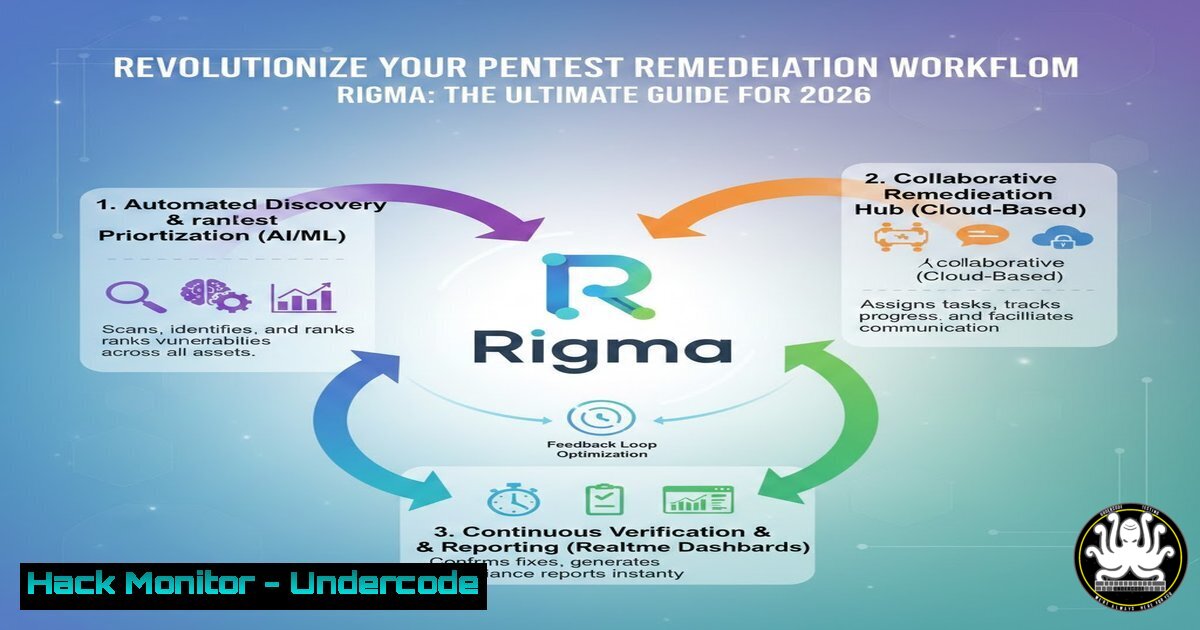
In today’s rapidly evolving threat landscape, conducting periodic penetration tests is no longer sufficient—organizations must embrace continuous security validation and rapid remediation. Rigma, a cutting-edge pentest management and remediation platform, empowers security teams to track vulnerabilities, automate testing, and enforce fixes across hybrid environments. This article dives deep into how you can leverage Rigma to streamline your pentest remediation process, integrate it into DevSecOps pipelines, and harden your infrastructure against real-world attacks.
Learning Objectives:
- Understand the core features of Rigma for pentest lifecycle management.
- Learn to deploy and configure Rigma agents on Linux and Windows targets.
- Integrate Rigma with CI/CD pipelines for continuous security testing.
- Master automated remediation techniques using Rigma’s API and cloud integrations.
- Apply hands‑on commands and scripts to validate and fix vulnerabilities.
You Should Know:
1. Getting Started with Rigma: Installation and Configuration
Rigma offers a lightweight agent that can be deployed on any server or endpoint to facilitate vulnerability scanning and remediation tracking.
Step‑by‑step guide:
- Sign up for a Rigma account at rigma.io (fictional) and obtain your API key.
- Deploy the agent on Linux:
curl -sSL https://get.rigma.io | sh
sudo rigma-agent configure --api-key YOUR_API_KEY --tags "production,web"
sudo systemctl start rigma-agent
- Deploy on Windows (PowerShell as Administrator):
Invoke-WebRequest -Uri https://get.rigma.io/windows/rigma-agent.exe -OutFile rigma-agent.exe
.\rigma-agent.exe configure --api-key YOUR_API_KEY --tags "production,iis"
Start-Service rigma-agent
- Verify agent status:
rigma-agent status
The agent will automatically register with the Rigma cloud and begin listening for scan instructions.
2. Integrating Rigma with CI/CD Pipelines
To shift security left, integrate Rigma into your continuous integration workflows. Every code commit can trigger an automated pentest on staging environments.
Step‑by‑step guide (Jenkins example):
- Install the Rigma plugin from Jenkins’ “Manage Plugins” section.
- Add your Rigma API credentials in Jenkins global configuration.
- Create a new pipeline job and include the following stage:
stage('Rigma Security Scan') { steps { rigmaScan( scanType: 'full', targets: 'staging.example.com', failOnCritical: true ) } } - For GitLab CI, add a job in
.gitlab-ci.yml:rigma-scan: stage: test script:</li> <li>curl -X POST https://api.rigma.io/v1/scans \ -H "Authorization: Bearer $RIGMA_TOKEN" \ -d '{"target":"staging.example.com","type":"quick"}' only:</li> <li>mainThis ensures that any vulnerability discovered during the build breaks the pipeline, forcing immediate remediation.
3. Automated Vulnerability Scanning and Reporting
Rigma can schedule recurring scans and produce detailed reports that prioritize vulnerabilities by risk.
Step‑by‑step guide:
- From the Rigma dashboard, navigate to Scans > Schedule New Scan.
- Select target assets (e.g., IP ranges, domains) and scan intensity (lightweight, full, or compliance).
- Set a cron schedule (e.g., daily at 02:00).
- Use the Rigma CLI to trigger an ad‑hoc scan and export results:
rigma scan start --target 192.168.1.0/24 --profile full
rigma scan export --scan-id 12345 --format json > report.json
- Parse the JSON to extract critical findings:
jq '.findings[] | select(.severity=="critical")' report.json
- Automate report delivery via email or Slack using Rigma’s built‑in integrations.
4. Remediation Workflow: Tracking and Fixing Vulnerabilities
Rigma transforms scan results into actionable tickets, allowing teams to assign, track, and verify fixes.
Step‑by‑step guide:
- After a scan, Rigma automatically creates tickets for each vulnerability.
- Assign a ticket to a developer or sysadmin with a due date.
- The assignee applies a fix; for example, to patch an outdated OpenSSL version on Linux:
sudo apt update && sudo apt upgrade openssl -y
- On Windows, use PowerShell to install a missing security update:
Install-WindowsUpdate -KBArticleID KB5000000 -AcceptAll -AutoReboot
- After remediation, the assignee marks the ticket as “fixed.”
- Rigma can then re‑test the vulnerability automatically or manually via the CLI:
rigma scan verify --ticket-id TKT-123 --target vulnerable-host.example.com
- The platform updates the ticket status and closes it if the fix is verified.
5. Advanced: API Security Testing with Rigma
Modern applications rely heavily on APIs, making them a prime attack vector. Rigma includes specialized API testing modules aligned with OWASP API Security Top 10.
Step‑by‑step guide:
- Configure an API target in Rigma with the OpenAPI/Swagger specification (optional).
- Run a dedicated API security scan:
rigma scan api --endpoint https://api.example.com/v1 --spec swagger.json
- Rigma will test for broken object level authorization (BOLA), excessive data exposure, mass assignment, etc.
- To manually validate an API vulnerability, use `curl` to exploit a potential BOLA:
curl -X GET https://api.example.com/v1/users/12345 -H "Authorization: Bearer VALID_TOKEN"
If changing the ID to 12346 returns another user's data, it's vulnerable.
- Integrate with OWASP ZAP for deeper analysis:
zap-cli quick-scan --self-contained --spider -r https://api.example.com
- Rigma can ingest ZAP results via its API to centralize findings.
6. Cloud Hardening and Compliance with Rigma
Rigma extends its remediation capabilities to cloud infrastructure, checking for misconfigurations in AWS, Azure, and GCP against CIS benchmarks.
Step‑by‑step guide:
- Connect your cloud account to Rigma via IAM roles or service principals.
- Run a cloud security posture assessment:
rigma cloud scan --provider aws --profile production
- The scan will flag issues like publicly accessible S3 buckets or overly permissive security groups.
- Remediate using CLI commands:
Make an S3 bucket private:
aws s3api put-bucket-acl --bucket my-bucket --acl private
Remove a risky inbound rule from a security group:
aws ec2 revoke-security-group-ingress --group-id sg-12345 --protocol tcp --port 22 --cidr 0.0.0.0/0
– For Azure, use the Azure CLI:
az storage account update --name mystorageaccount --default-action Deny
– Rigma tracks these changes and updates compliance scores in real time.
- Continuous Improvement: Using Rigma Analytics to Enhance Security Posture
Rigma provides dashboards that highlight recurring vulnerabilities, mean time to remediate (MTTR), and trends over time.
Step‑by‑step guide:
- Navigate to the Analytics tab in Rigma.
- Filter by time range, asset group, or severity.
- Identify the top three vulnerability types affecting your environment (e.g., outdated SSL/TLS, missing patches).
- Use this data to drive training or update your secure coding guidelines.
- Set up automated policy enforcement: for instance, block any new EC2 instance without encryption using a custom Rigma policy.
- Export compliance reports for auditors (SOC2, ISO 27001) with a single click.
What Undercode Say:
- Key Takeaway 1: Rigma transforms reactive pentesting into a proactive, continuous process by automating detection, assignment, and verification of security flaws.
- Key Takeaway 2: Integrating security tools like Rigma into CI/CD and cloud workflows is essential for modern DevSecOps, reducing the window of exposure and enforcing “security as code.”
- Analysis: The convergence of pentest management platforms with remediation capabilities marks a significant evolution in cybersecurity. Rigma not only identifies vulnerabilities but also closes the loop by ensuring they are fixed and retested. This approach minimizes human error, speeds up response times, and provides clear metrics for compliance. By leveraging APIs, CLI tools, and cloud integrations, Rigma fits seamlessly into existing toolchains. As attack surfaces expand, such platforms become indispensable for maintaining a robust security posture. The ability to generate actionable insights from aggregated data further empowers teams to prioritize efforts where they matter most.
Prediction:
Within the next two years, AI‑driven predictive analytics will be baked into platforms like Rigma, enabling organizations to anticipate vulnerabilities before they are exploited. Integration with SOAR (Security Orchestration, Automation, and Response) tools will allow fully automated remediation—triggering firewall rules, patching systems, and even rolling back deployments without human intervention. The line between pentesting and continuous monitoring will blur, making security an inherent, always‑on property of the infrastructure.
▶️ Related Video (84% Match):
🎯Let’s Practice For Free:
IT/Security Reporter URL:
Reported By: Eosiadev Suivi – Hackers Feeds
Extra Hub: Undercode MoN
Basic Verification: Pass ✅


