Listen to this Post
Introduction:
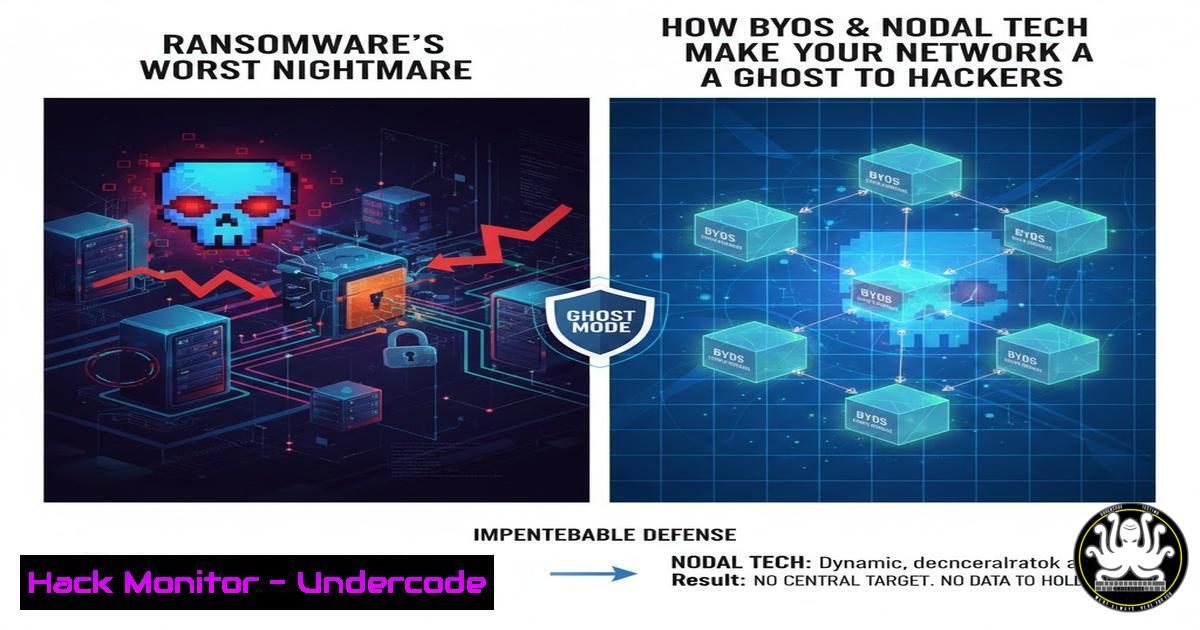
The relentless barrage of ransomware attacks continues to cripple industries, yet a paradigm shift in defensive technology is emerging. By moving beyond traditional perimeter defenses, solutions like BYOS (Bring Your Own Security) at the hardware level and Nodal Technologies for internal segmentation are creating networks that are not just hard to breach, but virtually impossible to find and map. This article deconstructs the layered security model that can render even the most advanced adversaries ineffective.
Learning Objectives:
- Understand the principles of network invisibility and hardware-enforced security provided by BYOS.
- Learn how microsegmentation and deceptive network architectures (Nodal) neutralize lateral movement.
- Gain practical skills for implementing zero-trust principles at the firmware and network layer.
You Should Know:
- The Foundation: Making Your Network Disappear with BYOS
The first layer of modern defense is not stronger walls, but the removal of the target. BYOS embeds security into the network interface card (NIC) itself, creating a hardware-based secure edge. This moves the security perimeter to each individual device, rendering the traditional corporate network boundary invisible to external scans. The adversary cannot attack what they cannot find.
Step‑by‑step guide:
Concept: Each endpoint equipped with a BYOS-secured NIC presents its own encrypted, authenticated tunnel for communication. There is no common corporate LAN IP range to probe.
Implementation: This is hardware-based, but the principle can be mimicked in software using robust VPNs and host-based firewalls on all assets.
Linux Command (Illustrative): To check network interfaces and consider them as individual “edges,” use: ip addr show. Configuring each with a unique WireGuard tunnel key exemplifies the BYOS principle of per-device cryptographic identity.
Windows Command: Use `Get-NetAdapter` to list interfaces. Software like PowerShell Desired State Configuration (DSC) can enforce unique firewall rules per device.
2. The Unbreakable Lock: AES-256 and Firmware Authentication
If an adversary miraculously discovers a device, they face two immediate, hardware-enforced barriers. All communication is encrypted with AES-256, and any attempt to communicate must be authenticated at the firmware level of the NIC. This prevents protocol exploits and spoofing attacks dead in their tracks.
Step‑by‑step guide:
Concept: The BYOS module handles key management and authentication before the host OS even sees a packet. This is a zero-trust implementation at the hardware level.
Verification: System admins should ensure that hardware with these capabilities has their firmware validated and secured.
Linux Command: To verify encryption capabilities of your system, you can check for AES-NI support (hardware acceleration for AES): `grep aes /proc/cpuinfo`
Windows Command: Use PowerShell: Get-WmiObject Win32_Processor | Select-Object Name, MaxClockSpeed, AddressWidth,L2CacheSize, `L3CacheSize` and research if your CPU supports AES-NI.
- The Internal Maze: Deploying Nodal Technology for Microsegmentation
Assuming an implausible breach of the first two layers, Nodal Technology awaits inside. This creates a dynamic, deceptive internal network. Assets cannot see or map each other without explicit, authenticated policy. Lateral movement, the lifeblood of ransomware, becomes impossible.
Step‑by‑step guide:
Concept: Implement software-defined microsegmentation. Tools like VMware NSX, Cisco ACI, or open-source options like Open vSwitch can create these isolated segments.
Basic Implementation with Linux iptables (Example): Create a policy where a web server can only talk to its specific database on port 3306, and nothing else.
 On the Web Server host
iptables -A OUTPUT -d <DB_IP> -p tcp --dport 3306 -j ACCEPT
iptables -A OUTPUT -j DROP
 On the Database host
iptables -A INPUT -s <Web_Server_IP> -p tcp --dport 3306 -j ACCEPT
iptables -A INPUT -j DROP
Cloud Implementation: In AWS, use Security Groups with the principle of least privilege. A security group for an EC2 instance should only allow inbound/outbound traffic from specific other security groups, not by IP address.
4. Operational Security: Continuous Validation and Deception
Advanced defenses require validation. Integrate deception technology by deploying honeypots that mimic real assets within your Nodal architecture. Any interaction with a honeypot is a definitive indicator of compromise.
Step‑by‑step guide:
Tool: Deploy a low-interaction honeypot like Canarytokens or a medium-interaction one like T-Pot.
Action: Place honeypot “nodes” in your segmented network with enticing names (e.g., HR_Database_Backup). Generate alerts for any connection attempt.
Linux Command (Using Canarytoken): Simply visit canarytokens.org/generate and select a token type (e.g., AWS Keys, Web Bug). Place the generated file or URL in your environment.
- Building Your Defensive Blueprint: A Practical Integration Plan
Theoretical perfection fails without a rollout plan. Start with crown jewel assets, implement hardware security (BYOS principle), segment them aggressively, and monitor relentlessly.
Step‑by‑step guide:
- Asset Inventory: Use `nmap` or `netdiscover` on a trusted management network to map what you have: `sudo nmap -sP 192.168.1.0/24`
2. Classify Data: Identify your most critical data stores (SQL databases, file servers). - Segment: Isolate these assets into their own VLAN or subnet.
- Harden: Apply strict host-based firewalls (Windows Firewall with Advanced Security, `ufw` on Linux).
- Monitor: Use a SIEM (like Wazuh or Splunk) to ingest logs from these isolated segments and baseline normal traffic.
What Undercode Say:
- Key Takeaway 1: The future of defense is proactive obscurity and hardware-rooted trust. Making your network invisible is a more powerful first step than trying to build an impenetrable wall.
- Key Takeaway 2: Internal network design is now a primary security control. Flat networks are indefensible; microsegmentation and deceptive architectures (Nodal) are non-negotiable for stopping breach progression.
The post’s vehement lack of sympathy for ransomware victims is a call to action against complacency. While the technologies mentioned (BYOS, Nodal) are specific commercial solutions, the principles they represent—hardware-enforced zero-trust, cryptographic identity per device, and opaque internal networking—are the bedrock of modern security architecture. The technical commands provided illustrate that these concepts can be initiated with existing tools. The era of relying solely on signature-based AV and a firewall at the edge is conclusively over. The analysis is blunt but correct: the baseline must evolve from “keeping them out” to “making ourselves impossible to find, authenticate with, and traverse.”
Prediction:
The convergence of hardware-based security (like BYOS), AI-driven autonomous segmentation, and deceptive network ecosystems will render broad, automated ransomware campaigns obsolete within 5-7 years. Attackers will be forced into highly targeted, human-driven operations with significantly higher cost and lower success rates, fundamentally altering the cybercrime economy. Organizations failing to adopt these architectural principles will not only be prime targets but may face insurability and regulatory challenges.
🎯Let’s Practice For Free:
IT/Security Reporter URL:
Reported By: Robert Westerman – Hackers Feeds
Extra Hub: Undercode MoN
Basic Verification: Pass ✅


