Listen to this Post
Introduction:
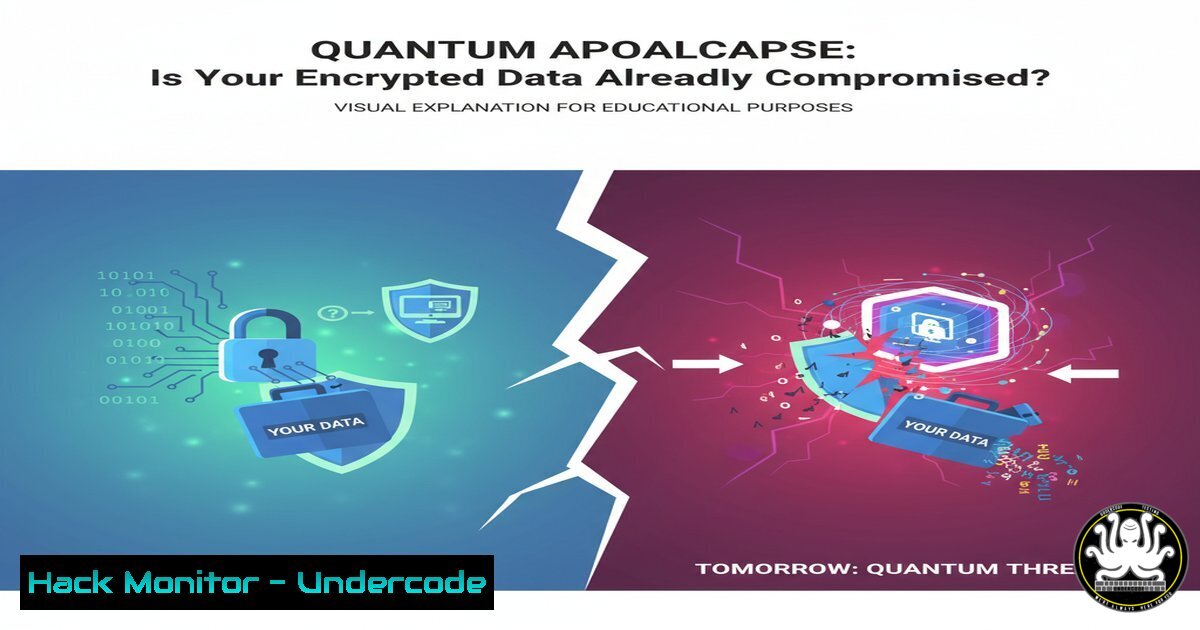
The dawn of practical quantum computing threatens to shatter the foundations of modern cybersecurity. While corporations focus on AI, a silent crisis brews: asymmetric encryption algorithms, which secure virtually all digital communication and data at rest, are vulnerable to cryptographically relevant quantum computers (CRQCs). This article provides a technical deep dive into the imminent threat and the immediate steps every IT professional must take to achieve quantum resilience.
Learning Objectives:
- Understand the specific cryptographic algorithms vulnerable to quantum attack and their pervasive use in modern IT.
- Learn to audit existing systems for quantum vulnerability and inventory sensitive, long-lived data.
- Implement immediate steps for cryptographic agility and begin the transition to post-quantum cryptography (PQC).
You Should Know:
1. The Harvest-Now-Decrypt-Later Threat
Quantum vulnerability is not a future problem. Adversaries are already conducting “harvest now, decrypt later” (HNDL) attacks, stealing encrypted data today with the expectation that they will be able to decrypt it once a CRQC is available. Data with a long shelf-life—intellectual property, government secrets, health records, and financial data—is particularly at risk.
2. Auditing for Quantum-Vulnerable Algorithms
The first step to defense is understanding your exposure. The following OpenSSL command can be used to interrogate a remote server and list the cryptographic ciphers it supports, highlighting those that are quantum-vulnerable.
`openssl s_client -connect example.com:443 -servername example.com | openssl ciphers -V | grep -E ‘RSA|ECDHE|DHE’`
Step-by-step guide:
1. Open your terminal.
2. Replace `example.com` with the target domain.
- Run the command. The output will list all ciphersuites, their hex value, and the key exchange algorithm.
- Ciphers using
RSA, `ECDHE` (Elliptic Curve Diffie-Hellman), or `DHE` (Diffie-Hellman) for key exchange are considered quantum-vulnerable and must be prioritized for replacement.
3. Inventorying Sensitive Data with PowerShell
Identify files containing sensitive data that could be targeted in a HNDL attack. This PowerShell command recursively searches a directory for files that may contain keywords and have been accessed a long time ago.
`Get-ChildItem -Path “C:\Data” -Recurse -Include .pdf, .docx, .xlsx | Where-Object { $_.LastWriteTime -lt (Get-Date).AddYears(-5) } | Select-Object FullName, LastWriteTime | Export-Csv -Path “long_term_data.csv” -NoTypeInformation`
Step-by-step guide:
1. Open PowerShell with administrative privileges.
- Modify the `-Path` parameter to point to your critical data share.
- Adjust the `-Include` filter for relevant file extensions.
- The `-lt (Get-Date).AddYears(-5)` filter finds files not modified in over 5 years.
- The results are exported to a CSV for analysis, helping you prioritize the protection of this long-lived data.
4. Forcing PQC Ciphers in Nginx
Begin testing Post-Quantum Cryptography in lab environments. The OpenSSL library is integrating PQC algorithms, and web servers can be configured to prefer them. Below is an example Nginx configuration snippet to prioritize a hybrid (classical + PQC) key exchange.
`ssl_ciphers ECDHE-SECP384R1-OQS-OpenSSH:ECDHE-RSA-AES256-GCM-SHA384:ECDHE-RSA-AES256-SHA;`
Step-by-step guide:
- Access your Nginx configuration file (typically `/etc/nginx/nginx.conf` or within
/etc/nginx/sites-enabled/). - Within your `server { }` block, locate or add the `ssl_ciphers` directive.
- The example above prioritizes a hybrid post-quantum cipher (
ECDHE-SECP384R1-OQS-OpenSSH). Note that specific available ciphers depend on your version of OpenSSL and any integrated PQC libraries.
4. Reload Nginx: `sudo systemctl reload nginx`.
- Use the OpenSSL audit command from section 2 to verify the new ciphers are being offered.
5. Generating a Post-Quantum Hybrid SSH Key
Secure your SSH infrastructure against quantum attacks by generating hybrid SSH keys that combine a traditional algorithm with a post-quantum one.
`ssh-keygen -t rsa -b 4096 -O Enable=post-quantum-hybrid -f ~/.ssh/id_rsa_pqc`
Step-by-step guide:
- This command requires a version of OpenSSH that has been compiled with experimental PQC support (e.g., using the OpenQuantumSafe project library).
2. The `-t rsa` specifies the traditional algorithm.
- The `-O Enable=post-quantum-hybrid` flag instructs the keygen tool to create a hybrid key.
4. The `-f` flag specifies the output filename.
- Copy the public key (
id_rsa_pqc.pub) to your server’s `~/.ssh/authorized_keys` file. - This ensures backward compatibility while providing a quantum-resistant path forward.
6. Implementing Certificate Transparency Monitoring
Quantum attacks may target the PKI (Public Key Infrastructure) itself. Certificate Transparency (CT) logs help detect maliciously issued SSL certificates. Use this command to check a domain’s CT status.
`curl -s https://crt.sh/?q=%.example.com&output=json | jq .`
Step-by-step guide:
- Ensure you have `curl` and `jq` installed on your system.
2. Replace `example.com` with your domain.
- The command queries the `crt.sh` database, which aggregates CT logs, and returns all certificates issued for that domain in JSON format.
- Regularly monitor this output or use a monitoring service to get alerts for any new, unexpected certificates issued for your domains, which could indicate a compromise.
-
Enabling Key Rotation and Crypto-Agility in AWS KMS
Cryptographic agility—the ability to easily change algorithms—is critical. AWS Key Management Service (KMS) allows you to automate key rotation.
`aws kms enable-key-rotation –key-id alias/MySymmetricKey`
Step-by-step guide:
- Ensure the AWS CLI is installed and configured with appropriate permissions.
- Identify the KMS key ID or alias you use for encryption.
- Run the command above, replacing `alias/MySymmetricKey` with your key’s alias.
- This enables automatic annual rotation of the KMS key material. While this currently rotates the underlying key and not the algorithm, it establishes the practice of key management agility, which is foundational for the eventual migration to PQC algorithms when they become available in cloud services.
What Undercode Say:
- The Countdown Started Years Ago. The greatest risk is complacency. If you are storing data today that must remain secret for 10+ years, assume it is already in an adversary’s hands awaiting decryption. The time to implement crypto-agility and PQC testing was yesterday.
- Hybrid is the Bridge. A full transition to NIST-standardized PQC algorithms will take years. The immediate strategic imperative is to implement hybrid solutions that combine classical and post-quantum cryptography, ensuring both backward compatibility and future security.
The convergence of accelerated quantum hardware roadmaps and proven HNDL campaigns creates a unique and critical vulnerability window. Corporate leadership’s focus on AI has created a dangerous blind spot. The organizations that will survive the quantum transition are not necessarily those with the most resources, but those that began their cryptographic migration earliest. The tools and commands outlined provide a starting point for every security team to build a quantum-resilient posture, turning a theoretical future threat into a manageable present-day risk mitigation project.
Prediction:
Within the next 3-5 years, we will witness the first public demonstration of a quantum cryptanalytic attack against a deprecated but still-in-use cryptographic standard, likely TLS or SSH. This will not be a full break of modern PQC but will serve as a “Sputnik moment,” causing widespread panic and a frantic, disorderly rush to adopt PQC standards. Organizations that have not achieved cryptographic agility by then will face catastrophic operational disruption, regulatory fines, and irreparable brand damage as their legacy systems become instantly and profoundly insecure.
🎯Let’s Practice For Free:
IT/Security Reporter URL:
Reported By: https://lnkd.in/p/dxyPttkx – Hackers Feeds
Extra Hub: Undercode MoN
Basic Verification: Pass ✅


