Listen to this Post
Introduction:
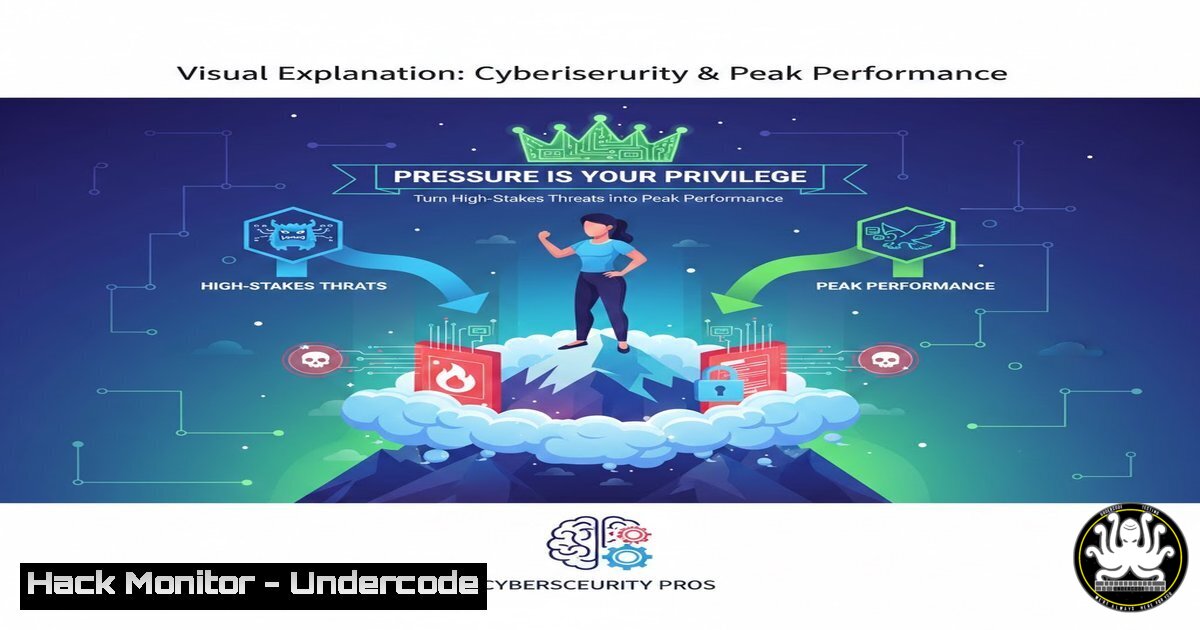
In the relentless arena of cybersecurity, pressure is not a sporadic event but a constant environmental variable. Where many see stress, elite security practitioners and IT teams leverage pressure as a catalyst for unparalleled focus and rapid skill evolution. This article reframes operational pressure—from critical incident response to defending against zero-day exploits—as a performance-enhancing privilege, examining the technical disciplines and mental models that transform threat pressure into defensive momentum.
Learning Objectives:
- Understand how to technically channel pressure into improved security posture and monitoring precision.
- Implement actionable command-line and tool configurations to thrive during security incidents.
- Develop a resilience framework that turns high-stakes scenarios into opportunities for skill mastery and system hardening.
You Should Know:
1. Pressure as a Detection Tuning Mechanism
Extended version: The post posits that pressure sharpens focus. In cybersecurity, this translates to using the heightened awareness during a potential incident to fine-tune detection systems. Instead of panicking at an alert surge, a trained professional sees an opportunity to reduce signal noise and improve fidelity.
Step‑by‑step guide:
What this does: This process uses the “pressure” of an active SIEM (Security Information and Event Management) alert storm to create more precise filtering rules, reducing future false positives.
How to use it:
- Isolate the Noise: During an alert surge, connect to your SIEM or log aggregation server (e.g., Elasticsearch, Splunk).
- Analyze the Pattern: Use CLI queries to group and categorize the flooding alerts. For example, in a Linux-based ELK stack:
Query Elasticsearch for the top 10 alert signatures in the last 15 minutes curl -X GET "localhost:9200/_search?pretty" -H 'Content-Type: application/json' -d' { "query": { "range": { "@timestamp": { "gte": "now-15m" } } }, "aggs": { "top_alerts": { "terms": { "field": "rule.signature", "size": 10 } } }, "size": 0 }' - Create Suppression Rules: Identify benign, repetitive alerts (e.g., from routine internal scans). Document the exact conditions (source IP, signature ID, destination port).
- Implement & Test: Add a suppression rule in your detection engine. In a tool like Wazuh or Suricata, this often involves editing the `rules/local_rules.xml` or `suricata.yaml` file to suppress specific SIDs for trusted sources.
- Verify: Re-run your query to confirm the noise has been filtered, leaving only higher-fidelity alerts requiring action.
-
Hardening Systems Under the “Gun” of an Imminent Threat
Extended version: The “moment that counts” is often the window between threat intelligence of a new exploit and its widespread deployment. Pressure here forces rapid, yet precise, system hardening.
Step‑by‑step guide:
What this does: This guide details immediate actions to mitigate a critical vulnerability (e.g., a new CVSS 9.8 Apache Log4j-style flaw) across a fleet of Linux servers.
How to use it:
- Rapid Inventory: Use `ansible` or a parallel SSH tool to list all affected services. `ansible all -i inventory.ini -m shell -a “systemctl list-units | grep apache”`
2. Apply Immediate Mitigations: If a patch isn’t immediately available, apply vendor-recommended workarounds. This might involve modifying configuration files. Use a script to push changes:Example: Disable a vulnerable feature in a config file across servers ansible all -i inventory.ini -m lineinfile -a "path=/etc/application/config.conf regexp='^VulnerableFeature=' line='VulnerableFeature=OFF'"
- Update Firewall Rules: Temporarily restrict access to vulnerable services using a host-based firewall. On Linux (iptables):
iptables -A INPUT -p tcp --dport 8080 -s ! <trusted_management_IP> -j DROP
- Validate: Run vulnerability scanners (e.g., `nmap` scripts,
grype) against a sample host to confirm mitigation:nmap -sV --script vuln <target_IP>.
3. Turning Incident Response Pressure into Forensic Clarity
Extended version: A major breach triggers immense pressure, which, when channeled, leads to meticulous forensic processes that not only contain the breach but prevent its recurrence.
Step‑by‑step guide:
What this does: Outlines a systematic CLI-driven triage on a potentially compromised Linux host to gather evidence and identify initial compromise vector.
How to use it:
- Establish Order of Volatility: Start with memory. Use `lsmem` or `cat /proc/meminfo` to check system state. Consider acquiring a full memory dump with
LiME. - Process & Network Analysis: Combine commands for a snapshot:
ps auxf && netstat -tulpan > /tmp/ir_snapshot_$(date +%s).txt
lsof -i -P -n | grep LISTEN
- Timeline Analysis: Use `find` to locate recently modified files in key directories (e.g.,
/tmp,/var/www, user bash histories):find / -type f -mtime -1 -exec ls -la {} \; 2>/dev/null | head -50 - Persistent Artifact Collection: Secure copies of logs (
/var/log/auth.log,/var/log/syslog), cron jobs, and user `~/.ssh/` directories for offline analysis.
4. Stress-Testing Your Defenses: Proactive Pressure Simulation
Extended version: You can choose your pressure through proactive offensive security exercises. Controlled simulations build the “muscle memory” needed for real incidents.
Step‑by‑step guide:
What this does: Guides setting up a simple internal penetration testing lab using Docker to safely practice exploitation and hardening under time constraints.
How to use it:
- Deploy a Vulnerable Target: Run a deliberately vulnerable container (e.g., DVWA, Metasploitable2). `docker run –rm -d -p 80:80 vulnerables/web-dvwa`
2. Configure Your Attack Box: Ensure Kali Linux or Parrot OS tools are updated. `sudo apt update && sudo apt install metasploit-framework nmap sqlmap -y`
3. Run a Time-Boxed Assessment: Give yourself 30 minutes to:
Discover the target: `nmap -sC -sV -p-`
Exploit a known vulnerability (e.g., SQL injection viasqlmap -u "http://<target_IP>/vuln.php?id=1" --dbs).
Document findings and suggested remediations (e.g., input validation, WAF rules).
5. Automating Response to Reclaim Mental Bandwidth
Extended version: To prevent pressure from becoming debilitating, automate the response to common, high-volume threats. This frees cognitive resources for complex, strategic analysis.
Step‑by‑step guide:
What this does: Creates a simple automated playbook using Python and OS commands to isolate a host exhibiting beaconing malware behavior.
How to use it:
- Define the Trigger: Your EDR or logs detect a host making repeated, failed DNS queries to a known bad domain.
- Write the Containment Script (to be run from a central server):
!/usr/bin/env python3 import subprocess import sys target_host = sys.argv[bash] Hostname passed from SIEM alert Isolate host on network via SSH to firewall or switch API Example: Block host via local firewall on the compromised host itself (via SSH) ssh_cmd = f"ssh admin@{target_host} 'iptables -A INPUT -j DROP && iptables -A OUTPUT -j DROP'" subprocess.run(ssh_cmd, shell=True, check=False) print(f"[+] Host {target_host} network isolation attempted.") - Integrate: Connect this script to your SIEM’s alerting system (e.g., as a custom action in TheHive, Cortex, or Splunk Phantom).
- Test in a Lab Environment: Validate the automation works as intended before deploying to production.
What Undercode Say:
- Pressure is a Data Point: The physiological and psychological sensation of pressure in cybersecurity is often a direct signal of system risk or personal skill gaps. It should be acknowledged and analyzed, not just feared.
- Skill Compression: High-pressure incidents act as a forcing function, compressing years of theoretical learning into weeks of practical, indelible experience. The key is to have a post-incident review process to codify the lessons learned.
Analysis: The LinkedIn post philosophically reframes pressure as a privilege of caring. In technical practice, this translates directly to preparation. The “fun” of performance under pressure in cybersecurity is only accessible when underpinned by rigorous drills, documented playbooks, and automated safety nets. Teams that view pressure as a positive test environment proactively create those environments through red team exercises and tabletop simulations, thereby building the resilience and clarity needed when real adversaries attack. The difference between a crushing incident and a “sharpening” one is almost entirely determined by the work done before the alert fires.
Prediction:
The future of cybersecurity operations will formalize the “pressure performance” paradigm. We will see the rise of Adaptive Stress Simulation Platforms that use AI to dynamically adjust the difficulty of penetration tests and incident drills in real-time based on team performance metrics, heart rate variability, and cognitive load monitoring. This will create “pressure-conditioned” responders. Furthermore, security tools will increasingly incorporate Cognitive Load Management features, automatically simplifying interfaces and prioritizing alerts during critical incidents to reduce extraneous mental burden, allowing professionals to focus their pressurized energy entirely on strategic decision-making. The divide will widen between organizations that shelter teams from pressure and those that systematically train them to thrive within it.
▶️ Related Video (82% Match):
🎯Let’s Practice For Free:
IT/Security Reporter URL:
Reported By: Piyushpushpak Pressure – Hackers Feeds
Extra Hub: Undercode MoN
Basic Verification: Pass ✅


