
Listen to this Post
Introduction:
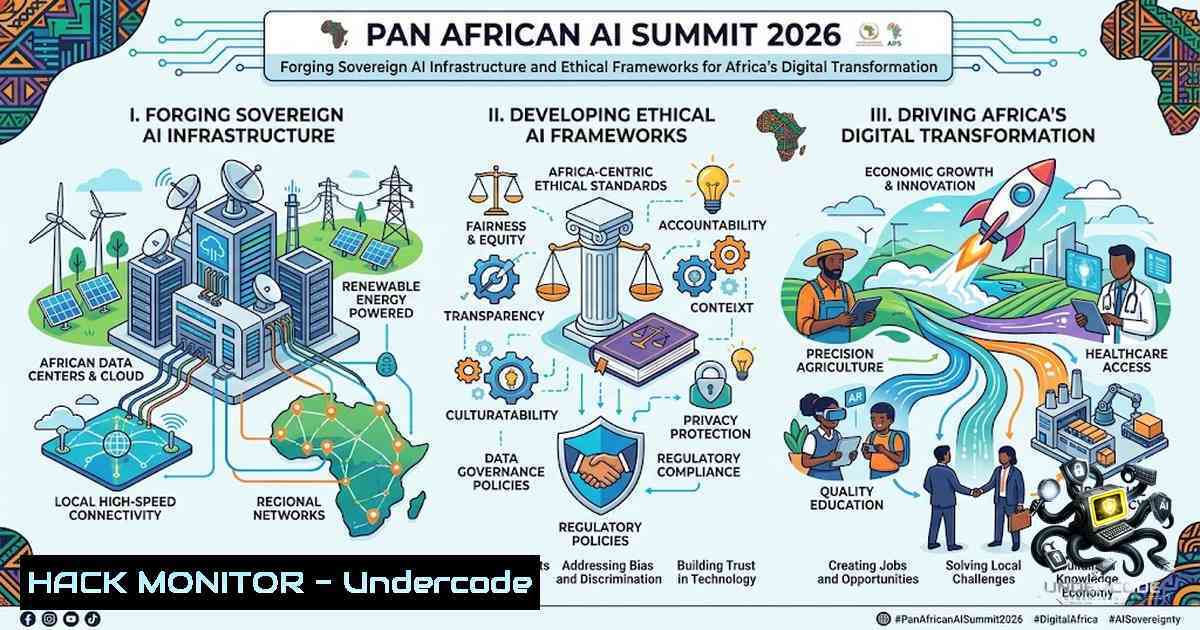
The Pan African AI & Innovation Summit 2026, convening on 22–23 September at the Kempinski Hotel in Accra, Ghana, represents a pivotal moment for the continent’s technological sovereignty. As African nations move beyond the adoption of foreign AI systems, this summit focuses on building indigenous large language models (LLMs), sovereign data infrastructure, and ethical governance frameworks tailored to the continent’s unique socio-economic landscape. The event brings together policymakers, enterprise executives, and technical practitioners to address the critical intersection of AI innovation, cybersecurity, and digital self-determination.
Learning Objectives & Secrets:
- Objective 1: Implement Sovereign AI Infrastructure – Understand the architecture and deployment of Afrocentric LLMs using local data centers and open-source frameworks, ensuring data residency and compliance with emerging continental regulations.
- Objective 2 Secret Tips: Optimize ML for Low-Bandwidth Environments – Learn model compression techniques (e.g., quantization, pruning) to deploy AI on edge devices in rural areas, a critical skill for reaching the 80% of Africans lacking reliable internet. Utilize frameworks like TensorFlow Lite and ONNX to reduce model size by up to 75% without significant accuracy loss.
- Objective 3 Secret Tips: Navigate Ethical AI and Policy Frameworks – Gain insights into the REST-AI Governance Framework and the African Union’s Malabo Convention to architect compliant AI solutions. Master the integration of “privacy by design” principles to mitigate risks associated with deepfakes and algorithmic bias.
You Should Know:
- Building and Deploying Afrocentric Large Language Models (LLMs)
The summit emphasizes developing LLMs rooted in African data, culture, and languages to bridge the linguistic gaps present in global models. This involves curating datasets that include hundreds of African languages often neglected by Western models.
Step‑by‑step guide for setting up a sovereign LLM environment:
– Data Collection and Curation: Use tools like `wget` and `curl` to scrape publicly available African language corpora. For structured data, leverage Python with libraries such as `BeautifulSoup` and requests.
 Linux: Download a dataset repository
wget -r -1p -1H --cut-dirs=3 -R index.html http://example.com/african_language_corpus/
– Environment Setup: Deploy a secure development environment using Docker to containerize your training pipeline.
 Pull a base image for NLP
docker pull tensorflow/tensorflow:latest-gpu
 Run container with mounted volumes for data
docker run --gpus all -v /local/data:/data -it tensorflow/tensorflow:latest-gpu bash
– Model Selection and Fine-Tuning: Start with an open-source architecture like LLaMA-7B and fine-tune it on your curated dataset. Use the Hugging Face Transformers library for efficient fine-tuning.
from transformers import AutoModelForCausalLM, AutoTokenizer, Trainer, TrainingArguments
model = AutoModelForCausalLM.from_pretrained("meta-llama/Llama-2-7b-hf")
tokenizer = AutoTokenizer.from_pretrained("meta-llama/Llama-2-7b-hf")
 Configure training arguments and start fine-tuning
– Deployment and Monitoring: Deploy the model using FastAPI for inference. Implement logging and monitoring with Prometheus and Grafana to track performance and drift.
2. Implementing Ethical AI and Cybersecurity Governance
With the rise of AI-driven threats and the need for data protection, the summit highlights frameworks like the REST-AI and the Malabo Convention. Ensuring your AI systems are compliant is non-1egotiable.
Step‑by‑step guide for hardening AI infrastructure:
- Data Encryption: Ensure all data at rest and in transit is encrypted. Use AES-256 for storage and TLS 1.3 for communication.
Linux: Encrypt a directory using gpg
tar -czvf data.tar.gz /path/to/data
gpg --symmetric --cipher-algo AES256 data.tar.gz
- Access Control: Implement Role-Based Access Control (RBAC) using tools like Keycloak or AWS IAM.
Windows: Set NTFS permissions for a directory
icacls C:\AI_Data /grant "AI_Team:(OI)(CI)F" /inheritance:r
- Vulnerability Scanning: Regularly scan your AI models and dependencies for vulnerabilities using tools like `trivy` or
safety.Linux: Scan a Docker image for vulnerabilities trivy image my-ai-model:latest
- Adversarial Robustness: Implement defenses against adversarial attacks by using techniques like adversarial training and input sanitization. Use the `Adversarial Robustness Toolbox` (ART) from IBM.
from art.attacks.evasion import FastGradientMethod
from art.estimators.classification import TensorFlowV2Classifier
Wrap your model and apply the attack for testing robustness
- Optimizing Machine Learning for Low-Bandwidth and Edge Environments
A significant portion of Africa’s population resides in areas with limited connectivity. The summit provides case studies on deploying ML in such environments, including offline-first AI systems.
Step‑by‑step guide for deploying lightweight AI models:
- Model Quantization: Reduce the precision of your model’s weights to decrease size and increase inference speed.
import tensorflow as tf converter = tf.lite.TFLiteConverter.from_saved_model('saved_model') converter.optimizations = [tf.lite.Optimize.DEFAULT] tflite_model = converter.convert() Save the quantized model with open('model_quantized.tflite', 'wb') as f: f.write(tflite_model) - Edge Deployment: Use platforms like Raspberry Pi or other ARM-based devices. Install the necessary runtime.
Linux (Raspberry Pi): Install TensorFlow Lite runtime
pip install tflite-runtime
- Offline-First Architecture: Design applications that function without constant internet connectivity. Use local databases like SQLite for data storage and synchronize when connectivity is restored.
import sqlite3
Create a local database for caching predictions
conn = sqlite3.connect('ai_cache.db')
c = conn.cursor()
c.execute('''CREATE TABLE predictions (id INTEGER PRIMARY KEY, input TEXT, output TEXT)''')
conn.commit()
4. Establishing Sovereign Data Infrastructure
The concept of “data embassies” and state-controlled communication enclaves is gaining traction. This involves building infrastructure that keeps sensitive data within national borders.
Step‑by‑step guide for setting up a secure data enclave:
– Network Segmentation: Use Virtual Local Area Networks (VLANs) to isolate AI training and data storage networks.
 Linux: Use iptables to restrict access to a specific subnet
iptables -A INPUT -s 192.168.1.0/24 -j ACCEPT
iptables -A INPUT -j DROP
– Data Backup and Recovery: Implement a robust backup strategy using tools like `rsync` for incremental backups to geographically distributed locations.
 Linux: Incremental backup to a remote server
rsync -avz --delete /local/data/ user@remote:/backup/data/
– API Security: Secure APIs using OAuth 2.0 and API gateways. Implement rate limiting to prevent abuse.
 Using Flask-Limiter for rate limiting
from flask import Flask
from flask_limiter import Limiter
from flask_limiter.util import get_remote_address
app = Flask(<strong>name</strong>)
limiter = Limiter(app, key_func=get_remote_address)
@app.route("/predict")
@limiter.limit("5 per minute")
def predict():
 Your prediction logic
return "Prediction"
5. Participating in the Hack-AI-Thon and Technical Masterclasses
The summit features a Hack-AI-Thon and hands-on masterclasses, including live code reviews of African NLP models.
Step‑by‑step guide for preparing for a Hack-AI-Thon:
- Setup Version Control: Use Git for collaborative development.
git init
git remote add origin https://github.com/your-team/hackathon-project.git
- Continuous Integration/Continuous Deployment (CI/CD): Set up a CI/CD pipeline using GitHub Actions to automate testing and deployment.
name: CI
on: [bash]
jobs:
build:
runs-on: ubuntu-latest
steps:</li>
<li>uses: actions/checkout@v2</li>
<li>name: Run tests
run: |
pip install -r requirements.txt
pytest tests/
- Documentation: Use tools like Sphinx or MkDocs to generate clean, professional documentation for your project.
What Undercode Say:
- Key Takeaway 1: The summit is not merely a conference but a “working summit” designed to ship tangible outcomes, focusing on moving from policy discussions to practical implementations of AI across agriculture, healthcare, and finance.
- Key Takeaway 2: A critical theme is the move towards “digital sovereignty,” with initiatives like the Smart Africa AI Council and frameworks like REST-AI aiming to ensure Africa defines its own AI ethics and data governance rules, countering “digital imperialism”.
Prediction:
- +1 The Pan African AI Summit will catalyze a new wave of indigenous AI startups, particularly in agritech and healthtech, leveraging offline-first AI to solve local challenges.
- +1 The emphasis on ethical AI frameworks will position Africa as a global leader in responsible AI development, attracting international partnerships and investment.
- -1 The lack of standardized, continent-wide data protection laws may lead to fragmented implementations, creating compliance challenges for pan-African AI solutions.
- -1 Without significant investment in digital infrastructure (power and connectivity), the deployment of sophisticated AI models in rural areas will remain limited, potentially widening the digital divide.
- +1 The creation of the African AI Council by Smart Africa will provide strategic guidance, helping to harmonize AI policies and foster a cohesive digital single market across the continent.
- -1 The rapid adoption of AI without robust cybersecurity measures could expose critical sectors to deepfake-driven disinformation and cyber-attacks, undermining trust in digital systems.
- +1 The summit’s focus on youth empowerment through mentorship and masterclasses will build a pipeline of skilled AI talent, essential for sustaining the continent’s digital transformation.
- +1 Successful sovereign AI models will reduce Africa’s reliance on foreign technology, enhancing economic resilience and data privacy.
- -1 The geopolitical implications of data sovereignty may lead to tensions with global tech giants, potentially affecting access to cloud services and advanced AI tools.
- +1 The collaborative environment fostered by the summit will lead to the formation of lasting partnerships, accelerating the development and deployment of ethical, scalable AI solutions across the continent.
▶️ Related Video (76% Match):
🎯Let’s Practice For Free:
🎓 Live Courses & Certifications:
Join Undercode Academy for Verified Certifications
🚀 Request a Custom Project:
Secure, high-velocity infrastructure and disruptive technological engineering. Contact our engineering team for high-tier development and proprietary systems:
[email protected]
💎 Smart Architecture | 🛡️ Secure by Design | ⭐ Trusted by Thousands
IT/Security Reporter URL:
Reported By: https://lnkd.in/p/e9JFaJ8n – Hackers Feeds
Extra Hub: Undercode MoN
Basic Verification: Pass ✅


