
Listen to this Post
Introduction:
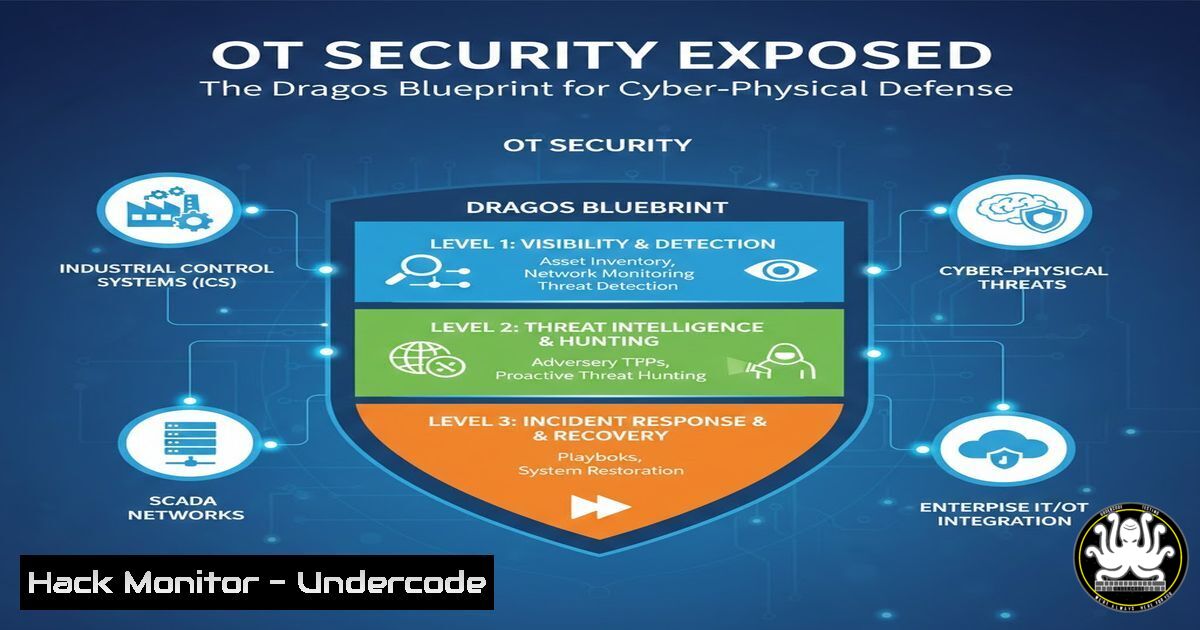
Operational Technology (OT) security is the frontline defense for industrial control systems (ICS) and critical infrastructure against escalating cyber threats. The Dragos Platform Essentials course underscores that effective OT protection hinges on context-aware visibility, threat intelligence, and operational understanding, not merely deploying tools. This article breaks down the practical methodologies and technical steps to fortify cyber-physical environments, drawing from insider insights and hands-on training.
Learning Objectives:
- Differentiate between IT and OT security paradigms and implement context-driven strategies for industrial networks.
- Deploy and configure monitoring tools to achieve comprehensive OT threat visibility and detection.
- Execute incident response protocols tailored to ICS/SCADA systems, integrating threat intelligence for proactive defense.
You Should Know:
1. OT Security Fundamentals: Context Over Tools
Step‑by‑step guide explaining what this does and how to use it:
OT security prioritizes physical process safety and reliability over data confidentiality, requiring a deep grasp of industrial protocols like Modbus, DNP3, and PROFINET. Start by segmenting OT networks from IT using firewalls to limit exposure. On Linux, use iptables to create rules that block unauthorized access while allowing essential traffic. For example, to allow Modbus TCP traffic only from a trusted subnet and log drops:
iptables -A FORWARD -p tcp --dport 502 -s 192.168.1.0/24 -j ACCEPT
iptables -A FORWARD -p tcp --dport 502 -j LOG --log-prefix "OT-BLOCK"
iptables -A FORWARD -p tcp --dport 502 -j DROP
Regularly audit network rules with `iptables -L -v` and update them based on operational needs. This foundational step prevents lateral movement and aligns security with process continuity.
2. Establishing OT Network Visibility with Passive Monitoring
Step‑by‑step guide explaining what this does and how to use it:
Passive monitoring taps into OT traffic without disrupting operations, enabling detection of anomalies and threats. Use a network tap or SPAN port to mirror traffic to a monitoring station. On the station, run Tcpdump or Wireshark to capture packets. For initial analysis, execute:
tcpdump -i eth0 -w ot_capture.pcap -c 10000
This captures 10,000 packets to a file for offline inspection. Filter for ICS protocols in Wireshark using display filters like `modbus` or dnp3. To automate alerting, integrate with Security Onion or a SIEM, forwarding logs via syslog. Visibility is critical for baselining normal behavior and spotting deviations, such as unauthorized commands to PLCs.
3. Configuring Anomaly Detection for ICS Protocols
Step‑by‑step guide explaining what this does and how to use it:
Deploy intrusion detection systems (IDS) like Suricata with custom rules for OT protocols to flag malicious activity. First, install Suricata on a Linux server (e.g., sudo apt-get install suricata). Edit the configuration file `/etc/suricata/suricata.yaml` to include rule paths for OT. Create a custom rule file, e.g., ot-rules.rules, with rules targeting unusual function codes or payloads. Example rule to detect Modbus function code 0 (illegal):
alert tcp any any -> any 502 (msg:"Modbus illegal function code 0"; content:"|00|"; depth 1; sid:100001; rev:1;)
Reload Suricata with sudo systemctl reload suricata. Test with a packet generator like Scapy, sending crafted Modbus packets. This setup helps identify attacks like command injection or reconnaissance scans in OT layers.
4. OT Incident Response: A Practical Playbook
Step‑by‑step guide explaining what this does and how to use it:
OT incident response must balance cybersecurity with operational safety. Develop a playbook that includes isolation, investigation, and recovery steps. Upon detecting a threat, immediately isolate affected systems using network controls. On Windows-based HMI stations, enable the firewall to block inbound traffic:
netsh advfirewall set allprofiles state on
netsh advfirewall firewall add rule name="Block OT Incident" dir=in action=block remoteip=any
For Linux PLC gateways, use iptables to drop connections from malicious IPs. Then, preserve forensic evidence by capturing memory dumps with `fmpeg` or dd. Coordinate with operations staff to assess impact on physical processes before restoring systems from verified backups. Document all actions for post-incident review and compliance.
5. Integrating Threat Intelligence into OT SOC
Step‑by‑step guide explaining what this does and how to use it:
Enhance OT Security Operations Centers (SOC) with threat intelligence feeds specific to ICS threats, such as those from Dragos, ICS-CERT, or MISP. Use the TAXII protocol to consume STIX-formatted intelligence. Write a Python script to fetch and parse feeds. Example using the `taxii2-client` library:
from taxii2client import Server
server = Server("https://otx.dragos.com/taxii2/")
api_root = server.api_roots[bash]
collection = api_root.collections[bash]
bundle = collection.get_objects()
for obj in bundle.get('objects', []):
if obj['type'] == 'indicator':
print(f"Threat: {obj['pattern']} - {obj['description']}")
Integrate these indicators into SIEM correlation rules to alert on known OT malware like Triton or Industroyer. Regularly update feeds and tailor them to your industry sector for contextual relevance.
6. Hardening PLCs and RTUs: Configuration Best Practices
Step‑by‑step guide explaining what this does and how to use it:
Secure programmable logic controllers (PLCs) and remote terminal units (RTUs) by reducing attack surfaces. Access device web interfaces or engineering software (e.g., Siemens TIA Portal) to change default credentials—use strong passwords stored in a vault. Disable unused services like HTTP, FTP, or Telnet; for Linux-based RTUs, run:
sudo systemctl disable telnet.service
sudo systemctl stop telnet.service
Apply firmware updates from vendors only after testing in a staging environment. Configure access control lists (ACLs) on network switches to restrict management traffic to authorized IPs. Document all configurations and monitor for unauthorized changes using file integrity tools like AIDE on Linux servers.
- Continuous Learning and Certification Paths for OT Professionals
Step‑by‑step guide explaining what this does and how to use it:
Stay ahead in OT security through structured training and certifications. Enroll in courses like Dragos Platform Essentials, SANS ICS410, or ISA/IEC 62443 certifications. Set up a home lab using simulated OT environments: download ICS/SCADA emulators from sources like Critical Infrastructure Defense or use Docker containers for protocols. Practice with tools like Clarke and GRFICS for penetration testing. Join communities like Dragos WorldView or ISC2 for threat briefings. Dedicate time weekly to review new vulnerabilities from databases like CISA ICS Advisories, and simulate responses in your lab to build muscle memory.
What Undercode Say:
- Key Takeaway 1: OT security demands a paradigm shift from IT-centric tools to operational context, where safety and reliability trump traditional confidentiality goals.
- Key Takeaway 2: Proactive defense in OT environments blends passive visibility, threat intelligence, and hands-on incident response, requiring cross-disciplinary skills.
- Analysis: The Dragos course highlights that OT security is not a checkbox but a continuous journey anchored in real-world operations. As industries converge IT and OT, professionals must master both technical controls and process understanding. Investments in training like Dragos Platform Essentials yield dividends by reducing downtime and mitigating catastrophic risks. The emphasis on context and intelligence-driven response is a game-changer, moving organizations from reactive patching to predictive resilience.
Prediction:
The future of OT security will see accelerated adoption of AI and machine learning for anomaly detection in ICS networks, automating response to known threat patterns. However, human expertise will remain irreplaceable for interpreting contextual nuances and managing complex, targeted attacks. Regulatory pressures from standards like IEC 62443 and NIST CSF will drive mandatory OT security training and audits, expanding the market for specialized courses. Expect increased convergence with IT security tools, but with OT-specific adaptations to handle legacy systems and real-time constraints, ultimately shaping a new era of cyber-physical resilience.
▶️ Related Video (90% Match):
🎯Let’s Practice For Free:
IT/Security Reporter URL:
Reported By: Jayasankarjnair Otsecurity – Hackers Feeds
Extra Hub: Undercode MoN
Basic Verification: Pass ✅


