Listen to this Post
Introduction:
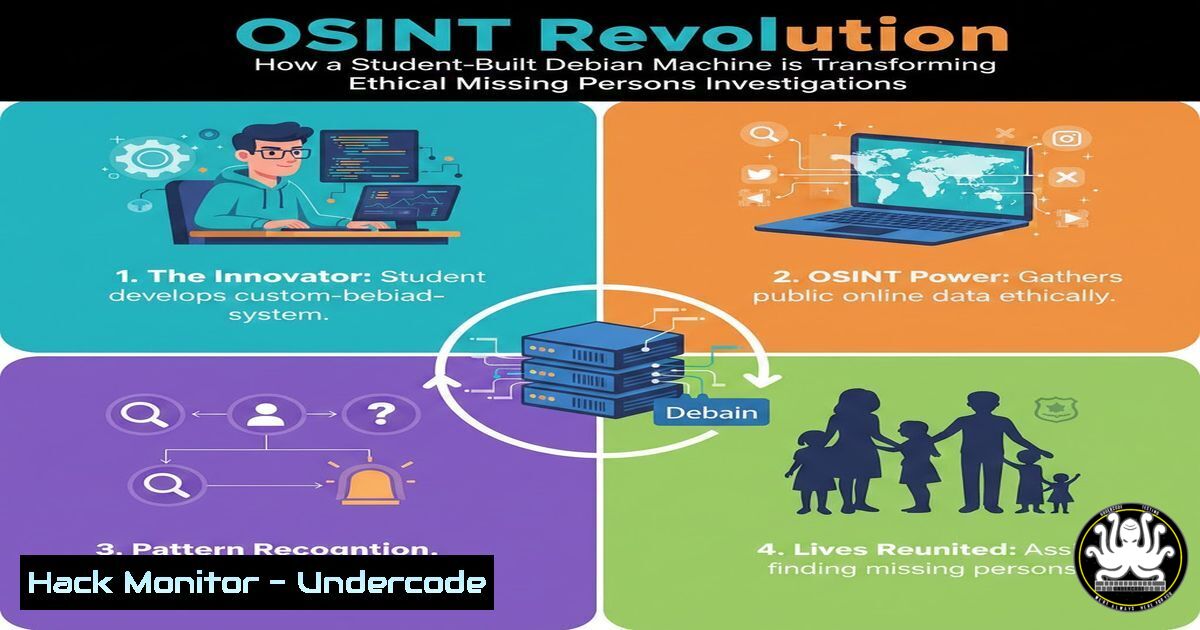
Open Source Intelligence (OSINT) has evolved from a niche skill to a cornerstone of modern cybersecurity and digital forensics. The “Oculus” project exemplifies this shift, presenting a specialized, Debian-based operating system engineered to streamline lawful OSINT investigations for critical real-world scenarios, such as locating missing persons. This tool underscores the increasing importance of structured, reproducible, and legally compliant methodologies in the intelligence-gathering lifecycle.
Learning Objectives:
- Understand the architecture and deployment of a purpose-built OSINT investigation machine.
- Master a foundational, ethical OSINT workflow for gathering publicly available information.
- Apply critical legal and ethical frameworks to ensure investigative compliance.
- Implement basic automation and data correlation techniques to enhance signal-to-noise ratio.
- Generate actionable, privacy-conscious reports from collected intelligence.
You Should Know:
1. Deploying Your Oculus Investigation Machine
The core of Oculus is a customized Debian Linux distribution, pre-loaded with essential OSINT tools. The project is hosted on GitHub, providing the blueprint for building your own instance.
Step‑by‑step guide explaining what this does and how to use it.
First, clone the repository and review the documentation to understand the toolset and setup scripts.
 Clone the Oculus project repository
git clone https://github.com/[bash]/oculus-project.git
cd oculus-project
 Review the installation and configuration scripts
cat INSTALL.md
ls scripts/
The provided scripts likely automate the installation of tools like maltego, theHarvester, recon-ng, sherlock, and metagoofil. Running the main deployment script (e.g., ./deploy.sh) will configure a dedicated virtual machine or physical system, ensuring all dependencies and frameworks are correctly installed for a turnkey investigative environment.
2. Executing a Lawful and Structured OSINT Workflow
A disciplined workflow prevents scope creep and maintains legal boundaries. Oculus provides a structured methodology focusing on phases: Discovery, Collection, Analysis, and Reporting.
Step‑by‑step guide explaining what this does and how to use it.
Begin with Discovery, using tools to identify potential digital footprints from a known starting point like a name or username.
 Use sherlock to find username matches across social platforms
python3 sherlock [bash]
 Use theHarvester for email and domain discovery
theHarvester -d [bash] -l 100 -b google
Move to Collection, where data is gathered systematically. Use `recon-ng` with its modular approach.
 Start recon-ng
recon-ng
 Create a new workspace for your investigation
workspaces create [bash]
 Use modules for information gathering
marketplace install all
modules load recon/domains-hosts/bing_domain_web
This phased approach ensures data is collected methodically, tagged correctly, and ready for correlation.
3. Implementing Legal and Ethical Safeguards
Before any investigation, you must establish a legal basis. Oculus is designed for authorized cases, academic simulation, or self-owned data.
Step‑by‑step guide explaining what this does and how to use it.
Create an Investigation Charter document for every case. This should include:
1. Legal Authority (e.g., court order, explicit consent, academic project brief).
2. Defined Scope (specific persons, data types, platforms, and timeframes).
3. Data Handling Protocol (encryption at rest, secure storage, retention period).
In your Oculus machine, enforce these protocols technically:
 Create an encrypted workspace using LUKS or Veracrypt
sudo cryptsetup luksFormat /dev/sdX1
sudo cryptsetup open /dev/sdX1 secure_workspace
 Mount the encrypted volume only for the duration of the investigation
sudo mount /dev/mapper/secure_workspace /mnt/oculus_case01
This technical enforcement aligns with regulations like GDPR and platform Terms of Service, mitigating legal risk.
4. Automating Repetitive Tasks with Scripts
Automation reduces human error and allows investigators to focus on analysis. Oculus’s future roadmap highlights enhanced automation.
Step‑by‑step guide explaining what this does and how to use it.
Write simple Bash or Python wrappers to chain tools together. For example, a script to automate initial footprinting.
!/bin/bash
 auto_footprint.sh
TARGET=$1
echo "[] Starting footprint on $TARGET"
mkdir -p ./data/$TARGET
python3 sherlock $TARGET --output ./data/$TARGET/sherlock.json
theHarvester -d $TARGET -b all -f ./data/$TARGET/harvester.xml
echo "[] Initial footprint complete. Data saved in ./data/$TARGET/"
Schedule regular, lawful data collection for ongoing monitoring using cron, but only within the defined legal scope.
 Edit crontab to run a specific collection script weekly
crontab -e
 Add line: 0 9   1 /path/to/oculus/scripts/weekly_check.sh
5. Correlating Data and Reducing False Positives
Raw OSINT data is noisy. Effective analysis requires correlating information from multiple sources to build a reliable picture.
Step‑by‑step guide explaining what this does and how to use it.
Use built-in Linux tools and simple databases to cross-reference data. After collecting usernames and emails, correlate them.
 Use grep, cut, and sort to find common identifiers across files
grep -oE "\b[A-Za-z0-9._%+-]+@[A-Za-z0-9.-]+.[A-Z|a-z]{2,6}\b" data/.json | sort | uniq -c | sort -nr
 This command extracts all email addresses from collected files, counts occurrences, and sorts them. Frequent appearances across sources increase credibility.
For more advanced correlation, import data into a local SQLite database via `recon-ng` or custom scripts to run JOIN queries, linking usernames, domains, and locations.
6. Generating Compliant Reports and Visualizations
The final output must be an actionable report that respects privacy, highlighting only relevant information for authorities or clients.
Step‑by‑step guide explaining what this does and how to use it.
Use Markdown or a template engine to create standardized reports. A Python script can parse JSON output from tools and generate a summary.
!/usr/bin/env python3
 generate_report.py
import json, datetime
with open('data/sherlock.json') as f:
profiles = json.load(f)
report = f"""
OSINT INVESTIGATION REPORT
Case: MP-2023-001
Date: {datetime.date.today()}

<h1>Investigator: [YOUR NAME]</h1>

Discovered Profiles for [bash]:
"""
for site, url in profiles.items():
report += f"- {site}: {url}\n"
with open('report.md', 'w') as out:
out.write(report)
For visualization, use built-in tools like `maltego` to create entity-relationship graphs, ensuring any exported images redact sensitive or superfluous personal data.
What Undercode Say:
- The Ethical Framework is Non-Negotiable. The most sophisticated tool is a liability without strict legal and operational guidelines. Oculus’s foundational emphasis on compliance is its most critical feature, setting a necessary standard for all OSINT tool development.
- Automation Serves the Analyst, Not Replaces Them. Future enhancements focusing on structured reporting and data correlation directly address the core challenge of OSINT: information overload. The goal is to elevate the investigator’s analytical decision-making, not just collect more data.
Prediction:
The integration of AI and machine learning for intelligent data correlation and anomaly detection will be the next frontier for tools like Oculus. We predict a rise in “Assisted Intelligence” platforms within 2-3 years, where AI pre-filters vast public data sets based on learned investigative patterns, flagging only high-probability leads for human review. This will drastically reduce investigation time in critical cases like missing persons but will concurrently spark significant ethical and regulatory debates around algorithmic bias and the automation of surveillance. Projects like Oculus, built with ethics at their core, provide the essential framework upon which these advanced systems must be developed.
▶️ Related Video (82% Match):
🎯Let’s Practice For Free:
IT/Security Reporter URL:
Reported By: Muhammad Waleed – Hackers Feeds
Extra Hub: Undercode MoN
Basic Verification: Pass ✅


