
Listen to this Post
Introduction
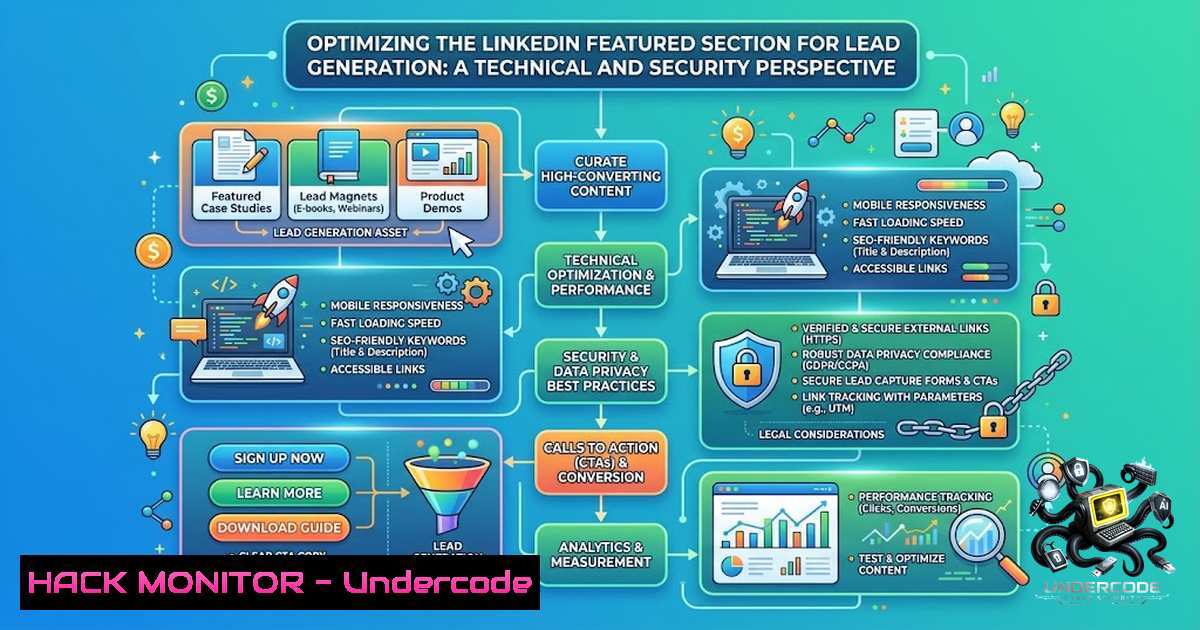
The LinkedIn Featured section, positioned directly beneath the About section on desktop profiles, represents one of the highest click-through surfaces on the platform, yet remains critically underutilized by professionals. This content slot functions as a micro-conversion funnel where strategic content curation can generate 5-15 booked calls monthly from approximately 500 weekly profile views. Understanding the technical implementation, meta tag requirements, and the platform’s ranking algorithms transforms this overlooked section into a predictable lead generation engine.
Learning Objectives & Secrets
- Objective 1: Optimize the three-slot configuration to maximize click-through rates across mobile and desktop platforms while understanding the platform’s OG image rendering requirements.
- Objective 2: Secret tip: Implement proper Open Graph meta tags on destination URLs to prevent broken card rendering—use the Facebook Sharing Debugger or LinkedIn Post Inspector to validate previews before publishing.
- Objective 3: Secret tip: Leverage LinkedIn’s completeness ranking signal by populating the Featured section, as the platform treats filled sections as indicators of profile completeness, indirectly improving search visibility.
You Should Know
1. Technical Implementation & Meta Tag Validation
The Featured section renders destination URLs using Open Graph (OG) meta tags. Missing or misconfigured tags produce broken-looking cards that dramatically reduce click-through. This section requires immediate technical validation.
Linux Command for OG Tag Inspection:
curl -s https://example.com | grep -E 'og:title|og:description|og:image'
Windows PowerShell for Meta Tag Extraction:
Invoke-WebRequest -Uri https://example.com | Select-String -Pattern 'og:title|og:description|og:image'
Step-by-Step Guide:
- Extract the destination URL’s meta tags using cURL or PowerShell
- Validate that `og:image` points to a valid, accessible image URL
- Test the URL using LinkedIn’s Post Inspector tool to preview how the card renders
4. Verify image dimensions (minimum 1200×627 pixels recommended)
- Confirm that `og:title` and `og:description` are not truncated (under 60 and 155 characters respectively)
Redirection Security Check:
curl -I https://example.com/featured-link | grep -i location
This command helps identify if a URL undergoes redirects, which may affect LinkedIn’s crawler behavior and caching.
2. Configuration Automation & Pipeline Tracking
The optimal configuration requires three pinned items in deliberate order: Slot 1 (best-performing post/social proof), Slot 2 (“start here” resource), and Slot 3 (booking link). This structure is not arbitrary—mobile truncation occurs after the third card, rendering a fourth item invisible to approximately half of all visitors.
Python Script for Click-Through Monitoring:
import pandas as pd
import matplotlib.pyplot as plt

Sample tracking structure
slots = ['Slot 1 (Social Proof)', 'Slot 2 (Resource)', 'Slot 3 (Booking)']
ctr_avg = [0.16, 0.115, 0.05]
dm_generated = [0, 45, 5]  percentage of DMs per slot

tracking_df = pd.DataFrame({
'Slot': slots,
'Click-Through Rate': ctr_avg,
'DM Generation %': dm_generated
})

print(tracking_df)
Configure UTM Parameters for Source Attribution:
https://yourdomain.com/resource?utm_source=linkedin&utm_medium=featured&utm_campaign=slot2
Browser Developer Tools Method:
- Open Chrome DevTools (F12) → Network tab
- Filter for `https://www.linkedin.com/` requests
- Monitor which featured cards receive the most hover/interaction events
- Track conversion events using LinkedIn’s Conversion Tracking pixel
3. API Security & Privacy Considerations
When linking to external resources from the Featured section, ensure that API endpoints are properly secured to prevent data leakage.
API Key Security Check (Linux):
 Check for exposed API keys in source code
grep -r "api_key|apikey|secret" /path/to/codebase --exclude-dir=.git
Environment Variable Management:
 Linux/Mac: Store credentials in environment variables
export LINKEDIN_API_KEY="your_key_here"
export LEAD_MAGNET_API_SECRET="your_secret"

Windows PowerShell
$env:LINKEDIN_API_KEY="your_key_here"
Step-by-Step Security Hardening:
- Rotate API keys monthly, especially for lead capture endpoints
- Implement rate limiting on lead form submissions (5-10 attempts per IP per hour)
- Use reCAPTCHA v3 on external landing pages to prevent bot abuse
- Sanitize all input fields on lead magnets to prevent XSS injections
5. Audit third-party integrations for proper OAuth implementation
4. Cloud Hardening for Landing Pages
Featured section destinations should be hosted on cloud infrastructure with appropriate hardening.
AWS CloudFront Security Headers Configuration:
Strict-Transport-Security: max-age=31536000; includeSubDomains
X-Content-Type-Options: nosniff
X-Frame-Options: DENY
Content-Security-Policy: default-src 'self'; img-src 'self' data:; script-src 'self'
Azure Application Gateway WAF Rule Configuration:
{
"properties": {
"policySettings": {
"mode": "Prevention",
"state": "Enabled"
},
"customRules": [
{
"name": "BlockSQLInjection",
"priority": 1,
"ruleType": "MatchRule",
"matchConditions": [
{
"matchVariables": [{"variableName": "RequestUri"}],
"operator": "Contains",
"matchValues": ["sql", "union", "select"]
}
]
}
]
}
}
Step-by-Step Cloud Hardening:
1. Enable DDoS protection (CloudFront/Azure DDoS Protection)
- Configure rate limiting at the load balancer level (100 requests/minute/IP)
- Implement Web Application Firewall (WAF) with OWASP Top 10 rules
- Set up server-side logging with retention policies for incident response
- Use Content Delivery Network (CDN) for asset delivery to reduce latency
-
Vulnerability Exploitation & Mitigation for Lead Generation Links
The Featured section’s prominence makes its destination URLs potential attack vectors.
Common Attack Vectors:
- Phishing: Attackers may clone landing pages to harvest credentials
- Malvertising: Malicious redirects from compromised destination sites
- Clickjacking: Embedding lead forms in invisible iframes
Mitigation Commands (Linux):
 Check for open redirects
curl -I "https://example.com/redirect?url=http://evil.com"

DNS security check
dig example.com +short | xargs -I {} curl -s https://ipinfo.io/{}

SSL/TLS validation
openssl s_client -connect example.com:443 -servername example.com < /dev/null
Mitigation Commands (Windows):
 SSL certificate check
Test-Connection -ComputerName example.com

Open redirect vulnerability testing
Invoke-WebRequest -Uri "https://example.com/redirect?url=http://evil.com" -Method GET
Step-by-Step Vulnerability Mitigation:
1. Implement sanitization for all user-supplied parameters
- Enforce HTTPS (HSTS preload) with proper certificate validation
- Regularly scan landing pages using OWASP ZAP or Burp Suite
4. Monitor traffic logs for unusual patterns
5. Maintain up-to-date software dependencies and plugins
6. Analytics & Performance Monitoring
Tracking Featured section performance requires integration with LinkedIn Analytics and third-party tools.
Google Analytics Event Tracking Setup:
// Track featured section clicks
document.querySelectorAll('.featured-link').forEach(link => {
link.addEventListener('click', function() {
gtag('event', 'featured_click', {
'event_category': 'LinkedIn',
'event_label': this.href,
'slot': this.dataset.slot
});
});
});
Step-by-Step Analytics Setup:
1. Implement UTM parameters on all Featured links
- Set up LinkedIn Insight Tag for conversion tracking
3. Configure goal funnels in Google Analytics 4
4. Monitor pipeline attribution through CRM integration
5. Create dashboards for weekly performance reviews
Recommended Monitoring Commands:
 Check URL status before posting
curl -o /dev/null -s -w "Status Code: %{http_code}\n" https://yourdomain.com/resource

Monitor SEO metadata
curl -s https://yourdomain.com/resource | grep -E 'title|description|h1'
What Undercode Say:
- Key Takeaway 1: The three-slot Featured configuration is not arbitrary—it aligns with mobile rendering constraints and user behavior patterns. Slot 1 (social proof) drives initial engagement, Slot 2 (resource) converts DMs, and Slot 3 (booking) captures high-intent leads. The click-through data demonstrates a clear hierarchy: 12-20% for social proof, 8-15% for resources with high DM generation, and 3-7% for booking with 5-10% actual call conversions. This structure maximizes the limited real estate.
-
Key Takeaway 2: Technical hygiene directly impacts conversion rates. Missing OG images create broken cards that users scroll past, and LinkedIn’s completeness ranking signal prioritizes profiles with filled sections. The cumulative effect of proper meta tags and strategic content placement can produce 5-15 booked calls monthly from just 500 weekly views. This represents a significant ROI given the zero-cost implementation.
Analysis: The LinkedIn Featured section functions as a miniature security-conscious marketing ecosystem. The technical requirements—OG tags, redirect validation, and SSL implementation—mirror broader cybersecurity principles. Just as encryption protects data in transit, proper meta tag implementation protects the user experience and conversion funnel. The security implications extend beyond technical hygiene: every featured link is a potential attack vector for phishing or credential harvesting. Professionals should treat their Featured section with the same security rigor as their corporate website. The performance data suggests that the platform’s algorithm rewards completeness, similar to search engine ranking factors, making this section a dual-purpose tool for both lead generation and profile optimization. The most successful implementations will likely integrate automated monitoring, regular URL validation, and security headers to maintain credibility and conversion rates over time.
Prediction:
+1 The convergence of content strategy and technical implementation will become increasingly automated, with AI tools emerging to optimize Featured section performance based on real-time engagement data.
+1 LinkedIn’s ranking algorithms will continue to prioritize profile completeness, making the Featured section a de facto requirement for visibility in competitive B2B markets.
-1 Security threats targeting featured links will intensify, with attackers exploiting this prominent surface area for spear-phishing campaigns aimed at high-value professionals.
+1 Marketing automation platforms will integrate native LinkedIn Featured section monitoring, providing predictive analytics for optimal slot rotation and timing.
-1 Organizations without dedicated security hygiene processes for their featured content will face increased exposure to brand impersonation and credential harvesting attacks.
▶️ Related Video (82% Match):
🎯Let’s Practice For Free:
🎓 Live Courses & Certifications:
Join Undercode Academy for Verified Certifications
🚀 Request a Custom Project:
Secure, high-velocity infrastructure and disruptive technological engineering. Contact our engineering team for high-tier development and proprietary systems:
[email protected]
💎 Smart Architecture | 🛡️ Secure by Design | ⭐ Trusted by Thousands
IT/Security Reporter URL:
Reported By: https://lnkd.in/p/eGFSJMnW – Hackers Feeds
Extra Hub: Undercode MoN
Basic Verification: Pass ✅


