Listen to this Post
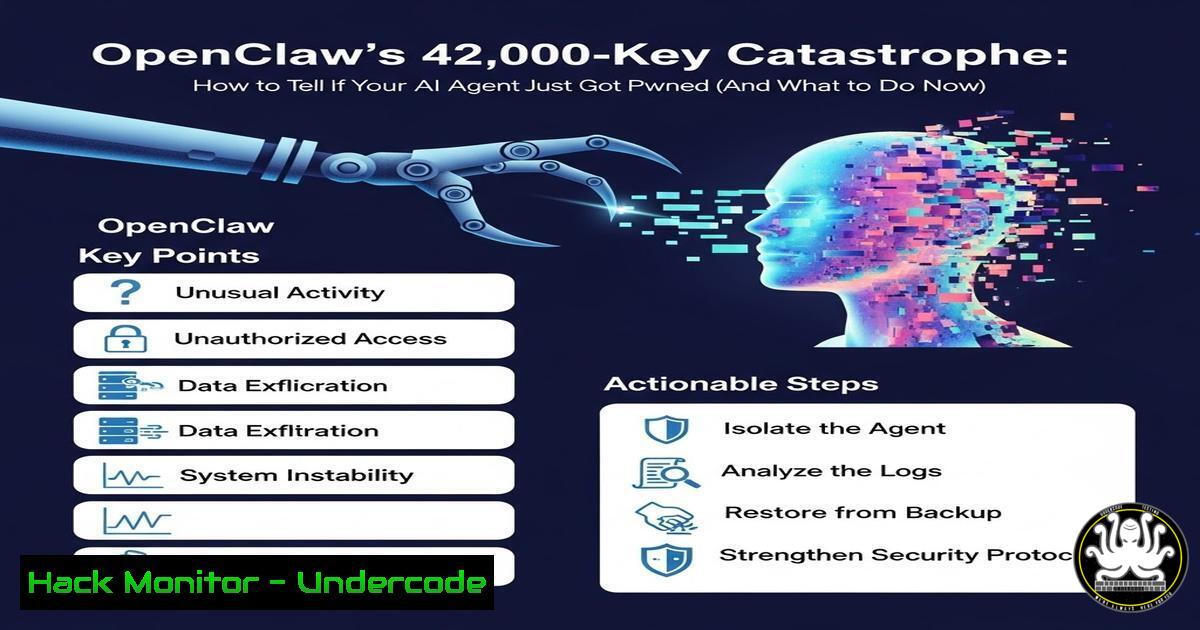
Introduction:
The OpenClaw AI agent exploded in popularity this January, but its rapid adoption opened the floodgates for one of the most severe credential‑exposure events in recent memory. Over 42,000 Anthropic API keys, Slack tokens, and chat histories were left unauthenticated on Shodan; 7% of marketplace skills leaked secrets through LLM context windows, and 341 malicious skills were actively exfiltrating SSH credentials and crypto wallet keys. While rotating keys is mandatory, it answers nothing about past compromise. This article dissects the exposure, introduces a privacy‑preserving CLI tool to check historic key compromise, and delivers a complete hardening blueprint across Linux, Windows, cloud, and CI/CD pipelines.
Learning Objectives:
- Learn how to verify whether previously rotated API keys were actually exploited using k‑anonymity without exposing secrets.
- Master batch auditing of credential stores (.env, CI secrets) and integrate automated checks into GitHub Advanced Security.
- Implement defensive controls against LLM context‑window leakage and malicious skills in agent marketplaces.
You Should Know:
1. “compromising-position” — Zero‑Trust Credential Forensics
The open‑source CLI `compromising-position` answers one question: “Was this key compromised during the exposure window?” It identifies provider types across 39 formats, queries breach databases using k‑anonymity (your full secret never leaves the machine), and returns a risk score from INFO to CRITICAL.
Step‑by‑step guide (Linux / macOS / WSL):
 Quick check of a single suspected key
echo "sk-anthr0p1c-Ex4mpl3" | npx compromising-position check

Batch audit of your entire .env file
npx compromising-position audit .env --format table

Generate SARIF report for GitHub Advanced Security
npx compromising-position audit .env --format sarif --output results.sarif

Offline mode (no outbound queries) — useful in air‑gapped environments
npx compromising-position check --offline --input key.txt
Windows PowerShell equivalent:
"sk-anthr0p1c-Ex4mpl3" | npx compromising-position check
npx compromising-position audit .env --format table
What it does:
The tool hashes the first five characters of your key and sends only this prefix (k‑anonymity) to public breach APIs (HIBP, dark web feeds). The service returns all full hashes matching that prefix; the CLI compares them locally. If a match occurs, your key existed verbatim in a breach. This prevents the tool itself from becoming a new exfiltration vector.
2. Retro‑active Shodan & Leak‑Site Sweeping
Even after key rotation, you must ascertain if your keys ever appeared on exposed surfaces.
Linux: Automate Shodan checks for your organisation’s key fingerprints:
 Install Shodan CLI
pip3 install shodan

Search for exposed Anthropic keys (example filter)
shodan search 'ssl:"anthropic" port:443' --fields ip_str,port,org --limit 1000

Cross‑reference with your old key hashes (use jq for parsing)
shodan download anthropic_keys 'anthropic api key'
shodan parse --fields ip_str,data anthropic_keys.json.gz | grep -i "sk-anth"
Windows: Use PowerShell with Shodan module:
Invoke-WebRequest -Uri "https://api.shodan.io/shodan/host/search?key=YOUR_SHODAN_KEY&query=anthropic" | ConvertFrom-Json | Select-Object -ExpandProperty matches
Mitigation: Any organisation that used OpenClaw should treat the January–February window as a presumed breach and conduct user‑notification if PII or sensitive operations were handled.
- LLM Context‑Window Hardening — Stopping Leaks at Runtime
Snyk’s finding that 7% of skills leaked secrets via the LLM’s own context window demands runtime filtering.
OpenAI / Anthropic API wrapper with output sanitisation (Python):
import re
from anthropic import Anthropic

client = Anthropic(api_key="YOUR_NEW_KEY")

def safe_completion(prompt):
response = client.messages.create(
model="claude-3-opus-20240229",
max_tokens=1000,
messages=[{"role": "user", "content": prompt}]
)
 Regex to scrub any accidental credential reflection
cleaned = re.sub(r'(sk-anthr0p1c-[A-Za-z0-9]{48})', '[REDACTED API KEY]', response.content[bash].text)
return cleaned
Cloud WAF (AWS WAF, Cloudflare): Deploy managed rules to inspect outbound LLM responses for regex patterns matching your secret formats and block or alert.
- CI/CD & Secret Scanning — Automating the “compromising-position” Check
Embed the tool into your GitHub Actions so that any secret exposed in the past triggers an audit trail.
GitHub Action workflow (.github/workflows/audit-old-secrets.yml):
name: Audit Old API Keys
on: [workflow_dispatch, schedule]
jobs:
audit:
runs-on: ubuntu-latest
steps:
- uses: actions/checkout@v4
- name: Check .env for compromised keys
run: npx compromising-position audit .env --format sarif > results.sarif
- name: Upload SARIF to GitHub Security
uses: github/codeql-action/upload-sarif@v3
with:
sarif_file: results.sarif
This provides a permanent ledger of which old keys were confirmed compromised, aiding forensic compliance.
- Malicious Skill Quarantine — Network & Endpoint Controls
Koi Security identified 341 malicious skills stealing SSH and crypto keys. Prevent execution of untrusted marketplace skills via eBPF or Sysmon.
Linux eBPF (using bpftrace) to monitor skill processes accessing ~/.ssh:
bpftrace -e 'tracepoint:syscalls:sys_enter_openat /str(args->filename)=="/home/user/.ssh/id_rsa"/ { printf("Skill %d accessed SSH key\n", pid); }'
Windows Sysmon configuration snippet:
<ProcessCreate onmatch="include">
<CommandLine condition="contains">openclaw-skill</CommandLine>
</ProcessCreate>
<FileCreateTime onmatch="include">
<TargetFilename condition="contains">.ssh</TargetFilename>
</FileCreateTime>
Block such processes immediately and revoke the associated skill token.
6. API Gateway & Keyless Authentication Migration
The root cause was API keys embedded in agent configurations. Move to keyless, short‑lived authentication where possible.
AWS Solution — Replace API keys with IAM Roles Anywhere for on‑prem agents:
 Install AWS IAM Roles Anywhere helper
aws_signing_helper credential-process \
--certificate /path/to/cert.pem \
--private-key /path/to/private-key.pem \
--trust-anchor-arn arn:aws:rolesanywhere:region:account:trust-anchor/ID \
--profile-arn arn:aws:rolesanywhere:region:account:profile/ID \
--role-arn arn:aws:iam::account:role/RoleName
Configure OpenClaw to call this credential helper instead of storing long‑lived keys.
7. Full Transparency & Vibe‑Code Due Diligence
The creator of `compromising-position` explicitly disclaims security‑expert status. You must independently verify tools that handle credential material.
Integrity check on the npm package:
npm view compromising-position dist.integrity
npm audit --production
npm run test  196 tests exist, run them locally
Reproducible build verification:
git clone https://github.com/tommyyau/compromising-position
cd compromising-position
npm ci
npm run build
npm test
 Compare the shasum of the installed binary with the release tag
Do not rely solely on a `npx` one‑liner for production‑grade incident response.
What Undercode Say:
- Key Takeaway 1: Credential rotation is hygiene, not forensics. The absence of active keys does not mean the past was clean; organisations must retro‑hunt exposed secrets using privacy‑preserving methods like k‑anonymity. `compromising-position` provides this capability with a rigorous privacy boundary.
- Key Takeaway 2: AI agent platforms introduce a new supply‑chain risk: malicious skills that exfiltrate credentials through both network calls and the LLM’s own context window. Runtime monitoring, output sanitisation, and network micro‑segmentation are no longer optional — they are core to agent security.
Analysis: The OpenClaw incident is a watershed moment for AI‑native development. It proves that traditional secret‑scanning and rotation are insufficient for ephemeral, skill‑driven architectures. The industry must adopt three simultaneous shifts: forensic key‑auditing tools that preserve privacy, LLM‑aware data‑loss prevention, and a wholesale migration from static API keys to dynamic, identity‑based authentication. Developers who “vibe‑code” agents without these layers will repeat this leak at scale.
Prediction:
Within 12 months, every major AI agent marketplace will mandate runtime credential introspection — skills will be sandboxed with mandatory DLP filters, and marketplaces will scan submitted code for both static secrets and behavioural exfiltration patterns. Expect NIST SSDF (Secure Software Development Framework) controls to be retrofitted for LLM‑augmented applications, and regulatory bodies to classify large‑scale agent credential leaks as reportable data breaches. The era of trusting community‑built AI skills with root‑level API keys is ending; ephemeral, just‑in‑time tokens will become the baseline.
▶️ Related Video (72% Match):
🎯Let’s Practice For Free:
IT/Security Reporter URL:
Reported By: Tommyyau Clawdbot – Hackers Feeds
Extra Hub: Undercode MoN
Basic Verification: Pass ✅


