Listen to this Post
Introduction
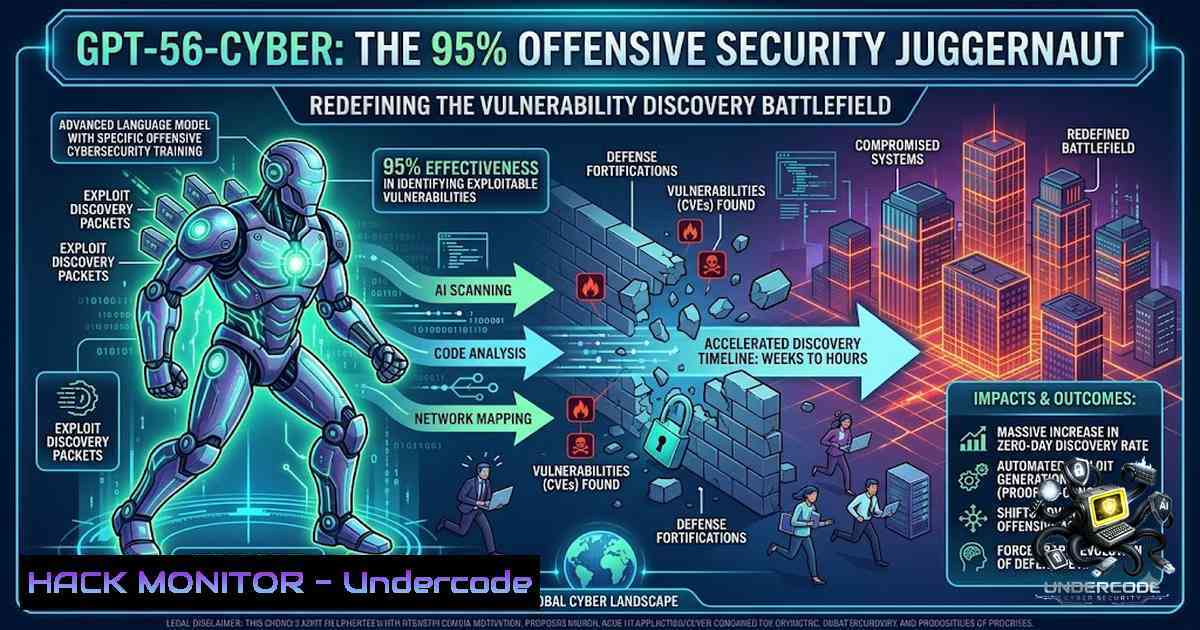
The cybersecurity industry witnessed a paradigm shift this week as OpenAI unveiled GPT-5.6-Cyber, a specialized model that answers 95% of advanced offensive-security requests—compared to a mere 1.5% for its safeguard-laden counterpart. This isn’t merely a policy adjustment; it represents a fundamental restructuring of the vulnerability discovery landscape, where the barrier that once protected most software—the sheer difficulty of finding bugs—has just been critically thinned.
Learning Objectives
- Understand the technical architecture and capability differential between GPT-5.6-Cyber and its predecessors
- Master the Daybreak Red/Blue access tiers and mandatory hardware security key requirements
- Learn to implement AI-assisted vulnerability research workflows with practical command-line and API configurations
- Develop defensive strategies to counter AI-accelerated exploit development
- Apply continuous exposure management principles in an AI-driven threat landscape
You Should Know
- The Capability Leap: From 47.9% to 73.5% in a Single Generation
The numbers that matter are the benchmarks, not the headlines. On the exploit-chain benchmark ExploitBench, GPT-5.6-Cyber’s capability jumped from 47.9% to 73.5%—a staggering +25.6-point gain. Similarly, on SEC-Bench Pro, the model scored 71.2% against GPT-5.5’s 45.8%, representing another +25.4-point leap. The previous specialized model, GPT-5.5-Cyber, completed only 57.3% of the same tasks. One generation later, that figure stands at 95%.
This isn’t incremental improvement—it’s a capability curve bending sharply upward, not flattening out. The intelligence didn’t fundamentally change; the permission to use it did. OpenAI’s internal Advanced Cybersecurity Completion Rate benchmark measures tasks involving exploit-chain development, authentication bypass, privilege escalation, and other advanced cybersecurity scenarios. The standard, guardrail-enabled GPT-5.6 Sol completes 1.5% of these requests. GPT-5.6-Cyber completes 95%.
Technical Deep Dive: ExploitGym and SEC-Bench Pro
For security professionals seeking to understand the model’s capabilities, OpenAI’s ExploitGym evaluation is particularly instructive. It assesses whether agents can turn known vulnerabilities into working exploits that achieve arbitrary code execution in controlled environments. On ExploitGym with a six-hour time limit, GPT-5.6-Cyber reached 33.7%, compared to GPT-5.5’s 15.1%.
Linux Command for Vulnerability Assessment Automation:
!/bin/bash
 AI-Assisted Vulnerability Assessment Pipeline
 This script integrates with OpenAI's API for automated vulnerability research

API_KEY="your_daybreak_red_api_key"
MODEL="gpt-5.6-cyber"
BASE_URL="https://api.openai.com/v1/chat/completions"

Function to query GPT-5.6-Cyber for exploit chain analysis
query_exploit_chain() {
local target_service=$1
local port=$2

curl -s -X POST "$BASE_URL" \
-H "Content-Type: application/json" \
-H "Authorization: Bearer $API_KEY" \
-d '{
"model": "'"$MODEL"'",
"messages": [
{"role": "system", "content": "You are an advanced cybersecurity researcher. Perform exploit-chain analysis."},
{"role": "user", "content": "Analyze potential exploit chains for service '"$target_service"' on port '"$port"'. Include authentication bypass vectors and privilege escalation paths."}
],
"temperature": 0.2,
"max_tokens": 4000
}' | jq '.choices[bash].message.content'
}

Nmap scan to identify services
nmap -sV -p- --min-rate 1000 target_ip | grep open > services.txt

Iterate through discovered services
while IFS= read -r line; do
port=$(echo "$line" | awk '{print $1}' | cut -d'/' -f1)
service=$(echo "$line" | awk '{print $3}')
query_exploit_chain "$service" "$port"
done < services.txt
Windows PowerShell Equivalent:
 AI-Assisted Vulnerability Discovery Script
$apiKey = "your_daybreak_red_api_key"
$model = "gpt-5.6-cyber"
$uri = "https://api.openai.com/v1/chat/completions"

function Invoke-ExploitAnalysis {
param($Target, $Port)

$body = @{
model = $model
messages = @(
@{role = "system"; content = "You are an advanced cybersecurity researcher."}
@{role = "user"; content = "Analyze potential exploit chains for $Target on port $Port. Include authentication bypass and privilege escalation vectors."}
)
temperature = 0.2
max_tokens = 4000
} | ConvertTo-Json -Depth 10

$headers = @{
"Content-Type" = "application/json"
"Authorization" = "Bearer $apiKey"
}

$response = Invoke-RestMethod -Uri $uri -Method Post -Headers $headers -Body $body
$response.choices[bash].message.content
}

Port scan using Test-1etConnection
1..1024 | ForEach-Object {
$port = $_
$result = Test-1etConnection -ComputerName "target_ip" -Port $port -WarningAction SilentlyContinue
if ($result.TcpTestSucceeded) {
Invoke-ExploitAnalysis -Target "target_ip" -Port $port
}
}
2. Real-World Discovery: CVE-2026-15903 and Beyond
GPT-5.6-Cyber isn’t just a theoretical tool—it has already found real, unknown flaws in production software. OpenAI researchers used the model to discover two previously undocumented vulnerabilities in Chrome’s V8 JavaScript engine. These flaws, when chained together, could enable memory corruption and an escape from V8’s heap sandbox. Google received the findings through coordinated disclosure, patched the issues, and assigned them CVE-2026-15903.
The model’s discovery capabilities extend far beyond Chrome. OpenAI reports that GPT-5.6-Cyber identified:
– At least five vulnerabilities in a popular mobile operating system, including a chain that allows an application to gain full administrator-level access
– Three critical vulnerabilities in a widely used database
– More than 400 privilege-escalation flaws in a popular OS kernel
Step-by-Step: Integrating AI Discovery into Your Security Pipeline
Step 1: Set Up Daybreak Red Access
- Apply through OpenAI’s Daybreak Access portal (requires identity verification and organizational approval)
- Configure hardware security key (mandatory from September 1, 2026)
Step 2: Configure API Environment
 Linux/macOS Environment Setup
export OPENAI_API_KEY="your_daybreak_red_key"
export OPENAI_MODEL="gpt-5.6-cyber"
export OPENAI_BASE_URL="https://api.openai.com/v1"

Create a virtual environment for isolation
python3 -m venv cyber-ai-env
source cyber-ai-env/bin/activate

Install required packages
pip install openai requests beautifulsoup4
Step 3: Implement Automated Vulnerability Research
!/usr/bin/env python3
"""
GPT-5.6-Cyber Integration for Automated Vulnerability Research
Requires Daybreak Red API access and hardware security key authentication
"""

import openai
import json
import subprocess
import logging
from datetime import datetime

Configure logging
logging.basicConfig(level=logging.INFO,
format='%(asctime)s - %(levelname)s - %(message)s')
logger = logging.getLogger(<strong>name</strong>)

class CyberSecurityAgent:
def <strong>init</strong>(self, api_key, model="gpt-5.6-cyber"):
self.client = openai.OpenAI(api_key=api_key)
self.model = model
self.conversation_history = []

def analyze_target(self, target_description):
"""Perform AI-driven vulnerability analysis on a target"""
prompt = f"""
Perform a comprehensive vulnerability analysis on: {target_description}

Requirements:
1. Identify potential attack surfaces
2. List possible authentication bypass vectors
3. Map privilege escalation paths
4. Provide exploit chain recommendations
5. Include specific CVE references where applicable

Format the response as structured JSON with the following keys:
- attack_surfaces: list
- auth_bypass_vectors: list
- privilege_escalation_paths: list
- exploit_chains: list
- cve_references: list
"""

try:
response = self.client.chat.completions.create(
model=self.model,
messages=[
{"role": "system", "content": "You are an expert cybersecurity researcher with deep knowledge of vulnerability discovery and exploit development."},
{"role": "user", "content": prompt}
],
temperature=0.2,
max_tokens=4000
)

result = response.choices[bash].message.content
self.conversation_history.append({
"timestamp": datetime.now().isoformat(),
"target": target_description,
"analysis": result
})
return json.loads(result)
except json.JSONDecodeError:
logger.error("Failed to parse JSON response")
return {"raw_analysis": result}
except Exception as e:
logger.error(f"API error: {str(e)}")
return {"error": str(e)}

def generate_exploit_code(self, vulnerability_description):
"""Generate proof-of-concept exploit code for a vulnerability"""
prompt = f"""
Generate a proof-of-concept exploit for the following vulnerability:
{vulnerability_description}

Requirements:
- Include proper error handling
- Add comments explaining each step
- Follow secure coding practices
- Provide both Python and Bash implementations when applicable
"""

response = self.client.chat.completions.create(
model=self.model,
messages=[
{"role": "system", "content": "You are a security researcher generating proof-of-concept code. Follow responsible disclosure practices."},
{"role": "user", "content": prompt}
],
temperature=0.3,
max_tokens=3000
)
return response.choices[bash].message.content

Usage example
if <strong>name</strong> == "<strong>main</strong>":
agent = CyberSecurityAgent(api_key="your_daybreak_red_key")

Analyze a target service
analysis = agent.analyze_target("nginx web server with PHP-FPM on Ubuntu 22.04")
print(json.dumps(analysis, indent=2))

Save conversation for audit trail (required for Daybreak Red compliance)
with open("audit_trail.json", "w") as f:
json.dump(agent.conversation_history, f, indent=2)
- The Gate is the Security Control: Daybreak Red vs. Blue
OpenAI has explicitly positioned access control as the primary security mechanism. The company expanded its Daybreak program into two distinct tiers:
Daybreak Blue: Provides GPT-5.6 Sol with safeguards adapted for defensive work—incident response, malware analysis, secure code review, and patch validation. This tier completes approximately 2% of advanced cybersecurity requests.
Daybreak Red: Provides GPT-5.6-Cyber for authorized vulnerability research, exploit validation, penetration testing, and red-team work. This tier completes 95% of advanced cybersecurity requests.
The access controls are stringent: identity verification, monitored accounts, approved-use restrictions, legal attestations, and—starting September 1, 2026—mandatory hardware security keys for every Daybreak account.
Configuring Hardware Security Key Authentication
Linux (using YubiKey or similar FIDO2 device):
 Install required packages
sudo apt-get install libpam-u2f yubikey-manager

Configure YubiKey for API authentication
ykman oath accounts add -t OpenAI-Daybreak-Red

Generate FIDO2 credentials
pamu2fcfg -1 > ~/.config/Yubico/u2f_keys

Configure SSH with hardware key
ssh-keygen -t ed25519-sk -C "daybreak-red-access"
Windows (using Windows Hello or FIDO2 security keys):
 Install YubiKey Manager
winget install Yubico.YubiKeyManager

Configure FIDO2 for web authentication
 Register the security key through OpenAI's Daybreak portal

Generate SSH key with hardware-backed security
ssh-keygen -t ed25519-sk -C "daybreak-red-access"

Configure Git to use hardware key for API authentication
git config --global user.signingkey ed25519-sk
4. The Preparedness Framework: High, Not Critical
Under OpenAI’s Preparedness Framework, GPT-5.6 Sol was assessed as “High” for cybersecurity capability, below the “Critical” threshold. GPT-5.6-Cyber similarly reaches the “High” threshold but deliberately falls short of “Critical”. This distinction matters: “Critical” capability would mean the model could autonomously build zero-day exploits and independently design and execute end-to-end cyberattacks based only on a high-level goal.
The company is deliberately shipping what it’s comfortable with—not the top of what’s coming. The upcoming Astra model, delayed due to concerns it could reach the “Critical” threshold, represents the next frontier.
Implementing Continuous Exposure Management
With AI accelerating vulnerability discovery, organizations must shift from periodic vulnerability management to continuous exposure management. Here’s a practical implementation:
Step 1: Continuous Asset Discovery
!/bin/bash
 Continuous Asset Discovery Pipeline
 Run this as a cron job every 6 hours

Discover new assets
nmap -sL 192.168.0.0/16 | grep "Nmap scan" | awk '{print $5}' > assets.txt

Query Shodan/Censys for external exposure
curl -s "https://api.shodan.io/shodan/host/search?key=$SHODAN_API_KEY&query=org:your_company" | \
jq '.matches[].ip_str' >> external_assets.txt

Feed new assets to GPT-5.6-Cyber for analysis
while read -r asset; do
python3 analyze_asset.py "$asset"
done < <(comm -23 <(sort assets.txt) <(sort known_assets.txt))
Step 2: Automated Patch Prioritization
 Patch Prioritization Engine
def prioritize_patches(vulnerabilities):
"""
Use GPT-5.6-Cyber to prioritize patches based on exploitability
and business impact
"""
prompt = f"""
Prioritize the following vulnerabilities for patching:
{vulnerabilities}

Consider:
1. Exploit availability (public exploits > theoretical)
2. CVSS score
3. Business criticality of affected systems
4. Potential for AI-assisted exploitation
5. Chainability with other vulnerabilities

Return a prioritized list with urgency scores (1-10).
"""

response = agent.analyze_target(prompt)
return response
5. The Economics of AI-Powered Security Research
GPT-5.6-Cyber comes with a premium price tag: $12.50 per million input tokens and $75 per million output tokens (compared to $5/$30 for GPT-5.6 Sol). Cached input tokens are available at $1.25 per million. Access requires separate Daybreak Red approval and provisioning.
The model is not available directly to enterprises. Approved providers including Accenture, IBM, Capgemini, EY, KPMG, PwC, NCC Group, SpecterOps, Palo Alto Networks, CrowdStrike, Cisco, Sophos, Akamai, Fortinet, and Cloudflare deliver the capabilities through their security products, managed services, or consulting engagements.
API Security Hardening for AI Integration
When integrating AI-powered security tools, implement these security controls:
API Gateway Configuration (NGINX):
 Rate limiting to prevent abuse
limit_req_zone $binary_remote_addr zone=api_limit:10m rate=10r/s;

JWT validation with hardware key binding
location /api/v1/ {
limit_req zone=api_limit burst=20 nodelay;
auth_jwt "Daybreak Red" token=$http_authorization;
auth_jwt_key_request /_jwks_uri;

Additional security headers
add_header X-Content-Type-Options "nosniff";
add_header X-Frame-Options "DENY";
add_header Content-Security-Policy "default-src 'none'";
}
Kubernetes Network Policy for AI Agent Isolation:
apiVersion: networking.k8s.io/v1
kind: NetworkPolicy
metadata:
name: cyber-agent-isolation
spec:
podSelector:
matchLabels:
app: gpt-5.6-cyber-agent
policyTypes:
- Ingress
- Egress
ingress:
- from:
- podSelector:
matchLabels:
role: security-analyst
ports:
- protocol: TCP
port: 8080
egress:
- to:
- namespaceSelector:
matchLabels:
name: api-1amespace
ports:
- protocol: TCP
port: 443
6. The Defenders’ Dilemma: Faster Discovery, Faster Exploitation
Forrester principal analyst Biswajeet Mahapatra notes that the larger change isn’t necessarily new offensive capabilities, but the ability of attackers and defenders to perform existing tasks faster and at greater scale. Keith Prabhu, founder and CEO of Confidis, argues that models like GPT-5.6-Cyber may accelerate vulnerability discovery and weaponization without fundamentally shifting the attacker-defender balance, because both sides are likely to gain access to broadly similar capabilities.
However, the asymmetry lies in access and intent. OpenAI’s gated access model—identity verification, monitored accounts, hardware keys—creates a barrier that malicious actors must overcome. The question is whether that gate will hold.
Monitoring and Detection for AI-Assisted Attacks
SIEM Integration (Splunk Query):
index=security sourcetype=firewall
| stats count by src_ip, dest_ip, dest_port
| eval threat_score =
if(match(src_ip, "known_malicious"), 50, 0) +
if(count > 1000, 30, 0) +
if(dest_port in (22,23,3389,445,1433,3306,5432), 20, 0)
| where threat_score > 50
| table src_ip, dest_ip, dest_port, count, threat_score
Anomaly Detection with ML:
 Unsupervised anomaly detection for AI-assisted attacks
from sklearn.ensemble import IsolationForest
import numpy as np

Features: request frequency, token usage patterns, vulnerability types, time patterns
X = np.array([
[req_freq, token_usage, vuln_types, time_pattern]
for req_freq, token_usage, vuln_types, time_pattern in request_logs
])

clf = IsolationForest(contamination=0.1)
predictions = clf.fit_predict(X)
anomalies = np.where(predictions == -1)[bash]
What Undercode Say
- The capability gap is widening faster than defensive measures can adapt. A +25-point jump in a single generation means the window between vulnerability discovery and exploitation is collapsing. Organizations that haven’t adopted AI-assisted security tools are already falling behind.
-
Access control is the new security boundary. OpenAI’s decision to gate GPT-5.6-Cyber behind identity verification, monitored accounts, and hardware keys acknowledges that the model’s capabilities are too dangerous for unrestricted distribution. This creates a critical dependency on identity and access management infrastructure.
-
The “High” vs. “Critical” distinction is a false comfort. OpenAI rates GPT-5.6-Cyber as “High”—deliberately short of “Critical.” But the trajectory is clear: each generation pushes closer to the Critical threshold. The upcoming Astra model, already flagged for potential Critical capability, represents the inevitable next step.
-
Defenders must shift from reactive to predictive security. The traditional model of discovering vulnerabilities and waiting for patches is obsolete. Continuous exposure management, AI-assisted vulnerability research, and automated patch prioritization are no longer optional—they’re survival requirements.
-
The economics favor the attackers. While defenders must secure entire attack surfaces, attackers only need to find one exploitable weakness. AI tools like GPT-5.6-Cyber dramatically reduce the cost and time required to find those weaknesses. The asymmetry has never been more pronounced.
Prediction
-
+1 The democratization of AI-powered vulnerability research will accelerate the discovery and patching of critical vulnerabilities, potentially reducing the average lifespan of zero-day exploits from months to days.
-
-1 The same capabilities that enable faster patching will enable faster weaponization. The time-to-exploit for newly disclosed vulnerabilities will compress dramatically, forcing organizations to patch within hours rather than weeks.
-
-1 Nation-state actors will develop their own unrestricted versions of similar AI models, bypassing OpenAI’s access controls entirely. The gate will hold for legitimate defenders but not for sophisticated adversaries.
-
+1 The mandatory hardware security key requirement (September 1, 2026) will set a new industry standard for access to sensitive AI capabilities, potentially creating a model for governing other dual-use technologies.
-
-1 The 400+ kernel privilege-escalation flaws discovered by GPT-5.6-Cyber suggest that a vast number of unknown vulnerabilities exist in critical infrastructure. The model is finding them faster than vendors can patch them, creating a growing backlog of unpatched, AI-discovered vulnerabilities.
-
+1 Security teams that adopt AI-assisted vulnerability research will gain a significant advantage over those that don’t. The capability gap between AI-enabled and traditional security teams will become the defining competitive differentiator in cybersecurity.
-
-1 The delay of the Astra model due to “Critical” capability concerns signals that we are approaching—or have already crossed—a threshold where AI can autonomously conduct end-to-end cyberattacks. The only thing preventing this is policy, not technical capability.
-
+1 The partnership model (delivering capabilities through Accenture, IBM, CrowdStrike, etc.) creates a layer of professional accountability that could prevent reckless deployment and ensure responsible use of these powerful tools.
-
-1 The pricing structure ($12.50/$75 per million tokens) puts advanced AI security capabilities out of reach for smaller organizations, widening the security gap between large enterprises and everyone else.
-
+1 The fundamental shift from “finding the bug is hard” to “finding the bug is easy” will force a long-overdue rethinking of software security—moving from vulnerability discovery to secure-by-design principles that prevent bugs from existing in the first place.
▶️ Related Video (82% Match):
https://www.youtube.com/watch?v=1lD7LKQ-BDE
🎯Let’s Practice For Free:
🎓 Live Courses & Certifications:
Join Undercode Academy for Verified Certifications
🚀 Request a Custom Project:
Secure, high-velocity infrastructure and disruptive technological engineering. Contact our engineering team for high-tier development and proprietary systems:
[email protected]
💎 Smart Architecture | 🛡️ Secure by Design | ⭐ Trusted by Thousands
IT/Security Reporter URL:
Reported By: Aslam Ahamed – Hackers Feeds
Extra Hub: Undercode MoN
Basic Verification: Pass ✅


