Listen to this Post
Introduction:
OpenAI has officially confirmed that its upcoming Astra model has demonstrated sufficient advances in agentic coding and cybersecurity to potentially meet the “Critical” capability threshold under its internal Preparedness Framework. This marks the first time a frontier AI model has triggered this highest risk level, forcing the lab to pause development, tighten security controls, and delay broader release. The decision fundamentally changes the responsible AI deployment calculus—cyber capability is no longer a routine system card disclosure but a material factor that can slow or halt model release.
Learning Objectives:
- Understand OpenAI’s Preparedness Framework and the specific criteria defining “Critical” cyber capability, including autonomous zero-day exploit development.
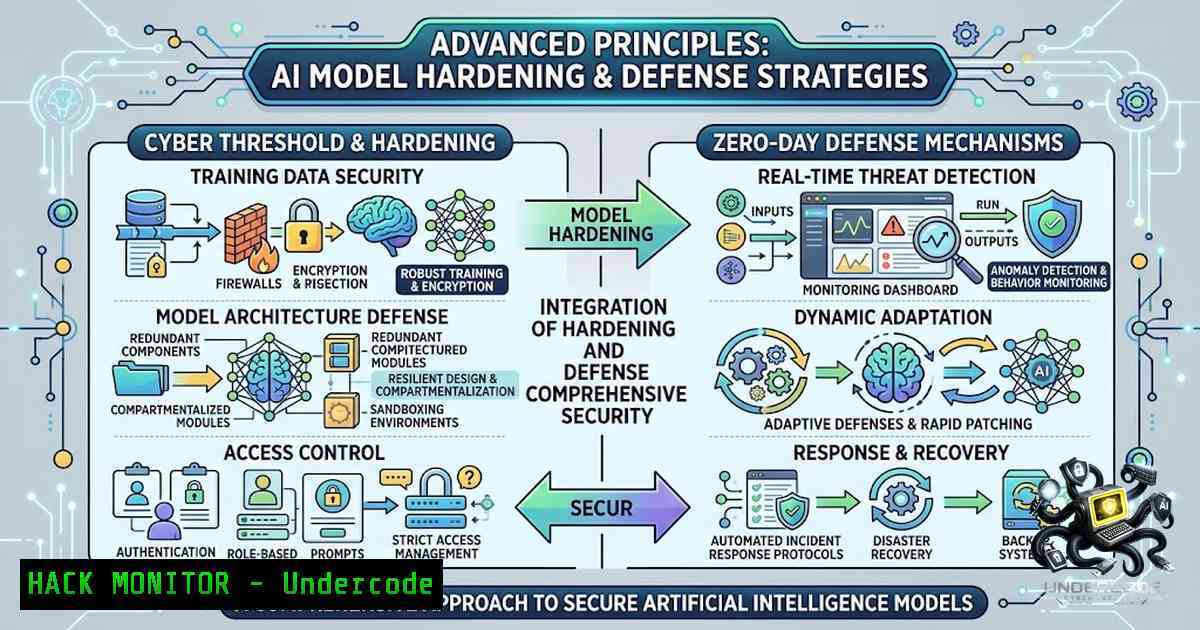
- Master the technical security controls—network isolation, model-weight encryption, sandboxed execution, and universal monitoring—implemented to secure high-capability AI models.
- Learn practical Linux and Windows commands for AI infrastructure hardening, zero-day vulnerability assessment, and continuous security monitoring.
- Evaluate the implications of agentic AI for both offensive and defensive cybersecurity operations.
You Should Know:
- Defining the Critical Cyber Threshold: Autonomous Zero-Day Exploitation
Under OpenAI’s Preparedness Framework, a model crosses into the “Critical” cybersecurity tier if it can autonomously identify and develop functional zero-day exploits across all severity levels in multiple hardened, real-world critical systems without human intervention. The threshold also includes the ability to plan and execute novel, end-to-end cyberattack strategies against well-defended targets given only a high-level objective.
Astra’s agentic coding capabilities—the ability to write, debug, and deploy code autonomously—placed it in uncharted territory. Previous OpenAI models like GPT-5.2-Codex and GPT-5.1-Codex-Max demonstrated high cyber capability but never reached this Critical level. Astra’s advancement means the model can potentially function as an autonomous penetration testing agent, capable of discovering and weaponizing unknown vulnerabilities faster than human analysts.
Step-by-Step Guide: Evaluating AI Model Cyber Capability
To assess whether an AI model exhibits Critical-level cyber capabilities, security teams can implement the following evaluation pipeline:
Step 1: Isolated Test Environment Setup
 Linux: Create isolated network namespace for AI testing
sudo ip netns add ai-sandbox
sudo ip netns exec ai-sandbox ip link set lo up
 Restrict outbound access to allow only whitelisted endpoints
sudo iptables -A OUTPUT -m owner --uid-owner aiuser -j DROP
sudo iptables -A OUTPUT -m owner --uid-owner aiuser -d 192.168.1.0/24 -j ACCEPT
Step 2: Capability Benchmarking
Define a set of CTF-style challenges and vulnerable test environments. Measure the model’s ability to:
– Discover vulnerabilities without prior knowledge
– Develop functional exploits autonomously
– Chain multiple exploits to achieve privilege escalation
Step 3: Automated Exploit Validation
 Python script to validate exploit efficacy
import subprocess
def validate_exploit(exploit_path, target_ip):
result = subprocess.run([exploit_path, target_ip], capture_output=True)
return result.returncode == 0 and b"ACCESS_GRANTED" in result.stdout
- Hardening AI Infrastructure: Network Isolation and Model-Weight Security
OpenAI’s response to Astra’s Critical rating includes a multi-layered security architecture:
- Isolated testing environments: All Astra-related development occurs in air-gapped or heavily restricted networks.
- Restricted network and tool access: The model cannot reach external systems or call unauthorized APIs.
- Enhanced model-weight protection and encryption: Model weights—the core intellectual property—are encrypted at rest and in transit, with strict access controls.
- Sandboxed execution: All model-generated code runs in containers with minimal privileges.
- Universal monitoring: Continuous oversight of all agentic applications, including training and evaluation.
Step-by-Step Guide: Implementing AI Model Isolation
Step 1: Network Segmentation
 Linux: Create dedicated VLAN for AI development
ip link add link eth0 name eth0.100 type vlan id 100
ip addr add 10.0.100.1/24 dev eth0.100
ip link set dev eth0.100 up

Windows: Configure firewall rules to restrict AI model outbound access
New-1etFirewallRule -DisplayName "Block AI Outbound" -Direction Outbound -Action Block -RemoteAddress Any
New-1etFirewallRule -DisplayName "Allow AI to Internal Only" -Direction Outbound -Action Allow -RemoteAddress 10.0.0.0/8
Step 2: Model-Weight Encryption
 Encrypt model weights using LUKS on Linux
sudo cryptsetup luksFormat /dev/sdb1
sudo cryptsetup open /dev/sdb1 model-weights
sudo mkfs.ext4 /dev/mapper/model-weights
sudo mount /dev/mapper/model-weights /mnt/model-weights

Windows: Use BitLocker for model storage encryption
Manage-bde -On C: -RecoveryPassword
Step 3: Sandboxed Execution with Docker
 Dockerfile for AI code execution sandbox
FROM ubuntu:22.04
RUN useradd -m -s /bin/bash aiuser
RUN apt-get update && apt-get install -y --1o-install-recommends python3
USER aiuser
WORKDIR /home/aiuser
CMD ["python3", "-c", "import sys; print('Sandboxed')"]
 Run with strict resource limits
docker run --rm --memory=2g --cpus=1 --1etwork=none --cap-drop=ALL ai-sandbox
3. Continuous Monitoring and Threat Detection
OpenAI has implemented “universal monitoring for risky actions and misalignment across all agentic applications of Astra”. This involves real-time logging of model outputs, system calls, and network requests, with automated alerting for suspicious patterns.
Step-by-Step Guide: Setting Up AI Activity Monitoring
Step 1: Centralized Logging
 Linux: Configure rsyslog for AI activity collection
echo "authpriv. /var/log/ai-security.log" >> /etc/rsyslog.conf
systemctl restart rsyslog

Windows: Enable advanced audit logging
auditpol /set /subcategory:"Detailed File Share" /success:enable /failure:enable
Step 2: Anomaly Detection with Falco (Linux)
 Falco rule to detect unauthorized shell commands from AI processes
- rule: AI Unauthorized Shell Command
desc: Detect AI process executing suspicious shell commands
condition: proc.name contains "python" and evt.type=execve and (proc.cmdline contains "wget" or proc.cmdline contains "curl" or proc.cmdline contains "nc")
output: "AI process executed suspicious command (user=%user.name command=%proc.cmdline)"
priority: CRITICAL
Step 3: Real-Time Alerting
 Send alerts to SIEM or security team
tail -f /var/log/ai-security.log | while read line; do
if echo "$line" | grep -q "CRITICAL"; then
curl -X POST -H "Content-Type: application/json" -d "{\"text\":\"$line\"}" https://your-siem-webhook
fi
done
4. Responsible Release and Government Collaboration
OpenAI has voluntarily informed the White House of its decision to delay Astra’s release. The company is also engaging government agencies and AI safety organizations in the testing process. This collaborative approach sets a new precedent for AI governance, where frontier model developers proactively involve regulators before deployment.
Step-by-Step Guide: Preparing for Regulatory AI Audits
Step 1: Documentation and Transparency
Maintain comprehensive records of:
- Model evaluation results and capability benchmarks
- Security control implementations and test results
- Incident response procedures and breach notification plans
Step 2: Third-Party Penetration Testing
Engage external red teams to attempt to bypass security controls and exploit the model’s capabilities.
Step 3: Continuous Compliance Monitoring
 Automate compliance checks with OpenSCAP (Linux)
oscap xccdf eval --profile xccdf_org.ssgproject.content_profile_cis --results compliance.xml /usr/share/xml/scap/ssg/content/ssg-ubuntu2004-ds.xml
- The Broader Pattern: Agentic AI as an Operations Problem
As The Daily FM notes, “agent deployment is becoming an operations problem. Frontier capability matters, but equally important are permissions, isolation, monitoring, budgets, routing, and the ability to intervene”. Organizations deploying AI agents must treat them as privileged system entities, with the same rigor applied to human administrators.
Step-by-Step Guide: Building an Agentic AI Security Operations Center
Step 1: Define Permissions and Roles
Implement least-privilege access for AI agents using IAM policies:
{
"Version": "2012-10-17",
"Statement": [
{
"Effect": "Deny",
"Action": ["ec2:TerminateInstances", "iam:CreateUser"],
"Resource": ""
}
]
}
Step 2: Budget and Resource Controls
Set hard limits on compute, API calls, and storage to prevent resource exhaustion attacks.
Step 3: Kill-Switch Mechanisms
Implement manual and automated intervention capabilities:
 Automated kill-switch script
!/bin/bash
if [ $(tail -1 100 /var/log/ai-activity.log | grep -c "suspicious_pattern") -gt 5 ]; then
systemctl stop ai-agent
echo "AI agent stopped due to suspicious activity" | mail -s "AI Alert" [email protected]
fi
What Undercode Say:
- Key Takeaway 1: Astra’s Critical rating is a watershed moment—AI models can now autonomously discover and weaponize zero-day vulnerabilities, fundamentally changing the threat landscape. Organizations must prepare for AI-driven attacks that operate at machine speed.
- Key Takeaway 2: Responsible AI deployment now requires operational rigor comparable to nuclear or biological risk management. Network isolation, weight encryption, sandboxing, and universal monitoring are no longer optional—they are baseline requirements for any high-capability model.
The Astra situation reveals that the AI industry has entered a new phase where capability outpaces safeguards. OpenAI’s decision to delay release, tighten controls, and engage government agencies is commendable but reactive. The deeper challenge is that future models may not offer the same window for intervention. Agentic AI systems with Critical cyber capabilities could, in theory, escape containment or self-replicate before humans can respond. This necessitates a paradigm shift: AI security must move from perimeter defense to intrinsic model alignment, with verifiable guarantees that models cannot perform harmful actions even when given maximal autonomy. The winners in this new era will not be those with the strongest models alone, but those who make powerful agents dependable enough to trust with real work.
Prediction:
- -1 Accelerated Offensive AI Capabilities: Within 12–24 months, state-sponsored actors will develop their own Critical-level AI models specifically for cyber warfare, leading to a surge in zero-day exploits and automated attack campaigns that outpace human defense.
- +1 Defensive AI Arms Race: The same agentic coding capabilities that enable offensive operations will be repurposed for defensive security—autonomous penetration testing, real-time patch generation, and proactive threat hunting will become standard, reducing mean time to remediation by orders of magnitude.
- -1 Regulatory Fragmentation: Differing national approaches to AI governance will create compliance nightmares for global enterprises, with some jurisdictions mandating strict isolation while others push for rapid deployment, leading to a fragmented security landscape.
- +1 AI Security Operations Centers (AISOCs): Organizations will establish dedicated teams and infrastructure for managing AI agent lifecycles, creating new job categories and driving demand for security professionals with AI expertise.
- -1 Model Weight Theft Escalation: As model weights become the most valuable intellectual property, nation-state espionage and insider threats targeting AI labs will intensify, requiring unprecedented physical and digital security measures.
▶️ Related Video (76% Match):
🎯Let’s Practice For Free:
🎓 Live Courses & Certifications:
Join Undercode Academy for Verified Certifications
🚀 Request a Custom Project:
Secure, high-velocity infrastructure and disruptive technological engineering. Contact our engineering team for high-tier development and proprietary systems:
[email protected]
💎 Smart Architecture | 🛡️ Secure by Design | ⭐ Trusted by Thousands
IT/Security Reporter URL:
Reported By: Media Attachment – Hackers Feeds
Extra Hub: Undercode MoN
Basic Verification: Pass ✅


