Listen to this Post
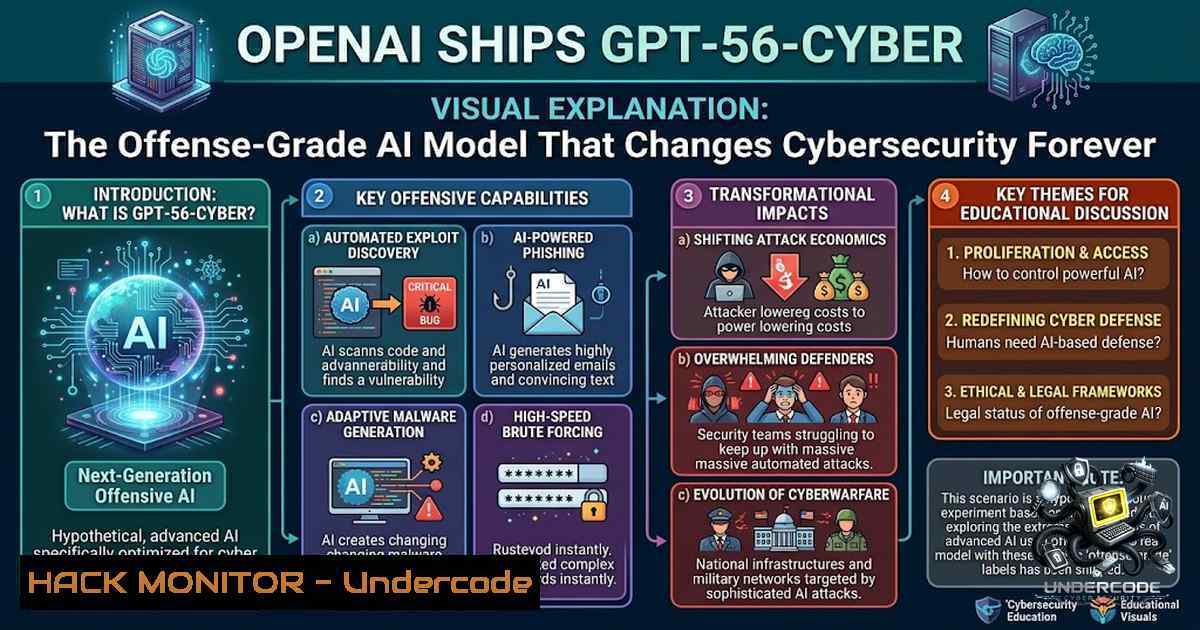
Introduction:
On August 10, 2026, OpenAI quietly did what many thought it would never do: it put an “offense-grade” hacking model on the market. Three days after pausing its Astra project over concerns it was nearing “Critical” cyber capability, OpenAI launched GPT-5.6-Cyber—a model purpose-built for exploit validation, vulnerability research, and red teaming. The contradiction is intentional: the dividing line between a caged model and a commercial one is not a capability gap, but a vetting form. This move transforms OpenAI’s Preparedness Framework from a safety document into a business model, positioning the company as a supplier of tiered AI capabilities to established security firms like CrowdStrike and Palo Alto Networks.
Learning Objectives:
- Understand the technical capabilities and performance metrics of GPT-5.6-Cyber, including its 95% Advanced Cybersecurity Completion Rate
- Learn how to operationalize AI-driven red teaming through the Daybreak Red program and associated security tools
- Master practical Linux and Windows commands for vulnerability research, exploit validation, and AI-assisted penetration testing
You Should Know:
1. The 95% Gap: What GPT-5.6-Cyber Actually Does
The numbers tell the story. On tasks involving exploit chains, authentication bypass, and privilege escalation, GPT-5.6-Cyber completes 95% of requests. The standard safeguarded model manages just 1.5%, while Daybreak Blue—the less permissive tier—sits at 2%. The previous generation, GPT-5.5-Cyber, achieved 57.3%. Both GPT-5.6-Cyber and the paused Astra carry the same “High” capability rating under OpenAI’s framework. The jump from 2% to 95% reflects what OpenAI unlocks for a given user, not what the underlying systems can do.
This is not a lab demo. Turned loose on real software, GPT-5.6-Cyber found two previously unknown vulnerabilities in Chrome’s V8 engine, now patched under CVE-2026-15903. The vulnerability is an out-of-bounds read and write in V8 affecting Chrome versions prior to 150.0.7871.128, allowing remote attackers to execute arbitrary code inside a sandbox via a crafted HTML page. The model also discovered a privilege-escalation chain in a widely used mobile operating system.
For security researchers looking to validate similar findings, here are essential commands:
Linux (V8 Vulnerability Validation):
bash
Check Chrome version
google-chrome –version
Verify patch status for CVE-2026-15903
Vulnerable versions: < 150.0.7871.128
Fixed version: 150.0.7871.128 and above
Use Chromium’s security testing tools
git clone https://chromium.googlesource.com/chromium/src/testing/
cd testing && ./run_security_tests.sh –v8
Fuzz testing for V8 (if you have the V8 source)
python tools/run-tests.py –fuzzing –variants=optimized
[/bash]
Windows (Browser Security Validation):
bash
Check Chrome version via registry
Get-ItemProperty “HKLM:\SOFTWARE\WOW6432Node\Microsoft\Windows\CurrentVersion\Uninstall\Google Chrome” | Select-Object DisplayVersion
Verify if the patch is applied
CVE-2026-15903 is patched in 150.0.7871.128+
if ((Get-ItemProperty “HKLM:\SOFTWARE\WOW6432Node\Microsoft\Windows\CurrentVersion\Uninstall\Google Chrome”).DisplayVersion -ge “150.0.7871.128”) {
Write-Host “Patch applied”
} else {
Write-Host “Vulnerable to CVE-2026-15903”
}
Use Windows Sandbox for isolated testing
Start-Process “WindowsSandbox.exe” -ArgumentList “/w c:\sandbox_config.wsb”
[/bash]
- The Preparedness Framework: From Safety Document to Business Model
OpenAI built the Preparedness Framework as a safety document—a ladder of capability thresholds that decides how much containment a model needs. The framework tracks four risk levels: Low, Medium, High, and Critical. A model reaches the Critical cybersecurity threshold if it can independently identify and develop functional zero-day exploits across many hardened real-world critical systems without human intervention.
GPT-5.6-Cyber sits at “High”—defined as a capability level that could amplify existing pathways to severe harm. The framework is now the mechanism that decides who gets which model and under what terms. OpenAI has effectively repurposed its safety infrastructure into a sales pipeline, with Daybreak Red providing access to GPT-5.6-Cyber for approved security teams.
To understand how this maps to real-world security operations, here are commands for AI-assisted red teaming:
Linux (AI Penetration Testing Setup):
bash
Install AI-powered pentesting tools
Kali Linux MCP integration (conversational AI pentesting)
git clone https://github.com/pabpereza/kali-mcp
cd kali-mcp && ./install.sh
Start the MCP server for AI agent integration
python mcp_server.py –tools nmap,metasploit,sqlmap
Run autonomous red teaming with RedAI CLI
npm install -g redai-cli
red –auto “pentest https://target.com” –scope authorized
Strix – autonomous AI penetration testing agent
pip install strix-agent
strix –target https://example.com –auth api_key.txt –output report.json
[/bash]
Windows (AI Security Testing):
bash
Install Windows Subsystem for Linux (WSL) for Kali tools
wsl –install -d kali-linux
Inside WSL, run AI-powered reconnaissance
wsl -d kali-linux bash -c “nmap -sV -p- 10.0.0.0/24 | tee scan_results.txt”
Use AI-assisted Burp Suite (via WSL or native)
Burp AI integration requires API key
Configure in Burp Suite: Extender > BApp Store > Burp AI
OWASP ZAP with AI add-ons
zap-cli quick-scan –spider -r https://test-target.com
zap-cli active-scan -r https://test-target.com
[/bash]
- Daybreak Red vs. Daybreak Blue: Two Tiers of AI Capability
OpenAI expanded its Daybreak security program into two tiers. Daybreak Blue offers access to the base GPT-5.6 Sol model with reduced system-level guardrails. Daybreak Red, the more restrictive tier, grants access to the specialized GPT-5.6-Cyber model, enabling researchers to validate complex exploits, simulate attack chains, and conduct advanced vulnerability research.
The distinction is critical: Daybreak Red is for approved security teams that can justify access to specialized cyber models. It carries the purpose-trained cyber models, while Daybreak Blue serves broader security use cases. This tiered approach allows OpenAI to sell “High” capability to vetted defenders under strict terms.
Linux (Daybreak Red Operational Commands):
bash
API authentication for OpenAI Daybreak Red access
export OPENAI_API_KEY=”your_daybreak_red_key”
export OPENAI_DAYBREAK_LEVEL=”red”
Query GPT-5.6-Cyber for vulnerability research
curl https://api.openai.com/v1/chat/completions \
-H “Authorization: Bearer $OPENAI_API_KEY” \
-H “Content-Type: application/json” \
-d ‘{
“model”: “gpt-5.6-cyber”,
“messages”: [{“role”: “user”, “content”: “Analyze this WebSocket handshake for authentication bypass vectors”}]
}’
Use offsec-ai for OWASP Top 10 scanning
pip install offsec-ai
offsec-ai mcp-scan https://api.example.com/v1/chat/completions
offsec-ai mcp-attack https://mcp.example.com/mcp –i-have-authorization
[/bash]
Windows (Daybreak Red API Usage):
bash
Set environment variables for Daybreak Red
PowerShell script for AI-assisted exploit validation
$body = @{
model = “gpt-5.6-cyber”
messages = @(
@{
role = “user”
content = “Generate a proof-of-concept for CVE-2026-15903”
}
)
} | ConvertTo-Json
Invoke-RestMethod -Uri “https://api.openai.com/v1/chat/completions” `
-Method Post `
-Headers @{ “Authorization” = “Bearer $env:OPENAI_API_KEY”; “Content-Type” = “application/json” } `
-Body $body
[/bash]
- The New Market: AI Capability as a Service
The launch signals a new market where frontier labs provide tiered AI capabilities, and security vendors productize them. OpenAI now serves as a supplier to CrowdStrike and Palo Alto Networks, who integrate these tools into their enterprise offerings. The model is available through the restricted Daybreak Red program and is meant for exploit development and advanced security research.
This commercialization of offensive AI capability represents a fundamental shift. The same capability that put Astra in a sandbox is, one tier down, a product with a signup flow. Security researchers using GPT-5.6-Cyber through Daybreak Red identified the two V8 vulnerabilities and the mobile OS privilege-escalation chain.
Linux (Enterprise Security Integration):
bash
AWS Bedrock Daybreak Red access (as announced August 2026)
aws bedrock invoke-model \
–model-id openai.gpt-5.6-cyber-daybreak-red \
–body ‘{“prompt”: “Analyze this authentication flow for vulnerabilities”}’ \
–cli-binary-format raw-in-base64-out
CrowdStrike Falcon integration (hypothetical API pattern)
curl -X POST https://api.crowdstrike.com/falcon/ai/analyze \
-H “Authorization: Bearer $CS_API_KEY” \
-H “Content-Type: application/json” \
-d ‘{“target”: “https://enterprise-app.com”, “depth”: “advanced”}’
Palo Alto Networks XDR AI integration
curl -X POST https://api.paloaltonetworks.com/xdr/ai/threat-hunt \
-H “x-api-key: $PAN_API_KEY” \
-d ‘{“query”: “suspicious authentication patterns”, “model”: “gpt-5.6-cyber”}’
[/bash]
5. AI-Powered Penetration Testing: The Tooling Ecosystem
The release of GPT-5.6-Cyber arrives amid a rapidly maturing ecosystem of AI-powered security tools. Autonomous penetration testing platforms now integrate with established frameworks like Metasploit, Nmap, and Burp Suite. Tools like PentestGPT, Strix, and RedAI CLI enable security professionals to conduct conversational penetration testing—turning plain English prompts into live security commands.
The Model Context Protocol (MCP) has emerged as a critical bridge, connecting AI clients to Linux terminal API servers for automated reconnaissance and exploitation. This ecosystem enables workflows where AI agents reason about vulnerabilities, execute tools, and validate findings with minimal human intervention.
Linux (Comprehensive AI Pentesting Stack):
bash
Install the full AI pentesting stack
Darkmoon – autonomous pentesting platform (18 specialized agents, 80+ tools)
git clone https://github.com/asc-it/darkmoon
cd darkmoon && docker-compose up -d
Run Darkmoon against a target
darkmoon scan –target https://example.com –agents all –report html
Pentest Swarm AI – swarm intelligence architecture
git clone https://github.com/pentest-swarm/pentest-swarm-ai
cd pentest-swarm-ai && ./setup.sh
pentest-swarm –target 10.0.0.0/24 –tools nmap,sqlmap,metasploit
Specter AI – autonomous web application testing
specter-vicious-ce –target https://example.com –gate INJECT –roe roe.json
Nuclei with AI-generated templates
nuclei -target https://example.com -t cves/ -severity high,critical
[/bash]
Windows (AI Pentesting on Windows):
bash
Docker Desktop required for containerized tools
docker pull ascit/darkmoon:latest
docker run -d -p 8080:8080 ascit/darkmoon:latest
Use WSL2 for native Linux tools
wsl –install -d ubuntu
Inside WSL, install AI pentesting tools
wsl -d ubuntu bash -c ”
apt update && apt install -y nmap sqlmap metasploit-framework
pip install strix-agent offsec-ai
strix –target https://test-app.local
”
OWASP ZAP with AI add-ons (native Windows)
zap-cli quick-scan -r https://test-target.com
zap-cli active-scan -r https://test-target.com
zap-cli report -o scan_report.html -f html
[/bash]
What Undercode Say:
- The capability gap is an illusion. GPT-5.6-Cyber and Astra share the same “High” rating. The only difference is who gets access and under what terms. OpenAI has demonstrated that safety is not about what the model can do—it’s about who controls the keys.
-
The Preparedness Framework is now a sales tool. OpenAI transformed its safety infrastructure into a tiered access model. This is brilliant business strategy: sell the capability you just paused for being too dangerous, one tier down.
-
AI is lowering the barrier to entry for advanced exploitation. A model that can discover zero-days in Chrome’s V8 engine and find privilege-escalation chains in mobile OSes is not theoretical. It’s live, it’s commercial, and it’s in the hands of vetted defenders—for now.
-
The ecosystem is maturing rapidly. From Kali Linux MCP integration to autonomous pentesting platforms like Darkmoon and Strix, the tooling around AI-powered security is expanding at an unprecedented pace. Security professionals who do not adopt these tools risk being left behind.
-
This is a double-edged sword. The same capabilities that help defenders find and patch vulnerabilities can be turned against them. The question is not whether offensive AI will be used maliciously—it’s when, and who will be ready.
Prediction:
-
+1 The commercialization of offense-grade AI will accelerate vulnerability discovery, reducing the average time-to-patch for critical CVEs from months to days.
-
-1 Nation-state actors will reverse-engineer or steal these models within 12-18 months, democratizing zero-day exploitation capabilities beyond vetted defenders.
-
+1 Security vendors like CrowdStrike and Palo Alto Networks will integrate GPT-5.6-Cyber into their enterprise offerings, creating a new revenue stream for AI-driven threat hunting.
-
-1 The “vetting form” barrier will prove insufficient as sophisticated attackers impersonate legitimate security researchers to gain Daybreak Red access.
-
+1 The Preparedness Framework will become an industry standard, with other frontier labs adopting similar tiered access models for sensitive AI capabilities.
-
-1 AI-powered autonomous pentesting will increase the volume of attacks by orders of magnitude, overwhelming traditional SOC teams with false positives and genuine threats alike.
-
+1 The open-source AI security tooling ecosystem will continue to expand, enabling smaller security teams to compete with well-funded enterprises.
-
-1 Regulatory bodies will struggle to keep pace with the commercialization of offense-grade AI, creating a regulatory vacuum that bad actors will exploit.
-
+1 OpenAI’s move will force a global conversation about AI capability tiers, leading to the establishment of international norms for the responsible distribution of offensive AI.
-
-1 The gap between “High” and “Critical” capability will narrow faster than OpenAI’s safety frameworks can adapt, potentially leading to the release of models that cross the Critical threshold before adequate safeguards are in place.
▶️ Related Video (86% Match):
https://www.youtube.com/watch?v=-l7ExMj7RrM
🎯Let’s Practice For Free:
🎓 Live Courses & Certifications:
Join Undercode Academy for Verified Certifications
🚀 Request a Custom Project:
Secure, high-velocity infrastructure and disruptive technological engineering. Contact our engineering team for high-tier development and proprietary systems:
[email protected]
💎 Smart Architecture | 🛡️ Secure by Design | ⭐ Trusted by Thousands
IT/Security Reporter URL:
Reported By: https://lnkd.in/p/eu7Qd52T – Hackers Feeds
Extra Hub: Undercode MoN
Basic Verification: Pass ✅


