Listen to this Post
Introduction:
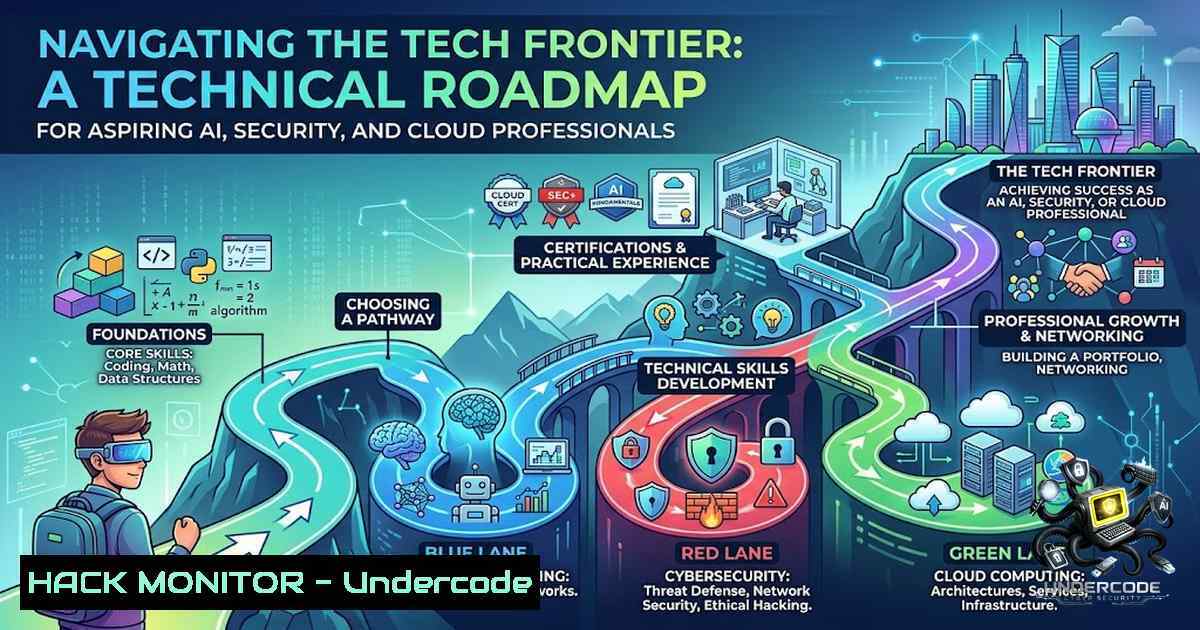
The modern technological landscape is defined by a convergence of sophisticated domains—Artificial Intelligence, Cybersecurity, and Cloud Computing. As organizations accelerate their digital transformation, the demand for professionals who can navigate the complexities of AI security, data analytics, and infrastructure automation has surged. This article provides a technical deep-dive into the essential skills and practical tools required in these high-growth areas, offering a hands-on guide for aspiring professionals to build real-world competencies.
Learning Objectives:
- Understand the foundational concepts and security implications of Generative AI, Agentic AI, and traditional AI models.
- Master the practical implementation of security controls, ethical hacking techniques, and network defense mechanisms in diverse environments.
- Deploy and manage cloud infrastructure using DevOps principles and incorporate MLOps for scalable AI/Data solutions.
You Should Know:
- Building and Hardening AI & Generative AI Pipelines
Generative AI models, while powerful, introduce unique vulnerabilities. To secure these systems, one must understand the infrastructure they operate on. From a Linux standpoint, you are often deploying model servers using tools like FastAPI or TensorFlow Serving. A typical deployment script might involve setting up a Python environment and using `gunicorn` as a WSGI HTTP server. For securing these endpoints, implementing API gateways and rate limiting is critical. On the defensive side, employing `fail2ban` on Linux can mitigate brute-force attacks against exposed Jupyter notebooks or API endpoints. Windows-based development often leverages WSL (Windows Subsystem for Linux) to simulate production environments. A crucial step in the pipeline is parameterizing the model configuration using environment variables, often managed via `.env` files. To verify the integrity of the model weights, consider using SHA-256 checksums to prevent supply chain attacks.
 Linux: Securing a Jupyter server with a password hash
jupyter notebook password
 Restrict access based on IP
sudo ufw allow from 192.168.1.0/24 to any port 8888

Windows (PowerShell): Check file hash for model integrity
Get-FileHash -Algorithm SHA256 model.pt
2. Data Science and Data Analytics Security
Data is the fuel for AI and security systems. When dealing with Data Science, it’s paramount to implement differential privacy to anonymize sensitive data before analysis. Tools like Python’s `opendp` library can be integrated into data pipelines. Furthermore, ensuring secure data transmission mandates using TLS 1.3. When working with SQL databases, parameterized queries are non-1egotiable to prevent SQL injection—a foundational security concept. For Windows administrators, integrating Active Directory (AD) with SQL Server ensures robust authentication. Linux environments rely heavily on IAM roles, particularly when cloud instances access S3 buckets or Azure Blob storage. Securing these connections involves configuring awscli with temporary credentials via aws sts assume-role. For analytical workloads, the use of Apache Spark requires secure cluster configurations, often set via spark.conf.
 Python snippet for parameterized SQL query (Data Security)
import psycopg2
conn = psycopg2.connect("dbname=test user=postgres")
cur = conn.cursor()
cur.execute("SELECT  FROM users WHERE id = %s", (user_id,))
3. Advanced Cyber Security & Ethical Hacking Techniques
Penetration testing remains a cornerstone of cybersecurity. A typical test begins with reconnaissance using `nmap` to scan for open ports and services. Following enumeration, tools like `Metasploit` can be used for exploitation, but the focus now shifts to API security and containerized environments. For instance, inspecting a Docker container’s environment variables for secrets is a common attack vector. Linux commands like `docker inspect` can reveal configurations. On Windows, PowerShell’s `Invoke-WebRequest` can mimic web-based attacks against APIs. To mitigate, one must enforce strict secrets management via HashiCorp Vault or Azure Key Vault. A step-by-step guide to vulnerability assessment includes: 1) Scanning for open ports, 2) Fingerprinting services, 3) Testing for default credentials, and 4) Exploiting known CVEs using `searchsploit` to find exploit scripts.
4. Cloud & DevOps Infrastructure Hardening
Cloud security follows the Shared Responsibility Model. Administrators must harden the Control Plane. For AWS, the base command `aws configure` sets up access, but security best practices dictate using MFA and session tokens. For Azure, the `az login` command initiates access. The hardening process involves configuring Web Application Firewalls (WAF) and restricting inbound/outbound traffic using Network Security Groups (NSGs). A typical DevOps hardening pipeline includes scanning a Dockerfile for vulnerabilities using `trivy` and ensuring the image is non-root. The following commands showcase Linux and Windows strategies to validate cloud environment integrity.
 Linux: Hardening SSH and checking cloud metadata
echo "PermitRootLogin no" >> /etc/ssh/sshd_config
curl -s http://169.254.169.254/latest/meta-data/iam/security-credentials/  Attack simulation
 Windows: Azure CLI hardening and security group rules
az vm open-port --resource-group MyResourceGroup --1ame MyVM --port 80 --priority 100
5. MLOps and Automated Security Validation
Integrating security into MLOps ensures the model code and data remain secure. This often involves automated scanning of model repositories for secrets using trufflehog. Additionally, model integrity checks can be deployed to ensure no adversarial attacks have tampered with the model output. A standard CI/CD pipeline (e.g., GitLab CI) will include stages for linting, security scanning (bandit for Python), and infrastructure validation (Terraform plan). For training, ensuring GPU-accelerated instances are properly patched is vital. The `nvidia-smi` command on Linux ensures the driver is functional, while Windows uses similar diagnostic tools. Securing training data often means encrypting EBS volumes and ensuring network policies isolate the training subnet from the public internet.
 Linux: GitLab CI security scanning
pip install bandit
bandit -r ./src/ -ll

Windows: Docker security scan using PowerShell
docker scan --severity high my-image
What Undercode Say:
- Key Takeaway 1: The barrier to entry is shifting from memorizing commands to understanding the architecture and security posture of integrated systems. Hands-on projects must be accompanied by a security-first mindset.
- Key Takeaway 2: The convergence of AI and Cloud means professionals must learn to secure APIs, data pipelines, and container orchestration systems simultaneously. Skills like IAM management and vulnerability scanning are no longer optional.
Analysis: The tech industry is moving away from siloed roles. A data scientist today must understand how to securely connect to cloud databases; a cybersecurity analyst must understand how AI models can be poisoned or exploited. The focus on “Industry-aligned curriculum” and “Certification-oriented learning” reflects an industry that values verifiable skills over theoretical knowledge alone. The call to action “FREEDOM” encapsulates the opportunity for individuals to break into these fields, but it also underlines the responsibility that comes with handling critical infrastructure and sensitive data. With NASSCOM and Future Skills-aligned programs, the education is tailoring itself to reduce the “experience required” gap that often plagues entry-level IT roles.
Prediction:
- +1 The proliferation of Generative AI courses will address the impending talent shortage in developing secure AI applications, leading to a more robust software ecosystem.
- +1 In the next two years, DevOps and Cybersecurity will merge into “DevSecOps” as standard practice, with cloud providers automating more security features, reducing manual configuration risks.
- -1 The rapid upskilling driven by fee waivers might lead to a transient oversupply of junior-level professionals, creating intense competition for entry-level positions and driving down starting salaries temporarily.
▶️ Related Video (80% Match):
🎯Let’s Practice For Free:
🎓 Live Courses & Certifications:
Join Undercode Academy for Verified Certifications
🚀 Request a Custom Project:
Secure, high-velocity infrastructure and disruptive technological engineering. Contact our engineering team for high-tier development and proprietary systems:
[email protected]
💎 Smart Architecture | 🛡️ Secure by Design | ⭐ Trusted by Thousands
IT/Security Reporter URL:
Reported By: https://lnkd.in/p/ezKEXhUq – Hackers Feeds
Extra Hub: Undercode MoN
Basic Verification: Pass ✅


