Listen to this Post
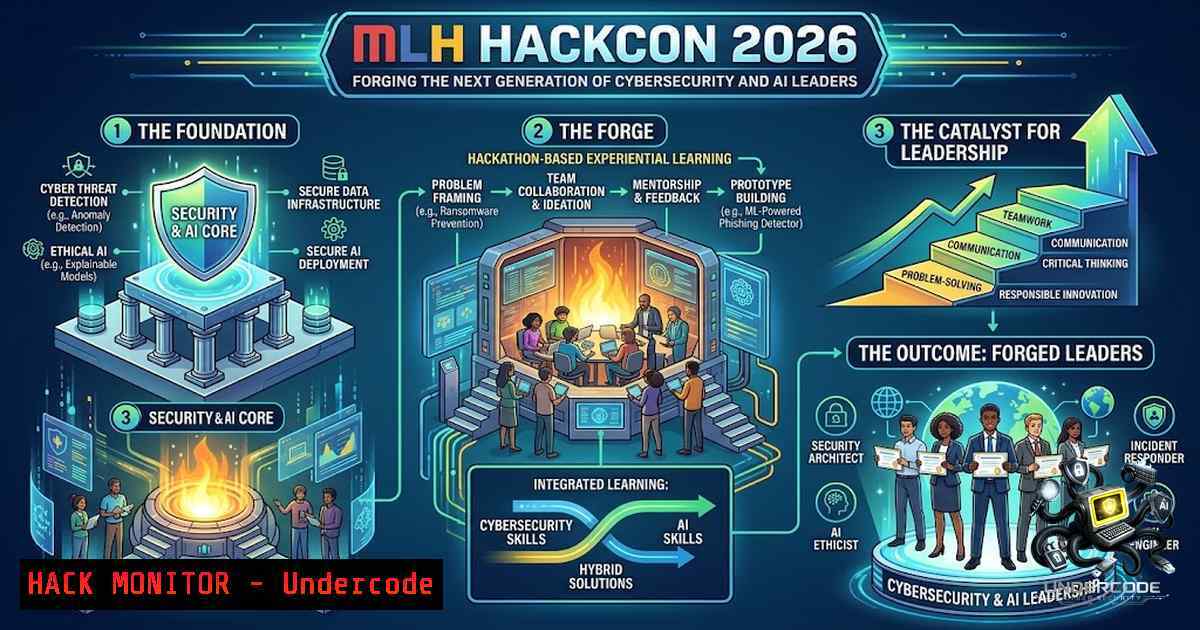
Introduction:
In an era where the lines between software development, cybersecurity, and artificial intelligence are rapidly blurring, the need for skilled, community-driven technical leaders has never been greater. Major League Hacking (MLH) HackCon 2026 emerges as a critical nexus for this evolution, convening over 300 hackathon organizers and campus technology leaders. This annual conference, held at Camp Pontiac in upstate New York, is not merely an event but a foundational training ground where the principles of secure coding, AI integration, and resilient community building are forged through peer-to-peer learning and hands-on experience. As student-led tech events grow in complexity, HackCon provides the essential operational knowledge and leadership frameworks needed to sustain them, directly impacting the cybersecurity posture of future digital infrastructures.
Learning Objectives & Secrets:
- Objective 1: Master the Logistics of a Secure Hackathon. Learn the intricacies of planning and executing a large-scale event with a strong security focus. This includes everything from secure venue selection and participant registration to establishing robust judging criteria and technical infrastructure that can withstand potential attacks.
- Objective 2 Secret Tips: Strategic Sponsorship Acquisition. Uncover the secrets to approaching potential sponsors, structuring compelling partnership packages, and maintaining long-term relationships. A well-funded hackathon can afford better security tools and training for its participants, creating a more secure and educational environment.
- Objective 3 Secret Tips: Building Resilient Communities. Learn how to build a sustainable campus technology community that persists across academic years. This involves creating frameworks for documenting institutional knowledge and developing pipelines for future leaders, ensuring that security best practices are passed down and continuously improved upon.
You Should Know:
1. The Hackathon Organizer’s Security and AI Toolkit
Running a hackathon in 2026 requires a modern tech stack that balances innovation with security. This section provides a step-by-step guide to setting up the core infrastructure for a secure and AI-integrated event, based on the tools and trends highlighted at HackCon.
Step‑by‑step guide:
- Step 1: Platform Selection & Security Hardening. Choose a reliable platform for event management (e.g., event registration, project submission, judging). For a self-hosted or cloud-based solution, apply basic security hardening.
- Linux (Ubuntu/Debian):
Update the system
sudo apt update && sudo apt upgrade -y
Install a firewall (UFW) and allow only necessary ports (e.g., SSH, HTTP, HTTPS)
sudo apt install ufw -y
sudo ufw allow 22/tcp
sudo ufw allow 80/tcp
sudo ufw allow 443/tcp
sudo ufw enable
Disable root login over SSH
sudo sed -i 's/PermitRootLogin yes/PermitRootLogin no/' /etc/ssh/sshd_config
sudo systemctl restart sshd
- Windows (Server):
Enable Windows Firewall and block all inbound connections by default
Set-1etFirewallProfile -Profile Domain,Public,Private -DefaultInboundAction Block
Allow specific ports (e.g., RDP, HTTP, HTTPS)
New-1etFirewallRule -DisplayName "Allow RDP" -Direction Inbound -Protocol TCP -LocalPort 3389 -Action Allow
New-1etFirewallRule -DisplayName "Allow HTTP" -Direction Inbound -Protocol TCP -LocalPort 80 -Action Allow
New-1etFirewallRule -DisplayName "Allow HTTPS" -Direction Inbound -Protocol TCP -LocalPort 443 -Action Allow
- Step 2: AI Integration & API Security. Integrate AI tools, as encouraged by MLH, to enhance the hackathon experience. Securely manage API keys for services like those from MongoDB, Cloudflare, or Google Cloud.
- Environment Variable Management (Linux/macOS):
Store API keys securely in environment variables
export MONGODB_API_KEY="your_secure_key_here"
export GOOGLE_CLOUD_API_KEY="your_secure_key_here"
For persistent use, add to ~/.bashrc or ~/.zshrc
- Windows (Command Prompt/PowerShell):
setx MONGODB_API_KEY "your_secure_key_here"
setx GOOGLE_CLOUD_API_KEY "your_secure_key_here"
- Step 3: Cloud Infrastructure Hardening. If using cloud services (e.g., for hosting project submissions or running AI models), follow best practices to secure your environment.
- Principle of Least Privilege: Create dedicated service accounts with the minimum permissions required.
- Enable Audit Logging: Activate and monitor audit logs for all cloud resources to detect and respond to suspicious activities.
- Network Segmentation: Use Virtual Private Clouds (VPCs) to isolate your hackathon’s infrastructure from other networks.
2. Fostering a Security-First Community Culture
A successful hackathon is built on a strong community that values security. This guide outlines how to build a sustainable community with a focus on security, as discussed at HackCon.
Step‑by‑step guide:
- Step 1: Establish a Clear Code of Conduct. Create and enforce a comprehensive code of conduct that explicitly includes guidelines for responsible disclosure and ethical hacking practices.
- Step 2: Implement Knowledge Transfer Systems. To combat institutional turnover, create wikis, runbooks, and recorded workshops that document security protocols, event logistics, and leadership best practices.
- Step 3: Develop a Pipeline for Future Leaders. Actively mentor and recruit new organizers, ensuring they are trained in security fundamentals from day one. Host “security 101” workshops and encourage participation in security-focused challenges.
- Step 4: Leverage the Broader Ecosystem. Connect with established communities like Hack the North, Hack UPC, HackUTD, and HexLabs to share security insights and collaborate on best practices.
3. Navigating the AI Revolution: Policy and Practice
HackCon 2026 directly addresses the “elephant in the room”: AI. With 91% of hackers already learning skills through the MLH community they can’t learn in class, and a 75% increase in interest in visual use cases for AI, defining a clear AI policy is crucial.
Step‑by‑step guide:
- Step 1: Define Your Hackathon’s AI Policy. Decide whether to “Ban AI” or “Embrace & Encourage AI”. A balanced approach might allow AI for ideation and debugging but prohibit it for final project submissions to ensure fair play and learning.
- Step 2: Provide AI Infrastructure. As MLH suggests, ensure your hackers have the necessary AI infrastructure. This could include access to AI models, credits for advanced models (like the $50k in credits MLH gives away), and workshops on how to use them securely.
- Step 3: Challenge Preconceptions. Show participants what’s actually possible with AI. Host workshops that demonstrate AI-powered vulnerability scanning, secure code generation, and automated threat detection.
4. Vulnerability Exploitation and Mitigation: A Hands-On Approach
Hackathons are an ideal environment to learn about cybersecurity through practical experience. While MLH HackCon focuses on organization, its community is deeply involved in security, as seen in projects like “ai-vulnerability-detection”.
Step‑by‑step guide (for educational purposes only):
- Step 1: Set Up a Safe Lab Environment. Use virtual machines or containers to create isolated environments for practicing vulnerability exploitation and mitigation.
- Using Docker (Linux/Windows/macOS):
Pull a vulnerable web application image (e.g., OWASP WebGoat)
docker pull webgoat/goatandwolf
Run the container
docker run -d -p 8080:8080 webgoat/goatandwolf
- Step 2: Practice Common Exploits. Use tools like
nmap,sqlmap, and `Burp Suite` to identify and exploit common vulnerabilities (e.g., SQL Injection, Cross-Site Scripting) in your lab environment. - Step 3: Implement Mitigations. Once vulnerabilities are identified, practice fixing them. For example, to prevent SQL Injection, use parameterized queries.
- Python (with SQLite):
Vulnerable code (concatenating user input) cursor.execute("SELECT FROM users WHERE username = '" + username + "'") Secure code (using parameterized queries) cursor.execute("SELECT FROM users WHERE username = ?", (username,)) - Step 4: Integrate AI for Vulnerability Detection. Explore using AI to scan and identify code weaknesses. This can be a powerful tool for both offensive and defensive security.
What Undercode Say:
- Key Takeaway 1: The future of cybersecurity education is community-driven and hands-on. Events like MLH HackCon are vital for bridging the gap between academic theory and real-world practice, fostering a new generation of security-minded developers.
- Key Takeaway 2: AI is not a threat to software engineering but a powerful tool that, when embraced ethically and securely, can dramatically enhance our ability to build resilient systems. Defining clear policies and providing the right infrastructure is key to harnessing its potential.
Analysis: The convergence of AI and cybersecurity is creating unprecedented opportunities and challenges. MLH HackCon 2026 exemplifies how the tech community is proactively addressing this shift. By focusing on peer learning, practical logistics, and the ethical integration of AI, HackCon is not just preparing students for the future; it is actively shaping it. The emphasis on building sustainable communities ensures that these skills and values are perpetuated, creating a lasting impact on the security posture of the entire tech ecosystem. The “no AI” taboo is being broken down, replaced by a pragmatic embrace of AI as a core competency, mirroring the demands of the modern job market where 51% of MLH alumni introduce technologies learned at MLH into production.
Prediction:
- +1 HackCon’s model of peer-to-peer learning will become the gold standard for technical education, leading to a more agile and responsive cybersecurity workforce.
- +1 The integration of AI tools in hackathons will accelerate the development of novel AI-powered security solutions, creating a new wave of cybersecurity startups and tools.
- -1 The rapid adoption of AI in coding could lead to a short-term skills gap where junior developers lack fundamental coding and security debugging skills if not properly balanced with foundational training.
- -1 As hackathons become more reliant on cloud and AI infrastructure, they will become more attractive targets for cyberattacks, necessitating even more robust security measures from organizers.
- +1 The focus on community building will create a more resilient and collaborative tech industry, where security knowledge is shared openly, leading to a more secure digital world for everyone.
▶️ Related Video (84% Match):
🎯Let’s Practice For Free:
🎓 Live Courses & Certifications:
Join Undercode Academy for Verified Certifications
🚀 Request a Custom Project:
Secure, high-velocity infrastructure and disruptive technological engineering. Contact our engineering team for high-tier development and proprietary systems:
[email protected]
💎 Smart Architecture | 🛡️ Secure by Design | ⭐ Trusted by Thousands
IT/Security Reporter URL:
Reported By: https://lnkd.in/p/eJCDqaZS – Hackers Feeds
Extra Hub: Undercode MoN
Basic Verification: Pass ✅


