Listen to this Post
Introduction:
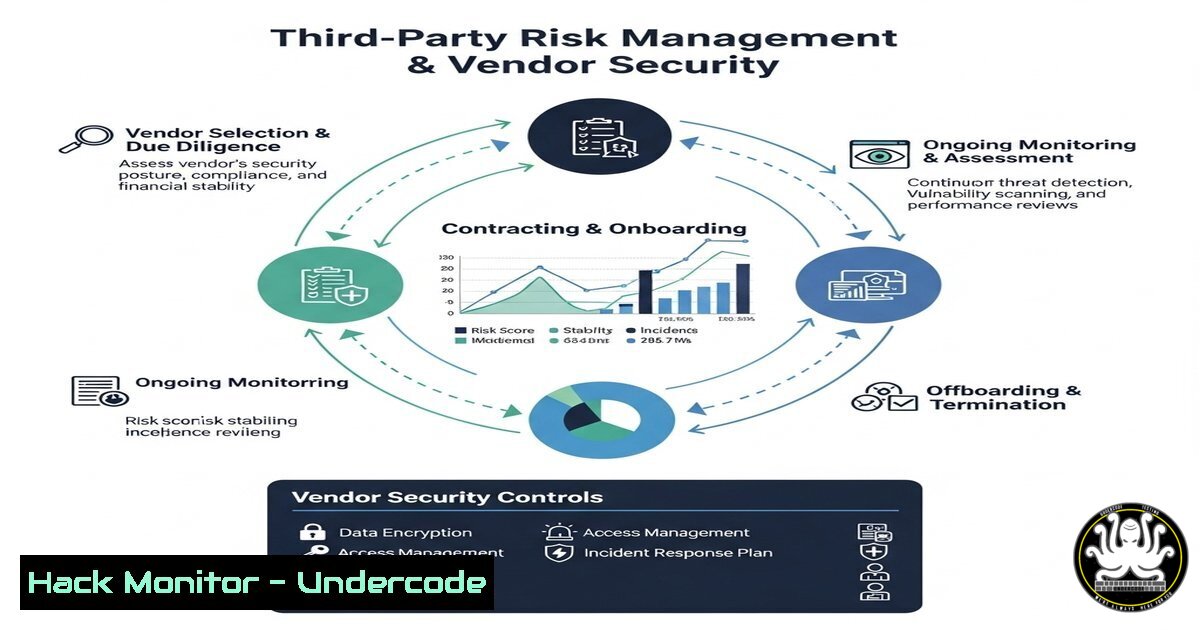
Third-party risk management (TPRM) remains a critical yet often overlooked aspect of cybersecurity. Many organizations struggle with outdated spreadsheets, fragmented tools, and poor adoption—leading to vulnerabilities. This guide provides actionable strategies, commands, and best practices to secure vendor ecosystems effectively.
Learning Objectives:
- Implement automated third-party risk assessments
- Integrate security tools for real-time monitoring
- Enforce compliance with AI-driven regulatory checks
- Automating Vendor Risk Assessments with PowerShell & Python
Command (PowerShell):
 Fetch third-party security ratings from RiskRecon API
Invoke-RestMethod -Uri "https://api.riskrecon.com/v1/companies/$vendorDomain" -Headers @{"Authorization"="Bearer $apiKey"}
Step-by-Step Guide:
- Replace `$vendorDomain` with the vendor’s domain (e.g.,
acme.com).
2. Use `$apiKey` from your RiskRecon account.
- This script retrieves security posture scores, including open ports and vulnerabilities.
Python Alternative:
import requests
response = requests.get(f"https://api.riskrecon.com/v1/companies/{vendor_domain}", headers={"Authorization": f"Bearer {api_key}"})
print(response.json())
2. Monitoring Third-Party Access with AWS IAM Policies
AWS CLI Command:
aws iam list-access-keys --user-name VendorUser --query 'AccessKeyMetadata[].{Status:Status,CreateDate:CreateDate}'
Step-by-Step Guide:
- Run this to audit active access keys for external vendors.
2. Revoke unused keys with:
aws iam delete-access-key --user-name VendorUser --access-key-id AKIAEXAMPLE
3. Detecting Shadow IT with SIEM Queries (Splunk/Sigma)
Splunk Query:
index=firewall dest_ip!=10.0.0.0/8 AND dest_ip!=192.168.0.0/16 | stats count by dest_ip
Step-by-Step Guide:
- This identifies external connections outside corporate IP ranges.
- Investigate unrecognized IPs to block unauthorized SaaS tools.
4. Enforcing Contractual Security with OpenFaaS & NLP
Linux Command (OpenFaaS):
faas-cli deploy --name nlp-contract-scanner --image ghcr.io/openfaas/nlp-model:latest
Step-by-Step Guide:
- Deploy this serverless function to scan vendor contracts for missing SLAs.
2. Use triggers to flag non-compliant clauses automatically.
5. Mitigating Supply Chain Attacks with SBOMs
Syft CLI (Software Bill of Materials):
syft vendor-app.tar.gz -o json > sbom.json
Step-by-Step Guide:
1. Generate an SBOM for vendor software.
2. Analyze with Grype for vulnerabilities:
grype sbom:sbom.json
What Undercode Say:
- Key Takeaway 1: Manual TPRM processes fail—automation is non-negotiable.
- Key Takeaway 2: Integration > Tool Overload—choose platforms that unify visibility.
Analysis:
The gap between procurement and security teams creates exploitable weaknesses. AI-driven compliance (e.g., Dr. Chelly’s approach) and API-based monitoring are the future. Companies lagging in real-time vendor assessments will face breaches.
Prediction:
By 2026, 60% of third-party breaches will stem from poor tool integration. Organizations adopting automated TPRM will reduce incidents by 40%.
Final Thought:
As Dr. Chelly emphasizes, “Tech must fit people”—simplify workflows, enforce defaults, and kill spreadsheets. Start with one script today.
🎯Let’s Practice For Free:
IT/Security Reporter URL:
Reported By: Magda Chelly – Hackers Feeds
Extra Hub: Undercode MoN
Basic Verification: Pass ✅


